Usually despatched in 2 - 3 working days. (Available now to download.)
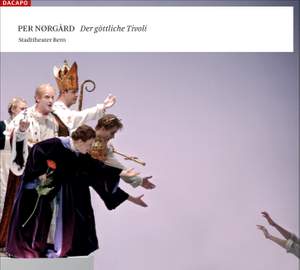
Der göttliche Tivoli (The Divine Circus) is Per Nørgård’s (b. 1932) marvellous portrayal of the Swiss schizophrenic artist Adolf Wölfli (1864-1930).
It stands as a key work in contemporary Nordic music drama and in two acts presents two periods in Wölfli’s life; his harsh upbringing in Switzerland in the late 19th century and his confinement in an asylum, where Wölfli for more than 30 years produced an endless number of incredible artworks.
The encounter with Wölfli’s life and art became a significant turning point in Nørgård’s music, which led to a series of great works, all dealing with chaos and catastrophe, among them The Divine Circus.
The Divine Circus is here presented on disc for the first time in a live performance from Stadttheater Bern in 2008.
Per Norgard: Der Gottliche Tivoli
Vorspiel
Prolog I: Ein Totschlag
Prolog II: So silbern tont's
Prolog III: Gondellied
Act I: Lobgesange mit Absturz (Adolf Wolfli, Doufi, Bianca)
Act I: Die automatische Tantzplatte (Vogelis, Doufi, Bianca, Mathilde)
Act I: Des Luftschiffers Fall (und Trost des Hausarztes) (Adolf II, Mutti, Lidia Wildermuth)
Act I: Die Verwandlungen der Lidia Wildermuth (Gottin Sereena, Doktor, Doufi, Mutti)
Act I: Erwachen im Himmel (D'r Hund zersprengt seine Ketten) (Adolf Wolfli, Gottin Sereena, Mutti)
1/10 - Act I: Katastrophe mit Fall (Die Uhr Schlagt zwolf) (Adolf II, Mutti, Neger, Margritt, Tochter, Doktor) - Wolfli – der Unglucksfall im Arrest (beginning)
Act I: Wolfli – der Unglucksfall im Arrest (continued) (Adolf Wolfli)
Act I: Auferstehung (Adolf Wolfli, Vogelis, All)
Act II: Erschaffung - Ameisenfuge (Doufi, Mutti, Adolf, Adolf II)
Act II: Fahrt mit dem Tram (Santta Maria, Konigin Cathrine, Doufi, Konig)
Act II: Ist wohl ein Unfall-Arzt zur Stelle? (Adolf Wolfli, Mutti, Adolf, Adolf II)
Act II: Des Konigs Kommentar (Konig Alfons XII, Doufi, Adolf Wolfli)
Act II: Halleluja – Schlusschor - Der Tanz im Paradies (All)
18th February 2010
***
“...a powerfully effective piece, with a text compiled by the composer from a range of sources, and the largely declamatory vocal writing underpinned mostly by a formidable battery of percussion. There is enough in the music, and in the allusive visual and literary layers around it, to suggest it would have a real theatrical presence.”