Prices shown exclude VAT. (UK tax is not payable for deliveries to United States.) See Terms & Conditions for p&p rates. | |  | The Very Best of Kiri Te Kanawa
Bizet: | Me voilà seule…Comme autrefois (from Les Pêcheurs de Perles) | Charpentier, G: | Depuis le jour (from Louise) | Cilea: | Ecco: respiro appena. Io son l'umile ancella (from Adriana Lecouvreur) | Duparc: | L'Invitation au voyage Le Manoir de Rosemonde | Giordano, U: | La mamma morta (from Andrea Chénier) | Korngold: | Glück, das mir verbleib 'Marietta's Lied' (from Die Tote Stadt) | Massenet: | Je marche sur tous les chemins (from Manon) | Mozart: | Ach, ich fühl's (from Die Zauberflöte, K620) | Offenbach: | Elle a fui, la tourterelle (from Les Contes d' Hoffmann) | Puccini: | Signore, ascolta! (from Turandot) | Ravel: | La Flûte enchantée (Shéhérazade No. 2) | Strauss, R: | Da geht er hin (from Der Rosenkavalier, Op. 59) | Verdi: | Attendo,attendo.. Addio del passato (from La Traviata) | Wagner: | Dich, teure Halle (from Tannhauser) | Weber: | Wie nahte mir der Schlummer … Leise, leise, fromme Weise (from Der Freischütz) |
The glamorous soprano Kiri Te Kanawa was born in 1944 in Gisborne, on the east coast of the North Island of New Zealand. After winning a number of major vocal competitions in Australia, she came to London in 1966 to study singing at the London Opera Centre, where she trained for three years. Then in 1970 she was accepted by the Royal Opera at Covent Garden as a junior member of the company. Her big break came in 1971, when she was chosen to sing the Countess in a new production of Le nozze di Figaro.. It was something of a gamble for the Covent Garden management to cast an inexperienced singer in such an important role, but on the opening night Kiri’s performance stole the show. After the Covent Garden Nozze di Figaro, an international career was assured. With a carefully chosen repertoire that included the principal soprano roles of Mozart, as well as a number of Verdi, Puccini and Richard Strauss heroines, Kiri went on to triumph in the major opera houses of the world. She first appeared at the Salzburg Festival in 1979 and became a regular and much-loved performer at Glyndebourne, a venue for which she has a particularly strong affection, and in 1981 Kiri was chosen to sing at the wedding of Prince Charles and Lady Diana Spencer in St Paul's Cathedral, an event seen by a world-wide television audience estimated at more than 600 million people Not surprisingly, her vibrant but creamy voice, together with her attractive stage presence, made her an ideal interpreter of the main Richard Strauss roles, and it was not long before she was singing the Marschallin in Der Rosenkavalier, a part with which she scored a particular success. After a number of popular Italian and French arias, Kiriis heard in this programme in the Marschallin's Act I monologue, 'Da geht er hin', as well as in arias from several other German operas, including Wagner's Tannhäuser, Der Freischutz by Weber and Korngold's unjustly neglected romantic masterpiece Die tote Stadt. As a brief reminder of Kiri's achievements on the concert stage, the first CD closes with three orchestral songs by the French composers Ravel and Duparc, all of which show off the lustrous beauty of her voice to full advantage. In addition to opera and so-called serious music however, Kiri is also a great enthusiast for the lighter repertoire, including folk music and the songs of Broadway and Tin Pan Alley. When performing this material, she uses the warm, lower part of her rich voice to give idiomatic performances of songs by some of America's greatest composers of popular music, such as George Gershwin, Jerome Kern, Irving Berlin and Cole Porter. Also heard here are Franz Gruber's familiar Christmas carol 'Silent Night' and a number of traditional British folk songs. These are followed by two Maori songs, in which Kiri is joined by a group of Maori singers and a number of specialist musicians who together capture the authentic style of these fascinating pieces. | | | In stock - usually despatched within 1 working day. |
|
|
| |  | Great Soprano Arias II
| | | Usually despatched in 2 - 3 working days. |
|
|
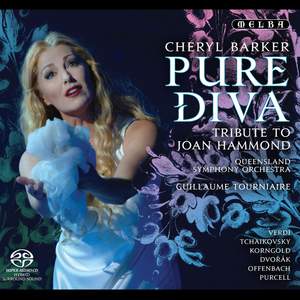
| |  | Pure DivaTribute to Joan Hammond
The ravishing Australian soprano Cheryl Barker has an important career in many major opera houses – English National Opera, Scottish Opera, Welsh National Opera and The Royal Opera Covent Garden among them – and concert halls. She is widely celebrated for her riveting performances. Pure Diva: is her very personal tribute to her teacher, the great Dame Joan Hammond, a disc, Barker says, “that feels as if it’s been a long time coming”. The orchestral scenes are high drama from the first note to the last reverberation. Cheryl’s glorious lyric soprano rides the wave of Guillaume Tourniaire’s orchestral texture in grand operatic scenes, arias and songs made famous by Hammond. They include Tatyana’s Letter Scene, Dido's Lament, Desdemona’s Willow Song, and other arias by Verdi, Dvořák, Korngold, and Offenbach. Cheryl’s visceral portrayals of these operatic heroines convey the full emotional depth of these multi-dimensional characters in extremis. The tributes with piano accompaniment (by Timothy Young) provide a contrast to the preceding drama, encore pieces beloved of Joan Hammond, the biggest selling recording artist during the war. Her recording of The Green Hills o’ Somerset became a best seller and Cheryl includes it as a homage here. The delightful rarity Shadows is a song written for Hammond by the Australian composer Ronald Settle. Illuminating CD notes are by the late and great vocal commentator John Steane who was an insightful witness to Dame Joan Hammond (1912-96) and all the great singers of her era and those that followed. Cheryl Barker’s relationship with Melba Recordings stretches back almost to the label’s beginning: Puccini=Passions (MR301085) was her acclaimed 2003 collection of arias with Richard Bonynge conducting Orchestra Victoria. “The excitement and sense of urgency of young Tatyana are well caught ad projected, with the fullness of Barker's voice brought into play...Despite the occasional unsteadiness and a certain lack of tonal freshness at time, I find much to like in the singing, and the Queensland orchestra and the pianist work well with the soloist.” International Record Review, January 2012 | | | Usually despatched in 4 - 5 working days. |
|
|
| |  | Anny SchlemmDocuments of a Singing Career
A 20 year career as a soprano saw her perform mainly in Berlin, Cologne and Frankfurt. However she appeared at Glyndebourne, Bayreuth and noted concert venues around the world. | | | Usually despatched in 2 - 3 working days. |
|
|
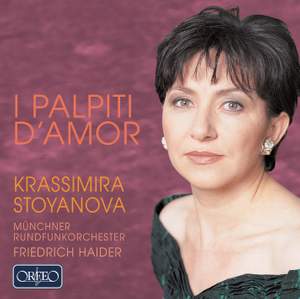
| |  | Krassimira Stoyanova - I Palpiti D’amor
Her appearances as Desdemona in Barcelona,Vienna and Tokyo, to say nothing of her Trovatore Leonora in Washington, have shown very clearly that the lirico spinto soprano, Krassimira Stoyanova has succeeded in filling a gap on the international stage. Stoyanova, who will also shortly be heard in the METDon Giovanni, is at home in more than just Italian repertory: a good half of the arias featured in this, her first operatic recital, are devoted to French repertoire, including Rachel in La juive - the part in which she made her international breakthrough. With its guitar accompaniment, the coloratura aria from Il Guarany is one of the rarer arias here, completing a lively portrait of this versatile and expressive performer. “This is a very well planned recital. With the exception of one aria… Krassimira Stoyanova has sung all the roles represented here on stage. …she demonstrates a voice of pleasing security and some dramatic power.” Gramophone Magazine, November 2008 | | | Usually despatched in 3 - 4 working days. |
|
|
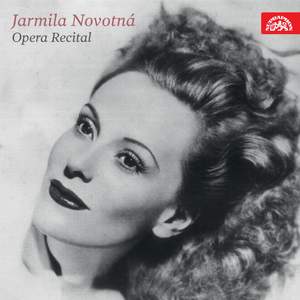
| |  | Jarmila Novotná: A Star of the Metropolitan Opera
Performance clips include
Jarmila Novotná (soprano) The legendary soprano Jarmila Novotna (b. 1907; d. 1994), long-time soloist of New York´s Metropolitan Opera House, but also a Hollywood film star, ranks among those distinguished individuals whose whole lives have been filled to the brim with work in art. Her beautiful, light, sparkling soprano, coupled with a formidable dramatic talent and a dazzling stage presence were the principal reasons underlying Jarmila Novotna´s dizzyingly steep international career. In 1928 she triumphed as Gilda in Verona´s Arena, and from 1933 - 1939 was engaged as soloist by the Vienna State Opera. Following her American debut at San Francisco came, in 1940, an engagement in the Metropolitan Opera, whose soloist she remained until 1956. After the Second World War she made repeated comeback tours of Europe, singing at Salzburg, Vienna, Paris, and before the 1948 communist coup also at Prague. The current DVD devoted to Jarmila Novotna contains two documentaries on her life and work; a digitally remastered recording of her rendition of folk songs with the piano accompaniment of Jan Masaryk; and a similarly updated collection of her 1940s readings of famous operatic arias. The sound-tracks are illustrated by copious pictorial material from the artist´s archives. | | | Usually despatched in 4 - 5 working days. |
|
|
| |  | George London: A Tribute
Beethoven: | O welche Lust! In freier Luft den Atem leicht zu heben! (from Fidelio) Vienna State Opera Chorus, Heinrich Hollreiser | Mozart: | Don Giovanni, K527: Overture Lothar Zagrosek Fin ch'han dal vino (from Don Giovanni) Archival television performance, 1964 George London Dalla sua pace (from Don Giovanni) Nicolai Gedda Heinrich Hollreiser Deh vieni, non tardar (from Le nozze di Figaro) Lucia Popp Deh, per questo istante solo (from La Clemenza di Tito) Tatiana Troyanos | Mussorgsky: | Dostig Ya Vyshey Vlasti (from Boris Godunov) Archival television performance, 1964 George London | Offenbach: | Les oiseaux dans la charmille (from Les Contes d'Hoffmann) Edita Gruberova Erich Binder Elle a fui, la tourterelle (from Les Contes d' Hoffmann) Catherine Malfitano Tu ne chanteras plus (from Les Contes d'Hoffman) Catherine Malfitano, Simon Estes, Margaretha Hintermeier Erich Binder | Puccini: | E lucevan le stelle (from Tosca) Nicolai Gedda | Strauss, R: | Er ist der Richtige nicht für mich … Aber der Richtige, wenn's einen gibt für mich (from Arabella) Lucia Popp, Sona Ghazarian Heinrich Hollreiser | Tchaikovsky: | Kuda, Kuda 'Lensky's Aria' (from Eugene Onegin) Francisco Araiza | Wagner: | Mit Gewitter und Sturm (from Der Fliegende Hollander) Thomas Moser Lothar Zagrosek Die Walkure: Act 1 Scene 3 Leonie Rysanek, James King Lothar Zagrosek |
Gala 1984 operatic concert organized by the George London Foundation for Singers. Bonus material includes excerpts from London's Bell Telephone and CBC telecast appearances, as well as excerpts of his role as Scarpia in VAI's Tosca, with Renata Tebaldi. 127 minutes, color, stereo with optional English subtitles. Playable in all regions. | | | Usually despatched in 4 - 5 working days. |
|
|
| |  | The Art of Sena Jurinac
Sena Jurinac (soprano) Orchestra di Milano della RAI, Orchester der Wiener Staatsoper, Mario Rossi, Berislav Klobucar | | | Usually despatched in 2 - 3 working days. |
|
|
| |  | Von der Königlichen Hofoper zur Staatsoper Unter den Linden
Albert, E: | Nun hab ich nichts als dich (from Tiefland) Max Roth | Bellini: | Casta Diva (from Norma) Lilli Lehmann | Bizet: | Votre toast je peux vous le rendre 'Toreador Song' (from Carmen) Karl Armster Si tu m'aimes, Carmen (from Carmen) Sung in German Walter Großmann | Cherubini: | Les Deux Journées: excerpt Sung in German | Donizetti: | Il segreto per esser felici (from Lucrezia Borgia) Sung in German Ernestine Schumann-Heink Povero Ernesto...cercherò lontano terra (from Don Pasquale) Sung in German Gino Sinimberghi | Flotow: | Ach, so fromm (from Martha) Richard Tauber | Gluck: | Cette nuit … O toi qui prolongeas mes jours (fromIphigénie en Tauride) Sung in German Zinaida Jurjewskaja | Gounod: | Il se fait tard ! Adieu ! (from Faust) Sung in German Karl Jörn Le veau d'or est toujours debout (from Faust) Sung in German Ludwig Hofmann | Leoncavallo: | No! Pagliaccio non son! (from I Pagliacci) Sung in German Josef Mann | Lortzing: | Du lässt mich kalt von hinnen scheiden (from Der Waffenschmied) Herbert Janssen | Meyerbeer: | Ah, mon fils! (from Le Prophète) Sung in German Marianne Brandt Adamastor, re dell'onde profonde (L'Africana) Sung in German Baptist Hoffmann | Mozart: | O Isis und Osiris, schenket (from Die Zauberflöte) Paul Knüpfer Ich baue ganz auf deine Stärke (from Die Entführung aus dem Serail) Crudel! perché finora farmi languir così? (from Le nozze di Figaro) Sung in German Lola Artot de Padilla Porgi amor (from Le nozze di Figaro) Sung in German Lilly Hafgren Der Hölle Rache kocht in meinem Herzen (from Die Zauberflöte) Gitta Alpar Ach, ich fühl's (from Die Zauberflöte, K620) Käthe Heidersbach La vendetta (from Le nozze di Figaro) Sung in German Alexander Kipnis Non piu andrai, farfallone amoroso (from Le Nozze di Figaro) Sung in German Willi Domgraf-Fassbänder Bei Männern, welche Liebe fühlen (from Die Zauberflöte) Margherita Perras Sull' aria che soave zeffiretto (from Le Nozze di Figaro) Sung in German Erna Berger Dies Bildnis ist bezaubernd schön (from Die Zauberflöte) Peter Anders | Mussorgsky: | Uf, tja zhelo! (from Boris Godunov) Sung in German Leo Schützendorf | Offenbach: | Elle a fui, la tourterelle (from Les Contes d' Hoffmann) Sung in German Emmy Bettendorf | Puccini: | Ah, quegli occhi… (from Tosca) Sung in German Mafalda Salvatini Recondita armonia (from Tosca) Sung in German Tino Pattiera O soave fanciulla (from La Bohème) Sung in German Hedwig von Debitzka Si, mi chiamano Mimi (from La Bohème) Sung in German Maria Cebotari Quando me'n vo (from La Bohème) Sung in German Carla Spletter | Saint-Saëns: | Amour, viens aider ma faiblesse (Samson et Dalila) Sung in German Marie Goetze | Strauss, J, II: | Dieser Anstand, so manierlich (from Die Fledermaus) Emilie Herzog Spiel’ ich die Unschuld vom Lande from Die Fledermaus Marie Dietrich | Verdi: | Un dì felice, eterea (from La traviata) Sung in German Frieda Hempel D'amor sull'ali rosee (from Il Trovatore) Sung in German Barbara Kemp Tutte le feste (from Rigoletto) Sung in German Claire Dux Stride la vampa (from Il Trovatore) Sung in German Emmi Leisner Vanne, la tua meta gia vedo…Credo in un Dio crudel (from Otello) Michael Bohnen Un ballo in maschera (excerpts) Sung in German Vera Schwarz Qui Radamès verrà!... O patria mia (from Aida) Gertrud Bindernagel Il Trovatore (excerpts) Heinrich Schlusnus Re dell’abisso affretati (Un ballo in maschera) Sung in German Theodor Scheidl Alla vita che t'arride (from Un ballo in maschera) Sung in German Theodor Scheidl Una macchia è qui tutt'ora (from Macbeth) Sung in German Gertrude Rünger Ella giammai m'amò (from Don Carlo) Sung in German Josef von Manowarda Pace, pace mio Dio! (from La forza del destino) Sung in German Hilde Scheppan | Wagner: | Athmest du nicht mit mir die sussen Dufte? (from Lohengrin) Wilhelm Grüning Das susse Lied verhallt (from Lohengrin) Ernst Kraus Dir töne Lob (from Tannhäuser) Francis MacLennan Vollendet das ewige Werk (from Das Rheingold) Hermann Bachmann Du Ärmste kannst wohl nie ermessen (from Lohengrin) Thila Plaichinger Als du in kuhnem Sange uns bestrittest (from Tannhäuser) Cornelis Bronsgeest Johohoe! Traft ihr das Schiff im Meere an 'Senta's Ballad' (from Der fliegende Holländer) Melanie Kurt Das ist nun der Liebe schlimmer Lohn (from Siegfried) Julius Lieban Siegmund heiß ich und Siegmund bin ich! (from Die Walküre) Rudolf Berger So ist’s denn aus...Deiner ew’gen Gattin (from Die Walküre) Margarete Arndt-Ober Winterstürme wichen dem Wonnemond (from Die Walküre) Walther Kirchhoff Athmest du nicht mit mir die sussen Dufte? (from Lohengrin) Robert Hutt Ewig war ich (from Siegfried) Helene Wildbrunn Brünnhilde, heilige Braut! (from Götterdammerung) Fritz Soot Verachtet mir die Meister nicht (from Die Meistersinger von Nürnberg) Friedrich Schorr Lass sie mich heilen (from Tristan und Isolde) Göta Ljungberg Hier sitz ich zur Wacht (from Götterdämmerung) Emanuel List Athmest du nicht mit mir die sussen Dufte? (from Lohengrin) Fritz Wolff Der Männer Sippe (from Die Walküre) Delia Reinhardt Dir töne Lob (from Tannhäuser) Max Lorenz Dich, teure Halle (from Tannhauser) Maria Müller Abendlich strahlt der Sonne Auge (from Das Rheingold) Rudolf Bockelmann Starke Scheite schichtet mir dort 'Brünnhilde's Immolation Scene' (from Götterdämmerung) Anny Konetzni War es so schmählich, was ich verbrach? (from Die Walküre) Eugen Fuchs Fanget an! (Die Meistersinger von Nürnberg) Set Svanholm Auf hohem Felsen lag ich (from Der fliegende Holländer) Irmgard Langhammer Das schöne Fest, Johannistag (from Die Meistersinger) Josef Greindl Dank, König, dir, daß du zu richten kamst! (from Lohengrin) Jaro Prohaska In fernem Land (from Lohengrin) Ludwig Suthaus Mild und leise 'Isolde's Liebestod' (from Tristan und Isolde) Paula Buchner | Weber: | Und ob die Wolke sie verhülle (from Der Freischütz) Tiana Lemnitz |
| | | Usually despatched in 2 - 3 working days. |
|
|
| |  | Victoria de los Ángeles: The Voice of an Angel
Bach, J C: | Ah! lamenta, oh bella Irene | Barbieri, F: | Canción de Paloma (from El Barberillo de Lavapiés) Profesores de la Orquesta Nacional de España, Rafael Frühbeck de Burgos | Barrera Saavedra: | Adiós Granada (from Emigrantes) arr. de los Angeles Victoria de los Angeles (guitar) | Beethoven: | Oh! would I were but that sweet linnet, WoO. 154 No. 9 Eduard Drolc (violin), Irmgard Poppen (cello) He promised me at parting, WoO. 154 No. 12 They bid me slight my Dermot dear, WoO. 152 No. 8 Eduard Drolc (violin), Irmgard Poppen (cello), Gerald Moore (piano) | Bizet: | Carmen (highlights) Nicolai Gedda (Don Jose), Denise Monteil (Micaela), Marcelle Croisier (Frasquita), Monique Linval (Mercédès) Chœurs et Orchestre National da la Radiodiffusion Française, Sir Thomas Beecham | Brahms: | Wiegenlied, Op. 49 No. 4 (Lullaby) Dein blaues Auge, (No. 8 from Acht Lieder und Gesänge, Op. 59) Vergebliches Ständchen, Op. 84 No. 4 Gerald Moore (piano) Sapphische Ode, Op. 94 No. 4 Gerald Moore (piano) | Caballero: | Romanza de Pilar (from Gigantes y cabezudos) Profesores de la Orquesta Nacional de España, Rafael Frühbeck de Burgos | Canteloube: | Songs of the Auvergne Orchestre des Concerts Lamoureux, Jean-Pierre Jacquillat | Catalani: | Ebben? Ne andrò lontana (from La Wally) Orchestra del Teatro dell’Opera di Roma, Giuseppe Morelli | Chapí: | Canción de Pastora (from La patria chica) Rafael Frühbeck de Burgos Canción de la gitana (from La chavala) Profesores de la Orquesta Nacional de España, Rafael Frühbeck de Burgos Carceleras from Las hijas de Zebedeo Sinfonia of London, Rafael Frühbeck de Burgos | Chueca: | La gran vía: Tango de la menegilda Rafael Frühbeck de Burgos La gran vía: Chotís del eliseo madrilène Profesores de la Orquesta Nacional de España, Rafael Frühbeck de Burgos | Debussy: | Fêtes galantes - Set 1 Gonzalo Soriano (piano) | Delibes: | Les filles de Cadix | Duparc: | L'Invitation au voyage Orchestre de la Société des Concerts du Conservatoire, Georges Prêtre | Dvorak: | Als die alte Mutter (No. 4 from Zigeunermelodien, op. 55) Moglichkeit Der Apfel, Op. 38 No. 2 Gerald Moore (piano) | Falla: | La vida breve: ‘Vivan los que rien!' Alli está! Riyendo (from La vida breve) Philharmonia Orchestra, Stanford Robinson El sombrero de tres picos: Overture Philharmonia Orchestra with Chorus, Rafael Frühbeck de Burgos El Amor Brujo: excerpts Philharmonia Orchestra, Carlo Maria Giulini Siete Canciones populares españolas Gonzalo Soriano (piano) | Fauré: | Tristesse, Op. 6 No. 2 Au bord de l'eau, Op. 8 No. 1 (Prudhomme) Les roses d'Ispahan Op. 39 No. 4 Toujours!, Op. 21 No. 2 Gonzalo Soriano (piano) | Gounod: | Ah! Je ris de me voir (from Faust) Il se fait tard ! Adieu ! (from Faust) Nicolai Gedda (Faust), Boris Christoff (Mephistopheles) Orchestre du Théâtre National de l’Opéra, André Cluytens | Granados: | Tonadillas: No. 2, Callejeo Tonadillas: No. 11, El tra la la y el punteado Gerald Moore (piano) Goyescas: Quejas ó La Maja y el Ruiseñor New Philharmonia Orchestra, Rafael Frühbeck de Burgos Iban al pinar Gracia mía Alicia de Larrocha (piano) | Grieg: | Ich liebe Dich, Op. 5 No. 3 | Guridi Bidaola: | Jota (from Six canciones castellanas) Gerald Moore (piano) | Hahn, R: | L'Enamourée Trois jours de vendange Le rossignol des lilas Gonzalo Soriano (piano) | Handel: | Joshua: Oh! had I Jubal's lyre Gerald Moore (piano) | Haydn: | Schlaf in deiner engen Kammer Eduard Drolc (violin), Irmgard Poppen (cello) | Leoncavallo: | Qual fiamma avea nel guardo!.... Hui! Stridono lassù (from I Pagliacci) RCA Victor Orchestra, Renato Cellini | Lleó Balbastre: | Couplets babilónicos (from La corte del Faraón) Profesores de la Orquesta Nacional de España, Rafael Frühbeck de Burgos | Lorca: | Canciónes (13) españolas antiguas: Anda, jaleo Canciónes (13) españolas antiguas: Los cuatro muleros Canciónes (13) españolas antiguas: Las tres hojas Canciónes (13) españolas antiguas: Los mozos de Monleón Canciónes (13) españolas antiguas: Las morillas de Jaén Canciónes (13) españolas antiguas: Sevillanas del Siglo XVIII Miguel Zanetti (piano) | Luna, P: | El Niño Judío: De España vengo Profesores de la Orquesta Nacional de España, Rafael Frühbeck de Burgos | Martini, J P: | Plaisir d'amour | Mascagni: | Voi lo sapete o mamma (from Cavalleria rusticana) Orchestra del Teatro dell’Opera di Roma, Giuseppe Morelli | Massenet: | Allons! Il le faut pour lui-même!... Adieu, notre petite table (from Manon) Je marche sur tous les chemins (from Manon) Chœurs et Orchestre du Théâtre National de l’Opéra-Comique, Pierre Monteux Werther! Werther!…Je vous écris de ma petite chambre (from Werther) Va! Laisse couler mes larmes (from Werther) Orchestre de Paris, Georges Prêtre | Mendelssohn: | Auf Flügeln des Gesanges, Op. 34 No. 2 | Montsalvatge: | Canciones negras (5) Orchestre de la Société des Concerts du Conservatoire, Rafael Frühbeck de Burgos | Mozart: | Porgi amor (from Le nozze di Figaro) Orchestra del Teatro dell’Opera di Roma, Giuseppe Morelli Ecco quel fiero istante, K346 Elisabeth Schwarzkopf (soprano), Dietrich Fischer Dieskau (baritone), Gerald Moore (piano) | Nin: | Granadina (from Cantos populares españoles) Gerald Moore (piano) | Offenbach: | Elle a fui, la tourterelle (from Les Contes d' Hoffmann) Orchestre de la Société des Concerts du Conservatoire, André Cluytens | Ovalle: | Azulao Profesores de la Orquesta Nacional de España, Rafael Frühbeck de Burgos | Puccini: | Si, mi chiamano Mimi (from La Bohème) O soave fanciulla (from La Bohème) Donde lieta usci (from La Bohème) Jussi Björling (Rodolfo), Robert Merrill (Marcello) RCA Victor Orchestra, Sir Thomas Beecham O mio babbino caro (from Gianni Schicchi) Orchestra del Teatro dell Opera di Roma, Tullio Serafin Ancora un passo…Spira sul mare (from Madama Butterfly) Jussi Björling (Pinkerton), Mario Sereni (Sharpless) Bimba dagli occhi pieni di malia (from Madama Butterfly) Jussi Björling (Pinkerton) Un bel di vedremo (from Madama Butterfly) Con onor muore (from Madama Butterfly) Coro e Orchestra del Theatro dell’Opera di Roma, Gabriele Santini | Purcell: | Let us Wander not Unseen (from The Indian Queen, Z630) Lost is my quiet for ever, Z502 Gerald Moore (piano) | Ravel: | La Flûte enchantée (Shéhérazade No. 2) Orchestre de la Société des Concerts du Conservatoire, Georges Prêtre | Rossini: | Nacqui all'affanno, al pianto...Non più mesta (from La Cenerentola) Giuseppe Morelli Una voce poco fa (from Il barbiere di Siviglia) Royal Philharmonic Orchestra, Vittorio Gui | Sadero: | Era la vo Profesores de la Orquesta Nacional de España, Rafael Frühbeck de Burgos | Scarlatti, A: | Le violette Gerald Moore (piano) | Schubert: | Der Tod und das Mädchen, D531 Wohin? (No. 2 from Die schöne Müllerin, D795) An die Musik D547 Gerald Moore (piano) | Serrano: | Cancion de la gitana (from Le alegria del battallon) Rafael Frühbeck de Burgos Escena lírica (Los claveles) Rafael Frühbeck de Burgos Romanza de Gloria (Los de Aragón) Profesores de la Orquesta Nacional de España, Rafael Frühbeck de Burgos | Stanford: | An Irish Lullaby | Tchaikovsky: | Schottische Ballade, Op. 46 No. 2 Gerald Moore (piano), Dietrich-Fischer Dieskau (baritone) | Toldrá: | Cançó de grumet (A l’ombra del Leidoner) Gonzalo Soriano (piano) | Turina: | Saeta en forme de Salve a la Virgen de la Esperanza, Op. 60 Poema en forma de canciones, Op. 19: No. 3, 'Cantares' Philharmonia Orchestra, Walter Susskind | Valls Gorina: | Canciones Sefarditas Jean-Claude Gérard (flute), Oscar Ghiglia (guitar) | Valverde: | Clavelitos Gerald Moore (piano) | Verdi: | Surta è la notte...Ernani! Ernani, involami (from Ernani) Era più calmo? (from Otello) Mia madre aveva...Piangea cantando...Ave Maria (from Otello) Orchestra del Teatro dell’Opera di Roma, Giuseppe Morelli Come in quest'ora bruna (from Simon Boccanegra) Orchestra del Teatro dell’Opera di Roma, Gabriele Santini Libiamo, ne' lieti calici (from La Traviata) È strano! è strano!...Ah! fors è lui (from La traviata) Teneste la promessa...Addio, del passato (from La Traviata) Carlo del Monte (Alfredo) Coro e Orchestra del Teatro dell’Opera di Roma, Tullio Serafin | Villa-Lobos: | Bachianas Brasileiras No. 5: Aria (Cantilena) Bachianas brasileiras no 5 ; Dança (martelo) Orchestre National de la Radiodiffusion Française, Heitor Villa-Lobos | Wagner: | Dich, teure Halle (from Tannhauser) Einsam in trüben Tagen (from Lohengrin) Orchestra del Teatro dell’Opera di Roma, Giuseppe Morelli | Yradier: | La Paloma Profesores de la Orquesta Nacional de España, Rafael Frühbeck de Burgos |
| | | In stock - usually despatched within 1 working day. |
|
|
| |
|