Gluck: Se mai senti spirarti sul volto (from La clemenza di Tito)

This page lists all recordings of Se mai senti spirarti sul volto (from La clemenza di Tito), by Christoph Willibald Gluck (1714-87) on CD. Generally, more recent releases are listed first, but with priority given to those that are in stock.

Recommendations

Opera Choice
April 2011
Disc of the Month
Awards Issue 2001
Disc of the Month
Awards Issue 2001

All recordings

Prices shown exclude VAT. (UK tax is not payable for deliveries to United States.)
See Terms & Conditions for p&p rates.

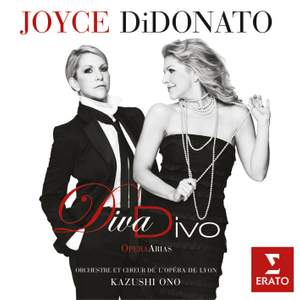
Joyce DiDonato: Diva, Divo

Joyce DiDonato: Diva, Divo


Bellini:

Ascolta! Se Romeo t'uccise un figlio...La tremenda ultrice spada (from I Capuleti)

Edgaras Montvidas (tenor), Nabil Suliman (baritone)

Berlioz:

La Damnation de Faust: D'amour l'ardente flamme

Roméo et Juliette, Op. 17: Premiers transports que nul n'oublie

Gluck:

Se mai senti spirarti sul volto (from La clemenza di Tito)

Gounod:

Faites- lui mes aveux (from Faust)

Massenet:

Je suis gris! Je suis ivre! (from Chérubin)

Allez, laissez-moi seul...Coeur sans amour, printemps sans roses (from Cendrillon)

Ô frêle corps.... Chère Cypris (from Ariane)

Mozart:

Giunse alfin il momento... Deh, vieni, non tardar… (from Le nozze di Figaro)

Ecco il punto...Non più di fiori vaghe catene (from La clemenza di Tito)

Voi che sapete (from Le nozze di Figaro)

Rossini:

Contro un cor (from Il barbiere di Siviglia)

Edgaras Montvidas (tenor)

Nacqui all'affanno, al pianto...Non più mesta (from La Cenerentola)

Elena Semenova (soprano), Pascale Obrecht (mezzo), Edgaras Montvidas (tenor), Nabil Suliman (baritone), Paolo Stupenengo (bass)

Strauss, R:

Sein wir wieder gut (from Ariadne auf Naxos)


Joyce DiDonato (mezzo)

Orchestre et Choeur de L'Opéra National De Lyon, Kazuko Ono

Joyce DiDonato celebrates the rich dramatic variety of the mezzo-soprano voice in this collection of arias for different characters – of both sexes – from a single opera, or from different operatic treatments of the same story.

Joyce DiDonato’s capacity for characterisation is as astounding as the range and flexibility of her voice. As her Virgin Classics recitals of Handel and Rossini have proven, she can charm and touch as a good girl, seduce and seethe as a bad girl, and slip believably into the trousers of a hero. As Opera News said of the Rossini disc, ‘Colbran, The Muse’: “With her sure sense of line and colour, DiDonato takes possession of the repertory, mining every musical and vocal gesture to inhabit each character confidently … Her theatrical sense is magnificent. Musically and dramatically, the disc is perfection.”

This new collection showcases DiDonato’s multi-faceted art – and the wealth of opportunities open to a mezzo-soprano – by presenting her as different characters, both male and female, from the same opera or from different musical treatments of the same story.

As DiDonato explains: “This recital celebrates the vast and fabulous world of the mezzo-soprano. Aside from the obvious Toscas or Cio-Cio Sans, I've never regretted the length of my vocal cords!

I have the privilege and unmitigated joy of playing boys and young men, as well as girls and grown women … It’s an exploration of the human palette of emotions.

“I wanted to find a way to show this duality on disc, while highlighting some of the composers I'm most passionate about, such as Mozart, Bellini, Berlioz, Rossini, and Massenet. In exploring this idea, the possibility became clear for telling different sides of some of the most familiar tales which have served as inspiration for operatic legends: Cinderella, Faust, Romeo and Juliet … I've always thought of myself as a storyteller, and with this particular disc, I can showcase that side of me as never before. I'm ready to play!”

The programme features several roles that DiDonato has sung on stage – such as Rossini’s Cenerentola (it was the character’s gentle, then exuberant ‘Nacqui all’affanno’ that launched her international career at Plácido Domingo’s Operalia competition, and subsequently at La Scala), Bellini’s Romeo and Mozart’s Cherubino. The ‘flip sides’ of those characters are roles that have not featured in her repertoire: the Prince from Massenet’s Cendrillon (a lavish treatment of the Cinderella story more likely to bring DiDonato in the title role – as at Santa Fe in 2006 and, in 2011, at Covent Garden); the Nurse from Berlioz’s Roméo et Juliette, and both Chérubin (from Massenet’s ‘sequel’ to Le nozze di Figaro) and Susanna. The Figaro connection continues with an excerpt from Il barbiere di Siviglia (Rosina, of course, later becomes Countess Almaviva), while other operas on the programme, from the Renaissance to late Romanticism, include La clemenza di Tito (Sesto and Vitellia), Faust, La Damnation de Faust, Mefistofele, Orphée et Eurydice, Orfeo and Orphée aux Enfers.

Accompanying Joyce DiDonato in this tour de force is the Orchestre de l'Opéra National de Lyon under the company’s Principal Conductor Kazushi Ono, another artist who successfully embraces an extraordinary diversity of musical idioms.

As John von Rhein wrote in Gramophone: “In complete control vocally, Joyce DiDonato is … consumed by the character. She embodies whomever she’s playing and whatever emotional situation she is evoking.”

“It's playful, as well as an ideal vehicle for her glorious mezzo voice in which the most fiendish coloratura ornaments and trills sound effortless.” The Observer, 30th January 2011

“I can find nothing but praise...This recording gives enormous pleasure in rare as well as familiar repertoire...the mezzo invariably finding the right colour for each portrayal...Perhaps the best thing about this recital is that everything DiDonato sings sounds spontaneous, as if the character her- or himself were actually experiencing it for the first time.” International Record Review, March 2011

“she is steadily terrific: technically secure, nimble and clean in her flourishes and roulades, always alert to dramatic nuance. Nor do we lack variety. First, a swaggering, tipsy aria for Cherubino from the luxuriously coloured Chérubin (Massenet again). Then we jump to Mozart’s Susanna, intimate and tender in The Marriage of Figaro. So it goes: jolting, fascinating, entertaining.” The Times, 11th February 2011 ****

“[This collection] draws together paired arias of male and female roles from the same story...the youthful Siebel's declaration of love for Marguerite, from Gounod's Faust, receives an anachronistic response from Berlioz's La Damnation de Faust. Clever stuff.” The Independent, 11th February 2011 ***

“DiDonato’s is a five-star voice, perhaps the finest lyric mezzo before the public today...Ono’s Lyons orchestra and chorus give her voice luxury support, and her growing army of fans won’t be disappointed.” Sunday Times, 20th February 2011 ****

“[DiDonato] underlines what has been increasingly obvious from her stage appearances – she is a consummate professional” Financial Times, 11th February 2011 ****

“DiDonato's tone and phrasing catch a genuine male authority in the first entry of Bellini's Capuleti Romeo...Cendrillon and the (to Anglophones) rare Ariane are utter, and quite dark, delights. Elsewhere the Mozart is enjoyed and well negotiated - the lower colouring makes Susanna sound mature and knowing.” Gramophone Magazine, April 2011

“Proof of DiDonato's consummate musicianship is everywhere here...For sheer beauty of tone, legato that defies gravity and singing that restores your faith in human nature, listen last of all to what Joyce DiDonato does with Berlioz's 'D'amour l'ardente flamme'. Diva or Divo, this is the real thing.” BBC Music Magazine, April 2011 *****

“Listening to DiDonato depict both [Cherubino and Susanna]...brings home just how deeply this singer can inhabit character...The American mezzo delivers this ambitious, imaginative programme with intelligence, musicality, vocal brilliance and immense charm. There's some lovely playing from the Lyon Opera Orchestra too.” Classic FM Magazine, May 2011 *****

GGramophone Awards 2011

Finalist - Recital

BBC Music Magazine

Opera Choice - April 2011

Virgin - 6419860

(CD)

$16.75

In stock - usually despatched within 1 working day.

The World of Castrati: The Voices of Angels

The World of Castrati: The Voices of Angels


Bach, J C:

Ebben si vada...lo ti lascio: Ebben si vada

Adriano in Siria: Cara, la dolce fiamma

Broschi, R:

Qual guerriero in campo armato (from Idaspe)

Caldara:

Giacché mi tremi in seno (from La Passione di Gesù Cristo Signor Nostro)

Gluck:

Se mai senti spirarti sul volto (from La clemenza di Tito)

Handel:

Crude furie degli orridi abissi (from Serse)

Scherza, infida (from Ariodante)

Frondi tenere e belle ... Ombra mai fù (from Serse)

Mi lusinga il dolce affetto (from Alcina)

Dall'ondoso periglio (from Giulio Cesare)

Dolci chiodi, amate spine (from La Resurrezione)

Ho un non so che nel cor (from La resurrezione)

Se l'arco avessi (from Admeto)

Quivi, tra questi soltari orr

In mille dolci modi (from Sosarme)

Ritorna pur, ritorna...Voglio che sia l'indegno (from Faramondo)

Lunga serie d'alti eroi (from Parnasso in festa)

Hasse, J A:

Spesso tra vaghe rose (from Il Siroe Re di Persia)

Monteverdi:

Hor mentre i canti alterno (from L'Orfeo)

Mozart:

Deh, per questo istante solo (from La Clemenza di Tito)

Venga pur, minacci e frema (from Mitridate, rè di Ponto)

Rossini:

Dolci silvestri... Perché mai le luci apprimo Arsace (from Aureliano in Palmira)

Vivaldi:

Sposa son disprezzata (from Bajazet)

Il Bajazet (Il Tamerlano) : Anch'il mar par che sommerga

Destin nemico...Destin avaro (from La fida ninfa)


In this double album, the greatest vocal artists of the present day offer their own vision of the singing of their legendary predecessors.

The extraordinary adulation accorded to castrati during the seventeenth and eighteenth centuries is still today one of the most fascinating phenomena in the history of music. During this golden age of the castrato, these male singers endowed with high voices that combined incredible refinement, amazing power and superhuman virtuosity took the musical world by storm. The whole of Europe was overcome by infatuation for these vocal prodigies. In the absence of the castrati themselves, the singers of today face the formidable challenge of reviving their repertoire. Both male and female singers now undertake the task of bringing back to life the wondrous voices of their androgynous forebears, in music that is by turns unsettling, deeply moving and of a dizzying virtuosity.

A 2CD-Compilation for the Price of 1 + 1 Bonus DVD - Digipack Format

Virgin - 6487912

(CD - 2 discs)

$26.00

In stock - usually despatched within 1 working day.

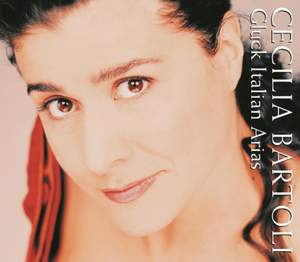
Gluck: Italian Arias

Gluck: Italian Arias


Gluck:

Ah! taci barbaro...Come potesti, oh Dio (from La Clemenza di Tito)

Di questa cetra in seno (from Il Parnaso confuso)

Misera, dove son...Ah! non son io (from Ezio)

Ciascun siegua il suo stile...Maggior follia non v'e (from La Semiramide riconosciuta)

Quel chiaro rio (from La Corona)

Berenice, che fai?...Perché, se tanti siete (from Antigono)

Se mai senti spirarti sul volto (from La clemenza di Tito)

Tremo fra dubbi miei (from La Clemenza di Tito)


“on this disc Cecilia Bartoli makes clear that Gluck was a formidable musical dramatist even in his early, pre-'reform' works...This CD, in short, is a tour de force of dramatic singing, in the widest sense of the term: and it is also full of really beautiful sound; rich, warm, out.” Gramophone Magazine, 2001

GGramophone Awards 2002

Record of the Year Finalist

GGramophone Magazine

Disc of the Month - Awards Issue 2001

Decca - 4783389

(CD)

$16.75

In stock - usually despatched within 1 working day.

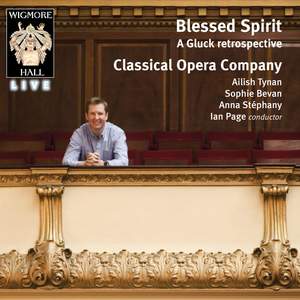
Blessed Spirit: A Gluck Retrospective

Blessed Spirit: A Gluck Retrospective


Gluck:

Il Ciel mi vuol oppresso (from La Semiramide riconosciuta)

Se povero il ruscello (from Ezio)

Se mai senti spirarti sul volto (from La clemenza di Tito)

Berenice, che fai?...Perché, se tanti siete (from Antigono)

Ombre tacite e chete...Dall’ orrido soggiorno (from Telemaco)

Elisa? Aminta? È sogno?...Vanne a regnar, ben mio (from Il Re Pastore)

Non jamais un tel époux (from L'Ivrogne corrigé)

Qual vita è questa mai...Che fiero momento (from Orfeo ed Euridice)

Ecco un nuovo tormento (from Orfeo ed Euridice)

Che faro' senza Euridice? (from Orfeo ed Euridice)

Figli, diletti figli!...Ah, per questo già stanco (from Alceste)

O del mio dolce ardor (from Paride ed Elena)

Dieux puissants que j'atteste… Jupiter, lance la foudre (from Iphigénie en Aulide)

On s’étonnerait moins que la saison nouvelle (from Armide)

Ah, lo veggo (from Paride ed Elena)


Ailish Tynan, Sophie Bevan (sopranos) & Anna Stéphany (mezzo-soprano)

Classical Opera Company, Ian Page

The Classical Opera Company was founded in 1997 by conductor Ian Page. It specialises in the music of Mozart and his contemporaries, performing with its own period-instrument orchestra, and is emerging as one of Britain’s most exciting and highly regarded young arts organisations. It has attracted considerable critical and public acclaim, not only for the high quality of its performances but also for its imaginative programming and, in particular, its ability to discover and nurture outstanding young singers.

“The Classical Opera Company feel like a true ensemble, and their generous acting and musicianship made the evening a joy from start to finish.” The Independent on Sunday

“My personal pick for giving this year is the Classical Opera Company's glorious The A-Z of Mozart Opera, which is fresh, diverse, insightful and illuminating (everything that such recital anthologies usually fail to be).” David Vickers, Gramophone

“Ian Page's subtle survey explores the development of certain textures...Ailish Tynan, Sophie Bevan and Anna Stéphany blend beautifully in the brief trio from Paride ed Elena...the playing is consistently incisive.” The Independent, 23rd May 2010

“In January, Ian Page’s young British troupe ransacked the [Gluck] treasure house with delightful results in a Wigmore Hall concert. And here it is, with Sophie Bevan wonderfully anguished in her aria from Alceste, Anna Stéphany darkly dramatic...[Page's group are] incisively suave.” The Times, 26th June 2010

“...there is some first-rate dramatic music here...Sophie Bevan sings the Tito excerpt with such intensity as to make one almost sympathise with Sesto...'Che Faro' [is] taken at a cracking pace by Ian Page and sung with desperate urgency by Anna Stephany...This is a terrific, unmissable disc.” Gramophone Magazine, September 2010

“The three singers here all make a good showing, Ailish Tynan with her direct engagement with recitative...and as a sentient, fearful Euridice...[Stéphany] scores highly as Clytemnestra in Iphigénie en Aulide, her smoky timbre encompassing the anger of Agamemnon's wife...Sophie Bevan cuts a charmingly determined figure as Colette” BBC Music Magazine, September 2010 ****

“Conductor, instrumentalists and singers alike, mirroring Gluck's reformist aims from the 1760s onwards, make sounds the servant of the sense, with stylish, eloquent and dramatic music-making of the highest order” International Record Review, September 2010

“[Gluck's] music is fiery. Ian Page understands this, as his live recording of excerpts from a dozen operas bears witness. His soloists deliver the long-breathed melodic lines expressively, and Anna Stéphany is a strong Clytemnestra.” Sunday Times, 23rd January 2011 ***

Wigmore Hall Live - WHLIVE0037

(CD)

$11.50

In stock - usually despatched within 1 working day.

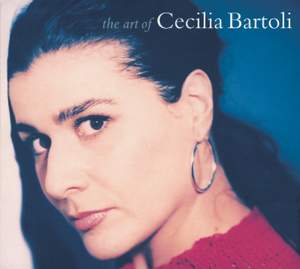
The Art of Cecilia Bartoli

The Art of Cecilia Bartoli


Donizetti:

Una parola…Chiedi all'aura (from L'elisir d'amore)

Gluck:

Se mai senti spirarti sul volto (from La clemenza di Tito)

Di questa cetra in seno (from Il Parnaso confuso)

Handel:

Lascia ch'io pianga (from Rinaldo)

Scherzano sul tuo volto (from Rinaldo)

Mozart:

Non so più cosa son, cosa faccio (from Le nozze di Figaro - Vienna version)

Voi che sapete (from Le nozze di Figaro - Vienna version)

La ci darem la mano (from Don Giovanni)

Un moto di gioia, K579

Pa-pa-pa-pa-Papagena (from Die Zauberflöte)

Rossini:

Nacqui all'affanno, al pianto...Non più mesta (from La Cenerentola)

Dunque io son? (from Il Barbiere di Siviglia)

Squallida veste...Caro padre, madre amata (from Il Turco in Italia)

Verdi:

Libiamo, ne' lieti calici (from La Traviata)

with Luciano Pavarotti

Vivaldi:

Dorilla in Tempe : Dell'aura al sussurrar

Gelido in ogni vena (from Il Farnace, RV711)

Il Bajazet (Il Tamerlano) : Anch'il mar par che sommerga


Decca - 4733802

(CD)

$16.75

In stock - usually despatched within 1 working day.

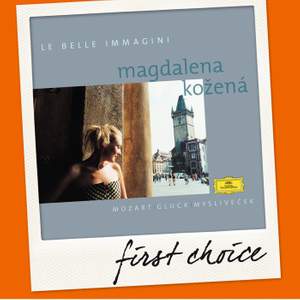
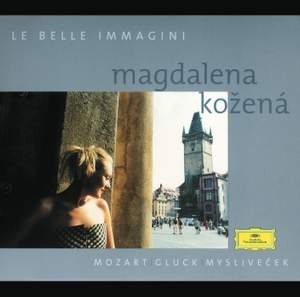
Le Belle Immagini

Le Belle Immagini


Gluck:

Le belle immagini d'un dolce amore (from Paride ed Elena)

O del mio dolce ardor (from Paride ed Elena)

Se mai senti spirarti sul volto (from La clemenza di Tito)

Mozart:

Parto, parto, ma tu ben mio (from La Clemenza di Tito)

Voi che sapete (from Le nozze di Figaro)

Ah, qual gelido orror...Il padre adorato (from Idomeneo)

Dunque Sperar Poss'io...Il Tenero Momento (from Lucio Silla)

Và pure ad altri in braccio (from La finta giardiniera)

Deh, per questo istante solo (from La Clemenza di Tito)

Myslivecek:

Deh, parlate (from Abramo ed Isacco)

Saro qual e il torrente (from Antigona)

Dunque Licida ingrato...Più non si trovano (from L'Olimpiade)

Che non mi disse (L'Olimpiade)


Magdalena Kozená

Prague Philharmonia, Michel Swierczewski

“Kozena's voice is silvery but lacks power in coloratura arias by Mozart and Myslivecek. Tender Gluck in a fascinating collection.” BBC Music Magazine, December 2012 ***

DG First Choice - 4790365

(CD)

$11.25

Usually despatched in 2 - 3 working days.

Gluck Italian Arias

Gluck Italian Arias


Gluck:

Ah! taci barbaro...Come potesti, oh Dio (from La Clemenza di Tito)

Di questa cetra in seno (from Il Parnaso confuso)

Misera, dove son...Ah! non son io (from Ezio)

Ciascun siegua il suo stile...Maggior follia non v'e (from La Semiramide riconosciuta)

Quel chiaro rio (from La Corona)

Berenice, che fai?...Perché, se tanti siete (from Antigono)

Se mai senti spirarti sul volto (from La clemenza di Tito)

Tremo fra dubbi miei (from La Clemenza di Tito)


“This is something very much out of the ordinary. These eight arias, taken variously from Gluck's early operas (those preceding his 'reforms' that began with Orfeo in 1762) or his non-reform later ones, are almost wholly unfamiliar, but they have great power and character; and they're sung with an extraordinary emotional force and technical skill, not to say a sheer beauty of tone, that can't be matched by any other singer today. Cecilia Bartoli's range is formidable. In the first aria, from La clemenza diTito, she sings with trumpet-like tone and brilliance of attack, throwing off wide-spanning arpeggios with evident abandon and dispatching coloratura with fluency and precision, each note articulated and perfectly tuned. The second, an elegantly pathetic little piece from the later IlParnaso confuso, is a tour de force of delicate, tender pianissimo singing. The third, from Ezio, begins with an orchestral recitative of thrilling dramatic urgency and goes on to an aria of great passion. Bartoli is described as a mezzo-soprano here, and her voice does indeed chiefly lie in that range; but most of these are soprano arias, and she happily goes well above the stave – there's one slightly squally high C sharp in the first aria but she's usually pretty comfortable in her top register. The accompaniments are splendidly sensitive and alert. A quite outstanding disc that no one who loves fine singing can miss.” Gramophone Classical Music Guide, 2010

GGramophone Awards 2002

Record of the Year Finalist

GGramophone Magazine

Disc of the Month - Awards Issue 2001

Decca - E4672482

(CD)

$16.75

Usually despatched in 8 - 10 working days.

Le Belle Immagini

Le Belle Immagini

Opera arias by Gluck, Mozart and Myslivecek


Gluck:

Le belle immagini d'un dolce amore (from Paride ed Elena)

O del mio dolce ardor (from Paride ed Elena)

Se mai senti spirarti sul volto (from La clemenza di Tito)

Mozart:

Parto, parto, ma tu ben mio (from La Clemenza di Tito)

Deh, per questo istante solo (from La Clemenza di Tito)

Dunque Sperar Poss'io...Il Tenero Momento (from Lucio Silla)

Ah, qual gelido orror...Il padre adorato (from Idomeneo)

Và pure ad altri in braccio (from La finta giardiniera)

Voi che sapete (from Le nozze di Figaro)

Myslivecek:

Deh, parlate (from Abramo ed Isacco)

Saro qual e il torrente (from Antigona)

Che non mi disse (L'Olimpiade)

Dunque Licida ingrato...Più non si trovano (from L'Olimpiade)


Magdalena Kozena (mezzo)

Prague Philharmonia, Michel Swierczewski

DG - E4713342

(CD)

$16.75

Usually despatched in 8 - 10 working days.

Copyright © 2002-13 Presto Classical Limited, all rights reserved.