All recordingsPrices shown exclude VAT. (UK tax is not payable for deliveries to United States.) See Terms & Conditions for p&p rates. | |  | The Very Best of Elisabeth Schwarzkopf
Bach, J S: | Cantata BWV51 'Jauchzet Gott in allen Landen': Aria Bist du bei mir, BWV508 | Beethoven: | O wär' ich schon mit dir vereint (Marzelline) | Heuberger: | Gehen wir ins Chambre séparée) from The Opera Ball | Humperdinck: | Brüderchen, komm tanz mit mir (Dance Duet from Hänsel und Gretel) | Lehár: | Viljalied (from Die lustige Witwe) | Mozart: | Non so più cosa son, cosa faccio (from Le nozze di Figaro) Porgi amor (from Le nozze di Figaro) E Susanna non vien! … Dove sono i bei momenti (from Le nozze di Figaro) In quali eccessi ... Mi tradì quell'alma ingrate (from Don Giovanni) Come scoglio (from Così fan tutte) Ridente la calma, K152 | Schubert: | An die Musik D547 Das Lied im Grünen, D917 Nachtviolen D752 (Mayrhofer) Der Musensohn, D764 (Goethe) | Siecynski: | Wien, du Stadt meiner Traüm | Smetana: | Endlich allein (from Die verkaufte Braut) | Strauss, J, II: | Klänge der Heimat (from Die Fledermaus) | Strauss, R: | Da geht er hin (from Der Rosenkavalier, Op. 59) Es gibt ein Reich (from Ariadne auf Naxos) Das war sehr gut, Mandryka (from Arabella) Frühling (from Vier Letzte Lieder) Im Abendrot (from Vier Letzte Lieder) Muttertändelei, Op. 43 No. 2 Zueignung, Op. 10 No. 1 | trad.: | Gsätzli | Wagner: | Einsam in trüben Tagen (from Lohengrin) | Weber: | Wie nahte mir der Schlummer … Leise, leise, fromme Weise (from Der Freischütz) | Wolf, H: | Auch kleine Dinge (No. 1 from Italienisches Liederbuch) Mein Liebster hat zu Tische mich geladen (No. 25 from Italienisches Liederbuch) Ich hab in Penna einen Liebsten (No. 46 from Italienisches Liederbuch) Verschling der Abgrund meines Liebsten Hütte Wiegenlied im Sommer (from Sechs Lieder für eine Frauenstimme) In dem Schatten meiner Locken (No. 2 from Spanisches Liederbuch: Weltliche Lieder) Mignon IV 'Kennst du das Land' (No. 9 from Goethe-Lieder) Mausfallen-Sprüchlein (from Lieder für eine Frauenstimme) |
Multi-award winning opera singer Elisabeth Schwarzkopf, praised for the ‘pristine beauty of her lyric soprano’ (The Guardian), was revered in opera houses worldwide and is perhaps most famous for her Mozart roles. However, she was also at home on the concert stage and this collection combines her acclaimed portrayals of Donna Elvira, Countess Almaviva and Richard Strauss’s Marschallin, among others, with her affecting interpretations of lieder and song-cycles. | 
| | | In stock - usually despatched within 1 working day. |
|
|
| |  | Schubert: 21 Lieder
Schubert: | An die Entfernte, D765 (Goethe) Auf dem Wasser zu singen, D774 Das Heimweh, D456 (Winkler) Das Lied im Grünen, D917 Das Zugenglocklein D871 (Seidl) Der Jüngling an der Quelle, D300 (Salis-Seewis) Der Jungling und der Tod, D545 (Spaun) Der Schiffer, D536 (Mayrhofer) Der Strom, D565 (poet unknown) Der Tod und das Mädchen, D531 Der Wanderer, D649 (Friedrich von Schlegel) Der Winterabend (Es ist so still), D938 Der zürnende Barde D785 (Bruchmann) Die Forelle, D550 Du bist die Ruh D776 (Rückert) Erlkönig, D328 Heidenröslein, D257 Litanei auf das Fest Allerseelen, D343 Nachtgesang D314 (Kosegarten) Sei mir gegrüsst! D741 (Rückert) Ständchen 'Horch! Horch! die Lerch!', D889 |
| 
| | | In stock - usually despatched within 1 working day. |
|
|
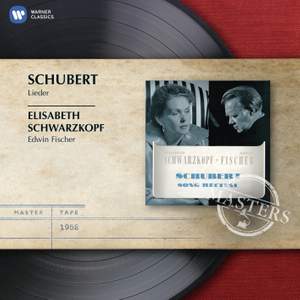
| |  | Schubert: Lieder
Schubert: | An die Musik D547 Im Frühling, D882 Wehmut, D772 (Collin) Ganymed, D544 (Goethe) Das Lied im Grünen, D917 Gretchen am Spinnrade, D118 Nähe des Geliebten, D162 Die junge Nonne, D828 An Sylvia, D891 Auf dem Wasser zu singen, D774 Nachtviolen D752 (Mayrhofer) Der Musensohn, D764 (Goethe) |
“Schwarzkopf and Fischer make a magical partnership, with even the simplest of songs inspiring intensely subtle expression from singer and pianist alike. Fischer left few records more endearing than this, and Schwarzkopf’s colouring of word and tone is masterly.” Penguin Guide | | | In stock - usually despatched within 1 working day. |
|
|
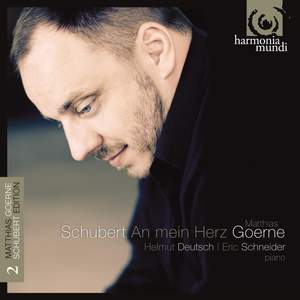
| |  | Schubert Lieder Volume 2: An Mein Herz
Schubert: | Der Jungling und der Tod, D545 (Spaun) Das Lied im Grünen, D917 Die Herbstnacht (Wehmut) D404 (Salis-Seewis) Ins stille Land, D403 Abschied von der Harfe D406 (Salis-Seewis) Drang in die Ferne, D770 An Mein Herz D860 Der Wanderer, D649 (Friedrich von Schlegel) Über Wildemann D884 (Ernst Schulze) Klage D371 Am Bach im Fruhling, D361 An die Laute D905 Des Fräuleins Liebeslauschen, D698 Augenlied, D297 (Mayrhofer) Du bist die Ruh D776 (Rückert) An die Musik D547 An eine Quelle D530 (Claudius) Der Sänger am Felsen, D482 Abschied von der Harfe D406 (Salis-Seewis) Liedesend, D473 (Mayrhofer) Das Heimweh, D456 (Winkler) Auf der Donau, D553 (Mayrhofer) Wie Ulfru fischt, D525 (Mayrhofer) Die Sternennacht D670 (Mayrhofer) Ruckweg, D476 (Mayrhofer) Geheimnis, D491 (Mayrhofer) Gondelfahrer, D808 Abendstern, D806 Der Sieg D805 (Mayrhofer) Nachtstück, D672 (Mayrhofer) Auflösung, D807 Heiss mich nicht reden, D877/2 Nur wer die Sehnsucht kennt, D877/4 An Mignon D161 Harfenspieler I 'Wer sich der Einsamkeit ergibt', D478 Am Flusse D160 (Goethe) Nähe des Geliebten, D162 Der Fischer, D225 (Goethe) Auf dem See, D543 (Goethe) Wonne der Wehmut D260 (Goethe) Willkommen und Abschied, D767 |
Matthias Goerne has received worldwide praise for his warm, fluid baritone and his profound interpretations. Highly respected as a Lieder singer, he is a frequent guest at renowned festivals and prestigious venues like the Carnegie and Wigmore Halls. From 2008 to 2011, Matthias Goerne will perform and record Schubert on 11 CDs for harmonia mundi and important venues all over the world will present the complete series of Schubert recitals with Matthias Goerne in their coming seasons. This second volume speaks of death, of the 'Wanderer', and of the relationship between Schubert and his poets . . . For this occasion the singer has called on two travelling companions who have left a lasting artistic impression on the world of lieder: Eric Schneider and Helmut Deutsch. Helmut Deutsch's career as a song accompanist began with Irmgard Seefried; he spent twelve years in an intensive collaboration with Hermann Prey, and has been the partner of many other celebrated singers. Eric Schneider has appeared notably with Christine Schäfer, Matthias Goerne, Christiane Oelze and Stephan Genz. He is a regular guest with these partners at the Schwarzenberg Schubertiade, Salzburg Festival and the Tanglewood Summer Music Festival. “Goerne… and Schneider offer grave and solemn performances of Goethe's Mignon and Harper songs, before ending on a higher note, celebrating the eternal joy of love in 'Willkommen and Abschied'.” BBC Music Magazine, February 2009 **** “Battered by Bryn Terfel dramatics, the ears cried out for a pure dose of lieder from a master of the craft. Matthias Goerne… seems to own a different shade of baritonal colour for every syllable Schubert wrote. The voice is sweet and serene, even at fff, and
the shifts that Goerne applies to the changing of seasons and the fickleness of love are done with enviable delicacy. More reticent than Fischer-Dieskau or Thomas Quasthoff to bend a line for expressive
emphasis, when Goerne takes a liberty the effect is breath stopping… T his is not an album to gorge at one go. Take it two songs a night before bedtime, and it might see you through to the end of recession.” Norman Lebrecht, Evening Standard CD of the Week “Goerne used to record for Decca, but it apparently had no interest in his 12-volume Schubert compendium, so the less ruthlessly commercial Harmonia Mundi comes to the rescue, for which the France-based company deserves the highest praise. From a vocal point of view, few male singers,
even Fischer-Dieskau, command such a rich palette of colours as Goerne does here…he goes where Dieskau never ventured: he includes two of Mignon's songs, Heiss' mich nicht reden and Nur wer die Sehnsucht kennt, as well as the Harper trilogy… In the middle Harper song, Mayrhofer's
Nachtstück and Nähe des Geliebten (Nearness of the Beloved), Goerne approaches the sublime and captures perfectly the wry wit of Goethe's sly dig at water-nymphery, Der Fischer, in which the surprise encounter of an angler with a "moist woman" is wryly underlined by Schubert. Luxury
support from Deutsch and Schneider sets the seal on an outstanding issue.” Sunday Times Classical CD of the Week “This promises to be a landmark series, up there with Hans Hotter and Fischer-Dieskau.” The Observer “Here elegy, fatalism and death-longing predominate and in such repertoire Goerne's mellow, darkly rounded timbre, expressive diction and care – rare in Lieder singers today – for a true, 'bound' line are well nigh ideal. Even at the most anguished fortissimo, his tone never grows harsh or hectoring. Perfectionism like Goerne's has inevitably provoked charges of over-calculation. Some might protest at the ultra-slow tempo for Du bist die Ruh. Yet Goerne's beauty of tone and phrasing (founded on seemingly superhuman reserves of breath), and a rapt intensity that rises to spiritual radiance in the final verse are mesmerising. At a more conventional tempo, he sings An die Musik as a simple, sincere confession of faith, with affectionate touches of rubato (and how eloquently Helmut Deutsch's left hand duets with the voice). Elsewhere Goerne's unsentimental tenderness can illuminate little-known songs that seem ordinary on the printed page – Abschied von der Harfe, say, or the quasi-operatic lament Der Sänger amFelsen. He even appropriates, successfully, two of Mignon's songs, giving one of the most desolate and – in the central section – disturbed performances of Nur wer die Sehnsucht kennt you will hear. True to form, Goerne makes an uncommonly melancholy serenader in An die Laute and DesMädchens Liebeslauschen, which never smiles. Yet he can lighten up, as in the story-telling of DerFischer and Wie Ulfru fischt. Like Deutsch on the first disc, Eric Schneider fully matches Goerne in acumen and command of colour, not least in a performance of Nachtstück of mingled grandeur, mystery and compassionate gentleness.” Gramophone Classical Music Guide, 2010 “Goerne's virtuoso vocal sculpting draws you into the inner landscape of each song, his warm, expressive baritone shaping detail often understated by lesser artists. This promises to be a landmark series, up there with Hans Hotter and Fischer-Dieskau.” The Guardian, 12th October 2008 | | | In stock - usually despatched within 1 working day. |
|
|
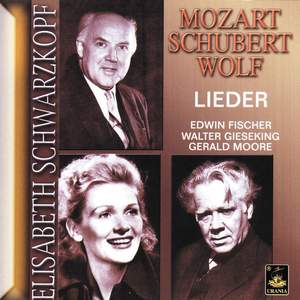
| |  | Schubert: | Moments Musicaux (6), D780, Op. 94 An die Musik D547 Im Frühling, D882 Wehmut, D772 (Collin) Ganymed, D544 (Goethe) Das Lied im Grünen, D917 Gretchen am Spinnrade, D118 Nähe des Geliebten, D162 Die junge Nonne, D828 An Sylvia, D891 Auf dem Wasser zu singen, D774 Nachtviolen D752 (Mayrhofer) Der Musensohn, D764 (Goethe) |
Recorded 1950 (moments musicaux) and 1952 (lieder) “Fischer's luminous, unfussily truthful, sober yet supple, and above all supremely elevated pianism is the perfect foil to Schwarzkopf's eye-lash-fluttering vocal acuity.” BBC Music Magazine, October 2005 | | | In stock - usually despatched within 1 working day. |
|
|
| |  | Schubert: 15 Lieder
Schubert: | Der Winterabend (Es ist so still), D938 Auf dem See, D543 (Goethe) Das Lied im Grünen, D917 An die untergehende Sonne, D457 Der liebliche Stern, D861 (Schulze) An den Mond, D296 Nachtstück, D672 (Mayrhofer) Augenlied, D297 (Mayrhofer) Der blinde Knabe D833 Am Grabe Anselmo's D504 Bei dir allein, D866/2 Die abgeblühte Linde, D514 Fischerweise, D881 (Schlechta) Geheimnis, D491 (Mayrhofer) An die Musik D547 |
| | | (also available to download from $10.50) | Usually despatched in 4 - 5 working days. (Available now to download.) |
|
|
| |  | Schwarzkopf sings Schubert Lieder
Beethoven: | Ah! Perfido, Op. 65 Recorded 20th September, 1954 in Watford Town Hall Philharmonia Orchestra, Herbert von Karajan Abscheulicher! Wo eilst du hin? (from Fidelio) Recorded 20th September, 1954 in Watford Town Hall Philharmonia Orchestra, Herbert von Karajan | Schubert: | An die Musik D547 Im Frühling, D882 Wehmut, D772 (Collin) Ganymed, D544 (Goethe) Das Lied im Grünen, D917 Gretchen am Spinnrade, D118 Nähe des Geliebten, D162 Die junge Nonne, D828 An Sylvia, D891 Auf dem Wasser zu singen, D774 Nachtviolen D752 (Mayrhofer) Der Musensohn, D764 (Goethe) Litanei auf das Fest Allerseelen, D343 Recorded 9th and 10th January, 1954 in EMI Abbey Road Studio 1 Gerald Moore (piano) Ungeduld (No. 7 from Die schöne Müllerin, D795) Recorded 9th and 10th January, 1954 in EMI Abbey Road Studio 1 Gerald Moore (piano) |
Recorded 4th - 7th October, 1952 in EMI Abbey Road Studio 1A “These studio sessions don’t really compare well with recordings of Schwarzkopf's live recitals - the voice can, at times, sound tired and over-studied - but there's a magnificent 'Abscheulicher!' from Fidelio.” BBC Music Magazine, December 2008 *** “a magical partnership, with even the simplest of songs inspiring intensely subtle expression from singer and pianist alike. Though Fischer's playing is not immaculate, he left few records more endearing than this, and Schwarzkopf's colouring of word and tone is masterly.” Penguin Guide, 2010 edition **** | | | (also available to download from $9.00) | Usually despatched in 2 - 3 working days. (Available now to download.) |
|
|
| |  | Volume 23 - Austrian Contemporaries Volume 3
Schubert: | Himmelsfunken, D651 Der Mondabend, D141 Berthas Lied in der Nacht, D653 Cora an die Sonne D263 (Baumberg) Mein Gruss an den Mai, D305 ('Ermin') Die Blumensprache D519 (Platner) Der Blumen Schmerz D731 (Majlath) Das Lied im Grünen, D917 Frühlingslied D919 (Pollak) An die Sonne D270 Lambertine, D301 (Stoll) Blondel zu Marien, D626 Der Morgenkuss, D264 Die Unterscheidung D866/1 (Seidl) Die Männer sind méchant, D866 No. 3 Das Echo D990C, formerly D868 (Castelli) Die Liebe D522 (Leon) Ammenlied D122 (Lubi) Die Macht der Liebe D308 (Kalchberg) Abendbilder, D650 |
Daniela Sindram (mezzo-soprano) & Ulrich Eisenlohr (piano) “Thematic programmes … offer an excellent way to appreciate individual aspects of his diverse output.” The Telegraph | | | (also available to download from $6.00) | Usually despatched in 2 - 3 working days. (Available now to download.) |
|
|
| |  | Schubert: Lieder
Schubert: | Das Lied im Grünen, D917 Der Schmetterling D633 An die Nachtigall, D497 An die Nachtigall, D196 (Holty) Der Wachtelschlag D742 (Sauter) Im Freien D880 Die Vogel D691 Fischerweise, D881 (Schlechta) Die Gebüsche, D646 Im Haine, D738 Im Abendrot, D799 Die Sterne, D939 (Leitner) Nacht und Träume, D827 Der liebliche Stern, D861 (Schulze) Rosamunde, D797: Romance 'Der Vollmond Strahlt auf Bergeshöh'n' Der Einsame, D800 Schlaflied D527 (Mayrhofer) An Sylvia, D891 Das Mädchen D652 (Schlegel) Minnelied D429 (Holty) Die Liebe hat gelogen D751 (Platen) Du liebst mich nicht D756 (Platen) An die Laute D905 Der Blumenbrief D622 (Schreiber) Die Männer sind méchant, D866 No. 3 Seligkeit D433 (Holty) |
Remastered Quadro Recording (RQR) | | | Usually despatched in 2 - 3 working days. |
|
|
| |  | Franz Schubert - Lieder
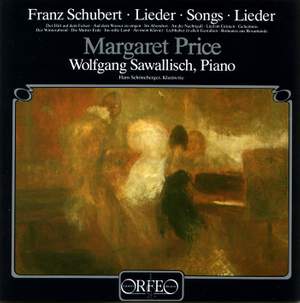
Schubert: | Geheimnis, D491 (Mayrhofer) Rosamunde, D797: Romance 'Der Vollmond Strahlt auf Bergeshöh'n' Auf dem Wasser zu singen, D774 Der Winterabend (Es ist so still), D938 Ins stille Land, D403 Seraphine an ihr Klavier (Sanftes Clavier), D342 Im Abendrot, D799 An die Nachtigall, D497 Die Mutter Erde, D788 (Stolberg) Das Lied im Grünen, D917 Liebhaber in allen Gestalten, D558 Der Hirt auf dem Felsen, D965 (Von Chezy / Muller) Hans Schöneberger (clarinet) |
| | | Usually despatched in 3 - 4 working days. |
|
|
| |
|