All recordingsPrices shown exclude VAT. (UK tax is not payable for deliveries to United States.) See Terms & Conditions for p&p rates. | |  | Wagner Heroes
2013 sees a series of Wagner reissues on Eloquence from complete operas and highlights to Wagner singer portraits and even an audiobook! This is a 50-year retrospective (1950 – 2000) of great Wagner singing on Decca and Deutsche Grammophon featuring twelve extracts from eight operas (including all four operas of the Ring cycle) with nine great singers. Wagner’s knowledge of heroes derived from two sources: the myths of ancient Greece, and the sagas and poetry of northern Europe. In both traditions, heroes possess god-like attributes which set them apart from non-heroic mortals and reinforce the view that they are superhuman. They often have gods as parents or grandparents. But Wagner humanizes his heroes, most notably Siegmund (sung inimitably by Jon Vickers in the legendary Decca recording of Die Walküre with Erich Leinsdorf), and the naïve Siegfried (with Wolfgang Windgassen singing both the Siegfried and Götterdämmerung Siegfrieds). Other great heldentenors represented on this collection include James King and James McCracken. Celebrated bass-baritones are also represented here: Paul Schöffler (singing Wotan’s Farewell from a rare 1950 recording), Ernst Haefliger (as the Dutchman) and most recently, Matthias Goerne (Wolfram). The insightful notes are provided by Wagner scholar Peter Bassett and a photo gallery of the singers is also included. | 
| | | (Sorry, download not available in your country) | In stock - usually despatched within 1 working day. |
|
|
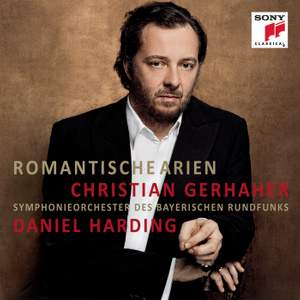
| |  | Romantische Arien
Nicolai, C O: | Norton! Du bist es, der mit Frevler Wuth (from Die Heimkehr des Verbannten) | Schubert: | Sei mir gegrüßt, o Sonne (from Alfonso und Estrella, D732) O Sing mir, Vater (from Alfonso und Estrella, D732) O Himmel! Kannst du mir so freundlich lächeln? ... Mein Weib, o Gott, mein süßer Knabe (from Der Graf von Gleichen, D918) | Schumann: | Ja, wart' du bis zum jüngsten Tag (from Genoveva) | Wagner: | Blick ich umher in diesem edlen Kreise (from Tannhäuser) Wie Todesahnung...O du, mein holder Abendstern (from Tannhäuser) | Weber: | Wo berg ich mich? (from Euryanthe) |
On his first-ever aria recital album Christian Gerhaher makes a strong case for the fascinating early-Romantic operatic repertoire. His illuminating selection draws a stringent line from lyric gems of great melodic beauty by Schubert and Schumann to more dramatic scenes by Weber and Nicolai and to Wolfram’s famous monologues from Wagner’s Tannhäuser, an opera in which the baritone has won particular international acclaim. “Gerhaher invests such music with the same exquisite rendering of every expressive nuance that make him the greatest Lieder singer of our time.The standard is set by the first Tannhäuser aria, which opens the disc - in everything that follows...his singing never loses its tonal beauty or any of its musical poise.” The Guardian, 29th November 2012 ***** “I cannot recall a recent vocal recital that reduced me to jelly so quickly. The warmth and steadiness of Christian Gerhaher’s voice, the care given to colouring each word, the clear enunciation and lyric flow, the crisply rolled “r”...all these melted my bones during the first seconds of Wolfram’s Tannhäuser aria” The Times, 7th December 2012 **** “It is no surprise that this great Schubertian would want to break a lance for his favourite composer’s neglected operas: he lavishes his immaculate diction on arias from Alfonso and Estrella and the unfinished Count of Gleichen, savouring the banal texts with the same care for verbal detail he would for a Schubert setting of a Goethe or Heine poem, maintaining seamless legato lines with his grainy yet beautiful baritone” Sunday Times, 16th December 2012 “Gerhaher's Wolfram has followers travelling all over Europe in its wake, so uniquely moving, honest and profound is his response to Wagner's role...[the Wolfram arias] display that simple integrity of an artist who conceals a great deal of art. A sense of wide-eyed innocence is incarnate in Gerhaher's delectable enunciation and perfection of phrasing and technique...Absolutely essential listening.” BBC Music Magazine, March 2013 ***** “All are in Gerhaher's best style, immaculately phrased and breathed, with considerable thought given to the text which is then fully characterised without mannerism....a great source for dipping into the history of this period.” Gramophone Magazine, March 2013 BBC Music Magazine
Opera Choice - March 2013 |
| 
| | | In stock - usually despatched within 1 working day. |
|
|
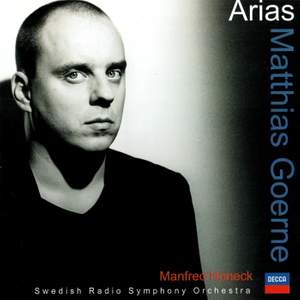
| |  | Matthias Goerne Sings German Arias
‘Operatic justice’, writes J.B. Steane in his informative and amusing note for this album, ‘is a law unto itself, and the baritone has been prominent among its victims. Unlucky in love, he is seen in the most favourable light as a father-figure and is otherwise all too often the villain of the piece. He may be manly but is rarely heroic. He will have his arias, his moments of glory, yet (uncannily, it must seem to him) their place is rarely at the centre of the opera, or for that matter, part of its last-act climax.’ Beginning with a bracket of Mozart arias, this colourful recital, recorded by Matthias Goerne in 2000, takes us through the terrains of mid- and late-19th century opera – Wagner, Humperdinck, Richard Strauss – to the early 20th-century with the moving ‘Mein Sehnen, mein Wähnen’ from Korngold’s Die tote Stadt, to two brief excerpts from Berg’s Wozzeck. Matthias Goerne both works within the tradition and extends it. Like his predecessors, from Schlusnus to Fischer-Dieskau, he has developed his careers in opera and song side by side, though it is true that his fame and hitherto his work as a recording artist have centred less on opera than on Lieder and oratorio. His operatic recording debut was spotted by Gramophone magazine and described as ‘an impressive appearance’, as Prometheus in the large cast of Braunfels’s Die Vögel. “he is heart-rending in the Tannhauser extracts, dancing in the Korngold and moving as Berg's Wozzeck.” BBC Music Magazine, December 2012 **** “[Goerne’s] powerful Count [makes for] a strong, wilful presence … Faust's solo from the end of the second part of Schumann's work, the Spielmann's lovely piece from the close of the Humperdinck and the aria from Die tote Stadt are all sung with feeling and beauty, especially the Korngold, which is wholly beguiling, the real piece of gold in this programme.” Gramophone Magazine “This is a voice with a honeyed, mellow beauty right through its range, and considerable power when needed’” MusicWeb International | | | (Sorry, download not available in your country) | In stock - usually despatched within 1 working day. |
|
|
| |  | Michel Dens
Adam: | Dans le sommeil (from Si j’étais roi) Orchestre de l'Opera, Pierre Dervaux | Berlioz: | La Damnation de Faust: Devant la maison Orchestre de l'Opera, Pierre Dervaux | Donizetti: | Jardins de l’Alcazar (from La favorite) Orchestre Radio-Lyrique, Gustave Cloeze | Gounod: | Avant de quitter ces lieux (from Faust) Orchestre de l'Opera, Louis Fourestier | Leoncavallo: | Si può? (from I Pagliacci) sung in French Orchestre de l'Opera Comique, Albert Wolff | Massenet: | La légende de la sauge (from Le Jongleur de Notre-Dame) Orchestre de l'Opera Comique, Andre Cluytens Promesse de mon avenir (from Le roi de Lahore) Orchestre de l'Opera, Pierre Dervaux Voilà donc la terrible cité (from Thaïs) Orchestre de l'Opera, Pierre Dervaux Vision fugitive (from Hérodiade) Orchestre de l'Opera, Pierre Dervaux Voilà donc la terrible cité (from Thaïs) Lilian Roux (piano) | Offenbach: | Je viens de faire un rêve magnifique (from La Grande Duchesse de Gerolstein) Marcel Cariven Scintille, diamant (from Les Contes d'Hoffmann) Orchestre de l'Opera, Pierre Dervaux | Rabaud: | A Travers le Désert (from Mârouf, Savetier du Caire) Orchestre de l'Opera, Pierre Dervaux | Rossini: | Largo al factotum (from Il barbiere di Siviglia) sung in French Orchestre de l'Opera Comique, Andre Cluytens | Thomas, Ambroise: | O vin, dissipe la tristesse (from Hamlet) Orchestre de l'Opera, Pierre Dervaux | Verdi: | Deserto sulla terra (from Il trovatore) sung in French Orchestre Radio-Lyrique, Gustave Cloeze Vanne, la tua meta gia vedo…Credo in un Dio crudel (from Otello) sung in French Orchestre Radio-Lyrique, Gustave Cloeze | Wagner: | Blick ich umher in diesem edlen Kreise (from Tannhäuser) sung in French Orchestre de l'Opera, Robert Blot O du, mein holder Abendstern (from Tannhäuser) sung in French Orchestre de l'Opera, Robert Blot |
Born in 1911, the French baritone Michel Dens had a long and successful career. His early career was in the world of opera but he later sang in many operettas. This collection includes arias which he perfomed at an event given in his honour in Marseilles in 1986. | | | In stock - usually despatched within 1 working day. |
|
|
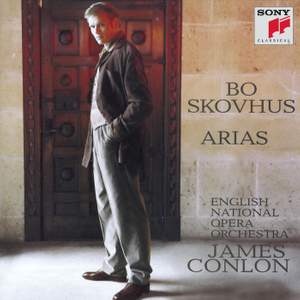
| |  | Bo Skovhus sings Arias
| | | In stock - usually despatched within 1 working day. |
|
|
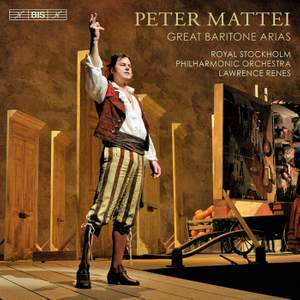
| |  | Peter Mattei: Great Baritone Arias
The Swedish baritone Peter Mattei has made a formidable reputation for himself performing at the most prestigious opera houses in the world including the Metropolitan, Teatro alla Scala and Covent Garden. In the recording studio he is, however, a more rarely seen guest. On this his first and long-awaited disc of arias, he revels in the rich opportunities offered by the baritone literature, performing a selection of his favourite arias and roles. Lovelorn young men and cynical libertines, friends faithful unto death and innocent victims of oppression. All of these are brought to life as one of today’s finest operatic baritones displays his entire range with the eminent support of the Royal Stockholm Philharmonic Orchestra and Lawrence Renes on the podium. | | | (also available to download from $10.50) | Usually despatched in 2 - 3 working days. (Available now to download.) |
|
|
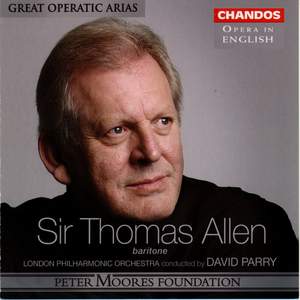
| |  | Great Operatic Arias 16 - Sir Thomas Allen Volume 1Sung in English
Bizet: | L’orage s’est calmé (from Les pêcheurs de perles) Sung in English as 'The storm has died away' | Britten: | Look! Through the port comes the moonshine astray (from Billy Budd) | Gounod: | Avant de quitter ces lieux (from Faust) Sung in English as ‘Even bravest heart may swell’ | Korngold: | Mein Sehnen (from Die tote Stadt) Sung in English as 'In visions, illusions' | Lehár: | The Merry Widow: Hello, here's a soldier bold Janice Watson (Hanna) | Mozart: | Hai gia vinta la causa! (from Le nozze di Figaro) Sung in English as ‘ “You’ve won the case already”?...Must I be made to suffer?' | Rodgers, R: | I wonder what he'll think of me! (from Carousel) | Rossini: | Largo al factotum (from Il barbiere di Siviglia) Sung in English as ‘I am the barber everyone wants, I am!’ | Strauss, J, II: | Dieser Anstand, so manierlich (from Die Fledermaus) Sung in English as 'Though I'm somewhat out of practice' Janice Watson (Rosalinde) | Tchaikovsky: | Ya vas lyublyu 'Yeletsky’s aria' (from Pique Dame) Sung in English as ‘You seem unhappy, my beloved’ | Thomas, Ambroise: | O vin, dissipe la tristesse (from Hamlet) Sung in English as ‘Oh wine, deliver me from sadness’ | Verdi: | Sacra la scelta è d'un consorte (from Luisa Miller) Sung in English as 'Stop! You shall listen...Marriage is sacred’ Brindley Sherratt (Wurm) | Wagner: | Wie Todesahnung...O du, mein holder Abendstern (from Tannhäuser) Sung in English as ‘With dark foreboding' Blick ich umher in diesem edlen Kreise (from Tannhäuser) Sung in English as 'Turning my gaze upon this proud assembly’ |
| | | (also available to download from $10.50) | Usually despatched in 2 - 3 working days. (Available now to download.) |
|
|
| |  | Lucien van Obbergh - Bass
Benoit, Peter: | K werp het doodenhulsel af (from De Schelde, Van Artevelde’s Geest) | Bizet: | Tra, La, La, Tra, La La!...Quand la flamme d'amour (from La jolie fille de Perth) | Charpentier, G: | Les pauvres gens (from Louise) Voir naître une enfant (from Louise) | Delibes: | Lakmé, ton doux regard (from Lakmé) | Diaz de la Pena: | De l’art, splendeur immortelle (from Benvenuto) | Gounod: | Le veau d'or est toujours debout (from Faust) Vous qui faîtes l'endormie (from Faust) | Massenet: | Promesse de mon avenir (from Le roi de Lahore) Hélas! Enfant encore (from Thaïs) | Mozart: | Non piu andrai, farfallone amoroso (from Le Nozze di Figaro) sung in French as 'Bel enfant' Madamina, il catalogo è questo (from Don Giovanni) sung in French as 'Ah, Madame' | Puccini: | Gia mi dicon venal (from Tosca) sung in French as 'Oui, l’on me dit vénal' | Rossini: | La calunnia è un venticello (from Il barbiere di Siviglia) sung in French as 'C’est d’abord rumeur légère' | Wagner: | Blick ich umher in diesem edlen Kreise (from Tannhäuser) sung in French as 'En contemplant cette assemblée immense' Wie Todesahnung...O du, mein holder Abendstern (from Tannhäuser) sung in French as 'Mortel présage!' |
Lucien van Obbergh (bass) | | | This item is currently out of stock at the UK distributor. You may order it now but please be aware that it may be six weeks or more before it can be despatched. |
|
|
| |  | Richard Wagner On Record
Wagner: | Du bist der Lenz (from Die Walküre) Lilli Lehmann Weilten die Sterne (from Die Meistersinger von Nürnberg) Hermann Winkelmann Noch bleibe denn unausgesprochen (from Tannhäuser) Wilhelm Hesch O du, mein holder Abendstern (from Tannhäuser) Leopold Demuth Weiche, Wotan, weiche! (from Das Rheingold) Ernestine Schumann-Heink Wohin nun Tristan scheidet (from Tristan und Isolde) Ernst Kraus Mögst du, mein Kind (from Der fliegende Holländer) Paul Knüpfer Jetzt fand ich's, was euch fehlt (from Das Rheingold) Otto Briesemeister Erstehe, hohe Roma, neu (from Rienzi) Jacques Urlus In fernem Land (from Lohengrin) Erik Schmedes Abendlich strahlt der Sonne Auge (from Das Rheingold) Theodor Bertram Als du in kuhnem Sange uns bestrittest (from Tannhäuser) Fritz Feinhals Fanget an! (Die Meistersinger von Nürnberg) Carl Burrian Entweihte Götter (from Lohengrin) Edyth Walker Hoho! Hoho! Hohei! Schmiede, mein Hammer, ein hartes Schwert! (from Siegfried) Heinrich Knote Mein Herr und Gott (from Lohengrin) Leon Rains Mein Vater, hochgesegneter der Helden (from Parsifal) Clarence Whitehill Dein Werk, o tör'ge Magd (from Tristan und Isolde) Johanna Gadski Des Königs Wort und Will tu ich euch kund (from Lohengrin) Nicola Geisse-Winkel Am stillen Herd (from Die Meistersinger) Leo Slezak Auf Ewigkeit wärst du verdammt mit mir (from Parsifal) Rudolf Berger Tatest du's wirklich? (from Tristan and Isolde) Paul Bender Nur eine Waffe taugt (from Parsifal) Heinrich Hensel O du, mein holder Abendstern (from Tannhäuser) Friedrich Plaschke Wohin nun Tristan scheidet (from Tristan und Isolde) Modest Menzinsky Was duftet doch der Flieder (from Die Meistersinger von Nürnberg) Hermann Weil Mein lieber Schwan (from Lohengrin) Hermann Jadlowker Hoiho! Hoihohoho! (from Götterdämmerung) Allen Hinckley Mögst du, mein Kind (from Der fliegende Holländer) Richard Mayr Der Unglücksel'ge, den gefangen (from Tannhäuser) Emmy Destinn Du Ärmste kannst wohl nie ermessen (from Lohengrin) Berta Morena Athmest du nicht mit mir die sussen Dufte? (from Lohengrin) Robert Hutt Über Stock und Stein (from Das Rheingold) Walther Kirchhoff Zauberfest bezähmt ein Schlaf (from Die Walküre) Fritz Soot Nothung! Nothung! Neidliches Schwert! (from Siegfried) Rudolf Ritter Ewig war ich (from Siegfried) Lucy Weidt An der Weltesche wob ich einst (from Götterdämmerung) Hermine Kittel Ich sah das Kind an seiner Mutter Brust (from Parsifal) Melanie Kurt Euch Lüften, die mein Klagen (from Lohengrin) Eva von der Osten Winterstürme wichen dem Wonnemond (from Die Walküre) Johannes Sembach Johohoe! Traft ihr das Schiff im Meere an 'Senta's Ballad' (from Der fliegende Holländer) Barbara Kemp Der Augen leuchtendes Paar (from Die Walküre) Karl Armster Mild und leise 'Isolde's Liebestod' (from Tristan und Isolde) Helene Wildbrunn Verachtet mir die Meister nicht (from Die Meistersinger von Nürnberg) Emil Schipper Seit Ewigkeiten harre ich deiner (from Parsifal) Lilly Hafgren Hojotoho, hojotoho, heiaha, heiaha! (from Die Walküre) Gertrude Kappel So ist’s denn aus...Deiner ew’gen Gattin (from Die Walküre) Margarete Arndt-Ober Siegmund heiß ich und Siegmund bin ich! (from Die Walküre) Richard Schubert Einsam wachend...Habet acht! (from Tristan und Isolde) Emmi Leisner Mime hiess ein mürrischer Zwerg (from Götterdammerung) Curt Taucher Ein Kind ward hier geboren (from Die Meistersinger von Nürnberg) Wilhelm Rode Du bist der Lenz (from Die Walküre) Maria Jeritza Oh, wunden wundervoller heiliger Speer (from Parsifal) Michael Bohnen Johohoe! Traft ihr das Schiff im Meere an 'Senta's Ballad' (from Der fliegende Holländer) Frida Leider Als du in kuhnem Sange uns bestrittest (from Tannhäuser) Harry De Garmo O Sachs, mein Freund (from Die Meistersinger) Lotte Lehmann Wie aus der Ferne längst (from Der Fliegende Holländer) Friedrich Schorr Weiche, Wotan, weiche! (from Das Rheingold) Sigrid Onegin Was duftet doch der Flieder (from Die Meistersinger von Nürnberg) Josef von Manowarda Gut'n Abend, Meister (from Die Meistersinger von Nürnberg) Emmy Bettendorf Schmerzen (No. 4 from Wesendonck-Lieder) Sabine Kalter Seit er von dir geschieden (from Götterdämmerung) Maria Olszewska Amfortas! Die Wunde! (from Parsifal) Nelly Larsen-Todsen Helle Wehr, heilige Waffe (from Götterdämmerung) Erik Enderlein Dich, teure Halle (from Tannhauser) Maria Müller Höchstes Vertrau´n (Lohengrin) Lauritz Melchior Weiche, Wotan, weiche! (from Das Rheingold) Karin Branzell Mein Herr und Gott (from Lohengrin) Alexander Kipnis Jerum! Jerum! (from Die Meistersinger) Rudolf Bockelmann Einsam in trüben Tagen (from Lohengrin) Elisabeth Rethberg Athmest du nicht mit mir die sussen Dufte? (from Lohengrin) Fritz Wolff Mild und leise 'Isolde's Liebestod' (from Tristan und Isolde) Gertrud Bindernagel O Himmel, lass dich jetzt erflehen (from Tannhäuser) Heinrich Schlusnus Hojotoho, hojotoho, heiaha, heiaha! (from Die Walküre) Kirsten Flagstad Auf wolkigen Hö'n wohnen die Götter (from Siegfried) Hans Hermann Nissen Fort, denn eile (from Die Walküre) Helen Traubel Winterstürme wichen dem Wonnemond (from Die Walküre) Franz Völker Am stillen Herd (from Die Meistersinger) Max Lorenz Fanget an! (Die Meistersinger von Nürnberg) Torsten Ralf Dein Werk, o tör'ge Magd (from Tristan und Isolde) Anny Konetzni Blick ich umher in diesem edlen Kreise (from Tannhäuser) Joel Berglund Euch Lüften, die mein Klagen (from Lohengrin) Maria Reining In fernem Land (from Lohengrin) Set Svanholm Allmächt’ge Jungfrau! (from Tannhäuser) Hilde Konetzni |
| | | Usually despatched in 2 - 3 working days. |
|
|
| |  | Dietrich Fischer-Dieskau: Seine Größten Erfolge
Beethoven: | Ha! Welch ein Augenblick! (from Fidelio) Adelaide, Op. 46 Andenken, WoO 136 Der Zufriedene, Op. 75 No. 6 Lied aus der Ferne, WoO 137 Sehnsucht (Die stille Nacht undunkelt), WoO 146 Der Wachtelschlag, WoO 129 An die Hoffnung, Op. 94 Der Kuss, Op. 128 Die Liebe, Op. 52 No. 6 Das Liedchen von der Ruhe, Op. 52 No. 3 Abendlied unter'm gestirten Himmel, WoO 150 Resignation, WoO 149 Zärtliche Liebe 'Ich liebe dich', WoO 123 In questa tomba oscura, WoO.133 Maigesang, Op. 52 No. 4 Marmotte, Op. 52 No. 7 Lieder (6), Op. 75: excerpts Songs (3) , Op. 83 Lieder von Gellert (6), Op. 48 | Bizet: | Au fond du temple saint (from Les Pêcheurs de Perles) sung in German as 'Im tempel Brahmas kniet' | Brahms: | Wie bist du, meine Königin Op. 32 No. 9 Nicht mehr zu dir zu gehen, Op. 32 No. 2 Der Strom, der neben mir verrauschte, Op. 32 No. 4 Du sprichst, daß ich mich täuschte, Op. 32 No. 6 Wehe, so willst du mich wieder, Op. 32 No. 5 Nachtwandler, Op. 86 No. 3 In Waldeseinsamkeit, Op. 85 No. 6 Die schöne Magelone, Op. 33 Denn wir haben hie keine bleibende Statt (from Ein Deutsches Requiem, Op. 45) Vier ernste Gesänge, Op. 121 | Donizetti: | Cruda, funesta smania (from Lucia di Lammermoor) sung in German as 'Wut, heissen Durst nach Rache' | Gluck: | O du, die ich so innig liebe (from Iphigenie in Aulis) | Humperdinck: | Wohin bist du gegangen? (from Königskinder) Verdorben! Gestorben! (from Königskinder) | Lortzing: | Einst spielt' ich mit Zepter, mit Krone und Stern (from Zar und Zimmermann) Nun ist's vollbracht!...Schwanensang, Schwanenklang (from Undine) Wie freundlich strahlt...Heiterkeit und Fröhlichkeit (from Der Wildschütz) | Mahler: | Lieder eines fahrenden Gesellen (4 songs, complete) Kindertotenlieder | Mozart: | Der Vogelfänger bin ich, ja (from Die Zauberflöte) Bei Männern, welche Liebe fühlen (from Die Zauberflöte) Fin ch'han dal vino (from Don Giovanni) sung in German as 'Auf, zu dem Feste' La ci darem la mano (from Don Giovanni) sung in German as 'Reich mir die Hand, mein Leben' Deh! vieni alla finestra (from Don Giovanni) sung in German as 'Feinsliebchen, komm ans Fenster' Hai gia vinta la causa! (from Le nozze di Figaro) sung in German as 'Der Prozess schon gewonnen' | Nicolai, C O: | In einem Waschkorb? (from Die lustigen Weiber von Windsor) | Pfitzner: | Den heil'gen Geist, der die Konzilien leitet (from Palestrina) | Puccini: | O Mimi, tu piu non torni (from La Bohème) sung in German as 'Ach Geliebte, nie kehrst du wieder' Addio dolce svegliare (from La Bohème) sung in German as 'Lebt wohl, ihr süssen Stunden' Addio, fiorito asil (from Madama Butterfly) sung in German as 'Leb wohl, mein Blütenreich' Rudolf Schock (tenor) | Schubert: | An die Musik D547 An Mignon D161 Wandrers Nachtlied II 'Über allen Gipfeln ist Ruh', D768 An den Frühling, D338 Nacht und Träume, D827 Erlkönig, D328 Rastlose Liebe, D138 Der Zwerg, D771 (Collin) Der Kreuzzug D932 (Leitner) Schwanengesang, D957 Die schöne Müllerin, D795 Winterreise D911 | Schumann: | Wanderlied (No. 3 from 12 Gedichte, Op. 35) Erstes Grün, Op. 35 No. 4 Sehnsucht nach der Waldgegend, Op. 35 No. 5 'Wär' ich nie aus euch gegangen' Auf das Trinkglas eines verstorbenen Freundes Stille Liebe, Op. 35 No. 8 Lust der Sturmnacht, Op. 35 No. 1 Wanderung, Op. 35 No. 7 'Wohlauf und frisch gewandert ins unbekannte Land!' Liederkreis, Op. 39 Dichterliebe, Op. 48 Myrthen, Op. 25 | Strauss, R: | Sie woll'n mich heiraten, sagt mein Vater (from Arabella) Wozu noch, Mädchen Op. 19 No. 1 O wärst du mein Op. 26 No. 2 Befreit, Op. 39 No. 4 Herr Lenz Op. 37 No. 5 Die Nacht, Op. 10 No. 3 Ach weh mir unglückhaftem Mann, Op. 21 No. 4 Schlichte Weisen, Op. 21 | Verdi: | Alla vita che t'arride (from Un ballo in maschera) sung in German as 'Für dein Glück und für dein Leben' Alzati…Eri tu che macchiavi quell'anima (from Un Ballo in Maschera) sung in German as 'Erhebe dich!...Ja, nur du hast dies Herz mir entwendet' In braccio alle dovizie (from I Vespri Siciliani) sung in German as 'In Glanz und Pracht regier' ich hier' Dio, che nell'alma infondere (from Don Carlo) sung in German as 'Gott, der entflammte der Liebe heisse Glut' Signora! Per vostra maestà (from Don Carlo) sung in German as 'Vernehmt, ich komme' Son io, mio Carlo... Io morro (from Don Carlo) sung in German as 'Ich bin's, mein Carlos' | Wagner: | O du, mein holder Abendstern (from Tannhäuser) Als du in kuhnem Sange uns bestrittest (from Tannhäuser) Blick ich umher in diesem edlen Kreise (from Tannhäuser) | Wolf, H: | Harfenspieler I (No. 1 from Goethe-Lieder) Harfenspieler II (No. 2 from Goethe-Lieder) Harfenspieler III (No. 3 from Goethe-Lieder) Phänomen (No. 32 from Goethe-Lieder) Ob de Koran von Ewigkeit sei? (No. 34 from Goethe-Lieder) Erschaffen und Beleben (No. 33 from Goethe-Lieder) Lebe wohl (No. 36 from Mörike-Lieder) In der Frühe (No. 24 from Mörike-Lieder) Verschwiegene Liebe (No. 3 from Eichendorff-Lieder) |
The death has recently been announced of one of the greatest singers of the 20th century, the German baritone Dieterich Fisher-Dieskau. Over a career spanning almost half a century Fisher-Dieskau performed all over the world with most of the major conductors, orchestras, and opera companies. He was particularly renowned for his interpretations of the lieder repertoire, especially the songs of Schubert. This 10CD set which was originally released in July 2011 covers a wide range of his performances in all areas of the vocal art. | | | Usually despatched in 4 - 5 working days. |
|
|
| |
|