All recordingsPrices shown exclude VAT. (UK tax is not payable for deliveries to United States.) See Terms & Conditions for p&p rates. | |  | Niu Niu: Liszt Transcriptions
Liszt: | Danse macabre (after Saint-Saëns), S555/F240 Zwolf Lieder Von Franz Schubert - [aus] Winterreise, S561: No. 4, Die Post Der Doppelganger (No. 12 from Schwanengesang, S560, after Schubert) Das Wandern (No. 1 from Müllerlieder von Franz Schubert, S565) Ständchen - Horch, horch! die Lerch (No. 9 from Zwölf Lieder von Franz Schubert, S558) Erlkönig, S558 No. 4 (after Schubert D328) Grande Étude de Paganini, S. 141 No. 2 Grande Étude de Paganini, S. 141 No. 3 'La Campanella' Grande Étude de Paganini, S. 141 No. 6 Isolde's Liebestod (after Wagner), S447 Spinnerlied aus Der fliegende Holländer S440 O du, mein holder Abendstern - Rezitativ und Romanze aus Tannhäuser S444 Liebestraum, S541 No. 3 (Nocturne in A flat major) Grand galop chromatique, S219 Le cygne (The Swan) |
“Given that Niu Niu was only 14 when he made this recording last year, his achievement is remarkable. His equable, rounded tone is underpinned by mature technique...Sometimes a big enough response to the music's soaring flight is lacking...Clearly though, here is a fine musical talent.” BBC Music Magazine, April 2013 *** “in purely digital terms, Niu Niu produces some remarkable playing. He has a wonderful leggiero touch when required: the 'Spinnerlied' from The Flying Dutchman is very fine (how good to hear a youngster revive this old favourite)...Niu Niu is able to breathe fresh life into an old chestnut like the Liebestraum No. 3. So - fantastic fingers, bags of potential but, as yet, no charm.” Gramophone Magazine, March 2013 “Poetic insights? Moments of repose? Those must wait, if they arrive at all, for the prodigy’s mature adulthood...the piano tone is varied and round, never appearing to have been stamped out by a music-making machine. Another good omen could be the modest, almost casual way that Niu Niu often concludes a piece, rarely emphasising the final chord.” The Times, 11th January 2013 *** | 
| | | In stock - usually despatched within 1 working day. |
|
|
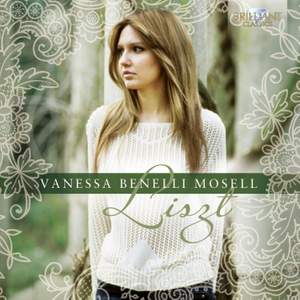
| |  | A Liszt Recital
Vanessa Benelli Mosell (piano) The second album of Vanessa Benelli Mosell, one of the most exciting pianists of the younger generation, contains a selection of works which Liszt regularly performed himself during his piano recitals (the piano recital itself, being a showcase for one artist only, was invented by Liszt). The works share a quality to impress the audience, whether through hair-raising pyrotechnics (Hungarian Rhapsodies, Grand Galop Chromatique), or heartfelt sentiment (Liebestraum). Vanessa’s first album (Brilliant Classics 94209) was met with great enthusiasm from the international press.The Gramophone wrote: “Prodigious playing that combines the blazing virtuosic demand and her natural musical insight…great panache… sparkling technique in demanding music…she leaves no doubt of her enviable facility”. New recording, newly written liner notes. A second disc from the brilliant young Italian pianist brings a focus on the 19th century lion of piano music whose anniversary was celebrated last year. The first Brilliant Classics disc from Vanessa Benelli Mosell included music by Prokofiev and Scriabin: a test for even the most engulfing virtuoso. "Sparkling technique in demanding music", "She leaves no doubt of her enviable facility through out this, her ultra-demanding debut album", "Dextrous and cool-headed, she launches into Prokofiev's Seventh Sonata at a cracking pace...she is off like a rocket in the drum-beat 7/8 Precipitato finale, remarkably maintaining her impetus in the ever-widening leaps of the closing pages." Gramophone, November 2011 This new Liszt disc is structured after the fashion of a recital such as the composer himself might have given; with shorter and lighter items sprinkled among unabashed showpieces, and in the centre, an exploration of the composer’s complex relationship with his homeland expressed through native melodies and dances transmuted into new forms through the fantasymedium of the Hungarian Rhaposody. To finish, the fireworks of the Grand galop chromatique, beloved of Cziffra, Bolet and others in whose pianistic footsteps Vanessa Benelli Mosell dances with abandon. “Pianistically, this recording is every bit as thrilling as the first...dazzling with her technique and surprising with her emotional maturity...There is no call for much in the way of pathos in her programme...when it comes to virtuosity, sensibility, panache, however, she has what it takes. Her articulation in particular is outstanding, with every note - Liszt permitting! - clean and precise.” MusicWeb International, December 2012 “While 'La leggierezza' is technically sound but musically square, the four Hungarian Rhapsodies stand out for Mosell's stylish bravura; she clearly enjoys showing off her supple octave technique in No. 6...Keep this one for the Rhapsodies.” Gramophone Magazine, February 2013 | | | In stock - usually despatched within 1 working day. |
|
|
| |  | Time Traveller: La Belle Epoque
Debussy: | Clair de Lune (from Suite Bergamasque) | Elgar: | Chanson de Matin, Op. 15 No. 2 | Fauré: | C'est l'extase langoureuse, Op. 58 No. 5 (Verlaine) | Gottschalk, L: | Le banjo, fantaisie grotesque Op. 15 | Lehár: | Viljalied (from Die lustige Witwe) | Liszt: | Grand galop chromatique, S219 | Martini, G B: | Plaisir d'amour | Massenet: | Meditation (from Thaïs) | Offenbach: | Gaite Parisienne: overture Ah! quel dîner je viens de faire (from La Perichole) | Satie: | Gymnopédie No. 3 | Strauss, J, II: | An der schönen, blauen Donau, Op. 314 Banditen-Galopp, Op. 378 | Tosti: | Marechiare | Waldteufel: | Les Patineurs - Valse, Op. 183 |
As the 19th century faded and the 20th century began, something special was in the air: the scent of decadence mingled with the thrill of the new. Moving from Romanticism to Modernism, creative spirits welcomed diverse influences – some of them exotic – and introduced new textures and colours to their work. Whether first heard in Paris, Vienna or London, the music of the Belle Époque was typically sensuous, elegant and perfumed – and full of subtle delights. | | | In stock - usually despatched within 1 working day. |
|
|
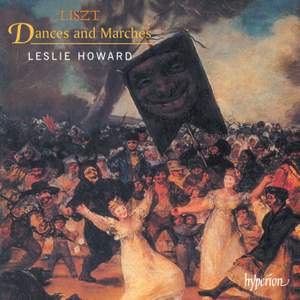
| |  | Liszt Complete Music for Solo Piano 28: Dances and Marches
Liszt: | Scherzo and March, S. 177 Petite valse favorite, S212ii Mazurka brillante, S221 Grand galop chromatique, S219 Galop, S218 Festpolonaise, S230a Csárdás (2), S. 225 Csárdás macabre, S. 224 Mephisto Polka, S217 Festvorspiel, S. 226 Heroischer Marsch im ungarischem Stil, S231 Ungarischer Sturmmarsch, S524 Goethe-Festmarsch, S521 Zweite Festmarsch nach Motiven von E H z S-C-G, S522 Marche héroïque, S510 Huldigungsmarsch, S228ii Ungarischer Marsch zur Krönungsfeier in Ofen-Pest, S523 Siegesmarsch, S233a Ungarischer Geschwindmarsch, S233 Vom Fels zum Meer!, S229 Bülow-Marsch, S230 Künstlerfestzug, S520ii Rákóczi-Marsch nach der Orchesterbearbeitung, S244a |
“Gorgeous stuff!” CD Review “A distinguished addition to one of the most important recording projects of the CD era” Fanfare | | | In stock - usually despatched within 1 working day. |
|
|
| |  | Shura Cherkassky: The Complete UK World Record Club Solo Recordings
Beethoven: | Piano Sonata No. 32 in C minor, Op. 111 Eroica Variations, Op. 35 | Chopin: | Impromptu No. 4 in C sharp minor, Op. 66 'Fantaisie-Impromptu' Barcarolle in F sharp major, Op. 60 Nocturne No. 15 in F minor, Op. 55 No. 1 Waltz No. 15 in E major, Op. post., KKIVa:12, B 44 Scherzo No. 3 in C sharp minor, Op. 39 | Liszt: | Consolation, S. 172 No. 3 in D flat major Grand galop chromatique, S219 Liebestraum, S541 No. 3 (Nocturne in A flat major) Grande Étude de Paganini, S. 141 No. 3 'La Campanella' | Schubert: | Piano Sonata No. 20 in A major, D959 | Schumann: | Fantasiestücke, Op. 111 Der Contrabandiste |
The Russian-born virtuoso Shura Cherkassky was undoubtedly one of the finest pianists of the 20th-century, admired not only for the magnificence of his playing but also for the wide range of his concert repertoire. On this important and valuable double-album, we concentrate on his noted recordings of 19th-century repertoire, which constitute music from the heart of his fondly-remembered performances. The recordings, all except the Liszt Liebestraum appearing on CD for the first time, have been excellently remastered and the playing-time of these CDs is very generous - almost two hours and forty minutes of great musicianship. | 
| | | Usually despatched in 8 - 10 working days. |
|
|
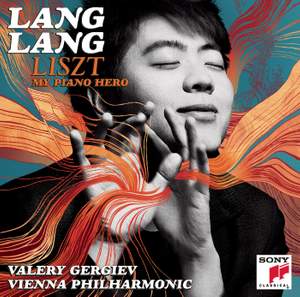
| |  | Liszt: My Piano HeroBonus DVD Version
Liszt: | Romance 'O pourquoi donc', S169 Grande Étude de Paganini, S. 141 No. 3 'La Campanella' Consolation, S. 172 No. 3 in D flat major Grand galop chromatique, S219 Liebestraum, S541 No. 3 (Nocturne in A flat major) Hungarian Rhapsody, S244 No. 6 in D flat major Un Sospiro from 3 Concert Studies, S144 No. 3 Hungarian Rhapsody, S244 No. 15 in A minor 'Rákóczy Marsch' Horowitz version Ave Maria, S558 No. 12 (after Schubert) Isolde's Liebestod (after Wagner), S447 Bonus Track Piano Concerto No. 1 in E flat major, S124 Vienna Philharmonic, Valery Gergiev |
This is truly the ‘Summer of Lang Lang’! The hottest Classical artist on the classical music planet, as described by The New York Times, is back with his second recording for Sony Classical, which is devoted to his very own piano hero - Franz Liszt. On this album, together with the Vienna Philharmonic and Valery Gergiev, Lang Lang plays Liszt's Piano Concerto No. 1 as well as a selection of some of the most commercial, famous, virtuosic and beautiful solo pieces by Franz Liszt such as La Campanella, Liebestraum and Hungarian Rhapsody Nr 6, Consolation etc. His 200th anniversary being this October 22, Franz Liszt is commonly regarded as the first pop star in music history. A touring piano virtuoso himself, Franz Liszt composed some of the most famous and virtuosic pieces ever written for the instrument. “Lang Lang’s gifts get a fruitful showcase in Liszt’s Piano Concerto No 1, performed with the Vienna Philharmonic and Valery Gergiev. None of the parties proves too bombastic...In the slow pieces we can take some comfort in our star pianist’s delicacy, however, when Liszt is being the showman, Lang Lang’s extreme virtuosity keeps removing the music’s soul” The Times, 3rd September 2011 *** “His talents are most generously indulged, however, in the Paganini study "La Campanella", a showcase of effusive flurries, sudden shifts of mood and rippling trills sweeping the entire length of the keyboard, all delivered with a restrained but dashing brio.” The Independent, 8th September 2011 **** “His approach to the piano is predominantly affectionate and respectful. While capable of producing massive sounds, he very seldom loses tonal control; indeed, his tone is frequently seductive.” BBC Music Magazine, November 2011 *** “Lang Lang's glittering career now moves from dubious beginnings...to an increasing range and maturity...His stealthy tempo for "La campanella" allows for a super-glitter and articulacy that even the most seasoned pianist might envy, while in "Un sospiro" his relaxed poetry and technique are masterly at every level. His Schubert-Liszt "Ave Maria" has all the communicative ardour that has endeared him to millions.” Gramophone Magazine, Awards Issue 2011 “There is some quite exquisite playing here (Consolation No. 3, 'Un sospiro' and the rarely-heard Romance 'O pourquoi donc' that opens the programme) and bursts of electrifying dexterity (Grand galop chromatique and Hungarian Rhapsody No. 6). The First Concerto is exciting and hard driven though not without a real sense of repose where required.” Classic FM Magazine, November 2011 **** | | | Usually despatched in 8 - 10 working days. |
|
|
| |  | Liszt - My Piano Herostandard version
Liszt: | Romance 'O pourquoi donc', S169 Grande Étude de Paganini, S. 141 No. 3 'La Campanella' Consolation, S. 172 No. 3 in D flat major Grand galop chromatique, S219 Liebestraum, S541 No. 3 (Nocturne in A flat major) Hungarian Rhapsody, S244 No. 6 in D flat major Un Sospiro from 3 Concert Studies, S144 No. 3 Hungarian Rhapsody, S244 No. 15 in A minor 'Rákóczy Marsch' Horowitz version Ave Maria, S558 No. 12 (after Schubert) Piano Concerto No. 1 in E flat major, S124 |
| | | Usually despatched in 8 - 10 working days. |
|
|
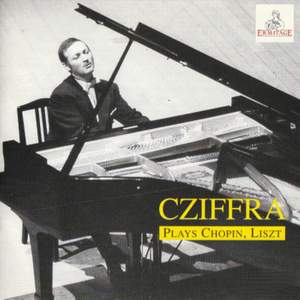
| |  | Georges Cziffra plays Chopin & LisztCziffra in Tokyo 1964
Chopin: | Fantasia in F minor, Op. 49 Scherzo No. 2 in B flat minor, Op. 31 Waltz No. 1 in E flat major 'Grande Valse Brillante', Op. 18 Waltz No. 4 in F major 'Grande Valse Brillante', Op. 34 No. 3 Impromptu No. 3 in G flat major, Op. 51 Ballade No. 4 in F minor, Op. 52 Polonaise No. 6 in A flat major, Op. 53 'Héroïque' | Liszt: | Rhapsodie espagnole, S254 Grand galop chromatique, S219 Polonaise No. 2 in E major, S223 No. 2 Hungarian Rhapsody, S244 No. 6 in D flat major |
Gyorgy (Georges) Cziffra (1921-1994) was a child prodigy, a phenomenal pianist, born into poverty in Budapest before adopting French citizenship having escaped from his Soviet-dominated homeland in 1956 after enduring deprivation, hard labour and imprisonment. In a breathtaking career, Cziffra achieved almost iconic status but at the same time remained a controversial figure. After the tragic death of his son, Gyorgy Junior, in 1981, Cziffra's life changed and he was never quite the same man again. Cziffra died in 1994 leaving the Cziffra Foundation at Senlis devoted to helping young pianists. 'Greater than Horowitz, he combines the precision of a metronome with the electrical discharge of a thunderstorm' are some of the quotes describing his pianism. His Liszt produced a near hysterical reaction where he found an ideal outlet for his hair-raising pianism while his Chopin was highly individual and controversial. The Tokyo recital from 1964 represents a very high point in his playing capturing the early Cziffra at his mercurial best. He had only started his career in 1956 and by 1964 was totally international. The tapes have been sourced from the Cziffra Foundation. "Judging from recordings of live concerts, the stimulation of an audience spurred Cziffra to reach for his limits and beyond; the pianist repeatedly demonstrated some of the most daring risk-taking in musical history. The 1964 live Tokyo recording contains unimaginable renditions of Liszt's Hungarian Rhapsody n°6 and Grand Galop chromatique, for example. The palpable electricity and generosity of his playing, reflecting the warmth and kindness of the man, were the sources of his public adulation" Pierre-Martin Juban writing in the International Piano Quarterly. “Traditionalists will no doubt baulk at his Chopin which sometimes pays scant regard to the markings in the score. Yet the results are almost always thrilling, and especially so in the almost improvisatory way he drives the music inexorably towards the cataclysmic climax of the Fourth Ballade. In the Liszt items Cziffra seems to be even more in his element, teasing the audience with the sheer velocity of his finger work and his surefire consecutive octaves.” BBC Music Magazine, May 2009 ***** | | | Usually despatched in 2 - 3 working days. |
|
|
| |  | Piano Virtuosos
Booklet Notes:Tracklisting in English, French, German. This recital by György Cziffra (1921-94) was made by the BBC in 1962-3 and should probably be re-classified as a class-A drug, so mind-blowing are the pianist's incredible gifts. The improvisation that opens the programme recalls the nights that he spent at the piano in bars in his native Budapest and is inspired in particular by Chopin's Gdzie lubi Op.74 No.5, which Cziffra paraphrases alla zingarese, before tackling the same composer's Étude in C major Op.10 No.1, which he plays at a vertiginous prestissimo. The programme builds to a thrilling climax with a highoctane performance of the Hungarian Rhapsody No.6 by Cziffra's favourite composer, Franz Liszt. Benno Moïseïwitsch (1890-1963) was famous for his impassivity at the piano even when the technical difficulties seemed insurmountable, encouraging observers to dub him "Pokerface Benno". His virtuosity and musicality were marvellously well suited to the Romantic and post-Romantic repertoire. He is heard here in works by Schumann and Rachmaninov. Moïseïwitsch was a good friend of Rachmaninov, who regarded him as one of the finest interpreters of his music. Like Cziffra, Jorge Bolet (1914-90) belonged to the Lisztian tradition, having had the privilege of working with Leopold Godowsky while he was still very young. Above all, however, his mentors included two of Liszt's most famous pupils, Moriz Rosenthal and Emil von Sauer. Capable of mastering even the most difficult scores, Bolet never sought virtuosity for its own sake alone, as is clear from his performances of Liszt's Grand galop chromatique, which contrasts sharply with Cziffra's reading of the same piece, and of Chopin's Berceuse. “Fuzzy filming from the 1950s and '60s, but a boggling feast of performances from three of the greatest piano virtuosos of the 20th century, crowned by those of Cziffra whose improvisation has to be heard to be believed.” BBC Music Magazine, November 2008 ***** “Cziffra's 1962 recital… opens with astonishing "warm-up", an improvisation that ends with a vertiginous Chopin C major Etude. After this, Moiseiwitsch seems to be from another age - economically, quietly singing his way through his beloved Schumann. Finally, the magisterial Jorge Bolet. How wonderful it is to see again that huge torso bent in concentration over the keyboard and the characteristic upward snap of the hands.” Gramophone Magazine, December 2008 | | | Usually despatched in 2 - 3 working days. |
|
|
| |  | Virtuosity of Earl Wild
Albert, E: | Scherzo in F Sharp Major, Op. 16, No. 2 | Chopin: | Polonaise No. 6 in A flat major, Op. 53 'Héroïque' | Dohnányi: | Concert Etude, Op. 28 No. 6 in F minor (Capriccio) Capriccio in B minor, Op. 2, No. 4 | Liszt: | Grand galop chromatique, S219 Hungarian Rhapsody, S244 No. 2 in C sharp minor Mephisto Waltz No. 1 Hungarian Rhapsody, S244 No. 4 in E flat major Hungarian Rhapsody, S244 No. 12 in C sharp minor Polonaise No. 2 in E major, S223 No. 2 Frühlingsnacht (after Schumann, Op. 39 No. 12), S568 Grande Étude de Paganini, S. 141 No. 2 Grande Étude de Paganini, S. 141 No. 3 'La Campanella' Grande Étude de Paganini, S. 141 No. 5 'La Chasse' Transcendental Study, S139 No. 10 'Appassionata' La leggierezza - Étude de concert No. 2, S144 Transcendental Study, S139 No. 2 in A minor Spinnerlied aus Der fliegende Holländer S440 Concert Paraphrase on Rigoletto, S.434 after Verdi's opera Valse oubliée No. 1, S.215/1 Gnomenreigen, S145 No. 2 Transcendental Study, S139 No. 7 'Eroica' Waldesrauschen, S145 No. 1 | Mendelssohn: | Songs without Words, Op. 67 No. 4 | Moszkowski: | Étincelles, Op. 36 No. 6 | Tausig: | Concert arrangement of Schubert's, Marche militaire, Op. 51 No. 1 | Tchaikovsky: | Scherzo à la Russe, Op. 1 No. 1 | Wild: | Dance of the Four Swans (after Tchaikovsky) |
| | | Usually despatched in 4 - 5 working days. |
|
|
| |
|