Prices shown exclude VAT. (UK tax is not payable for deliveries to United States.) See Terms & Conditions for p&p rates. | |  | Teresa Berganza - An Evening of Song, 1985
Teresa Berganza is undoubtedly one of the greatest Spanish singers of the 20th century. She enchanted audiences in opera houses around the world. Throughout her career, she would give recitals of songs, especially the songs of her homeland. This recital includes songs by Haydn, Fauré, Respighi, Braga and Rossini. | | | In stock - usually despatched within 1 working day. |
|
|
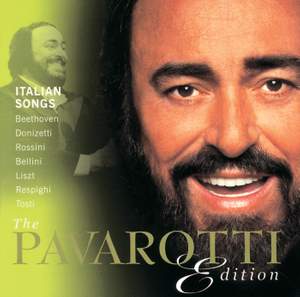
| |  | A Passion for Pavarotti: Art Songs & Lieder
In addition to Luciano Pavarotti’s brilliant career on the opera stage, he was also known for his immensely popular recital performances featuring art song and lieder. This double-album features 24 recordings made at the peak of his career, ranging through works by Donizetti, Rossini, Bellini, Mascagni, and the rather less obvious Legrenzi, Liszt and Respighi as well as Giordani’s ‘Caro mio ben’, Beethoven’s ‘In Questa Tomba Oscura’, and Schubert’s ‘Ave Maria’. This is one of a series of five archive recordings of the legendary tenor being released by the American label Opera d’Oro over the next couple of months. | | | Usually despatched in 4 - 5 working days. |
|
|
| |  | Respighi: La Sensitiva & Liriche da camera
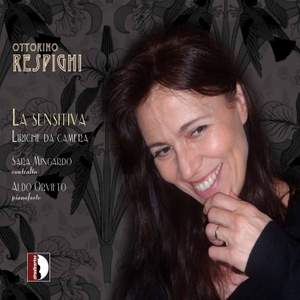
Sara Mingardo (contralto), Aldo Orvieto (piano) & Carlo Lazari (violin) Sara Mingardo is that rare bird, the true contralto, and has just won the prestigious Premio Abbiati 2010 as best Italian singer. Here she interprets works by Respighi that date from 1869 and 1914, and as such are often underestimated by critics and audiences, as pieces that anticipate Respighi’s successful creative period. The first nine pieces are very short, with lyrics by Ada Negri and Carlo Zangarini. In addition, ‘Pietà ti prenda, mio Dio’, is a transcription for voice, violin and piano from St Matthew Passion, a paraphrase of Psalm 51. Sara Mingardo studied in her hometown Venice at the Academy Benedetto Marcello and first came to prominence by winning the Giulietta Simionato Prize at the 23rd Vienna Competition and the first prize at the Competition Toti dal Monte in 1987. Today Sara is an established figure in concert halls and opera houses in repertoire from Vivaldi to Britten. Her recent appearances at Covent Garden in Tamerlano, production by Graham Vick, marked her debut with The Royal Opera. She has already performed in the Royal Albert and Wigmore Halls and has established a relationship with the London Symphony Orchestra, appearing on their recordings of Messiah, Beethoven Mass in C, The Trojans and Beatrice & Benedict. “Sara Mingardo is a shining exception, and the Venetian demonstrates with every performance the contralto beauties that the musical world is missing. Her voice is velvety smooth and beguilingly sensual, and she has a technique capable of tackling the most florid Baroque arias with grace.” The Times “In these songs we get the full measure of [Mingardo's fluency and upper reaches] and also the dramatic quality inherent in voices of such depth when guided, as this is, by a strongly emotional imagination.” Gramophone Magazine, Awards Issue 2010 | | | Usually despatched in 3 - 4 working days. |
|
|
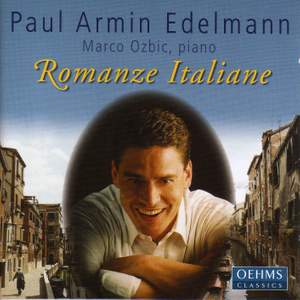
| |  | Romanze ItalianeSongs
Paul Armin Edelmann (baritone), Marco Ozbic (piano) | |
|
| |  | Respighi: Orchestral Songs
“In some of Respighi's comparatively neglected pieces, his accustomed richness and subtlety of orchestral colour go with a certain lack of melodic individuality. Once or twice in Deitàsilvane ('Woodland gods'), one wishes that the poems' classical imagery would lead him towards an evocation or even a direct quotation from Italian music's 'classical' past of the kind that so often renders his better-known music so memorable. In La sensitiva ('The sensitive plant'), however, his care for the imagery and prosody of Shelley's poem (in Italian translation) was so responsive that striking melodic invention was the result. The orchestral colour of the piece is exquisite, the succession of ideas (the sensitive plant is image both of unhappy lover and spurned artist) a good deal more than merely picturesque. In a performance as expressive as this it seems one of Respighi's best works, and a good deal more sophisticated than he's generally given credit for. Aretusa is fine, too, with bigger dramatic gestures, even richer colour and some magnificent sea music. The much better-known Nebbie is another example of Respighi finding a genuinely sustained melodic line in response to a text which obviously meant a great deal to him. Everything here is played with a real care for Respighi's line as well as his sumptuous but never muddy colours. First-class recording.” Gramophone Classical Music Guide, 2010 | | | (also available to download from $10.50) | Usually despatched in 2 - 3 working days. (Available now to download.) |
|
|
| |  | Maria Vitale: Rarities
Bellini: | Casta Diva (from Norma) | Boito: | L'altra notte in fondo al mare (from Mefistofele) | Catalani: | Ne mai dunque avro pace…Ohime! from La Wally Prendi, fanciul, e serbala! (from La Wally) | Charpentier, G: | Depuis le jour (from Louise) | Cherubini: | Du trouble affreux qui me dévore (from Médée) | Cilea: | Poveri fiori (from Adriana Lecouvreur) | Donizetti: | Com' e bello! (from Lucrezia Borgia) | Massenet: | Dis-moi que je suis belle (from Thaïs) sung in Italian as 'O specchio mio fedele, mi rassicura' | Ponchielli: | Suicidio! (from La Gioconda) | Respighi: | Nebbie | Verdi: | Ecco l'orrido campo … Ma dall'arido stelo divulsa (from Un ballo in maschera) Morrò, ma prima in grazia (from Un Ballo in Maschera) Pace, pace mio Dio! (from La forza del destino) Tu che la vanità (from Don Carlo) Aida (excerpts) Vitale sings in Italian, the rest of the cast in French. Maria Vitale (Aïda), Georgiette Frozier-Marot (Amneris), José Luccioni (Radamès), Charles Cambon (Amonasro), André Philippe (Ramfis) Otello (excerpts) Vitale sings in Italian, the rest of the cast in French. (Otello sings in Italian when addressing Desdemona). Maria Vitale (Desdemona), José Luccioni (Otello), Charles Cambon (Iago), Suzanne Darbans (Emilia) | Wagner: | Allmächt’ge Jungfrau! (from Tannhäuser) | Zandonai: | Paolo, datemi pace! (from Francesca Da Rimini) |
| | | Usually despatched in 2 - 3 working days. |
|
|
| |  | Luciano Pavarotti: Recital
| | | Usually despatched in 2 - 3 working days. |
|
|
| |  | The Art of Belcanto
Bellini: | Son vergin vezzosa (from I Puritani) Eccomi in lieta vesta...Oh! quante volte (from I Capuleti e I Montecchi) Vien, diletto, è in ciel la luna (from I Puritani) | Donizetti: | La Corrispondenza amorosa Amore e morte La dernière nuit d'un novice Le crépuscule O toi, Lisbonne (from Dom Sébastien, Roi de Portugal) Sung in Italian Qui un pugnale!...Ah! nel cuor (from Gemma di Vergy) Non turbati a questi accenti (from Caterina Cornaro) Vieni, amor...Leonora! A' piedi tuoi (from La Favorita) La morale in tutto questo (from Don Pasquale) Com'é gentil…Tornami a dir (from Don Pasquale) Come, innocente giovane (from Anna Bolena) Convien partir (from La figlia del reggimento) Deciso è dunque...le richezze (from La Figlia del Reggimento) | Liszt: | Sonetti di Petrarca (3) for voice & piano, S270 | Mascagni: | La tua stella Pena d´amore Rosa | Mozart: | Madamina, il catalogo è questo (from Don Giovanni) La ci darem la mano (from Don Giovanni) Hai gia vinta la causa! (from Le nozze di Figaro) | Respighi: | Notte, P. 97 No. 1 Stornellatrice Ma come potrei Nebbie Tanto bella | Verdi: | Ad una stella Il tramonto Lo spazzacamino Di provenza il mar (from La Traviata) Perfidi!…Pietà, rispetto, amore (from Macbeth) In braccio alle dovizie (from I Vespri Siciliani) Plebe! Patrizi! Popolo! (from Simon Boccanegra) |
This set includes the most famous recording of Alfredo Kraus, Lucia Alberti and Renato Bruson with arias by Bellini, Donizetti, Verdi, Mascagni etc. Also included are rare opera scenes such as Donizetti’s “Gemmy di Vergy” and Bellini’s “I Capuleti e I Montecchi. A highly recommended collection for fans of opera and these Belcanto artists. “Kraus is in fine voice at 62...Aliberti peals out secure, clean-toned ardour...Bruson is a skilled exponent of [bel canto]...His more emphatic, dramatic side is met in the wonderful Council Chamber scene, especially as Boccanegra launches his curse. The Mozart pieces are good, yet I shall place them behind the Donizetti and Verdi on this laudable CD.” International Record Review, December 2011 | | | (also available to download from $17.00) | Usually despatched in 2 - 3 working days. (Available now to download.) |
|
|
| |  | Pavarotti, 1937 - 2007: A World Icon2 CDs and 2 DVDs
Luciano Pavarotti was born the 10th of December 1935 in Modena Italy, and his debut came on April 29, 1961 as Rodolfo in La boheme, at the opera house in Reggio Emilia. His American debut came in February 1965, in a Miami production of Lucia di Lammermoor. It wasn’t until February 17, 1972, that the Pavarotti phenomenon was born, in a production of La Fille du Regiment at New York’s Metropolitan Opera. One of classical music’s most bankable names, selling more than 100 million recordings world-wide on Thursday, September 6, 2007, Pavarotti passed away at his home in Modena, Italy. | | | Usually despatched in 4 - 5 working days. |
|
|
| |  | Tito Gobbi: The Complete Solo Recordings
Anzi: | O mia bella Madonnina Mattinata fiorentina | Berlioz: | Une puce gentille 'Flea Song' (from La damnation de Faust) | Brogi: | Visione Veneziana | Capua: | O sole mio | Carissimi: | Vittoria, mio core! | Cavalli: | Beato chi può (from Xerse) | Cilea: | Come due tizzi accesi (from L'Arlesiana) Ecco il monologo (from Adriana Lecouvreur) (two recordings) | Cottrau: | Santa Lucia (two recordings) | Denza: | Occhi di fata Occhi di fata | Donizetti: | Come Paride vezzoso (from L'elisir d'amore) Cruda, funesta smania (from Lucia di Lammermoor) La pietade in suo favore (from Lucia di Lammermoor) Che fia?...Se tradirmi tu potrai (from Lucia di Lammermoor) La donna è originale...Venti scudi (from L'elisir d'amore) | Durante: | Vergin, tutto amor preghiera | Falvo: | Dicitencello vuie | Gastaldon: | Musica proibita | Giordani, G: | Caro mio ben | Giordano, U: | Nemico della patria (from Andrea Chénier) La donna russa (from Fedora) (two recordings) | Lama, G: | Silenzio cantatore | Leoncavallo: | Buona Zazà del mio buon tempo from Zazà Zazà, piccolo zingara from Zazà Si può? (from I Pagliacci) (two recordings) | Mascagni: | Serenata | Mayer: | Biondina in gondoletta | Monteverdi: | Air d'Orphee Rosa del ciel | Mozart: | Deh! vieni alla finestra (from Don Giovanni) Non piu andrai, farfallone amoroso (from Le Nozze di Figaro) Aprite un po'quegli occhi (from Le Nozze di Figaro) | Olivieri: | Nenia d’amore | Paisiello: | Nel cor più non mi sento | Pigarelli: | La montanara (from the film The Glass Mountain) (two recordings) | Puccini: | Minnie, della mia casa son partito (from La Fanciulla del West) (two recordings) Tosca: Act Two (excerpt) Maria Callas (Tosca), Luigi Alva (Cavaradossi) Ladro!...Via! via!...Lauretta mia...Ditemi voi, signori (from Gianni Schicchi) Victoria de los Angeles (Lauretta), Carlo del Monte (Rinuccio) | Respighi: | Nebbie | Rossini: | Largo al factotum (from Il barbiere di Siviglia) Guglielmo, sol per te...La valanga (from Guglielmo Tell) Resta immobile (from Guglielmo Tell) (two recordings) | Ruccione: | Famme sunn’a cu’tte | Sadero: | Amuri, amuri (two recordings) Gondoliera veneziana (two recordings) | Scarlatti, A: | O cessate di piagarmi (from Il Pompeo) | Tagliaferri: | Piscatore 'e pusilleco | Tosti: | A vucchella Marechiare Malià Donna, vorrei morir Ideale A vucchella | trad.: | Fenesta che lucive (two recordings) Tre giorni son che Nina (two recordings) Se gli alberi | Valente, N: | Torna! | Verdi: | Per me giunto è il di (from Don Carlo) O Carlo, ascolta (from Don Carlo) Era la notte (from Otello) Urna fatale (from La Forza del Destino) Vanne, la tua meta gia vedo…Credo in un Dio crudel (from Otello) Di provenza il mar (from La Traviata) Pari siamo! (from Rigoletto) Perfidi!…Pietà, rispetto, amore (from Macbeth) Alzati…Eri tu che macchiavi quell'anima (from Un Ballo in Maschera) Vanne, la tua meta gia vedo…Credo in un Dio crudel (from Otello) (two recordings) Ah, prigioniero io sono...Dio di Giuda! (from Nabucco) Quando ero paggio (from Falstaff) (two recordings) Plebe! Patrizi! Popolo! (from Simon Boccanegra) Rigoletto (excerpts) Maria Callas (Gilda), Giuseppe di Stefano (Il Duca) Dinne...alcun lá non vedesti? (from Simon Boccanegra) Victoria de los Angeles (Amelia) Ciel, mio padre! (from Aida) Maria Callas (Aida) Don Carlo (excerpts) Mario Filippeschi (Carlo), Plinio Clabassi (Filippo) L'onore! Ladri! (from Falstaff) | Vivaldi: | Cantata RV675 'Piango, gemo, sospiro' | Wolf-Ferrari: | Aprile o bella - Serenata (from I gioielli della Madonna) Commiato |
This 5 CD set, devoted to the outstanding Italian baritone Tito Gobbi, is a further release in the EMI Classics ICON series. The bulk of this set is devoted to all the solo recordings that Gobbi made during his entire career, brought together for the first time. The first CD begins with seven operatic arias (by Cilea, Leoncavallo, Mozart, Verdi and Puccini), and two songs (‘Musica proibita’ by Gastaldon and ‘Famme sunn’a cu’tte’ by Ruccione) that Gobbi made for the Italian branch of EMI in 1942. The songs were released only in Italy on a 78rpm record that had extremely limited circulation because of the Second World War, and are re-issued here by EMI for the first time. The programme continues on CD 1 with further recordings that Gobbi made for EMI from 1948 onwards of operatic arias and songs, including two songs (‘La montanara’ and ‘Take the Sun’) that were featured in the 1949 film The Glass Mountain that brought the baritone to a wide cinema audience. He eventually appeared in more than 20 films. CD 2 contains the rest of the songs and arias made up to the end of the 78rpm era, and finishes with the song ‘Nenia d’amore’ recorded in Italy in 1953 for the film Canzoni a due voci. In 1955, Gobbi made his first LP recital album (with the forces of the Rome Opera), but it was not released at the time due to concerns about the technical quality of the recording. With the advance of technology the problems were subsequently able to be corrected and Gobbi later gave permission for material from the album to be released in various LP collections. The whole album is now heard here complete for the first time. In 1964, EMI made a two-LP set called The Art of Tito Gobbi in which each of the four LP sides was devoted to a different genre, namely Operatic Arias, Classical Songs and Arias, Italian and Neapolitan Popular Songs, and Romantic Songs. The programme repeated some of the repertoire on the as yet unpublished 1955 album but ranged much more widely, especially in the field of song. The operatic arias were made with the Philharmonia Orchestra under Alberto Erede; the classical songs with a small chamber ensemble consisting of harpsichord, cello and guitar; the popular songs with members of the Orchestra of the Rome Opera, and the romantic songs with the distinguished pianist Gerald Moore. This project marked the end of Gobbi’s recording career in solo repertoire. The rest of the set covers extracts from some of the acclaimed complete opera recordings that Gobbi made for EMI, including Lucia di Lammermoor, Tosca, Aida and Rigoletto with the legendary soprano Maria Callas. Other operas featured are L’elisir d’amore, Simon Boccanegra, Don Carlo, Aida, Il tabarro, Il barbiere di Siviglia, Pagliacci and Gianni Schicchi. The programme ends with a memorable reminder of one of Gobbi’s finest assumptions, the title role in Verdi’s sublime Falstaff. | | | In stock - usually despatched within 1 working day. |
|
|
| |
|