Brahms: Ein Sonett, Op. 14 No. 4 (Herder) (Ach, könnt' ich, könnte vergessen sie)

This page lists all recordings of Ein Sonett, Op. 14 No. 4 (Herder) (Ach, könnt' ich, könnte vergessen sie), by Johannes Brahms (1833-97) on CD & download (MP3 & FLAC). Generally, more recent releases are listed first, but with priority given to those that are in stock.

Prices shown exclude VAT. (UK tax is not payable for deliveries to United States.)
See Terms & Conditions for p&p rates.

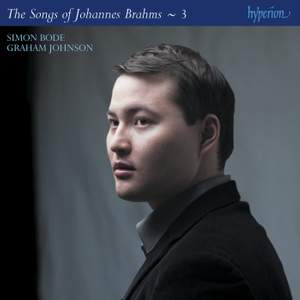
Brahms: The Complete Songs Volume 3 (Simon Bode)

Brahms: The Complete Songs Volume 3 (Simon Bode)


Brahms:

Wach auf, mein Herzensschöne, WoO33 No. 16

Erlaube mir, fein's Mädchen (No. 2 from Deutsche Volkslieder WoO 33)

Mein Mädel hat einen Rosenmund (No. 25 from Deutsche Volkslieder, WoO 33)

Ein Sonett, Op. 14 No. 4 (Herder)

Ständchen, Op. 14 No. 7

Der Kuss, Op. 19, No. 1

An eine Äolsharfe, Op. 19 No. 5

Magyarisch, Op. 46, No. 2

Die Schale der Vergessenheit, Op. 46, No. 3

Lieder (5), Op. 49

Mein wundes Herz verlangt, Op, 59, No. 7

Im Garten, Op. 70 No. 1

Lerchengesang Op. 70 No. 2

Serenade, Op. 70 No. 3

An den Mond, Op. 71 No. 2 (Text: K. Simrock)

In Waldeseinsamkeit, Op. 85 No. 6

Auf dem Schiffe, Op. 97, No. 2

Es hing der Reif, Op. 106 No. 3

Ein Wanderer, Op. 106 No. 5

Die Sonne scheint nicht mehr (No. 5 from Deutsche Volkslieder, WoO 33)

Wo gehst du hin, du Stolze? WoO33, No. 22

Es steht ein Lind (No. 41 from Deutsche Volkslieder, WoO 33)


Simon Bode (tenor) & Graham Johnson (piano)

Following the iconic series of the complete songs of Schubert and Schumann, Graham Johnson further demonstrates the phenomenal depth of his knowledge in the expert programming of this recital. Each disc in the series represents a different journey through the repertoire, and thus through Brahms’s life. This new volume is sensitively balanced, the opening and closing folksong transcriptions possessing beguiling charm and the five songs of Op 49 being performed in their entirety.

Hyperion is thrilled to welcome the young German tenor Simon Bode to the label. At home in the opera house and the recital hall, Bode possesses a controlled voice of great beauty, and gives performances of immediacy and conviction. Johnson, as accompanist, is immaculate and his usual scholarly notes are of course included.

“Bode sings [Sehnsucht and the Wiegenlied] with a fine sense of artistry and wonderment. Johnson takes care over his placing of Brahms's many folksong settings within this series, inserting a few at a time. Here, they frame the recital, with Bode's instinctive musicality making an irresistably friendly greeting of 'Wach auf, mein Herzensschone.'” BBC Music Magazine, January 2012 ****

“His tone is sweet and gently rounded, his diction crystal-clear, his phrasing always thoughtful. Spinning a rapt, sustained lined, he movingly catches the Brahmsian twilit melancholy of 'Abenddammerung'...'Wiegenlied', too, is as dulcet as you could wish, with singer and pianist vindicating a provocatively slumbrous [sic] tempo.” Gramophone Magazine, February 2012

“Bode has an unquestionably beautiful voice, his line is exquisitely controlled and his care over words and meaning were already evident in the folksong settings...There are marvellous things, such as a wondrously sustained “Es hing der Reif”. Indeed, according to their own lights, all the performances are marvellous...Every Brahmsian quality you could want is here except fullness of heart” MusicWeb International, March 2012

Hyperion Complete Brahms Songs - CDJ33123

(CD)

$16.50

In stock - usually despatched within 1 working day.

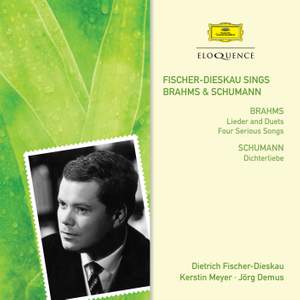
Fischer-Dieskau sings Brahms & Schumann

Fischer-Dieskau sings Brahms & Schumann


Brahms:

Vier ernste Gesänge, Op. 121

Sommerabend, Op. 85 No. 1

Mondenschein, Op. 85 No. 2

Es liebt sich so lieblich, Op. 71 No. 1

Meerfahrt, Op. 96 No. 4

Es schauen die Blumen, Op. 96 No. 3

Der Tod, das ist die kühle Nacht, Op. 96 No. 1

Mit vierzig Jahren, Op. 94 No. 1

Steig auf, geliebter Schatten, Op. 94 No. 2

Mein Herz ist schwer, Op. 94 No. 3

Kein Haus, keine Heimat, Op. 94 No. 5

Herbstgefühl, Op. 48 No. 7

Alte Liebe, Op. 72 No. 1

Abenddämmerung, Op. 49 No. 5

Heimweh, Op. 63 No. 8

Auf dem Kirchhofe, Op. 105 No. 4

Verzagen, Op. 72 No. 4

Regenlied (No. 3 from Acht Lieder und Gesänge, Op. 59)

Nachklang (No. 4 from Acht Lieder und Gesänge, Op. 59)

Fruhlingslied, Op. 85, No. 5

Auf dem See (No. 2 from Acht Lieder und Gesänge, Op. 59)

Feldeinsamkeit, Op. 86 No. 2

An eine Äolsharfe, Op. 19 No. 5

Der Frühling, Op. 6 No. 2

Wie die Wolke nach der Sonne (No. 5 from Sechs Gesänge, Op. 6)

Treue Liebe, Op. 7, No. 1

Heimkehr, Op. 7 No. 6

Juchhe! (No. 4 from Sechs Gesänge, Op. 6)

Nachwirkung, Op. 6 No. 3

Mondnacht, WoO 21

Ein Sonett, Op. 14 No. 4 (Herder)

Ständchen, Op. 14 No. 7

Vor dem Fenster Op. 14 No. 1

Scheiden und Meiden, Op. 19, No 2

Gang zur Liebsten, Op. 14 No. 6

Von verwundeten Knaben, Op. 14 No. 2

Murrays Ermordung, Op. 14 No. 3

Sehnsucht 'Mein Schatz ist nicht da', Op. 14 No. 8

Volkslied

Kerstin Meyer (contralto)

Duette (4), Op. 28

Schumann:

Dichterliebe, Op. 48


Dietrich Fischer-Dieskau (baritone), Jörg Demus (piano)

‘You sing as if you had written it yourself!’ Jean Cocteau once told Dietrich Fischer-Dieskau. This anthology of lieder by Brahms and Schumann is a prime example of the great singer doing just that, mining every nuance of emotion from a song while, at the same time, sounding as spontaneous and free as if he were making it up on the spot. One of the hallmarks of Fischer-Dieskau’s legacy is the ease with which he creates the spell of each individual song, drawing the listener – apparently effortlessly – into the drama created by the words and the music.

Fischer-Dieskau recorded extensively for Deutsche Grammophon, and the bulk of his archive has been mined on CDs. These recordings, however, are rarities. The songs on CD1 appeared only as part of the Fischer-Dieskau Edition for his 75th birthday. The Brahms songs on CD2 make their first appearance on CD. And the 1957 recording of Schumann’s Dichterliebe with his long-time pianist Jörg Demus, only appeared as part of Deutsche Grammophon’s centenary edition. CD2 includes the Four Duets, Op. 28 in which Fischer-Dieskau is partnered by an artist not heard enough on records, the contralto Kerstin Meyer.

This release marks the launch of an Eloquence series of notable recitals of songs and opera arias by some of the great voices of Decca and Deutsche Grammophon.

“A moving Brahms Four Serious Songs from a young and physically impassioned Fischer-Dieskau, and a fascinatingly exploratory Dichterliebe from 1957, both incomparably accompanied.” BBC Music Magazine, June 2012 *****

“Fischer-Dieskau is a superb interpreter of the cycle” Gramophone Magazine (Dichterliebe)

“this is a masterly performance, a towering interpretation of these dark, noble songs” Gramophone Magazine (Brahms: Four Serious Songs)

“Fischer-Dieskau is splendid in the furious little Hahm setting, Kein Haus, keine Heimat, the shortest of all Brahms’s songs, and gives a ravishing account of Feldeinsamkeit. … [His] performance is clearly among the greatest” Gramophone Magazine (Brahms)

Australian Eloquence Vocal Recitals - 4803527

(CD - 2 discs)

$14.00

In stock - usually despatched within 1 working day.

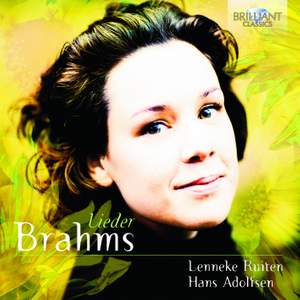
Brahms: Lieder

Brahms: Lieder


Brahms:

Fruhlingslied, Op. 85, No. 5

Serenade, Op. 70 No. 3

Es schauen die Blumen, Op. 96 No. 3

Regenlied (No. 3 from Acht Lieder und Gesänge, Op. 59)

Nachklang (No. 4 from Acht Lieder und Gesänge, Op. 59)

Liebesklage des Mädchens, Op. 48, No. 3

Gold überwiegt die Liebe, Op. 48, No. 4

Ein Sonett, Op. 14 No. 4 (Herder)

Ständchen, Op. 14 No. 7

Sehnsucht 'Mein Schatz ist nicht da', Op. 14 No. 8

Bitteres zu sagen denkst du, Op. 32 No. 7

Frühlingstrost, Op. 63 No. 1

Erinnerung, Op. 63 No. 2

Wenn um den Hollunder, Op. 63 No. 6

Heimweh I, Op. 63 No. 7

Nachtigall, Op. 97 No. 1

Dort in den Weiden, Op. 97 No. 4

Trennung, Op. 97, No. 6

Spanisches Lied, Op. 6 No. 1

Juchhe! (No. 4 from Sechs Gesänge, Op. 6)

Nachtigallen schwingen, Op. 6 No. 6

Am Sonntag Morgen Op. 49 No. 1

Das Mädchen (No. 1 from Sieben Lieder, Op. 95)

Beim Abschied (No. 3 from Sieben Lieder, Op. 95)

Vorschneller Schwur (No. 5 from Sieben Lieder, Op. 95)

Mädchenlied (No. 6 from Sieben Lieder, Op. 95)

Maienkätzchen, Op. 107 No. 4


Lenneke Ruiten (soprano) & Hans Adolfsen (piano)

Lenneke Ruiten is quickly establishing herself as one of the leading sopranos of her generation. She started her tuition with Maria Rondel en Meinard Kraak in The Hague, and subsequently took lessons with Elle Ameling, Robert Holl, Hans Hotter, Walter Berry and Robert Tear.

Her breakthrough came with winning the International Vocalist Competition of ¡¥s Hertogenbosch. She sang in all the important opera houses of Europe, and with conductors like Gardiner, Bruggen, Biondi, Koopman, Dantone.

In 2011 she made her Salzburger Festspiele debut in Die Frau ohne Schatten conducted by Christian Thielemann. This well chosen selection of Brahms songs shows her warm timbre, her wide range of colours and her complete understanding of the text.

Released or re-released in last 6 months

Brilliant Classics - up to 30% off

Brilliant Classics - 94611

(CD)

Normally: $7.25

Special: $6.16

Usually despatched in 4 - 5 working days.

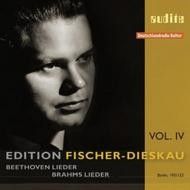
Edition Fischer-Dieskau Vol. 4 - Beethoven & Brahms Lieder

Edition Fischer-Dieskau Vol. 4 - Beethoven & Brahms Lieder


Beethoven:

Maigesang, Op. 52 No. 4

Marmotte, Op. 52 No. 7

Zärtliche Liebe 'Ich liebe dich', WoO 123

In questa tomba oscura, WoO.133

Andenken, WoO 136

Neue Liebe, Neues Leben, Op. 75, 2

Mephistos Flohlied, Op. 75, 3

Wonne der Wehmut, Op. 83 No. 1

Sehnsucht, Op. 83, 2

An die Hoffnung, Op. 94

Brahms:

Heimkehr, Op. 7 No. 6

Ein Sonett, Op. 14 No. 4 (Herder)

Wie rafft' ich mich auf Op. 32,1 (v.Platen)

Botschaft, Op. 47 No. 1

Abenddämmerung, Op. 49 No. 5

Es träumte mir (No. 3 from Acht Lieder und Gesänge, Op. 57)

Eine gute, gute Nacht (No. 6 from Acht Lieder und Gesänge, Op. 59)

Dein blaues Auge, (No. 8 from Acht Lieder und Gesänge, Op. 59)

Sommerabend, Op. 85 No. 1

Mondenschein, Op. 85 No. 2

Ständchen, Op. 106 No. 1


Dietrich Fischer-Dieskau (baritone) & Hertha Klust (piano)

Hans Mayer wrote “He knew exactly what he wanted to sing and how to go about it. The word ‘magnetism’ – so frequently misappropriated for all types of advertising – fully applied in his case.”

Beginning in the late 1940s “FiDi,” as he was already known in his Berlin years, elevated lied singing to an unparalleled level associated with his mellifluous baritone, superb vocal technique, and the credibility of his interpretations. Fortunately the persuasive powers of his early years are attested to not only by ear witnesses but by many radio recordings.

These two sets of lieder by Johannes Brahms and Ludwig van Beethoven are taken from two recording sessions held at Berlin’s RIAS broadcasting company in 1951/52.

Beethoven’s lieder did not belong to the standard repertoire at the time, and it was Fischer-Dieskau who first popularized them.

Audite Fischer-Dieskau Edition - AUDITE95601

(CD)

$15.00

Usually despatched in 3 - 4 working days.

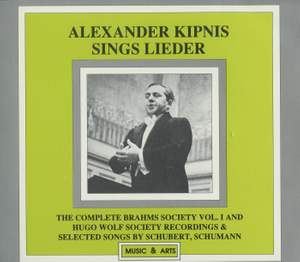
Alexander Kipnis

Alexander Kipnis

Songs By Brahms, Schubert, Schumann, Strauss & Wolf


Brahms:

Sapphische Ode, Op. 94 No. 4

Auf dem Kirchhofe, Op. 105 No. 4

Immer leiser wird mein Schlummer, Op. 105 No. 2

Feldeinsamkeit, Op. 86 No. 2

Vier ernste Gesänge, Op. 121

Verrat, Op. 105 No. 5

Erinnerung, Op. 63 No. 2

An die Nachtigall, Op. 46 No. 4 (Text: L.C.H. Hölty)

Ein Sonett, Op. 14 No. 4 (Herder)

Sonntag, Op. 47 No. 3

Von ewiger Liebe, Op. 43 No. 1

Heimweh, Op. 63 No. 8

Ständchen, Op. 106 No. 1

Die Mainacht, Op. 43 No. 2

Schubert:

Der Wegweiser (No. 20 from Winterreise, D911)

Der Doppelgänger D957 No. 13

Aufenthalt D957 No. 5

Am Meer, D 957 No. 12

Der Lindenbaum (No. 5 from Winterreise, D911)

Ungeduld (No. 7 from Die schöne Müllerin, D795)

Erlkönig, D328

Schumann:

Mondnacht (No. 5 from Liederkreis, Op. 39)

Wanderlied (No. 3 from 12 Gedichte, Op. 35)

Strauss, R:

Traum durch die Dämmerung, Op. 29 No. 1

Zueignung, Op. 10 No. 1

Wolf, H:

Um Mitternacht (No. 19 from Mörike-Lieder)

Grenzen der Menschheit (No. 51 from Goethe-Lieder)

Songs (3) on poems by Michelangelo Buonarroti

Gebet; Nun lass uns Frieden schliessen

Wie Glanzet der Helle Mond

Der Musikant (No. 2 from Eichendorff-Lieder)

Der Soldat I (No. 5 from Eichendorff-Lieder)

Der Schreckenberger (No. 9 from Eichendorff-Lieder)

Cophtisches Lied I (No. 14 from Goethe-Lieder)

Wir haben beide lange Zeit geschwiegen (No. 19 from Italienisches Liederbuch)

Geselle, woll’n wir uns in Kutten hüllen (No. 14 from Italienisches Liederbuch)

Heb’ auf dein blondes Haupt (No. 18 from Italienisches Liederbuch)

Wie viele Zeit verlor ich, dich zu lieben (No. 37 from Italienisches Liederbuch)

Was für ein Lied soll dir gesungen? (No. 23 from Italienisches Liederbuch)

Sterb' ich, so hüllt in Blumen meine Glieder (No. 33 from Italienisches Liederbuch)


"If you enjoy Lieder and/or the sound of a male singing voice, this extraordinary set belongs in your collection. It preserves the art of one of the greatest singers of this century, and is extremely well produced, with superb transfers, an intelligent booklet complete with texts and translations, and discs which are generously filled. This is, in fact, a model for the reissuing of important historical material, and it is one of Music & Arts's most significant achievements." Henry Fogel, in Fanfare

Music & Arts - MACD4661

Download only from $20.75

Available now to download.

Copyright © 2002-13 Presto Classical Limited, all rights reserved.