Fauré: Automne, Op. 18 No. 3

This page lists all recordings of Automne, Op. 18 No. 3, by Gabriel Urbain Fauré (1845-1924) on CD & download (MP3 & FLAC). Generally, more recent releases are listed first, but with priority given to those that are in stock.

Prices shown exclude VAT. (UK tax is not payable for deliveries to United States.)
See Terms & Conditions for p&p rates.

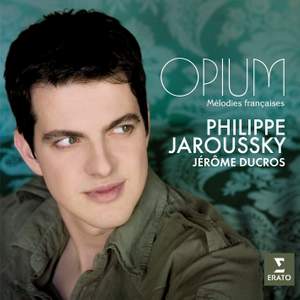
Opium (Mélodies Françaises)

Opium (Mélodies Françaises)


Caplet:

Viens, une flûte invisible soupire

Chaminade:

Sombrero (1894) – Edouard Guinand

Mignonne, à l'amour j'ai lié

Chausson:

Le temps des lilas

Debussy:

Romance

Dukas:

Sonnet – Ronsard

Dupont, G:

Les donneurs de sérénade

Fauré:

Automne, Op. 18 No. 3

Franck, C:

Nocturne

Hahn, R:

A Chloris

Fêtes galantes

Quand je fus pris au pavillon

Offrande

L'heure exquise

Indy:

Lied maritime

Lekeu:

Sur une tombe

Massenet:

Elégie

Nuit d'Espagne

Saint-Saëns:

Tournoiement ‘Songe d’opium’ Op. 26, No. 6

Violins dans le soir (de Noilles)


Philippe Jaroussky (contertenor) & Jérôme Ducros (piano)

Unsurprisingly, it is in the music of the Baroque era – the heyday of the castrato – that French countertenor Philippe Jaroussky has captured the attention of music-lovers lovers around the world. The ethereal, but sensuous beauty of his voice, his virtuosity and his sense of style have brought him critical praise, a number of major awards – including, in 2008, Germany’s prestigious Echo-Klassik prize for Male Singer of the Year, honouring his Virgin Classics album, Carestini: The Story of a Castrato – and impressive sales: more than 120,000 copies of his Vivaldi album Heroes and 90,000 of the Carestini release.

Jaroussky enters new territory with this programme of French songs from the late 19th and early 20th centuries – well over a hundred years after the end of the Baroque era. Taking its name, Opium, from a song by Saint-Saëns, it evokes the voluptuous, sometimes decadent spirit of the Belle Époque, the era of transition between Romanticism and Modernism. The programme includes a number of rarities by composers such as Dukas, Caplet, and Chaminade, as well as better-known numbers by figures like Fauré, Chausson and Hahn.

“Many people will probably wonder why a counter tenor should sing these songs,” says Jaroussky, “but if you think about it, the countertenor voice as such has no repertoire of its own, except the modern music written specifically for it. For the most part we sing music written for castratos who – as we know – had very different voices from ours. So why not venture into other musical worlds if we feel they are suited to our voices? … There has been David Daniels in Schubert, Max Emmanuel Cencic in Rossini, and even Andreas Scholl and Gérard Lesne in pop music.

“I’ve always felt a special affinity for French song, which was an area of focus in the early days of my studies with my teacher, Nicole Fallien. It was Renaud Capuçon -- whom I want to thank, along with Gautier Capuçon and Emmanuel Pahud for his valuable contribution to this disc -- who first had the idea of inviting me to sing Hahn, Chausson, Fauré in a recital. It was then that I met the pianist Jérôme Ducros, and we decided to work further on this rich and well-stocked repertoire, which contains some real undiscovered treasures. There is no theme to this album, but I wanted to record songs which have captured my heart and which suit my voice. Perhaps I can show them in a new light too.”

French song demands an acute sense of language and style, and today there are relatively few singers --- even native Francophones – who succeed in capturing its elusive magic. “I’ve decided to pronounce the texts in a way that is as close as possible to the spoken word – I don’t roll the ‘r’, for example,” continues Jaroussky. “The poetry should come to life without the imposition of too much interpretation or emotional contrivance. I’ve tried to approach it with humility.”

"Philippe Jaroussky is one of the best countertenors around. His voice is mellow, evenly toned, wide-ranging and largely free from intrusive mannerism and vocal strain” BBC Music Magazine, February 2007

“Philippe Jaroussky has a wide pitch range and absolute control throughout, with no tenseness at the top of hooting at the bottom, and his floated high notes are ravishing. Jérôme Ducros's accompanying is some of the best I have heard.” BBC Music Magazine, April 2009 ****

“His repertoire is fabulous, mixing gold star favourites with striking curios by non-song composers such as Dukas. The instrumental back-up from Jerome Ducros, the Capuçon brothers and Emmanuel Pahud is superb.” The Times, 28th March 2009 ***

Virgin - 2166212

(CD)

$13.00

In stock - usually despatched within 1 working day.

Fauré - The Complete Songs - 2

Fauré - The Complete Songs - 2

Un paysage choisi


Fauré:

Mai Op. 1 No. 2

Puisqu'ici-bas toute âme Op. 10 No. 1

Dans les ruines d'une abbaye Op. 2 No. 1

Lydia, Op. 4 No. 2

L'absent Op. 5 No. 3

Chant d'automne Op. 5 No. 1

Tristesse, Op. 6 No. 2

Après un rêve, Op. 7 No. 1

Le voyageur Op. 18 No. 2

Sérénade toscane Op. 3 No. 2

Automne, Op. 18 No. 3

La fée aux chansons Op. 27 No. 2

Noël Op. 43 No. 1

Clair de Lune, Op. 46 No. 2

Spleen, Op. 51 No. 3 (Verlaine)

Il est né, le divin enfant

En prière

Prison, Op. 83 No. 1

Dans la forêt de septembre Op. 85 No. 1

Chanson Op. 94

Le jardin clos Op. 106


Jennifer Smith, Geraldine McGreevy, Felicity Lott (sopranos), Stella Doufexis (mezzo), John Mark Ainsley, Jean-Paul Fouchécourt (tenors), Christopher Maltman, Stephen Varcoe (baritones), Graham Johnson (piano)

“There's a high standard of singing throughout and… Geraldine McGreevy offers delicacy, shape and direction, combined with an intelligent variety of tone, and Christopher Maltman's more forthright approach gives impetus to 'Le voyageur' and 'Prison'. Though her tone is a touch mature, Jennifer Smith is able to draw on the warm colours of her voice for the late cycle Le jardin clos (1914), a sombre, understated piece that emphasises the oblique, unpredictable harmony of the composer's final period.” BBC Music Magazine, May 2005 ****

“Volume 2 of Hyperion's superb Fauré song series takes its theme from Clair de lune and an idealised landscape peopled with dreaming birds and sobbing fountains. It follows the composer from youth to old age, from the young charmer to the mature master to the inscrutable sage, imaginatively side-stepping all possible monotony.
Fauré's dream world is a mirror of an occasionally innocent nature that received too many cruel knocks, reflected in music of light and darkness, courage and despair. All the singers involved in this ideally presented and recorded offering perform with a special ardour and commitment; Graham Johnson is, as always, a matchless partner and commentator.”
Gramophone Classical Music Guide, 2010

Hyperion French Song Edition - CDA67334

(CD)

$17.25

In stock - usually despatched within 1 working day.

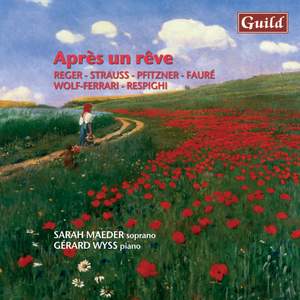
Après un rêve

Après un rêve


Fauré:

Les roses d'Ispahan Op. 39 No. 4

Clair de Lune, Op. 46 No. 2

Mandoline, Op. 58 No. 1 (Verlaine)

Automne, Op. 18 No. 3

Pfitzner:

Alte Weisen, Op. 33

Reger:

Volkslied aus Franken – Waldeinsamkeit, Op. 76, No. 3

Beim Schneewetter, Op. 76 No. 6

Schlecht’ Wetter, Op. 76 No. 7

Friede, Op. 76 No. 25

Respighi:

Quattro Rispetti toscani

Strauss, R:

Für fünfzehn Pfennige Op. 36 No. 2

Schlagende Herzen Op. 29 No. 2

Schlechtes Wetter, Op. 69 No. 5

Hat gesagt - bleibt's nicht dabei, Op. 36 No. 3

Mädchenblumen (4 songs), Op. 22

Wolf-Ferrari:

Rispetti (4), Op. 11


Sarah Maeder (soprano), Gérard Wyss (piano)

This is a unique recital of lieder by composers who were contemporaries of one another whose music is likely to appeal to the same music-lover. Alongside relatively familiar songs by Richard Strauss and Gabriel Fauré, from whence the CD takes its title, we are pleased to include rarely-heard examples from Reger, Pfitzner and Wolf-Ferrari. Sarah Maeder is a much-admired soprano who has made a special study of this repertoire, and she is excellently accompanied by the talented Gérard Wyss, to produce a recording that will be highly-prized by connoisseurs of this distinguished repertoire.

“Maeder can certainly turn on the charm but never goes coy, sings always with accuracy, purity and freshness, and articulates very clearly. She is also very fortunate in her accompanist. Gerard Wyss is a class act.” International Record Review, November 2011

Guild - GMCD7373

(CD)

$18.75

Usually despatched in 8 - 10 working days.

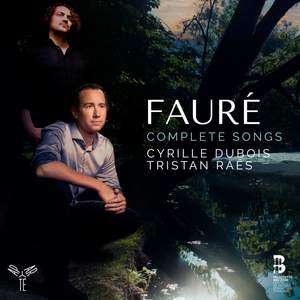
Faure: Complete Songs, Vol. 1

Faure: Complete Songs, Vol. 1


Fauré:

Le papillon et la fleur, Op. 1 No. 1

Mai Op. 1 No. 2

Dans les ruines d'une abbaye Op. 2 No. 1

Les matelots Op. 2 No. 2

Seule! Op. 3 No. 1

Tuscan Serenade

Chanson du pêcheur Op. 4 No. 1

Lydia, Op. 4 No. 2

Chant d'automne Op. 5 No. 1

Rêve d'amour, Op. 5 No. 2

L'absent Op. 5 No. 3

Aubade, Op. 6 No. 1

Tristesse, Op. 6 No. 2

Sylvie, Op. 6 No. 3

Après un rêve, Op. 7 No. 1

Hymne Op. 7 No. 2

Barcarolle Op. 7 No. 3

Au bord de l'eau, Op. 8 No. 1 (Prudhomme)

La rançon, Op. 8 No. 2

Ici-bas ! Op. 8 No. 3

Tarentelle Op. 10 No. 2

Nell, Op. 18 No. 1

Le voyageur Op. 18 No. 2

Automne, Op. 18 No. 3


Renee Doria (soprano), Simone Gouat (piano), Jacques Dutey (baritone), Tasso Janopoulo (piano), Pierre Mollet (baritone), Berthe Monmart (soprano)

Naxos Historical - 8112059

Download only from $9.25

Available now to download.

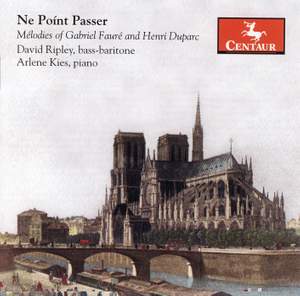
Ne point passer

Ne point passer


Duparc:

L'Invitation au voyage

Chanson triste

Le Manoir de Rosemonde

Lamento

Testament

Soupir

Phidylé

Extase

La Vague et la Cloche

Fauré:

Rêve d'amour, Op. 5 No. 2

Au bord de l'eau, Op. 8 No. 1 (Prudhomme)

Nell, Op. 18 No. 1

Mai Op. 1 No. 2

Automne, Op. 18 No. 3

Les berceaux, Op. 23 No. 1

Mandoline, Op. 58 No. 1 (Verlaine)

En sourdine, Op. 58 No. 2 (Verlaine)

Green, Op. 58 No. 3 (Verlaine)

Dans la forêt de septembre Op. 85 No. 1

La fleur qui va sur l'eau Op. 85 No. 2

Lydia, Op. 4 No. 2


David Ripley (bass), Arlene Kies (piano)

Centaur - CRC2795

Download only from $10.75

Available now to download.

Rencontres

Rencontres

Mélodies Françaises


Duparc:

L'Invitation au voyage

Le Manoir de Rosemonde

La Vie antérieure

Phidylé

Fauré:

Automne, Op. 18 No. 3

Poème d'un jour Op. 21

Chanson du pêcheur Op. 4 No. 1

Les berceaux, Op. 23 No. 1

Gounod:

L'Absent

Hahn, R:

L'heure exquise

Ibert:

Chansons (4) de Don Quichotte

Poulenc:

Voyage

La grenouillère, Op. 5

Ravel:

Don Quichotte à Dulcinée


Carlo Colombara (bass) & Rani Calderon (piano)

This CD presents a collection of French art songs – mélodies - covering a wide range of emotional and stylistic content from Fauré to Ibert. The French declamatory style emphasizes the text rather than the melody, but it is the piano part where the beauty of the music can shine through, both in the rich textures employed and in the special harmonies. This is particularly evident in the songs by Henri Duparc. The three songs by Ravel were his last works. Carlo Colombara has been a regular guest at the leading opera houses in Italy and abroad. He has worked with the most renowned conductors, such as Sir Colin Davis, Carlo Maria Giulini, Vladimir Jurowski, Riccardo Muti, Giuseppe Sinopoli and Sir Georg Solti. Critics in Italy and abroad have praised his stylistic versatility and the dark timbre and the colourful diversity of Colombara’s voice makes him one of the most sought-after basses of our time.

“The other find of the evening was Carlo Colombara, a bass making his New York debut as Mocenigo. Mr. Colombara's sound is deep and rounded, and he projected Mocenigo's malign character powerfully but without forcing it.” New York Times

Dynamic - CDS583

(CD)

$18.25

(also available to download from $10.75)

Usually despatched in 2 - 3 working days. (Available now to download.)

Fauré: Mélodies

Fauré: Mélodies


Fauré:

Nell, Op. 18 No. 1

Le voyageur Op. 18 No. 2

Automne, Op. 18 No. 3

Chant d'automne Op. 5 No. 1

La fée aux chansons Op. 27 No. 2

Les présents Op. 46 No. 1

Clair de Lune, Op. 46 No. 2

Larmes Op. 51 No. 1

Au cimetière, Op. 51 No. 2

Spleen, Op. 51 No. 3 (Verlaine)

La rose Op. 51 No. 4

Cinq Melodies 'de Venise', Op. 58

La Bonne Chanson, Op. 61

Le parfum impérissable Op. 76 No. 1

Arpège, Op. 76 No. 2 (Samain)

Prison, Op. 83 No. 1

Soir Op. 83 No. 2

Dans la forêt de septembre Op. 85 No. 1

La fleur qui va sur l'eau Op. 85 No. 2

Accompagnement Op. 85 No. 3

Mirages, Op. 113

L'horizon chimérique, Op. 118


Noel Lee (piano), Bernard Kruysen (baritone)

Naive Musique française - V4915

Download only from $21.75

Available now to download.

Irma Kolasssi sings works by Faure, Ravel and other artists

Irma Kolasssi sings works by Faure, Ravel and other artists


Fauré:

Mandoline, Op. 58 No. 1 (Verlaine)

La chanson d'Ève, Op. 95

Automne, Op. 18 No. 3

Soir Op. 83 No. 2

Ravel:

Cinq mélodies populaires grecques


Irma Kolassi (mezzo-soprano), André Collard & Jacqueline Bonneau (piano)

Testament - SBT1291

(CD)

$16.00

Usually despatched in 4 - 5 working days.

Fauré - Chansons Vol. 1

Fauré - Chansons Vol. 1


Fauré:

Rêve d'amour, Op. 5 No. 2

Après un rêve, Op. 7 No. 1

L'aurore

Tristesse, Op. 6 No. 2

Le secret Op. 23 No. 3

Chant d'automne Op. 5 No. 1

Mai Op. 1 No. 2

Dans les ruines d'une abbaye Op. 2 No. 1

Les présents Op. 46 No. 1

Notre amour Op. 23 No. 2

La rose Op. 51 No. 4

Soir Op. 83 No. 2

Le ramier Op. 87 No. 2

Les berceaux, Op. 23 No. 1

Le jardin clos Op. 106

Nell, Op. 18 No. 1

Dans la forêt de septembre Op. 85 No. 1

En Priere

Noël Op. 43 No. 1

Le parfum impérissable Op. 76 No. 1

Automne, Op. 18 No. 3


CRD - CRD3476

(CD)

$11.50

(also available to download from $10.75)

Usually despatched in 8 - 10 working days. (Available now to download.)

Mélodies

Mélodies


Duparc:

Chanson triste

Soupir

L'Invitation au voyage

Élégie

Extase

Le Manoir de Rosemonde

Phidylé

Lamento

Fauré:

Lydia, Op. 4 No. 2

Au bord de l'eau, Op. 8 No. 1 (Prudhomme)

Après un rêve, Op. 7 No. 1

Nell, Op. 18 No. 1

Automne, Op. 18 No. 3

Aurore, Op. 39 No. 1

Les roses d'Ispahan Op. 39 No. 4

Les présents Op. 46 No. 1

Clair de Lune, Op. 46 No. 2

Spleen, Op. 51 No. 3 (Verlaine)

Cinq Melodies 'de Venise', Op. 58

La Bonne Chanson, Op. 61

Prison, Op. 83 No. 1

Soir Op. 83 No. 2

Le parfum impérissable Op. 76 No. 1

Le plus doux chemin Op. 87 No. 1

Mirages, Op. 113

L'horizon chimérique, Op. 118


Marin Isepp (piano), Geoffrey Parsons (piano)

It was in 1972, when he was singing at Glyndebourne, that Cuenod began recording for Nimbus. In these records he leaves a unique and precious account of French song, which, incidentally, he taught every year in Europe and the United States. This album of Fauré and Duparc has never previously been released. Hugues Cuenod was between seventy and seventy-six at the time and the result is miraculous. Hear how skilfully he 'speaks' the text like an actor, with perfect diction and clarity. His style is admirably simple and natural, which is the most difficult thing to achieve in the very special art of the French 'mélodie'. He never descends into sentimentality or over-interpretation, temptations to which many singers of both sexes too often succumb.

Nimbus - NI5736

(CD - 2 discs)

$26.00

Usually despatched in 4 - 5 working days.

Page: 

 1   2 

 Next >>

Copyright © 2002-13 Presto Classical Limited, all rights reserved.