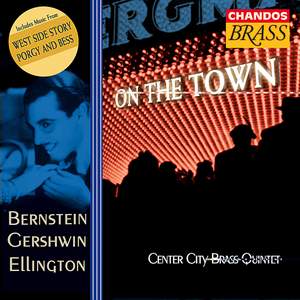
The ‘On The Town’ suite begins with a dissonant, flutter-tongued fortissimo chord, followed by a hectic passage that seems to say it all about an average day on the streets of New York. In the same movement there is also a ‘homesick’ interlude, rather like the one in Gershwin’s ‘An American in Paris’. Later movements explore other moods: a jitterbug dance, a trombone blues full of wry humour and a Broadway-belting showstopper, in which each of the instruments take a turn as the star performer. After the classic ‘lonely trumpet’ number, the suite finishes up-tempo with a samba rhythm number.
Bernstein made much of the urban blare of brass in his original score to ‘West Side Story’, which conveyed the youthful vitality and menace that underlies the drama. But brass can also have a hymn-like glow and numbers such as ‘Maria’ and ‘One Hand, One Heart’ draw on that for spiritual nourishment.
Jack Gale’s ‘Porgy and Bess’ suite has more of a ‘stand up and sing it’ character that his ‘West Side Story’ suite, reflecting the difference in style between Gershwin’s grand opera and Bernstein’s turbulent drama. The many colours of brass sound suggest the mood and characters of the opera: the passionate lament of ‘My Man’s Gone now’ contrasts with the insinuating trumpet (with cup mute) of ‘It ain’t necessarily so’ for example.
Duke Ellington was an inescapable force in American music. ‘Caravan’ is built around a contradiction: a dark, smokey main strain with an Arabic flavour, alternates with a sunny, major-key bridge passage. ‘Do Nothin’ Till You Hear From Me’ ranges from manicured urbanity to a bright, almost New Orleans-style swing. Billy Strayhorn’s ‘Chelsea Bridge’, with its sliding ninths is Strayhorn at his most pensive.
“From start to finish, we hear only total precision, excellent tone, plenty of fire and stylistic contrast, and superb intonation and balance” American Record Guide