Prices shown exclude VAT. (UK tax is not payable for deliveries to United States.) See Terms & Conditions for p&p rates. | |  | COLORaturaS
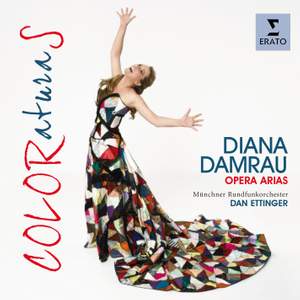
The multi-faceted German coloratura soprano, who has been described as “the Meryl Streep of classical music” shows her vocal and dramatic range with this collection of arias from the 19th and 20th centuries. The repertoire ranges from Rossini and Verdi to Stravinsky and Bernstein, from comedy to tragedy and covers four languages: German, Italian, French and English. It includes Zerbinetta’s marathon coloratura aria from Ariadne auf Naxos, one of the operas which spearheaded Damrau’s international career. “Damrau has … strong opinions on the use of coloratura for dramatic effect,” wrote Opera News in an interview with the soprano. “Unlike some singers of previous generations, who were encouraged to cut back on the vocal garni by conductors who found the flourishes suspect, Damrau employs embellishments to emphasize the impact of language ….What's more, her Italian diction is superb, something that cannot always be said for Central and Eastern European artists. ‘Oh, I'm so glad to hear that,’ she says, ‘because I have a facility for languages, and I work very hard to communicate well.’ Whether Rosina [in Il barbiere di Siviglia] is expressing delight over Almaviva's furtive caress or anger over his imagined betrayal, Damrau deploys her clarity of speech to vivid effect; she points out that in ‘Una voce poco fa’,’ [featured on this recital] the word vipera is key — the girl knows full well she can be a viper. Later on, the bite she puts into the word traditore, for example, cuts to the quick.” When Damrau performed Rosina at the Met, The New York Times wrote that: “the lovely German coloratura Diana Damrau was absolutely dazzling here. Interpolating extra-high roulades into the music, she brought her bright, clear and very sizable voice to the role, singing with impeccable accuracy and delightful impishness. This Rosina was no innocent. You immediately believed her when she explained in the touchstone aria ‘Una voce poca fa’ that though for the most part she is a docile and obedient thing, when crossed in love she becomes a viper.” Donizetti also appears in this recital, with an aria from Linda di Chamounix. Damrau took on the challenge of following Natalie Dessay as Lucia di Lammermoor at the Met. “Ms. Damrau dispatched the passage-work, trills and top notes with aplomb,” wrote the New York Times. “Her sound was warm, plush and clear ... That Ms. Damrau executed the Mad Scene’s spiraling vocal roulades so accurately and held sustained tones with such penetrating steadiness lent a quality of eerie control to Lucia’s madness. And her gleaming top notes filled the house.” “Diana Damrau is the most thrilling high soprano of our day.” The Observer “The point with Damrau ... is that she’s fearless, impressively unpredictable, and about as far as possible from being a ‘production line’ soprano.” Classic FM magazine “Diana Damrau is ice and fire. With a formidable technique allied to effortless artistry, there is it seems nothing that she cannot do, certainly in the vocal fireworks department. …it's her Gilda where everything melds into perfection. The lightly coloured tone in the introductory phrases to 'Caro nome' proclaim her innocence; the vocal slide into the flute solo that introduces the aria sings of her love for the Duke; and by the time you arrive at the tender trill on the aria's penultimate phrase and the final effortlessly sustained note you're just about in love yourself.” BBC Music Magazine, February 2010 ***** | | | In stock - usually despatched within 1 working day. |
|
|
| |  | Natalie Dessay - The Miracle of the Voice
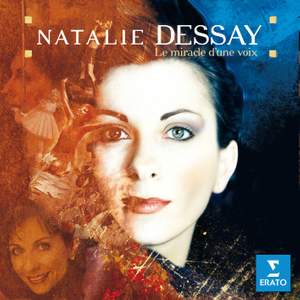
“Our finest coloratura soprano: she combines dazzling accuracy and luminous musicality” The Times | | | In stock - usually despatched within 1 working day. |
|
|
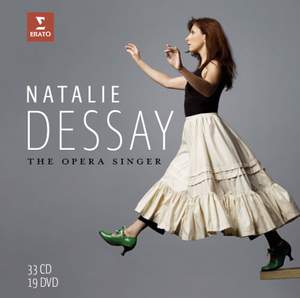
| |  | Natalie Dessay - The Miracle of the VoiceGreatest Moments on Stage
Bernstein: | Glitter and be gay (from Candide) London Philharmonic Orchestra, Sir Andrew Davis | Donizetti: | Il dolce suono mi colpì di sua voce! … Spargi d'amaro pianto (from Lucia di Lammermoor) Orchestre & Chœurs de l’Opéra de Lyon, Evelino Pidò | Mozart: | O zittre nicht (from Die Zauberflöte) Les Arts Florissants, William Christie Der Hölle Rache kocht in meinem Herzen (from Die Zauberflöte) Orchestre & Chœurs de l’Opéra National de Paris, Ivan Fischer | Offenbach: | Les oiseaux dans la charmille (from Les Contes d'Hoffmann) Orchester der Wiener Staatsoper, Jan Märkl Duo de la mouche from Orphée aux Enfers | Ravel: | Air du Feu: “Arrière…” from L'enfant et les sortilèges | Strauss, J, II: | Frühlingsstimmen Walzer Op. 410 Orchester der Wiener Staatsoper, Ulf Schirmer | Strauss, R: | Grossmächtige Prinzessin (from Ariadne auf Naxos) Wiener Philharmoniker, Christoph von Dohnanyi | Thomas, Ambroise: | A vos jeux, mes amis (from Hamlet) Symphony Orchestra & Chorus of the Gran Teatre del Liceu, Bertrand de Billy |
“Ms. Dessay treats opera like a form of theatre in which acting and singing are one” The Times, November 2005 | | | In stock - usually despatched within 1 working day. |
|
|
| |  | Edita Gruberova: Vienna State Opera 1977-2010
Bellini: | La dama d'Arturo... Oh, vieni al tempio (from I Puritani) Deh! Con te li prendi ... Mira,o Norma (from Norma) | Donizetti: | Quel guardo il cavaliere (from Don Pasquale) sung in German as 'O jene Glut in Blicken ... Auch ich versteh' die feine Kunst ' Quando di luce rosea (from Maria Stuarda) Regnava nel silenzio...Quando rapito in estasi (from Lucia di Lammermoor) Sulla tomba che rinserra (from Lucia di Lammermoor) Ah! tardai troppo...O luce di quest'anima (from Linda di Chamounix) Com' e bello! (from Lucrezia Borgia) Scellerato!...Va! La morte sul capo ti pende (from Robert Devereux) Pronta son; purch'io non manchi (from Don Pasquale) sung in German as 'Ich bin bereit' | Massenet: | Allons! Il le faut pour lui-même!... Adieu, notre petite table (from Manon) Suis-je gentille ainsi? ... Je marche sur tous les chemins ... Obéissons quand leur voix appelle (from Manon) Ces murs silencieux...Toi! Vous!...Oui, c'est moi (from Manon) | Mozart: | Fuggi, crudele, fuggi! (from Don Giovanni) Vanne, t'affretta… Ah se il crudel periglio (from Lucio Silla) Martern aller Arten (from Die Entführung aus dem Serail) | Strauss, J, II: | Mein Herr Marquis (from Die Fledermaus) | Strauss, R: | Grossmächtige Prinzessin (from Ariadne auf Naxos) | Verdi: | Un dì felice, eterea (from La traviata) Sempre libera (from La Traviata) |
If opera enthusiasts had to choose a singer as the quintessential coloratura soprano, the name of Edita Gruberova would be bound to come up. To the delight of her audiences, she has spent the last four decades exploring every corner of the coloratura repertory. The fact that throughout this period she has retained her timbre, flexibility and an upper range extending above top C is due to two factors: her sovereign technique and her intelligent choice of repertoire. After making her professional début with a provincial company in her native Slovakia, Gruberova joined the Vienna State Opera, which remains her artistic home to this day. This new compilation of high points from Orfeo's Wiener Staatsoper Live series showcases her earliest decisive successes in the sort of lighter coloratura roles often sung by soubrettes: Norina in 'Don Pasquale' and above all Zerbinetta in 'Ariadne auf Naxos', a role to which she returned for 35 years. Lucia stayed for 30 years, allowing her to cast a powerful spell on audiences not only in Vienna but all over the world. Starting with Lucia and with three of Mozart’s soprano roles, Donna Anna, Konstanze and Giunia in the rarely heard 'Lucio Silla', she began to develop in the direction of dramatic coloratura roles, a development that finally enabled her to tackle Bellini’s 'Norma'. Between these two extremes, Edita Gruberova’s career contains many other milestones that may all be enjoyed in this portrait from Vienna. Roles represented here include the titular heroine of Verdi’s 'La traviata' (with Alfredo Kraus as one of her many world-class partners), the flighty Manon in Massenet’s opera of the same name – one of only a handful of excursions into the French repertory – and her irresistible Adele in Johann Strauss’ operetta, 'Die Fledermaus'. Central to the second half of Edita Gruberova’s 40-year reign at the Vienna State Opera are leading roles in bel canto operas, operas which without her be even more of a rarity: Elvira in 'I Puritani' and four of Donizetti’s dramatic coloratura roles, Elisabetta in 'Roberto Devereux' plus Maria Stuarda, Linda di Chamounix and, most recently, Lucrezia Borgia. “an excellent portrait of the artist” International Record Review, October 2012 | | | Usually despatched in 3 - 4 working days. |
|
|
| |  | Alois – The Boy and his Voice
Alois Mühlbacher (treble) & Franz Farnberger (piano) Alois Mühlbacher, the St. Florian choirboy has performed on the stage of the Vienna State Opera, impressing all who have heard him. On his debut CD he performs works which hitherto have been beyond the reach of any boy soprano with youthful lightheartedness and vocal genius. | | | Usually despatched in 2 - 3 working days. |
|
|
| |  | Opera Highlights
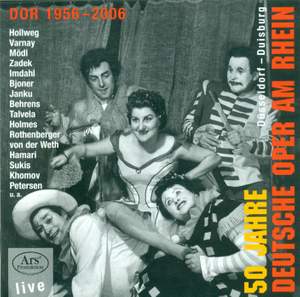
Ilse Hollweg (soprano), Anneliese Rothenberger (soprano), Heinz Imdahl (bass-baritone), Astrid Varnay (soprano), Hanna Ludwig (contralto), Hilde Zadek (soprano), Ingrid Bjoner (soprano), Martti Talvela (bass), Brigitte Durrler (soprano), Wolf Appel (tenor), Hana Janku (soprano), William Holley (tenor), Karl Vullings (vocals), Julia Hamari (contralto), Hildegard Behrens (soprano), Eugene Holmes (baritone), Lilian Sukis (soprano), Georgi Tscholakoff (tenor), Nassrin Azarmi (soprano), Serghei Khomov (tenor), Alexandra von der Weth (soprano), Mariselle Martinez (mezzo-soprano), Tassis Christoyannis (baritone), Nataliya Kovalova (soprano), Gordon Hawkins (baritone), Angelo Simos (tenor), Therese Waldner (soprano), Marlis Petersen (soprano) Dusseldorf Symphony Orchestra, Duisburger Philharmoniker, Deutschen Oper am Rhein Chorus, Arnold Quennet, Alberto Erede, Giuseppe Patane, Peter Schneider, Hector Urbon, Baldo Podic, Andreas Stoehr, John Fiore, Alexander Joel | | | (also available to download from $21.00) | Usually despatched in 4 - 5 working days. (Available now to download.) |
|
|
| |  | Coloratura Arias
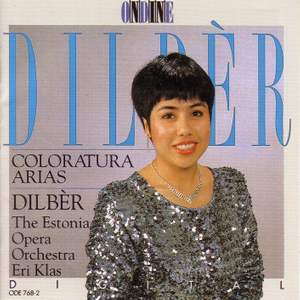
Dilbèr (coloratura soprano) Estonian Opera Orchestra, Eri Klas | |
|
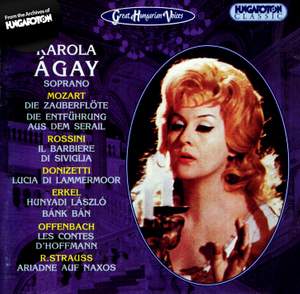
| |  | Great Hungarian Voices: Karola ÁgayArias & Duets by Mozart, Rossini, Offenbach
Karola Ágay (soprano), with Zsuzsa Barlay (mezzo-soprano), József Simándy (tenor) Hungarian State Opera Chorus and Orchestra, Vilmos Komor, János Ferencsik | | | Usually despatched in 4 - 5 working days. |
|
|
| |
|