All recordingsPrices shown exclude VAT. (UK tax is not payable for deliveries to United States.) See Terms & Conditions for p&p rates. | |  | Dowland: Tunes of Sad Despaire
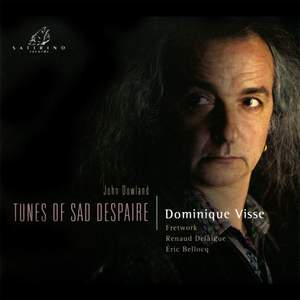
In the late 16th C, lute songs were known as ‘Ayres’ with John Dowland’s form of writing establishing a fashion of both composition and performance which was to last for 25 years. The popularity of rhetoric and a fashion for melancholy spilled over to Dowland’s writing and he became one of the greatest advocates for this style. This disc is a wonderful collection of his melancholic works (difficult to achieve as the composer himself never made a ‘collection’ as such), performed here by the fantastic Fretwork ensemble with countertenor Dominque Visse singing. Dominque began his career at the age of 11 as a chorister in the Cathedral of Notre Dame and went on to study with Alfred Deller. He has since performed with other greats including more recently René Jacobs, Nigel Rogers and William Christie. “In the final analysis, though in many ways infuriating, this is a brilliant and inspiring Dowland recital that cannot easily be ignored.” International Record Review | 
| | | In stock - usually despatched within 1 working day. |
|
|
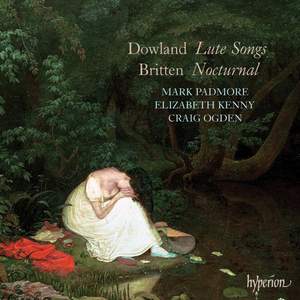
| |  | Britten & Dowland - Lute Songs
“Padmore provides context by singing Dowland's original song before Craig Ogden steals in, alert to the Nocturnal's every nuance, and with a palette of colours both caressing and disquieting. Completing the frame, 'Flow my Tears' is beautifully inflected, though finer still is 'In Darkness let me Dwell' where in the final bars Padmore's enrapt engagement seems to conjure up the very chill of death.” BBC Music Magazine, February 2008 **** “Mark Padmore again shows why he is one of today's finest tenors. The quicker songs, like "Away with these self-loving lads", gain in clarity from a semi-declamatory approach, while the slower are eerily viol-like.” Gramophone Magazine, Janurary 2008 “A simply brilliant disc. I can’t praise it enough. A bronze Liz Kenny should be on the empty plinth in Trafalgar Square, in my opinion” Early Music Today “Since Emma Kirkby’s first recording in the late-1970s, we have known what to expect from Dowland’s lute songs. Some fine discs have followed, but not until Mark Padmore and Elizabeth Kenny’s new release has there been one as radical in
its potential impact on our understanding of the music. With tonal purity intact, voice and lute add subtle decoration, rhythmic fluidity, drama and rich poetic sensibility to these songs” The Independent on Sunday “... extraordinary diction and whispering chamber-like intimacy … [Mark Padmore] joy in conveying the emotional core of each situation” Gramophone Magazine | | | In stock - usually despatched within 1 working day. |
|
|
| |  | Kuss Quartett - Bridges
“…provocative, driving, impassioned playing...the purity of sound was almost heavenly…” Houston Chronicle | | | In stock - usually despatched within 1 working day. |
|
|
| |  | The Art of Segovia
Albéniz: | Asturias (from Suite espanola, Op. 47) Zambra Granadina | Bach, J S: | Prelude in D (after Prelude from Cello Suite No. 1 in G BWV1007) Partita for solo violin No. 1 in B minor, BWV1002: Bourrée Cello Suite No. 3 in C major, BWV1009: Courante Gavotte (Rondeau) from Partita No. 3 in E major BWV1006 | Castelnuovo-Tedesco: | Capriccio diabolico (Homage to Paganini) Tonadilla on the name of Andrés Segovia, Op. 170, No. 5 | Chopin: | Prelude Op. 28 No. 7 in A major | Debussy: | Préludes - Book 1: No. 8, La fille aux cheveux de lin | Dowland: | If my complaints could passions move Frog Galliard | Falla: | Homenaje a Debussy | Franck, C: | L'Organiste: Quasi lento (Preludio) L'Organiste: Andantino poco allegretto | Frescobaldi: | Aria e Corrente | Grieg: | Lyric Pieces Op. 47: No. 3 - Melody | Handel: | Sarabande from Suite in D minor, HWV437 | Mendelssohn: | String Quartet No. 1 in E flat major, Op. 12: Canzonetta | Mussorgsky: | Pictures at an Exhibition: The Old Castle | Paganini: | Andantino variato | Pedrell, C: | Guitarreo | Ponce, M: | Theme Varie et Finale | Rameau: | Minuet in G major | Rodrigo: | Zarabanda lejana Fantasia para un Gentilhombre: Danza de las hachas Symphony of the Air, Enrique Jordá | Roussel: | Segovia for guitar, Op. 29 | Scarlatti, D: | Keyboard Sonata K11 in C minor | Scriabin: | Prelude, Op. 16 No. 4 in E flat minor | Segovia: | Estudio sin luz | Sor: | Introduction and Variations on a Theme by Mozart, Op. 9 | Tárrega: | Recuerdos de la Alhambra Capricho árabe Marieta (Mazurka) | Torroba: | Romanza de los piños Madroños Serenata burlesca | trad.: | Mexican Folksong | Turina: | Sevillana, Op. 29 | Villa-Lobos: | Prelude No. 1 in E minor Prelude No. 3 in A minor |
(All transcriptions by Andrés Segovia)
| | | (Sorry, download not available in your country) | In stock - usually despatched within 1 working day. |
|
|
| |  | Infernum In ParadiseConsort Songs & Music
Eugénie Warnier (soprano) Musicall Humors, Julien Léonard (direction) "Beer and the viola da gamba both arrived in England in the space of a year, in the reign of King Henry VII”, wrote Henry Peacham. And yet it was not until the following reign, that of Henry VIII, that the latter instrument gained its noble status. The high point, however, occurred in the long reign of Elizabeth I (1558-1603). The consort song had its origin partly in the theatre, partly in madrigals inspired by the Italians, then very much in vogue. Fashionable English composers write songs, airs and dance pieces that would embody this uniquely English phenomenon; among them John Dowland and Anthony Holborne, who feature prominently on this disc, both leading figures in Elizabethan music. With his ensemble Musicall Humors, Julien Léonard has managed to create a viol consort of astonishing homogeneity, offset by the delicate presence at times of a lute, at times of a cittern, a harpsichord, the virginals or organ. The sonorities are round, warm, velvety, and for her first solo disc, the voice of Eugénie Warnier lies with unforced delicacy upon this instrumental duvet. “A seductively programmed and sumptuously realised anthology of music for viol consort and voice that conveys the Elizabethan psyche in all its melancholy and amorous playfulness. Pity the words are often indistinct.” BBC Music Magazine, April 2013 *** “This is an attractive and well-contrasted recital of Elizabethan and Jacobean viol consort music and songs...All are played with a rare warmth and intimacy.” Sunday Times, 18th November 2012 | | | Usually despatched in 3 - 4 working days. |
|
|
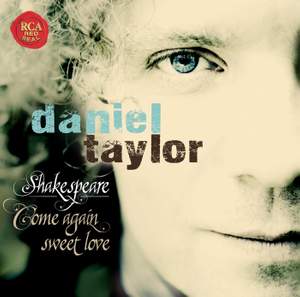
| |  | Shakespeare - Come Again Sweet Love
anon.: | Willow song | Bennet: | Weep, O Mine Eyes | Dowland: | Come again, sweet love doth now invite Galliard If my complaints could passions move Semper Dowland Semper Dolens | Gibbons, O: | The Silver Swan | Hume, T: | The Virgins Muse | Johnson, E: | Come againe, sweet Nature's treasure Come againe, sweet Nature's treasure reprise | Johnson, R: | Full fathom five Where the bee sucks | Jones, Robert: | Now what is love? Sweet Kate Farewell Dear Love | Morley: | Sweet nymph, come to thy lover It was a lover and his lass | Purcell: | By beauteous softness (from Now does the glorious day appear, Z332) If music be the food of love, Z379 | Robinson, T: | Fantasie & Toye | Wilson, John: | Take, O take those lips away |
Shakespeare – Come again sweet love is a haunting collection of songs and madrigals by some of the great masters of the Renaissance period, including Purcell, Dowland and Gibbons. The theme of the album is “love” in all its many forms, expressed through the poetry of the Shakespearian Era and the music it inspired. Daniel Taylor is joined on the album by the Theatre of Early Music (founded and conducted by Daniel Taylor) and famous soloists Dame Emma Kirkby, Carolyn Sampson, Michael Chance and Charles Daniels. Daniel and the Theatre of Early Music appear in some 30 concerts every year. The ensemble consists of a choir and orchestra that are dedicated to sustain the heritage of magnificent yet neglected choral and instrumental repertoire from four centuries. Their recent performance could be seen on stages in France, England, Argentina, Brazil and China. Daniel Taylor is a prolific recording artist who has worked on numerous albums including Sakamoto’s pop-opera Life with the Dalai Lama and Salman Rushdie, Renaissance duets with actor Ralph Fiennes, and Bach recitals with the Theatre of Early Music to name only a few. “Vocal leads and arrangements are shared: the results include a four-part madrigal setting of Gibbons' "The Silver Swan"; solo pieces accompanied by theorbo, such as Taylor's poised expression of a woman who "with such sweetness and such justice reigns" in Purcell's "By Beauteous Softness"; and tenor Charles Daniels's extended swoon of ardour through Dowland's "Come Again, Sweet Love Doth Now Invite".” The Independent, 24th June 2011 *** “This is deluxe casting, allowing combinations from unaccompanied lute songs to an a cappella duet, and lute solos to five-part madrigals...Taylor - with one of the loveliest countertenor voices in the business - is on nine [tracks], happy it seems to let others into the spotlight, with every other singer getting at least one solo spot.” Gramophone Magazine, Awards Issue 2011 | | | Usually despatched in 3 - 4 working days. |
|
|
| |  | English Song
anon.: | Miserere, my Maker | Berkeley, L: | How Love Came In | Bridge: | Go Not, Happy Day Love went a-riding | Britten: | Let the florid music praise! (from On this Island) | Butterworth, G: | Is My Team Ploughing? | Campion: | Come let us sound with melody Fair, if you expect admiring Shall I come, sweet love, to thee? | Dowland: | I saw my Lady weepe Awake, sweet love Fine knacks for ladies Sorrow, stay If my complaints could passions move What if I never speed? | Ford, T: | Faire, sweet, cruell Come Phyllis come | Holst: | Persephone (No. 1 from 12 Songs Op. 48) | Ireland: | I Have Twelve Oxen | Moeran: | In youth is pleasure | Morley: | It was a lover and his lass O mistress mine Thirsis and Milla I saw my lady weeping What if my mistress now | Oldham, A: | Chinese Lyrics (3) | Pilkington: | Rest sweet Nimphs | Rosseter: | When Laura smiles What then is love but mourning? Sweet come again What is a day? | Warlock: | Yarmouth Fair |
Peter Pears’ voice was undoubtedly one of the finest and most distinctive of the twentieth century and here he collaborates with Julian Bream and Benjamin Britten in performances of English song. Repertoire includes works by Ford, Morley, Rosseter, Dowland, Pilkington, Campion, Bridge, Butterworth, Ireland, Moeran, Warlock, Holst, Berkeley, Oldham and Britten. | | | Usually despatched in 8 - 10 working days. |
|
|
| |  | Good CompanyeGreat Music from a Tudor Court
A musical journey back in time - to the world of the jesters and music makers of the royal chamber. Stately dances, gentle lute music and wistful love songs make up this programme of beautiful and elaborate sixteenth-century music from the Tudor courts of Henry VIII and Elizabeth I. | | | (also available to download from $10.50) | Usually despatched in 2 - 3 working days. (Available now to download.) |
|
|
| |  | Melankoli
Morten Carlsen (viola), Marianne Beate Kielland (soprano), Sergej Osadchuk (piano) | | | Usually despatched in 4 - 5 working days. |
|
|
| |  | Baroque Voices 18 - Dowland: Ayres
These beautiful and melancholy “Ayres” by the English 16th century composer John Dowland may be seen as precursors of the songs of the Romantic period, two centuries later. They are performed here by the renowned combination of Gerard Lesne and the Ensemble Orlando Gibbons. | | | Usually despatched in 3 - 4 working days. |
|
|
| |
|