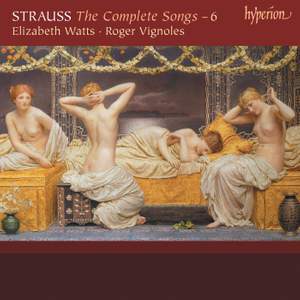
All recordingsPrices shown exclude VAT. (UK tax is not payable for deliveries to United States.) See Terms & Conditions for p&p rates. | |  | Richard Strauss: The Complete Songs 6
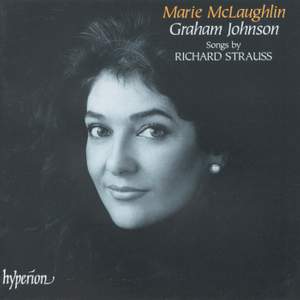
Strauss, R: | Einerlei, Op. 69 No. 3 Waldesfahrt, Op. 69 No. 4 Schlechtes Wetter, Op. 69 No. 5 Rote Rosen, AV76 Die erwachte Rose, TrV 90, AV 66 Der Stern, Op. 69 No. 1 Begegnung (Meeting), AV 72 Wir beide wollen springen, AV 90 Das Bächlein, Op. 88 No. 1 Blick vom oberen Belvedere, Op. 88 No. 2 Der Krämerspiegel (12 songs), Op. 66 (texts: Alfred Kerr) Wer hat’s getan Op. 10 No. 6 bis Malven, AV 304 |
Hyperion’s Strauss Lieder series continues to demonstrate that the composer’s achievements in this genre are among the most fascinating and accomplished of his works. This latest volume includes, for instance, the delicious Schlechtes Wetter from Op 69, and the lovely—and unknown—Waldesfahrt from the same group. The delicately beautiful Malven (never published in Strauss’s lifetime, and first performed by Kiri Te Kanawa in 1985), with which the recital ends, is known as Strauss’s ‘Fifth Last Song’. The central work recorded here, Krämerspiegel, owes its genesis to Strauss’s long-lasting and bitter dispute with the German music publishing industry. A Berlin literary critic, Alfred Kerr, wrote him a witty set of satirical verses lampooning music publishers, mentioning many of Strauss’s principal enemies by name. Strauss set all twelve poems to music, and this practical joke finally saw the light of day in 1921. It is easy to understand why the cycle is now rarely performed, given that the texts consist entirely of in-jokes, and that the lion’s share of the music is given to the pianist. But Strauss’s music is well worth savouring, not least for its humorous references to Strauss’s own works, such as Der Rosenkavalier and Ein Heldenleben, and especially for the beautiful prelude to the eighth song and its reprise as the final extended postlude—used by the composer nearly a quarter of a century later, in his opera Capriccio. Roger Vignoles is the curator and pianist of this series, and also writes the informative booklet notes. Making her Hyperion debut is soprano Elizabeth Watts, of whom The Guardian commented at a recent Strauss Lieder recital: ‘Watts, winner of the Lieder prize at Cardiff Singer of the World in 2007, is already a major artist, but this struck me as making a transformation into a great one, as well as allowing us to hear her in music she seems to have been born to sing. Watts has the right tonal glamour for Strauss along with that tricky combination of vocal ease and immaculate control that his work requires.’ “Vignoles was and is very impressive indeed, here readily catching the extraordinary variety of mood in each song...My pleasure in this latest volume is without any reservations. Elizabeth Watts sings gloriously, rising fluently to the high tessitura of Strauss's melodic lines...Her beautiful voice, sensitive phrasing and response to word-meanings are consistently rewarding and her partnership with Roger Vignoles could hardly be more beautifully balanced.” Gramophone Magazine, February 2013 “As well as showing her ability to weave around a wide-ranging phrase, apparent in the first song on the disc, 'Einerlei', and incorporating a useful chest voice, she shows a wicked penchant for donning joke fangs in the song cycle.” BBC Music Magazine, March 2013 **** | | | In stock - usually despatched within 1 working day. |
|
|
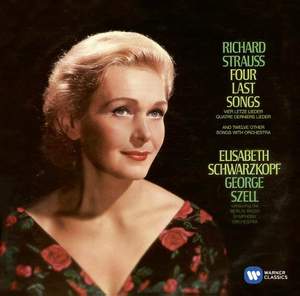
| |  | Strauss: Four Last Songs
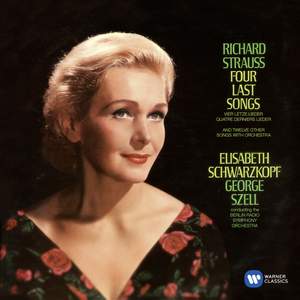
Strauss, R: | Four Last Songs Muttertändelei, Op. 43 No. 2 Waldseligkeit, Op. 49 No. 1 Zueignung, Op. 10 No. 1 Freundliche Vision, Op. 48 No. 1 Die heiligen drei Könige aus Morgenland Op. 56 No. 6 Ruhe, meine Seele!, Op. 27 No. 1 Meinem Kinde, Op. 37 No. 3 Wiegenlied, Op. 41 No. 1 Morgen, Op. 27 No. 4 Das Bächlein, Op. 88 No. 1 Das Rosenband, Op. 36 No. 1 Winterweihe, Op. 48 No. 4 |
| | | In stock - usually despatched within 1 working day. |
|
|
| |  | Gillian Keith bei Strauss
Strauss, R: | Fünf Lieder, Op. 48 Fünf kleine Lieder, Op. 69 Ständchen, Op. 17 No. 2 Schlagende Herzen Op. 29 No. 2 Das Bächlein, Op. 88 No. 1 Mädchenblumen (4 songs), Op. 22 Leises Lied, Op. 39 No. 1 Wiegenliedchen Op. 49 No. 3 Rote Rosen, AV76 Die erwachte Rose, TrV 90, AV 66 Malven, AV 304 Amor, Op. 68 No. 5 Muttertändelei, Op. 43 No. 2 Drei Lieder der Ophelia Op. 67 |
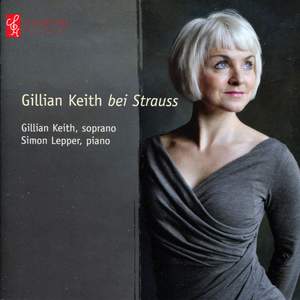
"I thank my Almighty Creator for the gift and inspiration of the female voice." R. Strauss Strauss displays a consistent ability to bring out the best in a singer, and soprano Gillian Keith - accompanied here by pianist Simon Lepper - amply showcases Straussʼ unique reverence for the female voice. In song-writing, as in orchestral music, Richard Strauss hit his stride early. His range and confidence is displayed in this group of songs; as the selection shows, he wrote some superb examples in his teens, and by his mid-twenties was already an assured master of the Lied; mastery which continued to develop into old age. Generations of singers have been inspired by Straussʼ devotion to song; from the dramatic, to the lyric, to the coloratura, Straussʼ songs offer something very special. In this recital of specially chosen Lieder are many songs which have earned their place in the repertoire, along with less-often heard works such as Mädchenblumen and Drei Lieder der Ophelia, which compliment those more familiar and are at the heart of this recital. One of Canadaʼs leading lyric sopranos, Gillian Keith made her Royal Opera Covent Garden debut as Zerbinetta in Straussʼ Ariadne auf Naxos, a role she has gone on to repeat with great success. A past winner of the prestigious Kathleen Ferrier Award, she has a natural affinity for Straussʼ music. | | | In stock - usually despatched within 1 working day. |
|
|
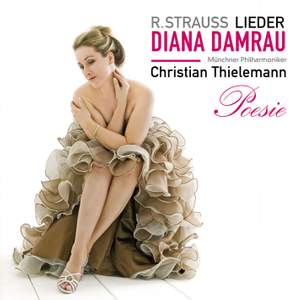
| |  | R. Strauss: Lieder
Strauss, R: | Ich wollt ein Sträusslein binden, Op. 68 No. 2 Waldseligkeit, Op. 49 No. 1 Das Bächlein, Op. 88 No. 1 Winterweihe, Op. 48 No. 4 Morgen, Op. 27 No. 4 Allerseelen, Op. 10 No. 8 Cäcilie, Op. 27 No. 2 Amor, Op. 68 No. 5 Säusle, Liebe Myrte, Op. 68 No. 3 Freundliche Vision, Op. 48 No. 1 Ständchen, Op. 17 No. 2 Traum durch die Dämmerung, Op. 29 No. 1 Wiegenlied, Op. 41 No. 1 Meinem Kinde, Op. 37 No. 3 Muttertändelei, Op. 43 No. 2 Zueignung, Op. 10 No. 1 Das Rosenband, Op. 36 No. 1 Heimkehr, Op. 15 No. 5 Als mir dein Lied erklang, Op. 68 No. 4 Des Dichters Abendgang, Op. 47 No. 2 An die Nacht, Op. 68 No. 1 Lied der Frauen, Op. 68 |
“This is a performance of transcendent art” proclaimed Opera News on hearing Diana Damrau’s interpretation of Strauss’ Zerbinetta on her last Virgin Classics album, ‘Coloraturas’. In this collection of Strauss songs, recorded in the composer’s hometown, she is joined by the Munich Philharmonic and Christian Thielemann, the leading German conductor of his generation. Soprano Diana Damrau, described by The Sunday Times as “the most dazzling star to have emerged from Germany in recent years” was born in Bavaria. The region’s capital, Munich, was the birthplace of Richard Strauss, and in March 2009 a programme of the composer’s songs was presented at the city’s Gasteig Philharmonie, with Damrau accompanied by the Munich Philharmonic Orchestra under its Chief Conductor, Christian Thielemann. “Strauss loved female voices,” says Damrau, “and he explores some extreme possibilities in these many-layered songs, each with its different point of view. Sensitivity to the words is vital to telling the story of each song, to capturing the rapid changes of mood and all the colours.” Strauss’ operatic roles for lyric-coloratura soprano, notably Zerbinetta (Ariadne auf Naxos), Aithra (Die Aegyptische Helena) and Sophie (Der Rosenkavalier) have played an important role in Damrau’s career. As Opera News wrote when reviewing her last Virgin Classics album, ‘Coloraturas’: “Zerbinetta … is one of Damrau's calling cards, having served for her stupendous Met debut in 2005. ‘Grossmächtige Prinzessin’ provides every opportunity to dazzle the listener, with stratospheric high notes, staccatos, roulades and trills, as Zerbinetta cajoles, berates and mocks the gloomy Ariadne. Every note and word reveals Damrau's artistry, the result of constantly questioning and probing into the composer's intentions; while the soprano has a knack for concealing or highlighting technical difficulties at will, here just enough self-absorbed delight breaks to the surface that we are as captivated by Zerbinetta's own theatrical skills as by Damrau's vocal athleticism. Damrau/Zerbinetta even seems to be commanding the orchestra's responses to her whimsical, moody outbursts. This is a performance of transcendent art.” On the new CD, favourites such as ‘Ständchen’, ‘Wiegenlied’, ‘Allerseelen’, ‘Cäcilie’ and ‘Zueignung’ feature alongside more rarely heard numbers, and six tracks recorded under studio conditions now complement the sixteen songs captured live. “Always there is delicacy and an absolute respect for the silky legato that Strauss demands from his soloist. Damrau finds drama in these songs too...the songs that demand diamond-bright coloratura, runs and trills to affright a Zerbinetta hold no terrors...Thielemann has a very special affinity with singers. He also coaxes some fine playing from the Munich orchestra.” International Record Review, January 2011 “What wins this disc the five stars are the facts that Damrau, singing in her native German, is poised ideally between dreamy haze and Schwarzkopfian fussiness...her hallowed pianissimos allow the exquisite detail Thielemann draws from his Munich players to shine...the ineffable balance between voice and orchestra, subtly assisted by the engineering, is a treat throughout.” BBC Music Magazine, February 2011 ***** “Secure in technique, gifted in projecting drama and emotion, Damrau is a peach of a singer...The haunting music; the lyrical voice; the orchestra’s dappled array, with woodwinds curling like climbing roses and violins wafting with fragrant perfume: poesie indeed, in small doses.” The Times, 28th January 2011 **** “With a creamy-voiced soprano such as Renée Fleming, say, the results could be an excess of musical cholesterol, but Damrau’s diamantine timbre brings a welcome edge to the mix...She’s the leading Strauss soprano of the day, and her singing here shows exactly why.” Sunday Times, 30th January 2011 **** “her voice is not ideally voluptuous for Strauss, but she makes up for it by her exceptional musicality, investing every song with meaning, and her clarity of diction. The Munich Philharmonic under Christian Thielemann are splendid partners on a CD that must now be regarded as the best modern introduction to Strauss's songs” Mail on Sunday, 30th January 2011 **** “Her singing is consistently accurate and expressive. I particularly liked her 'Traum durch die Dämmerung', which caught the atmosphere of a secret tryst perfectly...She joins the group of younger sopranos such as Angelika Kirchschlager and Anne Schwanewilms among the leading lyric Strauss singers of the day.” Sunday Telegraph, 30th January 2011 **** “she is not merely a fair-weather soprano. Darker shades, more serious tones lie within her expressive scope than one might at first suppose...Familiar songs such as "Ständchen" gain new life with a smiling intimacy of approach in the first verse and an enriched suggestiveness as dusk falls in the third.” Gramophone Magazine, March 2011 “there are performances of such favourites as Morgen, Allerseelen and Wiegenlied, where her hovering, silvery soprano is heard to perfection...Not all the orchestrations are by Strauss: Christian Thielemann and the Munich Philharmonic really bring home just how marvellous his own instrumentation sounds when placed beside that of some of the other composers” The Guardian, 10th February 2011 **** “When did a German coloratura soprano last handle Richard Strauss’s orchestral songs with such grace and aplomb?...Damrau’s artistry is a combination of vocal noblesse, emotional warmth and instinctive intelligence.” Financial Times, 19th February 2011 **** “This gloriously romantic collection of orchestral settings of Strauss’s songs... shows [Damrau] at her stunning best. Outstanding tracks include Amor, with its airy, witty coloratura, and a magically slow yet gloriously alive Wiegenlied. The accompaniments, as might be expected from Thielemann’s baton, are quite superb.” The Telegraph, 25th February 2011 ***** “These songs demand a variety of vocal weights and colours, and Damrau seems to have it all...Thielemann and the Munich Phil revel in the rich orchestral colours and can be as light as air when required...Damrau brings effortless technique, beautiful tone and unfailing musical instinct to these songs.” Classic FM Magazine, April 2011 ***** BBC Music Magazine
Choral & Song Choice - February 2011 |
| | | In stock - usually despatched within 1 working day. |
|
|
| |  | Richard Strauss: Four Last Songs - Orchestral Songs
Strauss had a lifelong affair with the soprano voice, and many of his songs were written with his (reputedly shrewish) wife Pauline's voice in mind. This collection brings together five songs performed with crystalline purity by Christine Schaefer as well as some more dramatic settings performed by Karita Mattila, concluding with Mattila's reading of the immortal Four Last Songs (Vier Letzte Lieder). | | | In stock - usually despatched within 1 working day. |
|
|
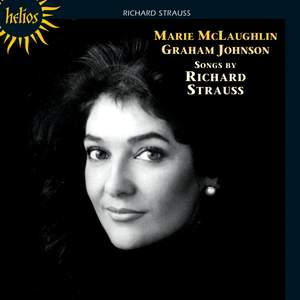
| |  | Songs by Richard Strauss
Strauss, R: | Die Drossel Ach, was Kummer, Qual und Schmerzen, Op. 49 No. 8 Ach Lieb, ich muß nun scheiden!, Op. 21 No. 3 Die Nacht, Op. 10 No. 3 Der müde Wanderer, Op. 13 Das Bächlein, Op. 88 No. 1 Lass ruh'n die Toten, WoO. 35 Allerseelen, Op. 10 No. 8 Abend- und Morgenrot Ruhe, meine Seele!, Op. 27 No. 1 Wiegenlied, Op. 41 No. 1 In goldener Fülle Op. 49 No. 2 Nebel Du meines Herzens Krönelein, Op. 21 No. 2 Weihnachtsgefühl, WoO. 94 Wiegenliedchen Op. 49 No. 3 Leises Lied, Op. 39 No. 1 Schlagende Herzen Op. 29 No. 2 Weihnachtslied, Op. 2 Morgen, Op. 27 No. 4 Wer lieben will, muss leiden Op. 49 No. 7 Wie sollten wir geheim sie halten, Op. 19 No. 4 Ein Röslein zog ich mir im Garten, Op. 49 Gefunden Op. 56 No. 1 All mein Gedanken ... Op. 21 No. 1 Zueignung, Op. 10 No. 1 |
| | | Usually despatched in 2 - 3 working days. |
|
|
| |  | Mozart & Strauss Arias
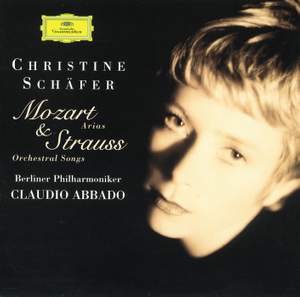
Mozart: | Nehmt meinen Dank, ihr holden Gönner!, concert aria K383 Exsultate, jubilate, K165 Mia speranza adorata... Ah, non sai qual pena, K416 Ch'io mi scordi di te?... Non temer, amato bene, K505 Ruhe sanft, mein holdes Leben (from Zaïde) Vorrei spiegarvi, oh Dio! K418 | Strauss, R: | Wiegenlied, Op. 41 No. 1 Das Rosenband, Op. 36 No. 1 Liebeshymnus, Op. 32 No. 3 Das Bächlein, Op. 88 No. 1 Morgen, Op. 27 No. 4 |
| | | Usually despatched in 8 - 10 working days. |
|
|
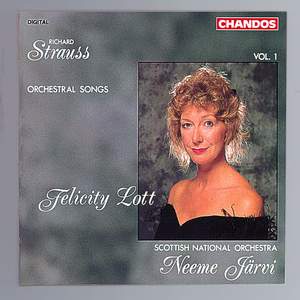
| |  | R Strauss: Orchestral Songs, Vol. 1
Strauss, R: | Muttertändelei, Op. 43 No. 2 Meinem Kinde, Op. 37 No. 3 Wiegenlied, Op. 41 No. 1 Das Bächlein, Op. 88 No. 1 Ruhe, meine Seele!, Op. 27 No. 1 Mein Auge Op. 37 No. 4 Die heiligen drei Könige aus Morgenland Op. 56 No. 6 Freundliche Vision, Op. 48 No. 1 Befreit, Op. 39 No. 4 Waldseligkeit, Op. 49 No. 1 Cäcilie, Op. 27 No. 2 Morgen, Op. 27 No. 4 Four Last Songs |
| | | (also available to download from $10.75) | This item is currently out of stock at the UK distributor. You may order it now but please be aware that it may be six weeks or more before it can be despatched. (Available now to download.) |
|
|
| |  | Richard Strauss - The Complete Orchestral Songs
Strauss, R: | Zueignung, Op. 10 No. 1 Allerseelen, Op. 10 No. 8 Heimkehr, Op. 15 No. 5 Ständchen, Op. 17 No. 2 Ruhe, meine Seele!, Op. 27 No. 1 Cäcilie, Op. 27 No. 2 Morgen, Op. 27 No. 4 Traum durch die Dämmerung, Op. 29 No. 1 Liebeshymnus, Op. 32 No. 3 Verfuehrung Op. 33 No. 1 Gesang der Apollopriesterin Op. 33 No. 2 Hymne Op. 34 No. 2 Pilgers Morgenlied, Op. 33 Das Rosenband, Op. 36 No. 1 Ich liebe dich Op. 37 No. 2 Meinem Kinde, Op. 37 No. 3 Mein Auge Op. 37 No. 4 Befreit, Op. 39 No. 4 Der Arbeitsmann, Op. 39, No. 3 Wiegenlied, Op. 41 No. 1 Winterliebe Op. 48 No. 5 Waldseligkeit, Op. 49 No. 1 Das Tal, Op. 51 Der Einsame, Op. 51 Frühlingsfeier Op. 56 No. 5 Die heiligen drei Könige aus Morgenland Op. 56 No. 6 Die Nacht, Op. 10 No. 3 Ich wollt ein Sträusslein binden, Op. 68 No. 2 Säusle, Liebe Myrte, Op. 68 No. 3 Als mir dein Lied erklang, Op. 68 No. 4 Amor, Op. 68 No. 5 Lied der Frauen, Op. 68 Das Bächlein, Op. 88 No. 1 Drei Hymnen Op. 71 Four Last Songs Muttertändelei, Op. 43 No. 2 Notturno, Op. 44 No. 1 Nächtlicher Gang, Op. 44 No. 2 World premiere recording Des Dichters Abendgang, Op. 47 No. 2 Freundliche Vision, Op. 48 No. 1 |
World Premiere Integral Recording | | | Usually despatched in 2 - 3 working days. |
|
|
| |  | Elizabeth Schwarzkopf: The Radiant Soprano
Bach, J S: | Cantata BWV51 'Jauchzet Gott in allen Landen' Cantata BWV208 'Was mir behagt, ist nur die muntre Jagd!' Cantata BWV68 'Also hat Gott die Welt geliebt: Mein glaubiges Herze Cantata BWV199 'Mein Herze schwimmt im Blut' Bist du bei mir, BWV508 | Brahms: | Vergebliches Ständchen, Op. 84 No. 4 Immer leiser wird mein Schlummer, Op. 105 No. 2 Wie Melodien zieht es mir, Op. 105 No. 1 Der Jäger (No. 4 from Sieben Lieder, Op. 95) Liebestreu, Op. 3 No. 1 Ständchen, Op. 106 No. 1 | Dvorak: | Songs My Mother Taught Me, Op. 55 No. 4 | Grieg: | Barnlige sange, Op. 61 No. 3 'Lok' Ich liebe Dich, Op. 5 No. 3 Med en vandlije, Op. 25 No. 4 Våren, Op. 33 No. 2 Det første møde, Op. 21 No. 1 Zur Rosenzeit (No. 5 from Seks Sange, Op. 48) | Handel: | L'Allegro, Il Penseroso ed Il Moderato: Sweet Bird | Heuberger: | Gehen wir ins Chambre séparée) from The Opera Ball | Humperdinck: | Suse, liebe Suse... Brüderchen, komm tanz mit mir (from Hänsel und Gretel) Der kleine Sandmann bin ich (from Hänsel und Gretel) Irmgard Seefried (Hansel Philharmonia Orchestra, Josef Krips | Jensen, A: | Murmelndes Lüftchen, Op. 21 No. 4 | Lehár: | Bitte meine Herren (from Die Lustige Witwe) Viljalied (from Die lustige Witwe) Lippen schweigen (from Die Lustige Witwe) Eberhard Wächter (baritone) Philharmonia Orchestra & Chorus, Lovro von Matačić Einer wird kommen (from Der Zarewitsch) Heut’ noch werd' ich Ehefrau...Unbekannt, deshalb nicht minder interessant (from Der Graf von Luxemburg) Ich danke...Soll ich? Soll ich nicht? (from Der Graf von Luxemburg) Meine Lippen sie Kussen so heiss (from Giuditta) | Liszt: | Die drei Zigeuner, S.320 | Mahler: | Lob des hohen Verstandes (Des Knaben Wunderhorn) | Medtner: | Selbstbetrug, Op. 15 No. 3 Aus 'Lila', Op. 15 No. 5 | Mendelssohn: | Auf Flügeln des Gesanges, Op. 34 No. 2 | Millöcker: | Ich habe Liebe schon genossen...Ich schenk' mein Herz (from Die Dubarry) Was ich im Leben beginne...Ja so ist sie, die Dubarry (from Die Dubarry) | Mozart: | Exsultate, jubilate, K165 Ridente la calma, K152 Oiseaux, si tous les ans, K307 Dans un bois solitaire, K308 Die kleine Spinnerin, K531 Als Luise die Briefe, K520 Abendempfindung an Laura, K523 Das Kinderspiel, K598 Die Alte K517 Das Traumbild, K.530 Das Veilchen, K476 Im Frühlingsanfang, K597 Die Zufriedenheit,K.349 Das Lied der Trennung, K519 An Chloë, K524 Sehnsucht nach dem Frühlinge, K596 Ch'io mi scordi di te?... Non temer, amato bene, K505 Vado, ma dove? oh Dei!, K583 Alma grande e nobil core K578 Nehmt meinen Dank, ihr holden Gönner!, concert aria K383 L'amerò, sarò costante (from Il re pastore) Zeffiretti lusinghieri (from Idomeneo) Welche Kummer herrscht in meiner Seele (from Die Entführung aus dem Serail) Traurigkeit (from Die Entführung aus dem Serail) Martern aller Arten (from Die Entführung aus dem Serail) Non so più cosa son, cosa faccio (from Le nozze di Figaro) Porgi amor (from Le nozze di Figaro) Voi che sapete (from Le nozze di Figaro) Dove sono i bei momenti (from Le nozze di Figaro) Giunse alfin il momento... Deh, vieni, non tardar… (from Le nozze di Figaro) Batti, batti, o bel Masetto (from Don Giovanni) Vedrai, carino (from Don Giovanni) In quali eccessi ... Mi tradì quell'alma ingrate (from Don Giovanni) Crudele? Ah no, mio bene! ... Non mi dir, bell'idol mio (from Don Giovanni) Ach, ich fühl's (from Die Zauberflöte, K620) Come scoglio (from Così fan tutte) Philharmonia Orchestra, Karl Böhm | Mussorgsky: | In der Pilzen | Puccini: | Tu che di gel sei cinta (from Turandot) Wiener Philharmoniker, Karl Böhm O mio babbino caro (from Gianni Schicchi) Wiener Phlharmoniker, Herbert von Karajan | Rossini: | La regata veneziana (C. Pepoli) Victoria de los Angeles (soprano) Duetto buffo di due gatti (Comic Duet for Two Cats) Victoria de los Angeles (soprano) | Schubert: | Die Vogel D691 Liebhaber in allen Gestalten, D558 An die Musik D547 Im Frühling, D882 Wehmut, D772 (Collin) Ganymed, D544 (Goethe) Das Lied im Grünen, D917 Gretchen am Spinnrade, D118 Nähe des Geliebten, D162 Die junge Nonne, D828 An Sylvia, D891 Auf dem Wasser zu singen, D774 Nachtviolen D752 (Mayrhofer) Der Musensohn, D764 (Goethe) Litanei auf das Fest Allerseelen, D343 Ungeduld (No. 7 from Die schöne Müllerin, D795) Heidenröslein, D257 Der Jüngling an der Quelle, D300 (Salis-Seewis) Der Einsame, D800 Die Forelle, D550 Liebe schwarmt auf allen Wegen, D239 No. 6 (Goethe) Seligkeit D433 (Holty) An mein Klavier D342 (Schubart) Erlkönig, D328 | Schumann: | Liederkreis, Op. 39 Aufträge, Op. 77 No. 5 Widmung, Op. 25 No. 1 Tanzlied Dietrich Fischer-Dieskau (baritone) | Siecynski: | Wien, Wien nur du Allein (Vienna, City of My Dreams) | Strauss, J, II: | Dieser Anstand, so manierlich (from Die Fledermaus) Nicolai Gedda (tenor) Klänge der Heimat (from Die Fledermaus) Philharmonia Orchestra, Herbert von Karajan So elend und so true…O habet acht (from Der Zigeunerbaron) Nicolai Gedda (tenor) Wer uns getraut? (from Der Zigeunerbaron) Willy Ferenz (bass) Philharmonia Orchestra & Chorus, Otto Ackermann Nun's Chorus & Laura's Song from Casanova | Strauss, R: | Four Last Songs Morgen mittag um elf! (from Capriccio) Ich danke, Fraulein (from Arabella) Anny Felbermayer (Zdenka) Mein Elemer! Das hat so einen sonderbaren (from Arabella) Anny Felbermayer (Zdenka), Murray Dickie (Elemer) Sie woll'n mich heiraten, sagt mein Vater (from Arabella) Josef Metternich (Mandryka) Und jetzt sag ich Adieu, mein lieber Dominik (from Arabella) Harald Pröglhöf (Dominik), Walter Berry (Lamoral) Das war sehr gut, Mandryka (from Arabella) Josef Metternich (Mandryka) Philharmonia Orchestra, Lovro von Matačić Der Rosenkavalier: excerpts Christa Ludwig (Octavian), Teresa Stich-Randall (Sophie) Philharmonia Orchestra, Herbert von Karajan Muttertändelei, Op. 43 No. 2 Waldseligkeit, Op. 49 No. 1 Zueignung, Op. 10 No. 1 Freundliche Vision, Op. 48 No. 1 Die heiligen drei Könige aus Morgenland Op. 56 No. 6 Radio-Symphonie-Orchester Berlin, George Szell Ruhe, meine Seele!, Op. 27 No. 1 Meinem Kinde, Op. 37 No. 3 Wiegenlied, Op. 41 No. 1 Morgen, Op. 27 No. 4 Edith Peinemann (violin) Das Bächlein, Op. 88 No. 1 Das Rosenband, Op. 36 No. 1 Winterweihe, Op. 48 No. 4 London Symphony Orchestra, George Szell Herr Gott in Himmel! (from Der Rosenkavalier) Irmgard Seefried (Octavian) Wiener Philharmoniker, Herbert von Karajan | Suppe: | Hab' ich nur deine Liebe (from Boccaccio) | Tchaikovsky: | None but the lonely heart, Op. 6 No. 6 | Verdi: | Libera me (from Requiem) Philharmonia Chorus and Orchestra, Carlo Maria Giulini | Wagner: | Dich, teure Halle (from Tannhauser) Philharmonia Orchestra, Walter Susskind Einsam in trüben Tagen (from Lohengrin) Philharmonia Orchestra, Walter Susskind | Weber: | Wie nahte mir der Schlummer … Leise, leise, fromme Weise (from Der Freischütz) Philharmonia Orchestra, Walter Susskind | Wolf, H: | Im Frühling (No. 13 from Mörike-Lieder) Elfenlied (No. 16 from Mörike-Lieder) Lebe wohl (No. 36 from Mörike-Lieder) Schlafendes Jesuskind (No. 25 from Mörike-Lieder) Phänomen (No. 32 from Goethe-Lieder) Die Spröde (No. 26 from Goethe-Lieder) Die Bekehrte (No. 27 from Goethe-Lieder) Anakreons Grab (No. 29 from Goethe-Lieder) Blumengruss (No. 24 from Goethe-Lieder) Epiphanias (No. 19 from Goethe-Lieder) Wie lange schon war immer mein Verlangen (No. 11 from Italienisches Liederbuch) Was soll der Zorn, mein Schatz, der dich erhitzt?
(No. 32 from Italienisches Liederbuch) Nein, junger Herr, so treibt man’s nicht, fürwahr (No. 12 from Italienisches Liederbuch) Mein Liebster hat zu Tische mich geladen (No. 25 from Italienisches Liederbuch) Bedeckt mich mit Blumen (No. 26 from Spanisches Liederbuch: Weltliche Lieder) Herr, was trägt der Boden hier (from Spanisches Liederbuch) In dem Schatten meiner Locken (No. 2 from Spanisches Liederbuch: Weltliche Lieder) Mögen alle bösen Zungen (No. 13 from Spanisches Liederbuch: Weltliche Lieder) Wie Glanzet der Helle Mond Wiegenlied im Sommer (from Sechs Lieder für eine Frauenstimme) Nachtzauber (No. 8 from Eichendorff-Lieder) Die Zigeunerin (No. 7 from Eichendorff-Lieder) Mignon IV 'Kennst du das Land' (No. 9 from Goethe-Lieder) | Zeller: | Ich bin die Christel von der Post (from Der Vogelhändler) Schenkt man sich Rosen in Tirol (from Der Vogelhändler) Wo sie war die Müllerin...Sei nicht bös' (from Der Obersteiger) |
Elizabeth Schwarzkopf (soprano) Elisabeth Schwarzkopf (1915–2006) is universally acknowledged to be one of the greatest singers of the 20th century. Blessed with a voice of exquisite beauty, as well as a striking physical presence, she shone brightly in opera, excelled in the concert hall and brought a unique artistry to the recital platform. She was signed exclusively to EMI in 1946 by the recording producer Walter Legge, with whom she formed a dedicated artistic and personal relationship, and together they produced a stream of magnificent recordings over almost 30 years. In addition to the tonal qualities of her voice, Schwarzkopf was renowned for her unrivalled communicative ability, which the vocal critic John Steane described as 'almost making the voice visible'. Thus she could translate her charismatic stage presence into purely vocal terms through the medium of recording, and still convey all the dramatic meaning of her songs and operatic characters to listeners who could hear but not see her. This rare quality is evident in all the recordings in this unique collection, which covers a lifetime of work and reveals the development of her art. The first CD begins with recordings of works by Bach, Handel and Mozart that are among the earliest that Schwarzkopf made for EMI. They show her voice at its freshest and also exhibit her fine legato and appreciable technique in Baroque music. CD 2 begins with the famous collaboration between Schwarzkopf and the eminent pianist Walter Gieseking in a collection of simple but refined songs by Mozart that reveal great beauty of tone, evenness of line and sincerity of expression in the singing, as well as sensitive accompaniment from Gieseking. These are followed by four of Mozart’s concert arias with orchestra, in which the conductor is the highly regarded George Szell. At the beginning of her career, Schwarzkopf sang mainly lighter roles and in CD 3 we have a collection of Mozart arias that demonstrate this part of her repertoire in the arias of Susanna (Le nozze di Figaro) and Pamina (Die Zauberflöte), but also a number of lyric roles that she never sang on stage, including Zerlina (Don Giovanni) and Cherubino (Le nozze di Figaro). This disc also gives us the chance to compare Schwarzkopf’s totally different characterisation of the three principal female roles in Don Giovanni (Elvira, Anna and Zerlina) and Le nozze di Figaro (Susanna, Cherubino and the Countess). CD 4 brings us back to the field of Lieder and includes another collaboration with a famous pianist, this time Edwin Fischer, in a highly acclaimed recital of Schubert Lieder, as well as more Schubert songs with her two regular accompanists, Gerald Moore and Geoffrey Parsons. In CD 5 we encounter the widely varied programmes of songs by a wide-ranging selection of composers – from Mendelssohn and Schumann, through Liszt and Brahms, to Mahler and Medtner and many more in between – that would often be a feature of Schwarzkopf’s recitals. To each of these songs she brings her own individuality and stamps them with her personal qualities of beautiful singing and vivid interpretation. The next disc is devoted entirely to the songs of Hugo Wolf, a composer whom Legge had championed since the beginning of the 1930s. Guided by Legge, Schwarzkopf became a peerless interpreter of Wolf's compositions. This live recording is of a legendary concert in Salzburg on 12 August 1953 marking the 50th anniversary of Hugo Wolf’s death. The piano accompanist is the great conductor Wilhelm Furtwängler. CD 7 brings us to Richard Strauss, a composer of whose works Schwarzkopf was a matchless performer. It begins with Schwarzkopf’s 1953 recording of Strauss’s valedictory Vier letzte Lieder, followed by the closing scene from Capriccio, an opera that Schwarzkopf performed a number of times on stage, and ends with scenes from Arabella, which Schwarzkopf sang only in the recording studio. CD 8 stays with Richard Strauss. It starts with a long extract from the first act of Der Rosenkavalier beginning with the aging Marschallin contemplating the passing of the years in a famous monologue and then going to the end of the act in an extended duet with her young lover, the handsome Octavian. This is followed by the glorious trio from the end of the third act, one of Strauss’s most beautiful compositions for the female voice. Then come 12 of Strauss’s wonderful songs for soprano with orchestra, all conducted in supreme Straussian style by George Szell. In CD 9 we turn to the lighter side of Schwarzkopf’s repertoire with extracts from a whole range of delightful Viennese operettas, beginning with two of Johann Strauss II’s favourite works: Die Fledermaus and Der Zigeunerbaron. Then come several extracts from Schwarzkopf’s second complete recording of Die lustige Witwe by Franz Lehár, and finally the complete recital of operetta arias that was always one of Schwarzkopf’s must popular albums. The final CD in the set starts with some of Schwarzkopf’s earliest operatic recordings, when she was singing Sophie in Der Rosenkavalier rather than the Marschallin, and a very youthful-sounding Gretel in Hänsel und Gretel. Then come a varied assortment of operatic arias that recall some of the roles that Schwarzkopf sang in the early part of her career, and the disc concludes with four items from the memorable concert at the Royal Festival Hall, London, in February 1967, when Schwarzkopf joined with her two distinguished colleagues Dietrich Fischer- Dieskau and Victoria de los Angeles to pay homage to that doyen of accompanists, Gerald Moore. | | | In stock - usually despatched within 1 working day. |
|
|
| |
|