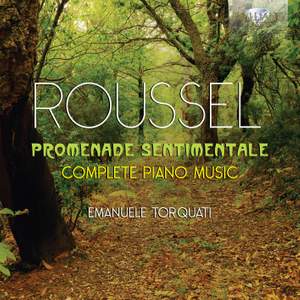
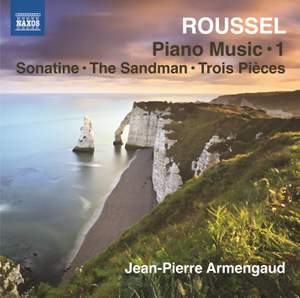
Prices shown exclude VAT. (UK tax is not payable for deliveries to United States.) See Terms & Conditions for p&p rates. | |  | Roussel: Promenade SentimentaleComplete Piano Music
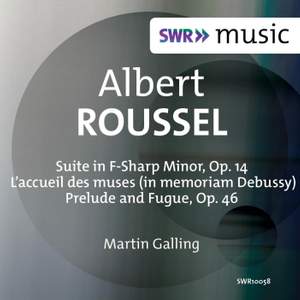
Roussel: | Des heures passent…, Op. 1 Résurrection, Op. 4 Symphonic prelude after Tolstoy, arranged for piano by Albert Roussel. First recording Rustiques, Op. 5 Petit canon perpétuel Doute Conte à la poupée L'accueil des muses Suite in F sharp, Op. 14 Sonatine, Op. 16 Le Festin de l’araignée, Op. 17: Waltz Segovia for guitar, Op. 29 arranged for piano by Albert Roussel Prélude et Fugue, Op. 46 3 Pieces, Op. 49 |
Emanuele Torquati (piano) Albert Roussel (1869–1937) was ideally placed to develop a unique musical style. His background was more colourful than most of his fellow composers (he initially studied mathematics and worked as a naval officer before devoting himself to music), while his early years as a composer saw him exposed to a barrage of rich but conflicting musical influences: the impressionist movement (spearheaded by Debussy) and the more traditional approach of the Schola Cantorum (championed by d’Indy and Franck). Roussel absorbed the wide-ranging styles that he heard around him, blending and modifying them to establish his own distinctive voice – a voice that can be perceived clearly in his music for solo piano. Traditional musical forms are a frequent point of inspiration: in the Suite in F sharp Op.14, Roussel uses rustic dances as a basis to explore both counterpoint and tonal disintegration, while the Bach-inspired Prélude et Fugue demonstrates the neo-Classical style that he was drawn to in his later period. Above all, Roussel’s piano music is characterised by its unique synthesis of rationality and feeling. This approach – exploring tradition while pushing boundaries – is captured expertly by the award-winning pianist Emanuele Torquati; his subtle yet vital performances make this two disc set a must-have for any enthusiasts of French music. | | | Usually despatched in 4 - 5 working days. |
|
|
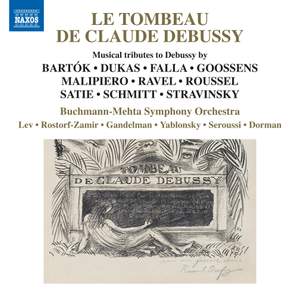
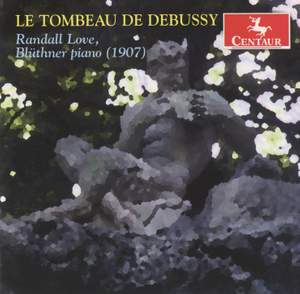
| |  | Le Tombeau De Debussy
To kick off Fuga Libera’s Debussy year, Jan Michiels has conceived a superb and generous programme to honour the "ultima verba" for piano which Debussy composed during the First World War, and the most significant fragments of the collective tribute rendered to him by some of the masters he had influenced in La Revue musicale of 1920. Apposing his own signature to the cd booklet, Jan Michiels invites us to listen to his wonderful Erard grand piano. His selection does full justice to the quality of these works which, though less popular than the Préludes and some of the composer’s earlier works, lack nothing in terms of inspiration and insight into the future. The interpolation in the Études – rendered here in full – of the pages by Dukas, Bartók, Roussel, de Falla and Stravinski and the scattered pages signed "Claude Debussy, French composer" between 1914 and 1917, are here particularly compelling: what better tribute could we give this composer on the dawn of the 150th anniversary of his birth? | | | (also available to download from $10.50) | Usually despatched in 4 - 5 working days. (Available now to download.) |
|
|
| | | |  | La Grèce des Mythes & des Rêveries
| | | Usually despatched in 2 - 3 working days. |
|
|
| |
|