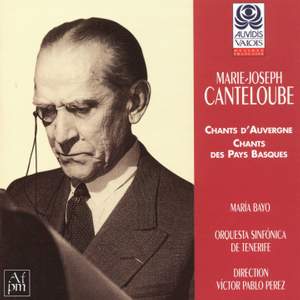
All recordingsPrices shown exclude VAT. (UK tax is not payable for deliveries to United States.) See Terms & Conditions for p&p rates. | |  | Canteloube - Chants d'Auvergne, Volume 2
Canteloube: | Songs of the Auvergne (selection) La Pastrouletta è lou chibalie; Lo Fiolairé; Pour l’enfant; Chut, chut; Pastorale; Obal, din lo coumbèlo; Postouro, sé tu m’aymo & Tè, l’co tè; Hé! Beyla-z-y dau fé! Triptyque Chants de France (Selection) Auprès de ma blonde; Où irai-je me plaindre?; Au prè de la rose; Délicieuses cimes; Réveillez-vous! & D’où venez-vous fillette |
“In her second volume, including 'Chut, Chut' and 'Lo Fiolairé', Véronique Gens does more than confirm her credentials. The voice is bright, forward, notably clear in diction and lightly responsive to nuance, backed by prominent woodwind and lean strings.” BBC Music Magazine, November 2007 **** “For her second CD devoted to Joseph Canteloube's vocal music, Véronique Gens has looked beyond the celebrated, much-recorded Chants d'Auvergne, and back to Tryptique, composed in 1913. A setting of three poems by Roger Frêne, its lush, not to say extravagant orchestration anticipates Canteloube's later folksong settings. The first section, "Offrande à l'été" is an ardent love song... The central "Lunaire" has a more mysterious, yearning feel... The finale, "Hymne dans l'aurore" is an ecstatic prayer to Pan, celebrating every wonder of... The final cry, "Mon âme s'ouvre ainsi qu'une aube étincellante! O Pan!" is marked in the score crescendo en grandissant, and Gens, Serge Baudo and the Lille Orchestra rise to the moment with splendid force.” Gramophone Magazine, December 2007 “For her second CD devoted to Joseph Canteloube's vocal music, Véronique Gens has looked beyond the celebrated, much-recorded Chantsd'Auvergne, and back to Tryptique, composed in 1913. Canteloube dedicated this to Maggie Teyte but the First World War interrupted its progress, and it was not until 1923 that Jane Campredon gave the premiere, with the Colonne orchestra conducted by Gabriel Pierné. A setting of three poems by Roger Frêne, its lush, not to say extravagant orchestration anticipates Canteloube's later folksong settings. The influence of both Ravel and Debussy is obvious, maybe also Stravinsky (it was, after all, the year of The Rite of Spring). The first section, 'Offrande à l'été' is an ardent love song, with some pretty giddy scoring for harps. The central 'Lunaire' has a more mysterious, yearning feel, with a lovely little dissonance at the word 'cendre', as the poet imagines the leaves turning to ash. The finale, 'Hymne dans l'aurore' is an ecstatic prayer to Pan, celebrating every wonder of nature. The final cry, 'Mon âme s'ouvre ainsi qu'une aube étincellante! O Pan!' is marked in the score crescendo en grandissant, and Gens, Serge Baudo and the Lille orchestra rise to the moment with splendid force. It is really surprising that this work has not become better known; any soprano wanting to look beyond the obvious repertory should welcome it. The rest of the disc is taken up with those remaining Auvergne songs not included on the earlier issue, conducted by Jean-Claude Casadesus. Once again, Gens proves that an authentic knowledge of the dialect is a great advantage. The much later group from Chants de France makes a pleasant end to the recital, but it is Tryptique that has to be heard.” Gramophone Classical Music Guide, 2010 | | | (also available to download from $5.75) | In stock - usually despatched within 1 working day. |
|
|
| |  | Canteloube: Songs of the Auvergne (selection)
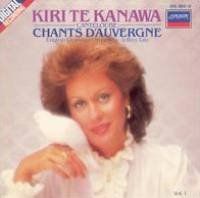
“[Véronique Gens’] singing is smooth and delicate, with plenty of body in the tone for some of the earthier movements…and the Lille Orchestra bring out all the little details in the score…This will no doubt become the interpretation for the present decade. It deserves to be a success, and then maybe the same forces will let us hear some of Canteloube’s enormous body of other songs.” Gramophone “Each decade finds its favourite soloist for the Chants d'Auvergne: in the 1960s it was Natania Devrath, the 70s had Victoria de los Angeles, the 80s Kiri Te Kanawa, the 90s Dawn Upshaw. They weren't French, whereas Véronique Gens is quite at home in the dialect, as she comes from the Auvergne. Her singing is smooth and delicate, with plenty of body in the tone for some of the earthier moments. In all, five volumes of Auvergne songs were published between 1923-54. Each singer naturally includes 'Baïlèro', the most famous, and Gens doesn't disappoint in this. The 20 other songs range from the sad 'Uno jionto postouro', the lament of the girl whose lover has deserted her, to 'Malurous qu'o ono Fenno', the jaunty exposé of unhappy couples. Jean-Claude Casadesus and the Lille Orchestra bring out all the little details in the score, such as the lovely woodwind solos that link the three Bourrées. Perhaps this will become the interpretation for the present decade.” Gramophone Classical Music Guide, 2010 | | | (also available to download from $5.75) | In stock - usually despatched within 1 working day. |
|
|
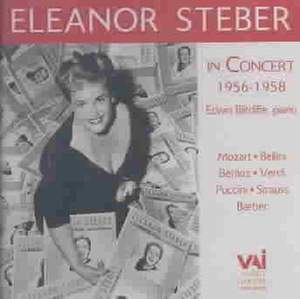
| |  | Eleanor Steber In Concert 1956-1958
Barber, S: | Knoxville: Summer of 1915, Op. 24 | Bellini: | O rendetemi la speme...Qui la voce sua soave...Vien, diletto (from I Puritani) | Berlioz: | Villanelle (from Les nuits d'été, Op. 7) Les Nuits D'été, Op. 7 (selection) | Canteloube: | Songs of the Auvergne (selection) | Charpentier, G: | Depuis le jour (from Louise) | Copland: | Long Time Ago Simple Gifts (from Old American Songs, Set I) | Menotti: | The Telephone: aria | Mozart: | Exsultate, jubilate, K165 - Alleluia Solitudini amiche ... Zeffiretti lusinghieri (from Idomeneo) Martern aller Arten (from Die Entführung aus dem Serail) | Puccini: | Vissi d'arte (from Tosca) Un bel di vedremo (from Madama Butterfly) | Schubert: | Ständchen 'Leise flehen meine Lieder', D957 No. 4 Im Abendrot, D799 | Strauss, R: | Ist mein Liebster dahin? (from Die Frau ohne Schatten) Freundliche Vision, Op. 48 No. 1 Vater, bist du's? (from Die Frau ohne Schatten) | trad.: | Londonderry Air | Verdi: | Surta è la notte...Ernani! Ernani, involami (from Ernani) | Wolf, H: | Elfenlied (No. 16 from Mörike-Lieder) |
| | | Usually despatched in 4 - 5 working days. |
|
|
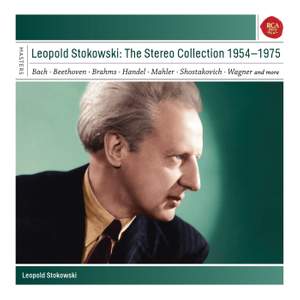
| |  | Leopold Stokowski: The Stereo Collection 1954-1975
Bach, J S: | Cantata BWV147 'Herz und Mund und Tat und Leben': Jesu, bleibet meine Freude New Symphony Orchestra of London, Norman Luboff Choir Sheep May Safely Graze, from Cantata BWV208 orch. Stokowski New Symphony Orchestra of London, Norman Luboff Choir Partita for solo violin No. 2 in D minor, BWV1004: Chaconne arr. Stokowski London Symphony Orchestra Partita for solo violin No. 3 in E major, BWV1006: Preludio arr. Stokowski London Symphony Orchestra Ein feste Burg ist unser Gott arr. Stokowski London Symphony Orchestra Orchestral Suite No. 3 in D major, BWV1068: Air ('Air on a G String') arr. Stokowski London Symphony Orchestra Fugue in G minor, BWV578 'Little' arr. Stokowski London Symphony Orchestra Adagio in F major, Sinfonia from Cantata No.156, Ich steh mit einem Fuss im Grabe (BWV156) arr. Stokowski London Symphony Orchestra Chorale Prelude BWV645 'Wachet auf, ruft uns die Stimme' arr. Stokowski London Symphony Orchestra Komm süsser Tod, BWV478 arr. Stokowski London Symphony Orchestra Toccata & Fugue in D minor, BWV565 London Symphony Orchestra Toccata & Fugue in D minor, BWV565 arr. Stokowski (rehearsal) London Symphony Orchestra | Beethoven: | Symphony No. 3 in E flat major, Op. 55 'Eroica' London Symphony Orchestra Coriolan Overture, Op. 62 London Symphony Orchestra Die Ehre Gottes aus der Natur ('Die Himmel rühmen des Ewigen Ehre'), Op. 48 No. 4 New Symphony Orchestra of London, Norman Luboff Choir | Brahms: | Academic Festival Overture, Op. 80 New Philharmonia Orchestra Symphony No. 4 in E minor, Op. 98 New Philharmonia Orchestra | Canteloube: | Songs of the Auvergne (selection) Anna Moffo (soprano) American Symphony Orchestra | Dvorak: | Symphony No. 9 in E minor, Op. 95 'From the New World' New Philharmonia Orchestra | Enescu: | Romanian Rhapsody in A major, Op. 11 No. 1 RCA Victor Symphony Orchestra | Gluck: | Orfeo ed Euridice: Les Champs-Elysées arranged as 'O, Saviour hear me' by Norman Luboff & Walter Stott New Symphony Orchestra of London, Norman Luboff Choir | Handel: | Ombra mai fu (from Serse) New Symphony Orchestra of London, Norman Luboff Choir Water Music Suite No. 1 in F major, HWV348: excerpts RCA Victor Orchestra Music for the Royal Fireworks, HWV351 RCA Victor Symphony Orchestra | Humperdinck: | Abendsegen 'Abends will ich schlafen gehn' (Hänsel und Gretel) New Symphony Orchestra of London, Norman Luboff Choir | Khachaturian: | Symphony No. 3 'Simfoniya-poema' Mary Sauer (organ) Chicago Symphony Orchestra | Liszt: | Hungarian Rhapsody, S244 No. 2 in C sharp minor arr. Muller-Berghaus RCA Victor Symphony Orchestra | Mahler: | Symphony No. 2 in C minor 'Resurrection' Margaret Price (soprano), Brigitte Fassbaender (mezzo) London Symphony Orchestra & Chorus | Menotti: | Sebastian: Ballet Suite Members of the NBC Symphony Orchestra | Prokofiev: | Romeo and Juliet, Op. 64 - excerpts Members of the NBC Symphony Orchestra | Rachmaninov: | Vocalise, Op. 34 No. 14 New Symphony Orchestra of London, Norman Luboff Choir Vocalise, Op. 34 No. 14 Anna Moffo (soprano) American Symphony Orchestra | Rimsky Korsakov: | Scheherazade, Op. 35 Erich Gruenberg (violin) Royal Philharmonic Orchestra Russian Easter Festival Overture, Op. 36 Chicago Symphony Orchestra | Shostakovich: | The Golden Age (complete) Chicago Symphony Orchestra Symphony No. 6 in B minor, Op. 54 Chicago Symphony Orchestra | Smetana: | The Bartered Bride Overture RCA Victor Symphony Orchestra Má Vlast: Vltava RCA Victor Symphony Orchestra | Tchaikovsky: | Liturgy of St John Chrysostom, Op. 41: Our Father New Symphony Orchestra of London, Norman Luboff Choir Symphony No. 6 in B minor, Op. 74 'Pathétique' London Symphony Orchestra | trad.: | Deep River New Symphony Orchestra of London, Norman Luboff Choir Praise God from whom all blessings flow New Symphony Orchestra of London, Norman Luboff Choir | Villa-Lobos: | Bachianas Brasileiras No. 5: Aria and Dança (Martelo) Anna Moffo (soprano) American Symphony Orchestra | Wagner: | Die Walküre: Ride of the Valkyries Martina Arroyo, Carlotta Ordassy, Doris Yarick (sopranos), Betty Allen, Doris Okerson, Regina Sarfaty, Shirley Verrett (mezzos), Louise Parker (contralto) Symphony of the Air Tristan und Isolde: Prelude to Act 3 Herny Schuman (cor anglais) Symphony of the Air Das Rheingold: Entrance of the Gods into Valhalla Martina Arroyo, Carlotta Ordassy (sopranos), Louise Parker (contralto) Symphony of the Air Tannhäuser: Overture and Venusberg Music Symphony of the Air Rienzi Overture Royal Philharmonic Orchestra Die Walkure: Magic Fire Music Royal Philharmonic Orchestra Die Meistersinger von Nürnberg: Prelude to Act 3 Royal Philharmonic Orchestra Die Meistersinger von Nürnberg: Dance of the Apprentices Royal Philharmonic Orchestra Die Meistersinger von Nürnberg: Entry of the Masters Royal Philharmonic Orchestra Tristan und Isolde: Prelude & Liebestod Royal Philharmonic Orchestra Götterdämmerung: Siegfried's Rhine Journey and Funeral March London Symphony Orchestra Starke Scheite schichtet mir dort 'Brünnhilde's Immolation Scene' (from Götterdämmerung) (orchestral version) London Symphony Orchestra Begluckt darf nun dich 'Pilgrims' Chorus' (from Tannhauser) New Symphony Orchestra of London, Norman Luboff Choir Rienzi Overture (rehearsal & alternative ending) Royal Philharmonic Orchestra |
and rehearsal footage of Beethoven's Pastoral and Mahler's Resurrection Symphony
| | | In stock - usually despatched within 1 working day. |
|
|
| |
|