All recordingsPrices shown exclude VAT. (UK tax is not payable for deliveries to United States.) See Terms & Conditions for p&p rates. | |  | Liszt: The Complete Songs Volume 2
Liszt: | Der du von dem Himmel bist (Goethe), S279 First version Ihr Glocken von Marling, S.328 Ein Fichtenbaum steht einsam, S309 First setting, first version Vergiftet sind meine Lieder, S.289 Third version Freudvoll und leidvoll, S.280 First setting, second version Die drei Zigeuner, S.320 First version Über allen Gipfeln ist Ruh (Wandrers Nachtlied II), S.306 Third version Es war einmal ein König, S73 Second version Das Veilchen, S316 No. 1 Die Schlüsselblumen, S316 No. 2 Und sprich 'Sich auf dem Meer' Ihr Auge (Rellstab) Second version Im Rhein, im schönen Strome, S272 Second version Es muss ein Wunderbares sein, S. 314 La perla, S326 Second version Der du von dem Himmel bist (Goethe), S279 Third version |
This second volume of Hyperion’s newest Lieder series features the great dramatic and musical gifts of mezzo-soprano Angelika Kirchschlager. Internationally renowned on the opera stage, the concert hall and the recording studio, Kirchschlager is an ideal performer of these most varied, complex and emotionally charged songs. She is accompanied by the multi-Gramophone Award-winning Julius Drake, who curates the series. The songs recorded here encompass thirty years of Liszt’s life, with texts in German, French and Italian, and contain many examples of the hidden beauties of this undervalued and little-known strand of the composer’s works. Detailed and informative notes by Susan Youens and a beautifully intimate recorded sound complete a volume which will be indispensable to any lovers of Lieder. “one of the most important recording projects of recent years...Kirchschlager is exquisite and intensely dramatic by turns, though occasionally she could do with more weight in her lower registers. Drake is outstanding throughout.” The Guardian, 12th July 2012 **** “Kirchschlager's rich, resonant mezzo finds beauties everywhere on this disc, from heights of drama to imtimacies of reflection, and at every turn Drake is with her. I particularly like the way they take their time in the more meditative songs, with expressive silences.” BBC Music Magazine, August 2012 ***** “Several of the songs on the disc are in effect dramatic scenas. Finding a wide palette of colours within her naturally warm mezzo, Kirchschlager is in her element...this recital should open many ears to the richness and variety of his songs.” Gramophone Magazine, September 2012 “The quality of this CD is stunning from every point of view...[Kirchschlager] has the ability to make the hairs on the nape of my neck rise...Drake makes a sensitive accompanist who is perfectly at home with both the exuberant and complex piano parts as well as the more thoughtful.” MusicWeb International, August 2012 | | | In stock - usually despatched within 1 working day. |
|
|
| |  | Liszt: Songs
Liszt: | Der Fischerknabe, S.292 No. 1 Im Rhein, im schönen Strome, S272 Die Lorelei Die drei Zigeuner, S.320 Es war einmal ein König, S73 Ihr Glocken von Marling, S.328 Über allen Gipfeln ist Ruh (Wandrers Nachtlied II), S.306 Der du von dem Himmel bist (Goethe), S279 Benedetto sia'l giorno S 270a/2 Sonetto 104 del Petrarca 'Pace non trovo', S270 No. 1 Sonetto 123 del Petrarca 'I' vidi in terra angelici costumi', S270 No. 3 Freudvoll und leidvoll, S.280 Es rauschen die Winde, S294 Die stille Wasserrose, S321 Bist du!, S277 Es muss ein Wunderbares sein, S. 314 O lieb, so lang du lieben kannst |
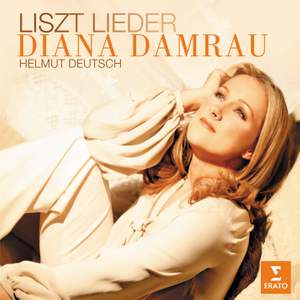
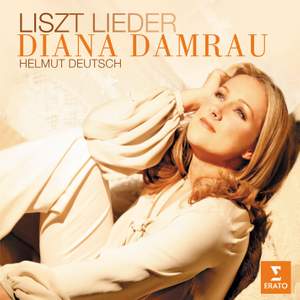
After her sumptuous album of Strauss songs with orchestra, soprano Diana Damrau marks the bicentenary of Liszt’s birth with an album of his most celebrated songs in German, French and Italian, accompanied by pianist Helmut Deutsch. “Diana Damrau has a fine line in floated high notes, and the lyrical songs (the majority of those recorded here) benefit from her sweet tone...Helmut Deutsch's accompaniments are of the highest quality, setting the mood from the very beginning of each song and managing Liszt's virtuoso figuration with apparent ease.” BBC Music Magazine, January 2012 **** “A gifted Lieder singer with a flawlessly even and shining sound, Damrau knows exactly how to draw the listener into the drama of each song...Deutsch proves yet again what a great accompanist he is too: his insights into the atmosphere and psychology of these works are as compelling as Damrau's.” Classic FM Magazine, February 2012 ***** “The particular qualities of Damrau's lustrous coloratura lend an aura of ethereal beauty to several of her interpretations...Damrau brings a languid voluptuousness to the more famous love songs...There are times when one wishes Damrau would abandon her consistently gorgeous sound production to focus instead on a more vivid characterization of the text. In terms of pure singing, these interpretations are undeniably beautiful.” International Record Review, February 2012 | | | In stock - usually despatched within 1 working day. |
|
|
| |  | Liszt Lied Edition Volume 2 - Was Liebe Sei?
Janina Baechle (mezzo-soprano) & Charles Spencer (piano) Janina Baechle has been a member of the Vienna State Opera since 2004. She has performed Mahler’s Symphony No.2 and The Song of the Earth with the Vienna Philharmonic and has given many recitals. | | | (also available to download from $10.50) | In stock - usually despatched within 1 working day. |
|
|
| |  | Wagner & Liszt - Lieder
Liszt: | Im Rhein, im schönen Strome, S272 Die Lorelei Ich möchte hingehn, S.296 Vergiftet sind meine Lieder, S.289 Schwebe, schwebe, blaues Auge, S. 305 Blume und Duft Der du von dem Himmel bist (Goethe), S279 Es rauschen die Winde, S294 O quand je dors (Hugo), S282 Sonetti di Petrarca (3) for voice & piano, S270 | Wagner: | Wesendonck-Lieder (5) |
Konrad Jarnot (baritone) & Alexander Schmalcz (piano) | | | (also available to download from $10.50) | In stock - usually despatched within 1 working day. |
|
|
| |  | Le Lied Romantique
| | | Usually despatched in 4 - 5 working days. |
|
|
| |  | Liszt: Voll Freud und Leid
Liszt: | Im Rhein, im schönen Strome, S272 Morgens steh ich auf und frage, S290 Ein Fichtenbaum steht einsam, S309 Anfangs wollt ich fast verzagen, S311 Du bist wie eine Blume Vergiftet sind meine Lieder, S.289 Die Lorelei Der König von Thule Freudvoll und leidvoll, S.280 Wer nie sein Brot mit Tränen ass, S.297 Über allen Gipfeln ist Ruh (Wandrers Nachtlied II), S.306 Der du von dem Himmel bist (Goethe), S279 Die drei Zigeuner, S.320 Es muss ein Wunderbares sein, S. 314 Das Veilchen, S316 No. 1 Die Schlüsselblumen, S316 No. 2 Nonnenwerth Drei Lieder aus Schillers Wilhelm Tell, S292 |
Hans-Jörg Mammel (tenor) & Hilko Dumno (piano) In this 200th anniversary year of Liszt, Carus has released a recording of seldom performed songs. The 20 songs in this collection reflect Liszt’s interest in German Romanticism and are based on poetry by various German poets of the 17th and 18th centuries. Mammel is in great demand as a lieder singer. | | | (also available to download from $10.50) | Usually despatched in 2 - 3 working days. (Available now to download.) |
|
|
| |  | Liszt: Lieder
Liszt: | Die drei Zigeuner, S.320 Du bist wie eine Blume Ein Fichtenbaum steht einsam, S309 Vergiftet sind meine Lieder, S.289 Die Lorelei Ihr Glocken von Marling, S.328 Die stille Wasserrose, S321 Blume und Duft Es rauschen die Winde, S294 Ich möchte hingehn, S.296 Gebet, S265 Freudvoll und leidvoll, S.280 Über allen Gipfeln ist Ruh (Wandrers Nachtlied II), S.306 Der du von dem Himmel bist (Goethe), S279 Mignons Lied (Kennst du das Land), S275 Wie singt die Lerche schon. S. 312 Wieder mocht’ ich dir begegnen Lasst mich ruhen Es muss ein Wunderbares sein, S. 314 Ihr Auge (Rellstab) O lieb, so lang du lieben kannst! S540a |
“Liszt's songs turn up far less frequently in recital than Schumann's, Brahms's or Wolf's… Ruth Ziesak's selection of 21… forms a good introduction to their varied merits, and her strong interpretative skills… stand her in good stead.” BBC Music Magazine, August 2008 **** | | | Usually despatched in 4 - 5 working days. |
|
|
| |  | Franz Liszt Songs
Liszt: | Drei Lieder aus Schillers Wilhelm Tell, S292 Der du von dem Himmel bist (Goethe), S279 Über allen Gipfeln ist Ruh (Wandrers Nachtlied II), S.306 Im Rhein, im schönen Strome, S272 Vergiftet sind meine Lieder, S.289 Ihr Auge (Rellstab) Was Liebe sei? (Hagn) Kling Leise, mein Lied, S301 Einst (Bodenstedt) Sonetti di Petrarca (3) for voice & piano, S270 Enfant, si j'étais roi (Hugo), S283 S'il est un charmant gazon, S284 Comment, disaient-ils (Hugo), S276 O quand je dors (Hugo), S282 |
| |
|
| |  | Franz Liszt - Lieder
Liszt: | Der du von dem Himmel bist (Goethe), S279 Freudvoll und leidvoll, S.280 Die drei Zigeuner, S.320 Es muss ein Wunderbares sein, S. 314 O lieb, so lang du lieben kannst! S540a Über allen Gipfeln ist Ruh (Wandrers Nachtlied II), S.306 Ich möchte hingehn, S.296 Ihr Glocken von Marling, S.328 Sonetti di Petrarca (3) for voice & piano, S270 O quand je dors (Hugo), S282 |
Marilyn Schmiege, Donald Sulzen | | | Usually despatched in 3 - 4 working days. |
|
|
| |  | Hermann Prey: A Life in Song
Bach, J S: | Cantata BWV82 'Ich habe genug' Siegfried Arnold (cello), Heinz Morawietz (double bass), Willy Gerlach (oboe), Hannes Kästner (organ) Gewandhaus-Orchester Leipzig, Kurt Thomas | Beethoven: | Adelaide, Op. 46 Marmotte, Op. 52 No. 7 Der Kuss, Op. 128 An die Hoffnung, Op. 94 Neue Liebe, Neues Leben, Op. 75, 2 Mephistos Flohlied, Op. 75, 3 Gerald Moore (piano) | Berlin, I: | They say it's wonderful Symphonie-Orchester Graunke, Carl Michalski | Bizet: | Votre toast je peux vous le rendre 'Toreador Song' (from Carmen) Sung in German as 'Euren Toast!...Auf inden Kampf' Ursula Schirrmacher (Frasquita), Ursula Gust (Mercedes), Christa Ludwig (Carmen) Berliner Symphoniker, Chor der Deutschen Oper Berlin, Horst Stein | Brahms: | Wach auf meins Herzens Schone, WoO posth. 35 No. 2 Erlaube mir, fein's Mädchen (No. 2 from Deutsche Volkslieder WoO 33) Feinsliebchen, du sollst mir nicht barfuß gehen (No. 12 from Deutsche Volkslieder, WoO 33) All mein Gedanken, die ich hab (No. 30 from Deutsche Volkslieder, WoO 33) Es steht ein Lind (No. 41 from Deutsche Volkslieder, WoO 33) Mein Mädel hat einen Rosenmund (No. 25 from Deutsche Volkslieder, WoO 33) Die Sonne scheint nicht mehr (No. 5 from Deutsche Volkslieder, WoO 33) Der bucklichte Fiedler (No. 1 from Sechs Lieder und Romanzen, Op. 93a) Da unten im Tale (No. 6 from Deutsche Volkslieder, WoO 33) Schöner Augen, schöne Strahlen (No. 39 from Deutsche Volkslieder) Ach, englische Schäferin (No. 8 from Deutsche Volkslieder, WoO 33) In stiller Nacht (No. 42 from Deutsche Volkslieder, WoO 33) Martin Mälzer (piano) | Flotow: | Martha: Lasst mich euch fragen (Porterlied) Bayerisches Staatsorchester, Chor der Bayerischen Staatsoper, Robert Heger | Gluck: | Che faro' senza Euridice? (from Orfeo ed Euridice) Sung in German as 'Ach, ich habe sie verloren' Berliner Symphoniker, Horst Stein | Gounod: | Avant de quitter ces lieux (from Faust) Sung in German as 'Da ich nun verlassen soll' Berliner Symphoniker, Wilhelm Schüchter | Humperdinck: | Verdorben! Gestorben! (from Königskinder) Berliner Symphoniker, Berliner Mozartchor, Horst Stein | Keiser: | Prangt die allerschönste Blume (from Der hochmüthige, gestürzte und wieder erhabene Croesus) Götter, übt Barmherzigkeit (from Der hochmüthige, gestürzte und wieder erhabene Croesus) Berliner Philharmoniker, Wilhelm Brückner-Rüggerberg | Korngold: | Mein Sehnen (from Die tote Stadt) Berliner Symphoniker, Horst Stein | Kreutzer, K: | Ein Schütz' bin ich (from Das Nachtlager von Granada) Die Nacht ist schön...Fürwahr es ist ein Abenteuer (from Das Nachtlager von Granada) Berliner Symphoniker, Chor der Deutschen Oper Berlin, Wilhelm Schüchter | Leoncavallo: | Nedda! Silvio! A quest'ora che imprudenza (from I Pagliacci) Anneliese Rothenberger (Nedda) Berliner Symphoniker, Wilhelm Schüchter | Liszt: | Es muss ein Wunderbares sein, S. 314 Ein Fichtenbaum steht einsam, S309 Ihr Auge (Rellstab) Die Vätergruft, S.281 Anfangs wollt ich fast verzagen, S311 Lasst mich ruhen Morgens steh ich auf und frage, S290 Über allen Gipfeln ist Ruh (Wandrers Nachtlied II), S.306 Der du von dem Himmel bist (Goethe), S279 Die drei Zigeuner, S.320 Blume und Duft Wer nie sein Brot mit Tränen ass, S.297 Die Fischerstochter Sonetti di Petrarca (3) for voice & piano, S270 Alexis Weissenberg (piano) | Loewe, C: | Der Schatzgräber, Op. 59 No. 30 Karl Engel (piano) Herr Oluf "Herr Oluf reitet spät und weit", Op. 2/2 Der Erlkönig, Op. 1 No. 3 (Goethe) Die wandelnde Glocke, Op. 20 No..3 Hochzeitlied, Op. 20 No. 1 Der getreue Eckart, Op. 44 No. 2 Archibald Douglas, Op. 128 Tom der Reimer "Der Reimer Thomas lag am Bach", Op. 135a Heinrich der Vogler, Op. 56 No. 1 Graf Eberstein Prinz Eugen, der edle Ritter, Op. 92 Gunther Weissenborn (piano) | Loewe, F: | My Fair Lady: On the street where you live Symphonie-Orchester Graunke, Carl Michalski | Lortzing: | Verraten! Von euch verraten!...Die Macht des Zepters (from Zar und Zimmermann) Wie freundlich strahlt...Heiterkeit und Fröhlichkeit (from Der Wildschütz) Berliner Symphoniker, Horst Stein Nun ist's vollbracht!...Schwanensang, Schwanenklang (from Undine) Radio-Sinfonie-Orchester Berlin, RIAS-Kammerchor, Robert Heger | Marschner, H A: | An jenem Tag (from Hans Heilig) Berliner Symphoniker, Wilhelm Schüchter | Millöcker: | Gasparone (highlights) Anneliese Rothenberger (Carlotta) Symphonie-Orchester Graunke, Chor des Theaters am Gärtnerplatz, München, Carl Michalski Und da soll man noch galant sein (from Der Bettelstudent) Mit Geld und guten Worten (from Der Bettelstudent) Symphonie-Orchester Graunke, Franz Allers | Mozart: | La ci darem la mano (from Don Giovanni) Sung in German as 'Reich mir die Hand, mein Leben' Erika Köth (Zerlina) Fin ch'han dal vino (from Don Giovanni) Sung in German as 'Auf denn zum Feste' Deh! vieni alla finestra (from Don Giovanni) Sung in German as 'Feinsliebchen, komm ans Fenster' Berliner Symphoniker, Hans Zanotelli Der Vogelfänger bin ich, ja (from Die Zauberflöte) Ein Mädchen oder Weibchen (from Die Zauberflöte) Berliner Symphoniker, Horst Stein Hai gia vinta la causa! (from Le nozze di Figaro) Sung in German as 'Der Prozeß schon gewonnen...Ich soll ein Glück entbehren' Berliner Symphoniker, Berislav Klobucar Donne mie la fate a tanti (from Così fan tutte) Sung in German as 'Mädchen, so treibt ihr's mit allen' Nordwestdeutsche Philharmonie, Wilhelm Schüchter | Nessler: | Möchte in die Ferne Schweifen (from Der Trompeter von Säkkingen) Trompeter von Säkkingen: Behüt dich Gott Berliner Symphoniker, Chor der Deutschen Oper Berlin, Wilhelm Schüchter | Porter, C: | So in Love Symphonie-Orchester Graunke, Carl Michalski | Reichardt, J F: | Heideröslein Karl Engel (piano) Blumengruß Karl Engel (piano) | Rodgers, R: | If I Loved You (from Carousel) Symphonie-Orchester Graunke, Carl Michalski | Rossini: | Largo al factotum (from Il barbiere di Siviglia) Sung in German as 'Ich bin das Faktotum' All'idea di quel metallo (from Il barbiere di Siviglia) Sung in German as 'Strahlt auf mich der Blitz des Goldes' Richard Holm (Almaviva) Dunque io son? (from Il Barbiere di Siviglia) Sung in German as 'Also ich, meinst du es wirklich?' Erika Köth (Rosina) Berliner Symphoniker, Wilhelm Schüchter | Schubert: | Hoffnung, D637 An den Fruhling, D283 (Schiller) Der Alpenjäger, D588 (Schiller) Sehnsucht, D52 Gruppe aus dem Tartarus, second version, D583 (Schiller) Der Pilgrim, D794 (Schiller) Der Musensohn, D764 (Goethe) Der Rattenfänger, D255 Geheimes, D719 (Goethe) Harfenspieler I D325 (Goethe) Ganymed, D544 (Goethe) Wandrers Nachtlied I 'Der du von dem Himmel bist', D224 Gerald Moore (piano) Winterreise D911 Karl Engel (piano) Tischlied, D234 Karl Engel (piano) Prometheus, D674 (Goethe) Karl Engel (piano) Der Goldschmiedsgesell, D560 Karl Engel (piano) | Schumann: | Dichterliebe, Op. 48 Karl Engel (piano) Gedichte (12) von Justinus Kerner Op. 35 Karl Engel (piano) Liederkreis, Op. 39 Karl Engel (piano) Sonntags am Rhein, op. 36 No. 1 Karl Engel (piano) | Spohr: | Ah Mignon!, Op. 41 No. 3 Karl Engel (piano) | Strauss, J, II: | Her die Hand, es mußja sein (from Der Zigeunerbaron) Als flotter Geist (from Der Zigeunerbaron) Einst träumte mir (from Fürstin Ninetta) Stadt der Liebe, Stadt der Freuden (from Casanova) In Hispaniens heißem Sonnenland (from Casanova) Symphonie-Orchester Graunke, Franz Allers | Strauss, R: | Sie woll'n mich heiraten, sagt mein Vater (from Arabella) Anneliese Rothenberger (Arabella) Symphonie-Orchester Graunk, Kurt Graunke Ach, so versuchet doch ein kleines Lied (from Ariadne auf Naxos) Sylvia Geszty (Zerbinetta) Staatskapelle Dresden, Rudolf Kempe | Suppe: | Boccaccio: excerpts Anneliese Rothenberger (Fiametta), Heinz Hoppe (Pietro), Hans Günther Grimm (Lambertuccio) ymphonie-Orchester Graunke, Carl Michalski | Tchaikovsky: | Uzhel ta samaya Tatyana (from Eugene Onegin) Sung in German as 'Ist dies denn wirklich die Tatjana?' Ya vas lyublyu 'Yeletsky’s aria' (from Pique Dame) Sung in German as 'Als deine Liebe du mir schenktest' Bayerisches Staatsorchester, Meinhard von Zallinger | Wagner: | Wie Todesahnung...O du, mein holder Abendstern (from Tannhäuser) O du, mein holder Abendstern (from Tannhäuser) Berliner Symphoniker, Horst Stein | Weber: | Die Zeit Op. 13:5 Meine Lieder, meine Sänge, J. 73 (Op. 15 No. 3) Klage ('Ein steter Kampf'), J. 63 (Op. 15 No. 2) Was zieht zu deinem Zauberkreise, J. 68 (Op. 15. No. 4) Das Röschen ('Ich sah ein Röschen am Wege steh’n'), J. 67 (Op. 15 No. 5) Er an Sie, J. 57 (Op. 15 No. 6) Meine Farben, J. 62 (Op. 23 No. 1) Liebe-Glühen, J. 140 (Op. 25 No. 1) Es stürmt auf der Flur, J. 161 (Op. 30 No. 2) Die Temperamente bei dem Verluste der Geliebten Leonard Hokanson (piano) | Zeller: | Gleich und gleich Karl Engel (piano) |
and a selection of German Folk and Wayfarer Songs
The German baritone Hermann Prey was born in Berlin in 1929. In a career that spanned some 48 years, he became one of the most popular singers of his time and formed a great bond with his audiences through his unaffected and natural style of singing and his personal charm and acting ability. His repertoire was extremely wide and encompassed all the classic German Lieder, as well as a whole range of operatic roles from the lively Figaro of both Mozart and Rossini to more serious baritone parts in Verdi and Wagner, although it is in the lighter roles that he is most affectionately remembered. He enjoyed great success in the world’s major opera houses including Vienna, Bayreuth, Salzburg, Munich, Milan and New York, and also appeared frequently on German TV and in opera films. He died in 1998. CD 1 begins with two groups of Lieder by Schubert to words by Schiller and Goethe, followed by a selection of 12 Deutsche Volkslieder by Brahms, while CD 2 contains a complete performance of Schubert’s great song cycle Winterreise. CD 3 is devoted to Schumann, including Dichterliebe and songs with words by Kerner, and CD 4 opens with Schumann’s Liederkreis before going on to a collection of songs by Weber. CD 5 presents six songs by Beethoven, starting with the popular ‘Adelaide’, and these are followed by a group of songs by Liszt, concluding with his setting of Three Sonnets by Petrarch. CD 6 begins with a group of songs by various composers all to words by Goethe that were recorded in 1974 but issued for the first time in 1998 as a tribute to Prey at the time of his death. These are followed by a very attractive selection of German Folk and Wayfarer songs that show Prey in lighter mood. In CD7 we have a group of ten descriptive ballads by Loewe including his setting of Goethe’s ‘Erlkönig’ and the traditional Scottish poem ‘Tom der Reimer’ (Tom the Rhymer). This CD ends with a magnificent performance of Bach’s Cantata Ich habe genug with the Orchestra of the Leipzig Gewandhaus conducted by Kurt Thomas that illustrates Prey ‘s talent for German liturgical music and oratorio. With CD 8 we move to opera in a wide range of repertoire from Baroque and Classical works by Keiser, Gluck and Mozart to the Romantic music of Wagner and Humperdinck. All the arias from French and Italian operas are sung in German, as was the practice in German opera houses at the time these recordings were made. CD 9 brings us to some more modern operatic items by Leoncavallo Richard Strauss and Korngold and then two powerful arias by Tchaikovsky, after which the mood lifts with extracts from the operettas Gasparone by Millöcker and Boccaccio by Suppé. Finally we have four romantic songs from American musicals that Prey sings in fine idiomatic style. On this CD we also hear Prey’s frequent partner in both opera and operetta, the much loved soprano Anneliese Rothenberger, in several duets. The final CD begins with arias from a number of German so-called ‘Spielopern’ by Kreutzer, Nessler and Lortzing before concluding in high spirits with items from operettas by those two masters of the genre, Johann Strauss II and Carl Millöcker. | | | In stock - usually despatched within 1 working day. |
|
|
| |
|