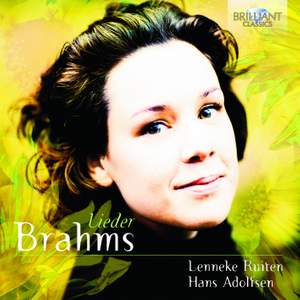
All recordingsPrices shown exclude VAT. (UK tax is not payable for deliveries to United States.) See Terms & Conditions for p&p rates. | |  | Brahms: Lieder
Brahms: | Fruhlingslied, Op. 85, No. 5 Serenade, Op. 70 No. 3 Es schauen die Blumen, Op. 96 No. 3 Regenlied (No. 3 from Acht Lieder und Gesänge, Op. 59) Nachklang (No. 4 from Acht Lieder und Gesänge, Op. 59) Liebesklage des Mädchens, Op. 48, No. 3 Gold überwiegt die Liebe, Op. 48, No. 4 Ein Sonett, Op. 14 No. 4 (Herder) Ständchen, Op. 14 No. 7 Sehnsucht 'Mein Schatz ist nicht da', Op. 14 No. 8 Bitteres zu sagen denkst du, Op. 32 No. 7 Frühlingstrost, Op. 63 No. 1 Erinnerung, Op. 63 No. 2 Wenn um den Hollunder, Op. 63 No. 6 Heimweh I, Op. 63 No. 7 Nachtigall, Op. 97 No. 1 Dort in den Weiden, Op. 97 No. 4 Trennung, Op. 97, No. 6 Spanisches Lied, Op. 6 No. 1 Juchhe! (No. 4 from Sechs Gesänge, Op. 6) Nachtigallen schwingen, Op. 6 No. 6 Am Sonntag Morgen Op. 49 No. 1 Das Mädchen (No. 1 from Sieben Lieder, Op. 95) Beim Abschied (No. 3 from Sieben Lieder, Op. 95) Vorschneller Schwur (No. 5 from Sieben Lieder, Op. 95) Mädchenlied (No. 6 from Sieben Lieder, Op. 95) Maienkätzchen, Op. 107 No. 4 |
Lenneke Ruiten (soprano) & Hans Adolfsen (piano) Lenneke Ruiten is quickly establishing herself as one of the leading sopranos of her generation. She started her tuition with Maria Rondel en Meinard Kraak in The Hague, and subsequently took lessons with Elle Ameling, Robert Holl, Hans Hotter, Walter Berry and Robert Tear. Her breakthrough came with winning the International Vocalist Competition of ¡¥s Hertogenbosch. She sang in all the important opera houses of Europe, and with conductors like Gardiner, Bruggen, Biondi, Koopman, Dantone. In 2011 she made her Salzburger Festspiele debut in Die Frau ohne Schatten conducted by Christian Thielemann. This well chosen selection of Brahms songs shows her warm timbre, her wide range of colours and her complete understanding of the text. | 
| | | In stock - usually despatched within 1 working day. |
|
|
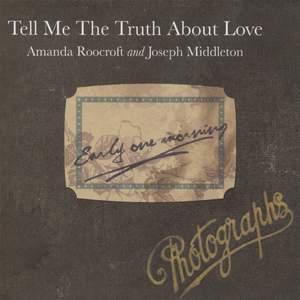
| |  | Tell me the truth about love…
Barber, S: | Rain has fallen | Boulanger, L: | Vous m'avez regardé avec toute votre âme | Brahms: | Wir wandelten, wir zwei zusammen Op. 96/2 Am Sonntag Morgen Op. 49 No. 1 Du sprichst, daß ich mich täuschte, Op. 32 No. 6 | Bridge: | Adoration, H 57 | Chausson: | Le Charme, Op. 2 No. 2 (Silvestre) | Copland: | Heart we will forget him | Debussy: | La chevelure | Dunhill: | The Cloths of Heaven, Op. 30/3 | Fauré: | Fleur jetée, Op. 39 No. 2 | Grieg: | Jeg Elsker Deg, Op. 41 No. 3 | Hahn, R: | Infidélité | Ireland: | The Trellis | Loewe, C: | Ich kann's nicht fassen, nicht glauben, Op. 60 No. 3 | Marx: | Und gestern hat er mir Rosen gebracht | Quilter: | Love's Philosophy, Op. 3 No. 1 (Shelley) | Rachmaninov: | Summer nights Op.14 No. 5 | Schoenberg: | Warnung, Op. 3 No. 3 | Schubert: | Du liebst mich nicht D756 (Platen) | Schumann: | Seit ich ihn gesehen (No. 1 from Frauenliebe und Leben, Op. 42) | Strauss, R: | Nachtgang Op. 29 No. 3 | Weill, K: | Je ne t'aime pas (text: Maurice Magre) | Wieniawska: | En sourdine | Wolf, H: | O wär dein Haus durchsichtig wie ein Glas Geh' Geliebter, geh' jetzt (No. 34 from Spanisches Liederbuch: Weltliche Lieder) |
Some say love's a little boy, And some say it's a bird, Some say it makes the world go around, Some say that's absurd… W.H. AUDEN Charting the course of a love affair – in song – through the eyes of a young woman who begins by asking the universal question, Tell me the truth about love presents a programme of 19th and 20th century song. The album takes its title from Benjamin Britten’s 1938 seductive setting of W.H. Auden’s amusing poem and tries to pin down and define the most elusive of human emotions. The story takes us from love at first sight with Schumann’s Seit ich ihn gesehen, breathless with wonder and fervent reverance and Chausson’s Le charme which describes the quiver of excitement and the tender veneration the girl feels when the boy’s smile catches her unawares to Loewe’s Ich kann’s nicht fassen, nicht gluben to describe the lovers first encounter. As the love story unfolds and the couple become closer, it is illustrated with music such as Strauss’s Nachtgang, Rachmaninov’s Midsummer nights and Bridge’s Adoration. However the magic is soon broken and Sunday brings deception and betrayal. The girl finds out that the young man does not love her and she bitterly awakes from her dream. The feeling of love lost is brought to life through Brahm’s Am Sonntag Morgen, Schubert’s Du liebst mich nicht and Kurt Weill’s Je ne t’aime pas. As a postlude, Britten’s arrangement of Early one morning perfectly sums up the story of the young girl and the final message of ‘how could you use a poor maiden so?’ lingers in the ear. Amanda Roocroft has secured an international reputation as one of Britain’s most exciting singers, in opera, concert and recital and Joseph Middleton enjoys a busy and varied career as a chamber musician and song accompanist. | | | In stock - usually despatched within 1 working day. |
|
|
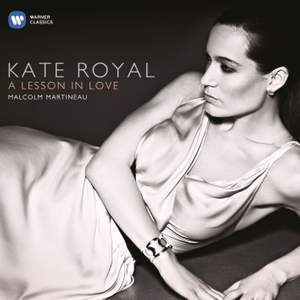
| |  | Kate Royal: A Lesson in Love
Beach: | Ah, Love, but a day! Op. 44, No. 2 | Bolcom: | Waitin' | Brahms: | Am Sonntag Morgen Op. 49 No. 1 | Bridge: | Love went a-riding | Britten: | O Waly, Waly | Canteloube: | Songs of the Auvergne: Chut, chut | Copland: | Pastorale Heart we will forget him | Debussy: | Apparition - song (1884) | Duparc: | Extase | Fauré: | Donc ce sera par un clair jour d’été | Hughes, H: | I will walk with my love | Liszt: | Es muss ein Wunderbares sein, S. 314 | Ravel: | Chanson de la mariée | Schubert: | Gretchen am Spinnrade, D118 Rastlose Liebe, D138 Die Männer sind méchant, D866 No. 3 Du liebst mich nicht D756 (Platen) | Schumann: | Jemand Lied der Braut II, Op. 25 No. 12 Lied der Braut I, Op. 25 No. 11 | Strauss, R: | Hochzeitlich Lied Op. 37 No. 6 | Tosti: | Pour un baiser | trad.: | Londonderry Air | Wolf, H: | Die Kleine O wär dein Haus durchsichtig wie ein Glas Erstes Liebeslied eines Mädchens (No. 42 from Mörike-Lieder) Verschling der Abgrund meines Liebsten Hütte |
A Lesson in Love tells the universal story of a love won and lost, and contains some beautiful and emotional German lieder, English and American songs and French mélodies. Kate Royal’s first two orchestral discs for EMI have been critically acclaimed. Here she turns her attention towards a more intimate recital disc with piano. A Lesson in Love charts the journey of a young girl’s relationship: from the first kiss and thrill of a blossoming love and initial intimacy through to the joy of a love fulfilled, to the disappointment and anger when the relationship breaks down - it ends with the girl’s acceptance and a cheeky sense of optimism about what her future love life might hold… Kate here creates her own unique song cycle, a thematic journey through the highs and lows of love, of young naivety lost and emotional maturity gained, feelings and experiences everyone can relate. Kate leads us through her own personal choice of song, and her innate sense of drama and her passion for musical storytelling brings a fresh and youthful interpretation of the disc repertoire. A Lesson in Love contains a mixture of well-known songs as well as some surprising rarities, with a range of song styles and languages to appeal to a broad audience. She is joined by the most esteemed and respected accompanists, Malcolm Martineau. “Royal is on fine form in the Schumann and Schubert Lieder, with Malcolm Martineau at the piano stage-managing the show admirably, as indeed he does throughout.” BBC Music Magazine, April 2011 **** “Royal's idea of combining songs of disparate eras and styles to tell a single love story works beautifully...[She] sings with radiant beauty and powerful emotional immediacy. If the golden warmth of her voice shows a hint of tightening when pushed on her high notes, it doesn't detract from the overall impact.” Classic FM Magazine, April 2011 **** “Royal, with Malcolm Martineau at the piano, finds a character and colour for each of her 28 songs...William Bolcom’s gentle “Wait in” at the start and finish is well justified, and her Bridge and Britten are heartfelt, but the gem is Amy Beach’s winsome “Ah, Love but a day!”.” Financial Times, 11th February 2011 **** “Kate Royal's beautifully sung new album, with finely characterised piano-playing from Malcolm Martineau, ranges imaginatively across a spectrum of composers who have captured the first pangs, the heartaches and the dashed hopes that can make life such a maelstrom of emotion.” Gramophone Magazine, March 2011 “Royal is generally in fine voice...luscious warmth is much in evidence. Royal is an exception among the majority of lyric sopranos these days in boasting an especially substantial middle range, which really glows throughout this disc.” International Record Review, March 2011 “An intriguingly fresh and unhackneyed programme...Kate Royal proves herself a compelling recitalist, colouring words with feeling and creating vivid atmosphere and character.” The Telegraph, 6th March 2011 **** | | | In stock - usually despatched within 1 working day. |
|
|
| |  | The Flagstad Recitals Volume 1Schubert, Brahms, Schumann, Wolf & Strauss - Lieder
Brahms: | Vier ernste Gesänge, Op. 121 Treue Liebe, Op. 7, No. 1 Am Sonntag Morgen Op. 49 No. 1 Auf dem Kirchhofe, Op. 105 No. 4 Wie Melodien zieht es mir, Op. 105 No. 1 Alte Liebe, Op. 72 No. 1 Bei dir sind meine Gedanken (No. 2 from Sieben Lieder, Op. 95) Wir wandelten, wir zwei zusammen Op. 96/2 Dein blaues Auge, (No. 8 from Acht Lieder und Gesänge, Op. 59) | Schubert: | Dem Unendlichen, D291 (Klopstock) Erlkönig, D328 Am Grabe Anselmo's D504 Des Mädchens Klage D191b Ave Maria, D839 | Schumann: | Der Nussbaum, Op. 25 No. 3 Die Soldatenbraut Op. 64 No. 1 Meine Rose, Op. 90 No. 2 Liebeslied, Op. 51 No. 5 Die Lotosblume, Op. 25 No. 7 Widmung, Op. 25 No. 1 Lust der Sturmnacht, Op. 35 No. 1 In der Fremde (No. 1 from Liederkreis, Op. 39) Zum Schluß, Op. 25 No. 26 Previously Unpublished | Sinding: | Leit etter livet og liv det! Op. 55, No. 5 Sylvelin, Op. 55, No. 1 Der skreg en fugl, Op. 18, No. 5 Den Jomfru gik i valmu-Vang? Op. 50, No. 5 | Strauss, R: | Befreit, Op. 39 No. 4 Mit deinen blauen Augen, Op. 56 No. 4 Lob des Leidens, Op. 15 No. 3 Ich trage meine Minne, Op. 32 No. 1 Ständchen, Op. 17 No. 2 Geduld Op. 10 No. 5 | Wolf, H: | Gesang Weylas (No. 46 from Mörike-Lieder) Gebet (No. 28 from Mörike-Lieder) Über Nacht Lieder aus der Jugendzeit Der Freund (No. 1 from Eichendorff-Lieder) Heb’ auf dein blondes Haupt (No. 18 from Italienisches Liederbuch) Anakreons Grab (No. 29 from Goethe-Lieder) Morgenstimmung Zur Ruh, zur Ruh! |
The first of four 2-CD “Flagstad Recitals” features Kirsten Flagstad in Brahms and Schubert on CD1 as well as CD premieres of songs by Schumann (including her previously unpublished “Zum Schluss”), Strauss, Wolf and Sinding on CD2. Her great power and control placed her among those with the natural capacity for success in the ‘big’ songs with its special thrill, but there is no want of gentleness in the quieter ones. The American critic, Virgil Thomson, probably spoke for the whole audience when he wrote on Flagstad’s return to the United States in 1947: ‘Never in this writer’s concert-going lifetime has there been available any other vocal artistry of such sumptuous natural acoustics, such perfect technical control and such sound musicianship’. "Throughout, one is stirred by the sheer beauty of the sound." Gramophone “deeply felt … wonderfully radiant tone … very touching” [Brahms] “the operatic drama of Der Erlkönig is as memorable as the gently ravishing cantilena of Am Grabe Anselmos” The Penguin Guide to Bargain Compact Discs "…worth having for the Wolf group alone." Gramophone | | | In stock - usually despatched within 1 working day. |
|
|
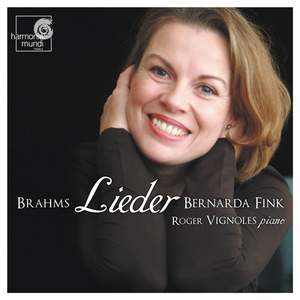
| |  | Brahms: Lieder
Brahms: | Bei dir sind meine Gedanken (No. 2 from Sieben Lieder, Op. 95) Wie Melodien zieht es mir, Op. 105 No. 1 Sapphische Ode, Op. 94 No. 4 Feldeinsamkeit, Op. 86 No. 2 Nachtigall, Op. 97 No. 1 Verzagen, Op. 72 No. 4 Alte Liebe, Op. 72 No. 1 An die Nachtigall, Op. 46 No. 4 (Text: L.C.H. Hölty) Das Mädchen spricht, Op. 107 No. 3 Dein blaues Auge, (No. 8 from Acht Lieder und Gesänge, Op. 59) Geheimnis, Op. 71 No. 3 Ständchen, Op. 106 No. 1 Von ewiger Liebe, Op. 43 No. 1 Der Tod, das ist die kühle Nacht, Op. 96 No. 1 Auf dem Kirchhofe, Op. 105 No. 4 Die Mainacht, Op. 43 No. 2 Anklänge, Op. 7 No. 3 Spanisches Lied, Op. 6 No. 1 Mädchenlied (No. 6 from Sieben Lieder, Op. 95) Am Sonntag Morgen Op. 49 No. 1 Liebestreu, Op. 3 No. 1 Vergebliches Ständchen, Op. 84 No. 4 Das Mädchen (No. 1 from Sieben Lieder, Op. 95) Therese, Op. 86 No. 1 Mädchenlied, Op. 107 No. 5 Der Jäger (No. 4 from Sieben Lieder, Op. 95) Der Schmied Op. 19/4 Der Gang Zum Liebchen, Op. 31 No. 3 Sonntag, Op. 47 No. 3 Mädchenlied, Op. 85 No. 3 Wiegenlied, Op. 49 No. 4 (Lullaby) |
| 
| | | Scheduled for release on 3 June 2013. Order it now and we will deliver it as soon as it is available. |
|
|
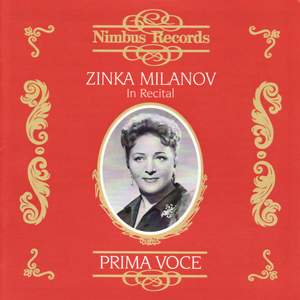
| |  | Zinka Milanov in Recital
| | Pastirica (The Shepherdess) Pavèiè Bersa She Duš Dan (All Souls’ Day) Songs of Yugoslavia (Croatia) Na Bembaši By Bembashi Waters | Brahms: | Am Sonntag Morgen Op. 49 No. 1 Wiegenlied, Op. 49 No. 4 (Lullaby) | Giordani, G: | Caro mio ben | Hageman: | Do Not Go My Love | Kunc, B: | The World is Empty Strepnja (Quivering) Èežnja (Longing) | Schumann: | Widmung, Op. 25 No. 1 Mondnacht (No. 5 from Liederkreis, Op. 39) | Strauss, R: | Zueignung, Op. 10 No. 1 Freundliche Vision, Op. 48 No. 1 Cäcilie, Op. 27 No. 2 Allerseelen, Op. 10 No. 8 |
“Best known as a Metropolitan diva in Verdi, Puccini ad Ponchielli roles, the Croatian soprano is captured rather late here in the song repertoire, including some of her native folk songs.” BBC Music Magazine, June 2008 *** | | | Usually despatched in 4 - 5 working days. |
|
|
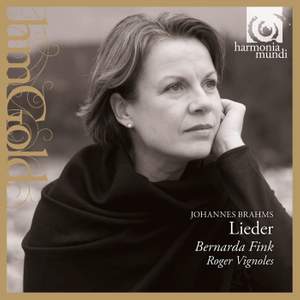
| |  | Brahms - Lieder
Brahms: | Bei dir sind meine Gedanken (No. 2 from Sieben Lieder, Op. 95) Wie Melodien zieht es mir, Op. 105 No. 1 Sapphische Ode, Op. 94 No. 4 Feldeinsamkeit, Op. 86 No. 2 Nachtigall, Op. 97 No. 1 Verzagen, Op. 72 No. 4 Alte Liebe, Op. 72 No. 1 An die Nachtigall, Op. 46 No. 4 (Text: L.C.H. Hölty) Das Mädchen spricht, Op. 107 No. 3 Dein blaues Auge, (No. 8 from Acht Lieder und Gesänge, Op. 59) Geheimnis, Op. 71 No. 3 Ständchen, Op. 106 No. 1 Von ewiger Liebe, Op. 43 No. 1 Der Tod, das ist die kühle Nacht, Op. 96 No. 1 Auf dem Kirchhofe, Op. 105 No. 4 Die Mainacht, Op. 43 No. 2 Anklänge, Op. 7 No. 3 Spanisches Lied, Op. 6 No. 1 Mädchenlied (No. 6 from Sieben Lieder, Op. 95) Am Sonntag Morgen Op. 49 No. 1 Liebestreu, Op. 3 No. 1 Vergebliches Ständchen, Op. 84 No. 4 Das Mädchen (No. 1 from Sieben Lieder, Op. 95) Therese, Op. 86 No. 1 Mädchenlied, Op. 107 No. 5 Der Jäger (No. 4 from Sieben Lieder, Op. 95) Der Schmied Op. 19/4 Der Gang Zum Liebchen, Op. 31 No. 3 Sonntag, Op. 47 No. 3 Mädchenlied, Op. 85 No. 3 Wiegenlied, Op. 49 No. 4 (Lullaby) |
"Brahms was capable - as were all his great predecessors - of writing a melody that was his own property, right down to the smallest inflection, and yet sounded like a folksong. Or, to put it another way, a melody that was a real, genuine folksong - and yet was by Brahms." Wilhelm Furtwängler, 1931 “From Roger Vignoles's first light-filled notes in 'Bei mir sind meine Gedanken', with Bernada Fink's smiling, wide-eyed voice, these performers make it sound as though the ink is still wet on Brahms's manuscripts. The real skill of Fink and Vignoles is to capture that fusion of physical and emotional movement within a song - and to recreate it with real spontaneity.” BBC Music Magazine, March 2007 **** “'Bei dir sind meine Gedanken', one of Brahms's happiest songs, makes an inviting aperitif. Buoyed by the evanescent shimmer of Roger Vignoles's accompaniment, Bernarda Fink is all confiding eagerness, phrasing deftly and gracefully and showing a natural feeling for Brahmsian rubato. One would expect Fink's warm, luminous mezzo, flecked by darker, deeper tints, to be near ideal for, say, the nostalgia of 'Alte Liebe' or the many songs of elegiac loss and heartbreak, all touchingly done here. But having thought of her as an essentially 'serious' singer, dignified, eloquent, the vivacity and 'face' she brings to 'Bei dir sind meine Gedanken' and other lighter songs is sheer delight. 'Ständchen', here more sunlit than moonlit, is charmingly characterised, with an affectionate caress on the dreaming girl's 'Vergiss nicht mein'. Fink is playfully coquettish without archness in the delicious 'Spanisches Lied', and sings 'Vergebliches Ständchen' with an outgoing boldness and witty touches of timing – and the tender lingering on the penultimate 'Mein Knab' suggests that the boy's luck may soon be about to change. Other singers have brought a more intense yearning to 'Die Mainacht' and found greater mystery amid the slumberous balm of 'Feldeinsamkeit'. But Fink's flowing performances, sensitively shaped and inflected, are never less than satisfying. It is good to be reminded, too, that, for all its melancholy, 'Die Mainacht' is also a song of spring, suffused by warm major-key harmonies, with a hint of excited anticipation at the line 'Wann, o lächelndes Bild'. On the face of it, Fink's lyric mezzo would seem to be on the light side for 'Von ewiger Liebe'. But with Vignoles imaginatively 'orchestrating' the keyboard part, she gives a finely graded, deeply moving performance, vividly contrasting the contained passion of the boy's words with the girl's gentle candour. The glowing climactic avowal of eternal love is truly overwhelming, setting the seal on a Brahms recital of rare distinction.” Gramophone Classical Music Guide, 2010 “For all the tragic, premature loss last year of Lorraine Hunt Lieberson, Argentinian Bernarda Fink is just one of a golden generation of mezzos vying for the mantle of Janet Baker. One of the most versatile, as at ease in Baroque repertoire as in music from Handel and Mozart to Schumann, Fink's rich, warm voice boasts the perfect blend of colour and clarity for this selection of 31 songs from the almost 200 Brahms wrote. Her musical intelligence combines with the sensitivity of Roger Vignoles to capture the folk-song spirit behind their urbane polish.” The Observer | | | Usually despatched in 3 - 4 working days. |
|
|
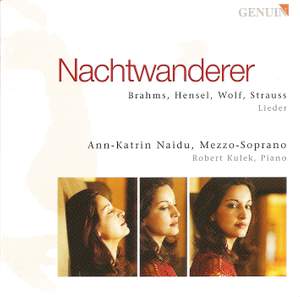
| |  | NachtwandererLieder by Brahms, Hensel, Wolf and Strauss
Brahms: | Über die Heide Op. 86 No. 4 Alte Liebe, Op. 72 No. 1 Mädchenlied, Op. 107 No. 5 Am Sonntag Morgen Op. 49 No. 1 Liebestreu, Op. 3 No. 1 Meine Lieder Op. 106 No. 4 Therese, Op. 86 No. 1 Die Mainacht, Op. 43 No. 2 Immer leiser wird mein Schlummer, Op. 105 No. 2 Der Tod, das ist die kühle Nacht, Op. 96 No. 1 | Mendelssohn: | Nachtwanderer Op. 7 No.1 (Eichendorff) | Mendelssohn, Fanny: | Der Eichwald brauset (Schiller) Die Mainacht, Op. 9 No. 6 (Text: Ludwig Hölty) | Strauss, R: | Die Nacht, Op. 10 No. 3 Zueignung, Op. 10 No. 1 Morgen, Op. 27 No. 4 | Wolf, H: | Die Nacht (No. 19 from Eichendorff-Lieder) (Eichendorff) Das verlassene Mägdlein (No. 7 from Mörike-Lieder) (Mörike) Verborgenheit (No. 12 from Mörike-Lieder) (Mörike) |
Ann-Katrin Naidu (mezzo-soprano), Robert Kulek (piano) | |
|
| |  | Kirsten Flagstad Edition: The Decca Recitals
Alnaes: | De hundrede violiner London Symphony Orchestra, Øivin Fjeldstad Varlaengsler London Symphony Orchestra, Øivin Fjeldstad Nu brister alle de klofter London Symphony Orchestra, Øivin Fjeldstad Februarmorgen ved Golfen London Symphony Orchestra, Øivin Fjeldstad | Bach, J S: | St Matthew Passion, BWV244: Break in Grief London Philharmonic Orchestra, Sir Adrian Boult Cantata BWV147 'Herz und Mund und Tat und Leben': Jesu, bleibet meine Freude London Philharmonic Orchestra, Sir Adrian Boult Bist du bei mir, BWV508 London Philharmonic Orchestra, Sir Adrian Boult Sheep May Safely Graze, from Cantata BWV208 London Philharmonic Orchestra, Sir Adrian Boult | Bortnyansky: | Jubilate London Philharmonic Orchestra, Sir Adrian Boult | Brahms: | Vier ernste Gesänge, Op. 121 Edwin McArthur (piano) Treue Liebe, Op. 7, No. 1 Edwin McArthur (piano) Am Sonntag Morgen Op. 49 No. 1 Edwin McArthur (piano) Auf dem Kirchhofe, Op. 105 No. 4 Edwin McArthur (piano) Wie Melodien zieht es mir, Op. 105 No. 1 Edwin McArthur (piano) Alte Liebe, Op. 72 No. 1 Edwin McArthur (piano) Bei dir sind meine Gedanken (No. 2 from Sieben Lieder, Op. 95) Edwin McArthur (piano) Wir wandelten, wir zwei zusammen Op. 96/2 Edwin McArthur (piano) Dein blaues Auge, (No. 8 from Acht Lieder und Gesänge, Op. 59) Edwin McArthur (piano) | Eggen: | Aere det evige forar i livet London Symphony Orchestra, Øivin Fjeldstad | Gounod: | Repentir (O Divine Redeemer) London Philharmonic Orchestra, Sir Adrian Boult | Grieg: | Haugtussa, Op. 67 Edwin McArthur (piano) Hjertets Melodier af H. C.Andersen, Op. 5 No. 3 'Jeg elsker Dig' Edwin McArthur (piano) Eros (from 5 Songs Op. 70) Edwin McArthur (piano) Millom Rosor, Op. 39, No. 4 Edwin McArthur (piano) Der gynger en baad paa bflge, Op. 69, No. 1 Edwin McArthur (piano) Hytten, Op. 18, No. 2 Edwin McArthur (piano) Det første møde, Op. 21 No. 1 Edwin McArthur (piano) Jeg giver mit digt våren, Op. 21, No. 3 Edwin McArthur (piano) Med en Primula veris, Op. 26 No. 4 Edwin McArthur (piano) Med en vandlije, Op. 25 No. 4 Edwin McArthur (piano) Seks Sange, Op. 48 No. 6 'Ein Traum' Edwin McArthur (piano) I Liden hojt deroppe, Op. 39 No. 3 Edwin McArthur (piano) Fra Monte Pincio, Op. 39 No. 1 Edwin McArthur (piano) Liden Kirsten (Little Kirsten), Op. 60 No. 1 Edwin McArthur (piano) Den Aergjerridge, Op. 26, No. 3 Edwin McArthur (piano) Efterårsstormen, Op. 18, No. 4 London Symphony Orchestra, Øivin Fjeldstad Og jeg vil ha mig hjertenskjaer (And I would like a sweetheart true), Op. 60 No. 5 London Symphony Orchestra, Øivin Fjeldstad Jeg giver mit digt våren, Op. 21, No. 3 London Symphony Orchestra, Øivin Fjeldstad Til én, Op. 59, No. 3 London Symphony Orchestra, Øivin Fjeldstad Til en II, Op. 59 No. 4 London Symphony Orchestra, Øivin Fjeldstad | Gruber, F: | Silent Night London Philharmonic Orchestra, Sir Adrian Boult | Handel: | Art thou troubled? (from Rodelinda) London Philharmonic Orchestra, Sir Adrian Boult Sommi Dei! (Radamisto) sung in English as 'Gods all powerful' London Philharmonic Orchestra, Sir Adrian Boult Semele: O, Sleep Why Dost Thou Leave Me? London Philharmonic Orchestra, Sir Adrian Boult Messiah: He shall feed His flock London Philharmonic Orchestra, Sir Adrian Boult Messiah: I know that my Redeemer liveth London Philharmonic Orchestra, Sir Adrian Boult Praise ye the Lord London Philharmonic Orchestra, Sir Adrian Boult | Liddle, S: | Abide with me London Philharmonic Orchestra, Sir Adrian Boult | Lie, H: | Nykelen London Symphony Orchestra, Øivin Fjeldstad Skindvengbrev London Symphony Orchestra, Øivin Fjeldstad | Mahler: | Kindertotenlieder Wiener Philharmoniker, Sir Adrian Boult Lieder eines fahrenden Gesellen (4 songs, complete) Wiener Philharmoniker, Sir Adrian Boult | Mendelssohn: | Hear My Prayer London Philharmonic Orchestra, Sir Adrian Boult Jerusalem, thou that killest the prophets, from Paulus, Op. 36 London Philharmonic Orchestra, Sir Adrian Boult | Parry: | Jerusalem London Philharmonic Orchestra, Sir Adrian Boult | Schubert: | Dem Unendlichen, D291 (Klopstock) Edwin McArthur (piano) Erlkönig, D328 Edwin McArthur (piano) Am Grabe Anselmo's D504 Edwin McArthur (piano) Das Madchens Klage, D191 (Schiller) Edwin McArthur (piano) Ave Maria, D839 Edwin McArthur (piano) | Schumann: | Der Nussbaum, Op. 25 No. 3 Edwin McArthur (piano) Die Soldatenbraut Op. 64 No. 1 Edwin McArthur (piano) Meine Rose, Op. 90 No. 2 Edwin McArthur (piano) Liebeslied, Op. 51 No. 5 Edwin McArthur (piano) Die Lotosblume, Op. 25 No. 7 Edwin McArthur (piano) Widmung, Op. 25 No. 1 Edwin McArthur (piano) Erstes Grün, Op. 35 No. 4 Edwin McArthur (piano) In der Fremde (No. 1 from Liederkreis, Op. 39) Edwin McArthur (piano) Zum Schluß, Op. 25 No. 26 Edwin McArthur (piano) | Sibelius: | Til kvällen, Op. 17 No. 6 London Symphony Orchestra, Øivin Fjeldstad Var det en dröm? Op. 37 No. 4 (J.J. Wecksell) London Symphony Orchestra, Øivin Fjeldstad Höstkväll, Op. 38:1 (Text: Viktor Rydberg) London Symphony Orchestra, Øivin Fjeldstad Demanten på marssnön, Op. 36 No. 6 (Wecksell) London Symphony Orchestra, Øivin Fjeldstad Flickan kom från sin älsklings möte, Op. 37, No. 5 London Symphony Orchestra, Øivin Fjeldstad Arioso, Op. 3 (Text: J.L. Runeberg) London Symphony Orchestra, Øivin Fjeldstad Våren flyktar hastigt, Op. 13 No. 4 (Text: Runeberg) London Symphony Orchestra, Øivin Fjeldstad Se'n har jag ej frågat mera, Op. 17 No. 1 (Text: J.L. Runeberg) London Symphony Orchestra, Øivin Fjeldstad Men min fågel märks dock icke, Op. 36, No. 2 London Symphony Orchestra, Øivin Fjeldstad På verandan på vid havet, Op. 38 No. 2 (Viktor Runeberg) London Symphony Orchestra, Øivin Fjeldstad Den första kyssen, Op. 37 No. 1 (Text: J.L. Runeberg) London Symphony Orchestra, Øivin Fjeldstad Svarta rosor, Op. 36 No. 1 (Ernst Josephson) London Symphony Orchestra, Øivin Fjeldstad Säf, säf, susa, Op. 36 No. 4 (Text: Gustav Fröding) London Symphony Orchestra, Øivin Fjeldstad Kom nu hit, Död, Op. 60 No. 1 (Bertel Gripenberg after Shakespeare) London Symphony Orchestra, Øivin Fjeldstad | Sinding: | Leit etter livet og liv det! Op. 55, No. 5 Edwin McArthur (piano) Sylvelin, Op. 55, No. 1 Edwin McArthur (piano) Der skreg en fugl, Op. 18, No. 5 Edwin McArthur (piano) Den Jomfru gik i valmu-Vang? Op. 50, No. 5 Edwin McArthur (piano) | Strauss, R: | Befreit, Op. 39 No. 4 Edwin McArthur (piano) Mit deinen blauen Augen, Op. 56 No. 4 Edwin McArthur (piano) Lob des Leidens, Op. 15 No. 3 Edwin McArthur (piano) Ich trage meine Minne, Op. 32 No. 1 Edwin McArthur (piano) Seitdem dein Aug' in meines schaute, Op. 17 No. 1 Edwin McArthur (piano) Geduld Op. 10 No. 5 Edwin McArthur (piano) | Wade: | O come, all ye faithful London Philharmonic Orchestra, Sir Adrian Boult | Wagner: | Wesendonck-Lieder (5) Wiener Philharmoniker, Hans Knappertsbusch Der Männer Sippe (from Die Walküre) Wiener Philharmoniker, Hans Knappertsbusch Du bist der Lenz (from Die Walküre) Wiener Philharmoniker, Hans Knappertsbusch Siegmund! Sieh' auf mich! (from Die Walküre) Set Svanholm (Siegmund) Wiener Philharmoniker, Sir Georg Solti Einsam in trüben Tagen (from Lohengrin) Wiener Philharmoniker, Hans Knappertsbusch Ich sah das Kind an seiner Mutter Brust (from Parsifal) Wiener Philharmoniker, Hans Knappertsbusch Starke Scheite schichtet mir dort 'Brünnhilde's Immolation Scene' (from Götterdämmerung) Oslo Philharmonic Orchestra, Norwegian State Radio Orchestra, Øivin Fjeldstad | Wolf, H: | Gesang Weylas (No. 46 from Mörike-Lieder) Edwin McArthur (piano) Gebet (No. 28 from Mörike-Lieder) Edwin McArthur (piano) Uber Nacht Edwin McArthur (piano) Der Freund (No. 1 from Eichendorff-Lieder) Edwin McArthur (piano) Heb’ auf dein blondes Haupt (No. 18 from Italienisches Liederbuch) Edwin McArthur (piano) Anakreons Grab (No. 29 from Goethe-Lieder) Edwin McArthur (piano) Morgenstimmung Edwin McArthur (piano) Zur Ruh, zur Ruh! Edwin McArthur (piano) |
and traditional Norwegian hymns (Sigvart Fotland - organ)
7 December 2012 marks the 50th anniversary of the death of Kirsten Flagstad. Born in Hamar, Norway, on 12 July 1895 Flagstad made her debut in Oslo in 1912 in D’Albert’s Tiefland. | | | (Sorry, download not available in your country) | Usually despatched in 2 - 3 working days. |
|
|
| |
|