Prices shown exclude VAT. (UK tax is not payable for deliveries to United States.) See Terms & Conditions for p&p rates. | |  | Handel: Water Music
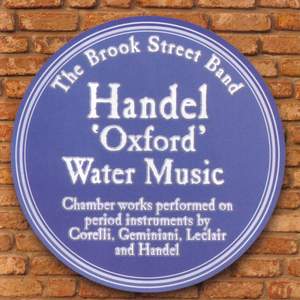
It’s easy to imagine the well-documented first performance of Handel’s Water Music, played by at least 50 musicians on a barge floating down the Thames for a royal procession. But what was the score’s first incarnation? After all, Baroque composers would shamelessly beg, borrow and steal from their own music, whatever it took to make a few extra bob. Enter the Brook Street Band, a young baroque chamber ensemble whose core make-up is two violins, harpsichord and cello. Upon learning of a chamber version of the Water Music in an Oxford University library, apparently penned by Handel himself, the group applied 18th century practices and adapted the music for their own forces, adding an oboe doubling on recorder. The resulting world premier recording recreates how Handel’s popular music may have been enjoyed by 18th century folk in the privacy of their own home. This is the debut recording by The Brook Street Band, award winning specialists in eighteenth century repertoire who take their name from the London street where George Frideric Handel lived and composed for most of his working life. They complete their CD with trio sonatas by Corelli, Geminiani, Handel and Leclair. | | | Usually despatched in 4 - 5 working days. |
|
|
| |  | Pachelbel: Canon & Gigue
| | | Usually despatched in 8 - 10 working days. |
|
|
| |  | Handel - Tra le fiammeItalian cantatas & trio sonatas
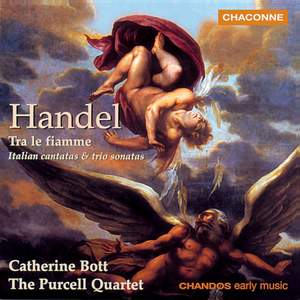
“The idea of alternating trio sonatas with cantatas is a happy one, based perhaps on the idea that people play CDs for pleasure and not simply for reference. The two cantatas are rarities on record. Tra le fiamme is a spectacularly scored piece, its textures enriched by a viola da gamba obbligato and wind instruments (recorders in some numbers, oboes in another) as well as strings. Notte placida e cheta is a delightful evocation of night, sleep and amorous reflection, with its opening aria full of sinuous, voluptuous interweaving violin lines and its soft, gently accompanied recitatives; it ends – a slightly rude awakening, perhaps, to chime with the words – with a fugal aria in which the singer takes one of the four contrapuntal parts along with the violins and the bass. Catherine Bott sings them very responsively, both to the words and to the sense of Handel's lines, with neatly placed detail and some attractively floated phrases. The viol obbligato is done in accomplished style by Richard Boothby, who supplies much of the continuo harmony with multiple stops. In the Trio Sonatas there's some splendidly athletic playing from the violins of the Purcell Quartet, which plays with its usual spruce rhythms and conversational give and take. These are probably the most appealing performances currently available of these works.” Gramophone Classical Music Guide, 2010 | | | (also available to download from $10.50) | Usually despatched in 2 - 3 working days. (Available now to download.) |
|
|
| |
|