Hahn, R: Trois jours de vendange

This page lists all recordings of Trois jours de vendange, by Reynaldo Hahn (1875-1947) on CD & download (MP3 & FLAC). Generally, more recent releases are listed first, but with priority given to those that are in stock.

Recommendations

Editor's Choice
May 2006

All recordings

Prices shown exclude VAT. (UK tax is not payable for deliveries to United States.)
See Terms & Conditions for p&p rates.

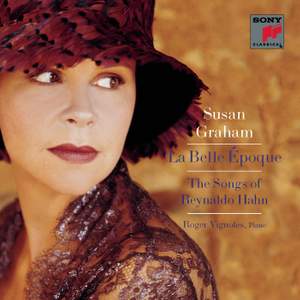
La Belle Époque: The Songs of Reynaldo Hahn

La Belle Époque: The Songs of Reynaldo Hahn


Hahn, R:

A Chloris

Le rossignol des lilas

L'Enamourée

Trois jours de vendange

Lydé

Tyndaris

Phyllis (No. 10 from Études Latines)

Les fontaines

L'Automne

Infidélité

Dans la nuit

D'une prison

Quand la nuit n'est pas étoilée

Fumée

Le printemps

Je me souviens

Quand je fus pris au pavillon

Paysage

Fêtes galantes

Nocturne

Mai

L'heure exquise

Offrande

Si mes vers avaient des ailes


Susan Graham (mezzo), Roger Vignoles (piano)

Sony - 601682

(CD)

$18.50

In stock - usually despatched within 1 working day.

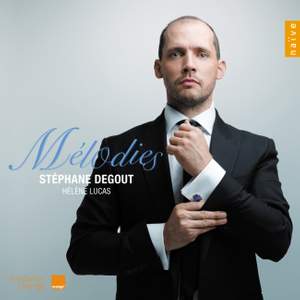
Mélodies: Stéphane Degout & Hélène Lucas

Mélodies: Stéphane Degout & Hélène Lucas


Chabrier:

L'ile heureuse

Chanson pour Jeanne

Les Cigales

Debussy:

La mer est plus belle

Le Son du cor

L'échelonnement des haies

Trois Ballades de François Villon

Duparc:

Le Galop

Lamento

Élégie

La Vie antérieure

Hahn, R:

Trois jours de vendange

Cimetière de campagne

Ravel:

Histoires naturelles (5)

Saint-Saëns:

Au cimetière (Mélodies persanes)

Tournoiement ‘Songe d’opium’ Op. 26, No. 6


Stéphane Degout (baritone) & Hélène Lucas (piano)

New Naïve signing baritone Stéphane Degout has already featured as soloist with the internationally renowned choral group Accentus on Brahms' German Requiem and Fauré's Requiem. The programme on his solo debut CD is a selection of mélodies by various French composers, Debussy, Ravel, Duparc, Saint-Saëns, Chabrier, and Reynaldo Hahn. Stéphane Degout first met pianist Hélène Lucas when he entered the Conservatoire National Supérieur de Musique de Lyon in 1995. She soon detected the young singer’s qualities and introduced him to the world of the mélodie and the lieder, and Stéphane gave his first recitals of this repertoire with Hélène Lucas as accompanist. After his acclaimed debut as Papageno at the Festival of Aix-en-Provence, the international operatic world opened its doors to him and kept him away from the lied and the mélodie for a while, but he has now returned to his roots.

Next to the great names of the French mélodie, Fauré, Debussy, and Ravel, Gounod, Bizet, Chabrier and Saint-Saëns appear less often in the singer’s repertoire. Among the latter’s many songs the pieces featured here are splendid examples of subtle orientalism. The less numerous mélodies of Chabrier introduce a French approach to Wagnerism with highly elaborate piano parts and extremely sensual vocal lines. The third of the somewhat neglected mélodistes represented in this programme is Reynaldo Hahn. His vocal works are frequently viewed as relatively lightweight, but the two songs featured here Trois jours de vendanges, and Cimetière de campagne are full of depth and melancholy.

“The voice - a natural for Pelléas, one would think - responds rapturously to Debussy and Verlaine's submarine wonders” Gramophone Magazine, April 2011

“[there's] no mistaking the quality of his sensual, yet gritty voice, or of his artistry...Degout has an exceptional, if unobtrusive way of projecting a text, and you're conscious – as in the various settings of Baudelaire, Verlaine and Gautier – of listening to great poetry as well as great music...There's wonderfully fluid playing from his accompanist Hélène Lucas, too.” The Guardian, 10th February 2011 *****

Naive - V5209

(CD)

$16.75

(also available to download from $10.50)

Usually despatched in 3 - 4 working days. (Available now to download.)

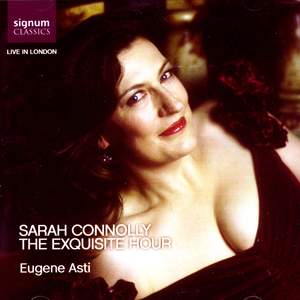
The Exquisite Hour

The Exquisite Hour


Brahms:

Ständchen, Op. 106 No. 1

Da unten im Tale (No. 6 from Deutsche Volkslieder, WoO 33)

Nachtwandler, Op. 86 No. 3

Feldeinsamkeit, Op. 86 No. 2

Alte Liebe, Op. 72 No. 1

Die Mainacht, Op. 43 No. 2

Von ewiger Liebe, Op. 43 No. 1

Britten:

Tit for Tat

Hahn, R:

À Chloris

L'Enamourée

Trois jours de vendange

L'heure exquise

Quand je fus pris au pavillon

Haydn:

Arianna a Naxos, cantata, Hob.XXVIb/2

Ireland:

Her song

Korngold:

Glückwunsch

Alt-Spanisch

Sterbelied

Gefasster adschied

Weill, K:

Lost in the stars

Speak low


Sarah Connolly (mezzo-soprano) & Eugene Asti (piano)

“a hugely impressive disc, testifying to the versatility and range of a singer who has already drawn comparisons with Janet Baker” The Guardian

“A national treasure” Evening Standard

“Connolly's lovely singing reaches to the sensuous core” The Telegraph

“Almost seven years ago we went to the Wigmore Hall expecting to hear a well known soprano only to find that she had been replaced by a less well-known mezzo. Sarah Connolly had already appeared with the English National Opera in major roles such as Handel's Xerxes and Donizetti's Mary Stuart. Disappointment at missing the scheduled artist vanished with the completion of the substitute's first phrases. Delight took its place and increased steadily throughout the recital. It was a clear, fresh and powerful voice, used with intelligent assurance, and by the final groups (Duparc and Falla) she had established with the audience the rapport of a much more experienced artist. What was true at the Wigmore holds for this concert at St John's, Smith Square, where her success with the audience is again unmistakable and fully merited.
Again, her choice of programme contributes to the success: a judicious mixture of the familiar and out-of-the-way, and well suited to voice and style. The Brahms group is particularly satisfying, with Die Mainacht broadly phrased, Nachtwandler imaginatively hushed and Von ewigerLiebe warmly felt. The Hahn songs are equally (if contrastingly) delightful, the two pastiche pieces, A Chloris and Quand je fus pris au pavillon charmingly in period. Weill's Speak Low and Ireland's Her Song are winning encore pieces.
That leaves Haydn's Arianna a Naxos, the long and demanding concert aria which opens the programme. Here we find a substantial achievement and a limitation. The style is admirably clean and the emotional range well probed, but the whole remains a little impersonal and one is driven to comparisons. Janet Baker brings warmer humanity and a more memorable timbre while Cecilia Bartoli is more vivid – hear her intense 'Tradita io sono' for instance, or the pale 'Già più non reggo' or the furious final 'Barbaro ed infedel'.
That comparison does, however, throw into a very favourable light Eugene Asti's accompaniment: where András Schiff (for Bartoli) is over– assertive, Asti is sensitive and keeps proportion.
And indeed he does so throughout: a constant pleasure and a major contribution to the recital's undoubted success.”
Gramophone Classical Music Guide, 2010

“Connolly woos her audience with the calling-card for any and every mezzo: Haydn's dramatic cantata, Arianna a Naxos. And every second of its nervous and emotional life - its hopes, fears and final despair - are uncovered in Connolly's superbly observant voice and imagination.” BBC Music Magazine, March 2006 *****

“…a clear, fresh and powerful voice, used with intelligent assurance… The Brahms group is particularly satisfying, with Die Mainacht broadly phrased, Nachtwandler imaginatively hushed and Von ewiger Liebe warmly felt. The Hahn songs are equally… delightful, the two pastiche pieces, A Chloris and Quand je fus pris au pavillon charmingly in period. ...Weill's Speak Low and Ireland's Her Song are winning encore pieces.” Gramophone Magazine, May 2006

GGramophone Magazine

Editor's Choice - May 2006

Signum - SIGCD072

(CD)

$16.75

Usually despatched in 3 - 4 working days.

L’heure exquise

L’heure exquise

French songs


Chausson:

L'Albatros

Le Chevalier Malheur

Apaisement

La chanson douce

Debussy:

Fêtes galantes - Set 2

Enescu:

Sept chansons de Clément Marot, Op. 15

Hahn, R:

À Chloris

D'une prison

Offrande

L'heure exquise

Fêtes galantes

Puisque j'ai mis ma lèvre

Trois jours de vendange

Cinq petites chansons

Quand la nuit n'est pas étoilée


Marie-Nicole Lemieux (contralto), Daniel Blumenthal (piano)

“…this is a fine new voice and an intelligently chosen programme, well executed.” Gramophone Magazine, December 2005

Naive - V5022

(CD)

$16.75

(also available to download from $10.50)

Usually despatched in 3 - 4 working days. (Available now to download.)

Airs Chantés

Airs Chantés


Daunais:

Cinq poèmes d'Éloi de Grandmont

Deux poèmes de Paul Éluard

Fantasie dans tous les tons

Hahn, R:

Quand je fus pris au pavillon

À Chloris

Le Rossignol des lilas

Les fontaines

L'Enamourée

Trois jours de vendange

L'heure exquise

Le printemps

Poulenc:

Airs chantés

Vocalise

Nos souvenirs qui chantent

Deux poèmes de Louis Aragon

Métamorphoses

Les chemins de l'amour


Hélène Guilmette (soprano); Delphine Bardin (piano)

Ambroisie - AMB9971

(CD)

$16.75

Usually despatched in 3 - 4 working days.

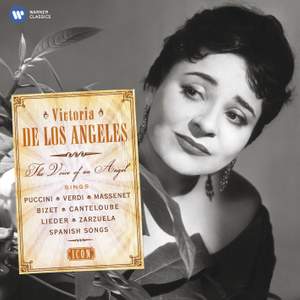
Victoria de los Ángeles: The Voice of an Angel

Victoria de los Ángeles: The Voice of an Angel


Bach, J C:

Ah! lamenta, oh bella Irene

Barbieri, F:

Canción de Paloma (from El Barberillo de Lavapiés)

Profesores de la Orquesta Nacional de España, Rafael Frühbeck de Burgos

Barrera Saavedra:

Adiós Granada (from Emigrantes)

arr. de los Angeles

Victoria de los Angeles (guitar)

Beethoven:

Oh! would I were but that sweet linnet, WoO. 154 No. 9

Eduard Drolc (violin), Irmgard Poppen (cello)

He promised me at parting, WoO. 154 No. 12

They bid me slight my Dermot dear, WoO. 152 No. 8

Eduard Drolc (violin), Irmgard Poppen (cello), Gerald Moore (piano)

Bizet:

Carmen (highlights)

Nicolai Gedda (Don Jose), Denise Monteil (Micaela), Marcelle Croisier (Frasquita), Monique Linval (Mercédès)

Chœurs et Orchestre National da la Radiodiffusion Française, Sir Thomas Beecham

Brahms:

Wiegenlied, Op. 49 No. 4 (Lullaby)

Dein blaues Auge, (No. 8 from Acht Lieder und Gesänge, Op. 59)

Vergebliches Ständchen, Op. 84 No. 4

Gerald Moore (piano)

Sapphische Ode, Op. 94 No. 4

Gerald Moore (piano)

Caballero:

Romanza de Pilar (from Gigantes y cabezudos)

Profesores de la Orquesta Nacional de España, Rafael Frühbeck de Burgos

Canteloube:

Songs of the Auvergne

Orchestre des Concerts Lamoureux, Jean-Pierre Jacquillat

Catalani:

Ebben? Ne andrò lontana (from La Wally)

Orchestra del Teatro dell’Opera di Roma, Giuseppe Morelli

Chapí:

Canción de Pastora (from La patria chica)

Rafael Frühbeck de Burgos

Canción de la gitana (from La chavala)

Profesores de la Orquesta Nacional de España, Rafael Frühbeck de Burgos

Carceleras from Las hijas de Zebedeo

Sinfonia of London, Rafael Frühbeck de Burgos

Chueca:

La gran vía: Tango de la menegilda

Rafael Frühbeck de Burgos

La gran vía: Chotís del eliseo madrilène

Profesores de la Orquesta Nacional de España, Rafael Frühbeck de Burgos

Debussy:

Fêtes galantes - Set 1

Gonzalo Soriano (piano)

Delibes:

Les filles de Cadix

Duparc:

L'Invitation au voyage

Orchestre de la Société des Concerts du Conservatoire, Georges Prêtre

Dvorak:

Als die alte Mutter (No. 4 from Zigeunermelodien, op. 55)

Moglichkeit

Der Apfel, Op. 38 No. 2

Gerald Moore (piano)

Falla:

La vida breve: ‘Vivan los que rien!'

Alli está! Riyendo (from La vida breve)

Philharmonia Orchestra, Stanford Robinson

El sombrero de tres picos: Overture

Philharmonia Orchestra with Chorus, Rafael Frühbeck de Burgos

El Amor Brujo: excerpts

Philharmonia Orchestra, Carlo Maria Giulini

Siete Canciones populares españolas

Gonzalo Soriano (piano)

Fauré:

Tristesse, Op. 6 No. 2

Au bord de l'eau, Op. 8 No. 1 (Prudhomme)

Les roses d'Ispahan Op. 39 No. 4

Toujours!, Op. 21 No. 2

Gonzalo Soriano (piano)

Gounod:

Ah! Je ris de me voir (from Faust)

Il se fait tard ! Adieu ! (from Faust)

Nicolai Gedda (Faust), Boris Christoff (Mephistopheles)

Orchestre du Théâtre National de l’Opéra, André Cluytens

Granados:

Tonadillas: No. 2, Callejeo

Tonadillas: No. 11, El tra la la y el punteado

Gerald Moore (piano)

Goyescas: Quejas ó La Maja y el Ruiseñor

New Philharmonia Orchestra, Rafael Frühbeck de Burgos

Iban al pinar

Gracia mía

Alicia de Larrocha (piano)

Grieg:

Ich liebe Dich, Op. 5 No. 3

Guridi Bidaola:

Jota (from Six canciones castellanas)

Gerald Moore (piano)

Hahn, R:

L'Enamourée

Trois jours de vendange

Le rossignol des lilas

Gonzalo Soriano (piano)

Handel:

Joshua: Oh! had I Jubal's lyre

Gerald Moore (piano)

Haydn:

Schlaf in deiner engen Kammer

Eduard Drolc (violin), Irmgard Poppen (cello)

Leoncavallo:

Qual fiamma avea nel guardo!.... Hui! Stridono lassù (from I Pagliacci)

RCA Victor Orchestra, Renato Cellini

Lleó Balbastre:

Couplets babilónicos (from La corte del Faraón)

Profesores de la Orquesta Nacional de España, Rafael Frühbeck de Burgos

Lorca:

Canciónes (13) españolas antiguas: Anda, jaleo

Canciónes (13) españolas antiguas: Los cuatro muleros

Canciónes (13) españolas antiguas: Las tres hojas

Canciónes (13) españolas antiguas: Los mozos de Monleón

Canciónes (13) españolas antiguas: Las morillas de Jaén

Canciónes (13) españolas antiguas: Sevillanas del Siglo XVIII

Miguel Zanetti (piano)

Luna, P:

El Niño Judío: De España vengo

Profesores de la Orquesta Nacional de España, Rafael Frühbeck de Burgos

Martini, J P:

Plaisir d'amour

Mascagni:

Voi lo sapete o mamma (from Cavalleria rusticana)

Orchestra del Teatro dell’Opera di Roma, Giuseppe Morelli

Massenet:

Allons! Il le faut pour lui-même!... Adieu, notre petite table (from Manon)

Je marche sur tous les chemins (from Manon)

Chœurs et Orchestre du Théâtre National de l’Opéra-Comique, Pierre Monteux

Werther! Werther!…Je vous écris de ma petite chambre (from Werther)

Va! Laisse couler mes larmes (from Werther)

Orchestre de Paris, Georges Prêtre

Mendelssohn:

Auf Flügeln des Gesanges, Op. 34 No. 2

Montsalvatge:

Canciones negras (5)

Orchestre de la Société des Concerts du Conservatoire, Rafael Frühbeck de Burgos

Mozart:

Porgi amor (from Le nozze di Figaro)

Orchestra del Teatro dell’Opera di Roma, Giuseppe Morelli

Ecco quel fiero istante, K346

Elisabeth Schwarzkopf (soprano), Dietrich Fischer Dieskau (baritone), Gerald Moore (piano)

Nin:

Granadina (from Cantos populares españoles)

Gerald Moore (piano)

Offenbach:

Elle a fui, la tourterelle (from Les Contes d' Hoffmann)

Orchestre de la Société des Concerts du Conservatoire, André Cluytens

Ovalle:

Azulao

Profesores de la Orquesta Nacional de España, Rafael Frühbeck de Burgos

Puccini:

Si, mi chiamano Mimi (from La Bohème)

O soave fanciulla (from La Bohème)

Donde lieta usci (from La Bohème)

Jussi Björling (Rodolfo), Robert Merrill (Marcello)

RCA Victor Orchestra, Sir Thomas Beecham

O mio babbino caro (from Gianni Schicchi)

Orchestra del Teatro dell Opera di Roma, Tullio Serafin

Ancora un passo…Spira sul mare (from Madama Butterfly)

Jussi Björling (Pinkerton), Mario Sereni (Sharpless)

Bimba dagli occhi pieni di malia (from Madama Butterfly)

Jussi Björling (Pinkerton)

Un bel di vedremo (from Madama Butterfly)

Con onor muore (from Madama Butterfly)

Coro e Orchestra del Theatro dell’Opera di Roma, Gabriele Santini

Purcell:

Let us Wander not Unseen (from The Indian Queen, Z630)

Lost is my quiet for ever, Z502

Gerald Moore (piano)

Ravel:

La Flûte enchantée (Shéhérazade No. 2)

Orchestre de la Société des Concerts du Conservatoire, Georges Prêtre

Rossini:

Nacqui all'affanno, al pianto...Non più mesta (from La Cenerentola)

Giuseppe Morelli

Una voce poco fa (from Il barbiere di Siviglia)

Royal Philharmonic Orchestra, Vittorio Gui

Sadero:

Era la vo

Profesores de la Orquesta Nacional de España, Rafael Frühbeck de Burgos

Scarlatti, A:

Le violette

Gerald Moore (piano)

Schubert:

Der Tod und das Mädchen, D531

Wohin? (No. 2 from Die schöne Müllerin, D795)

An die Musik D547

Gerald Moore (piano)

Serrano:

Cancion de la gitana (from Le alegria del battallon)

Rafael Frühbeck de Burgos

Escena lírica (Los claveles)

Rafael Frühbeck de Burgos

Romanza de Gloria (Los de Aragón)

Profesores de la Orquesta Nacional de España, Rafael Frühbeck de Burgos

Stanford:

An Irish Lullaby

Tchaikovsky:

Schottische Ballade, Op. 46 No. 2

Gerald Moore (piano), Dietrich-Fischer Dieskau (baritone)

Toldrá:

Cançó de grumet (A l’ombra del Leidoner)

Gonzalo Soriano (piano)

Turina:

Saeta en forme de Salve a la Virgen de la Esperanza, Op. 60

Poema en forma de canciones, Op. 19: No. 3, 'Cantares'

Philharmonia Orchestra, Walter Susskind

Valls Gorina:

Canciones Sefarditas

Jean-Claude Gérard (flute), Oscar Ghiglia (guitar)

Valverde:

Clavelitos

Gerald Moore (piano)

Verdi:

Surta è la notte...Ernani! Ernani, involami (from Ernani)

Era più calmo? (from Otello)

Mia madre aveva...Piangea cantando...Ave Maria (from Otello)

Orchestra del Teatro dell’Opera di Roma, Giuseppe Morelli

Come in quest'ora bruna (from Simon Boccanegra)

Orchestra del Teatro dell’Opera di Roma, Gabriele Santini

Libiamo, ne' lieti calici (from La Traviata)

È strano! è strano!...Ah! fors è lui (from La traviata)

Teneste la promessa...Addio, del passato (from La Traviata)

Carlo del Monte (Alfredo)

Coro e Orchestra del Teatro dell’Opera di Roma, Tullio Serafin

Villa-Lobos:

Bachianas Brasileiras No. 5: Aria (Cantilena)

Bachianas brasileiras no 5 ; Dança (martelo)

Orchestre National de la Radiodiffusion Française, Heitor Villa-Lobos

Wagner:

Dich, teure Halle (from Tannhauser)

Einsam in trüben Tagen (from Lohengrin)

Orchestra del Teatro dell’Opera di Roma, Giuseppe Morelli

Yradier:

La Paloma

Profesores de la Orquesta Nacional de España, Rafael Frühbeck de Burgos


EMI Icons - 2173082

(CD - 7 discs)

$27.00

In stock - usually despatched within 1 working day.

Copyright © 2002-13 Presto Classical Limited, all rights reserved.