All recordingsPrices shown exclude VAT. (UK tax is not payable for deliveries to United States.) See Terms & Conditions for p&p rates. | |  | Christine Schäfer: Arias
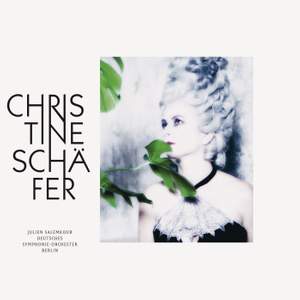
The acclaimed soprano Christine Schäfer is making her label debut for Sony Classical with a highly unconventional aria album. The arias she has recorded range in time from Handel to Messiaen, and in style from virtuosic belcanto to the drama of Verdi and the serenity of Richard Strauss. Christine Schäfer’s first-ever recital of operatic arias is a carefully composed musical essay that combines popular and lesser-known works. This highly personal programme is no selection of greatest hits, but a journey of adventure in search of musical beauty. In the manner of a resounding essay Schäfer takes well-known but intentionally diverse pieces from the Baroque period to the present and relates them to each other in unexpected ways. Seductive as they are on their own, in this changed context each seems to have been illuminated anew. The orchestra, the Deutsches Symphonieorchester Berlin under Julien Salemkour is the singer’s artistic counterpart and peer, and can shine in a variety of roles. | | | In stock - usually despatched within 1 working day. |
|
|
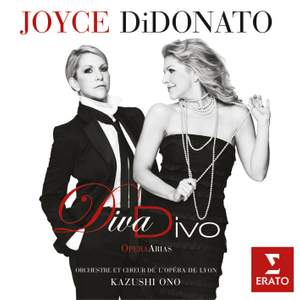
| |  | Joyce DiDonato: Diva, Divo
Bellini: | Ascolta! Se Romeo t'uccise un figlio...La tremenda ultrice spada (from I Capuleti) Edgaras Montvidas (tenor), Nabil Suliman (baritone) | Berlioz: | La Damnation de Faust: D'amour l'ardente flamme Roméo et Juliette, Op. 17: Premiers transports que nul n'oublie | Gluck: | Se mai senti spirarti sul volto (from La clemenza di Tito) | Gounod: | Faites- lui mes aveux (from Faust) | Massenet: | Je suis gris! Je suis ivre! (from Chérubin) Allez, laissez-moi seul...Coeur sans amour, printemps sans roses (from Cendrillon) Ô frêle corps.... Chère Cypris (from Ariane) | Mozart: | Giunse alfin il momento... Deh, vieni, non tardar… (from Le nozze di Figaro) Ecco il punto...Non più di fiori vaghe catene (from La clemenza di Tito) Voi che sapete (from Le nozze di Figaro) | Rossini: | Contro un cor (from Il barbiere di Siviglia) Edgaras Montvidas (tenor) Nacqui all'affanno, al pianto...Non più mesta (from La Cenerentola) Elena Semenova (soprano), Pascale Obrecht (mezzo), Edgaras Montvidas (tenor), Nabil Suliman (baritone), Paolo Stupenengo (bass) | Strauss, R: | Sein wir wieder gut (from Ariadne auf Naxos) |
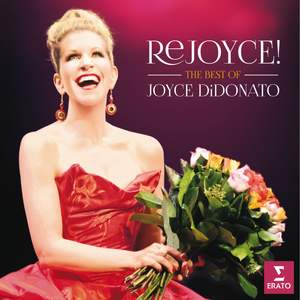
Joyce DiDonato celebrates the rich dramatic variety of the mezzo-soprano voice in this collection of arias for different characters – of both sexes – from a single opera, or from different operatic treatments of the same story. Joyce DiDonato’s capacity for characterisation is as astounding as the range and flexibility of her voice. As her Virgin Classics recitals of Handel and Rossini have proven, she can charm and touch as a good girl, seduce and seethe as a bad girl, and slip believably into the trousers of a hero. As Opera News said of the Rossini disc, ‘Colbran, The Muse’: “With her sure sense of line and colour, DiDonato takes possession of the repertory, mining every musical and vocal gesture to inhabit each character confidently … Her theatrical sense is magnificent. Musically and dramatically, the disc is perfection.” This new collection showcases DiDonato’s multi-faceted art – and the wealth of opportunities open to a mezzo-soprano – by presenting her as different characters, both male and female, from the same opera or from different musical treatments of the same story. As DiDonato explains: “This recital celebrates the vast and fabulous world of the mezzo-soprano. Aside from the obvious Toscas or Cio-Cio Sans, I've never regretted the length of my vocal cords! I have the privilege and unmitigated joy of playing boys and young men, as well as girls and grown women … It’s an exploration of the human palette of emotions. “I wanted to find a way to show this duality on disc, while highlighting some of the composers I'm most passionate about, such as Mozart, Bellini, Berlioz, Rossini, and Massenet. In exploring this idea, the possibility became clear for telling different sides of some of the most familiar tales which have served as inspiration for operatic legends: Cinderella, Faust, Romeo and Juliet … I've always thought of myself as a storyteller, and with this particular disc, I can showcase that side of me as never before. I'm ready to play!” The programme features several roles that DiDonato has sung on stage – such as Rossini’s Cenerentola (it was the character’s gentle, then exuberant ‘Nacqui all’affanno’ that launched her international career at Plácido Domingo’s Operalia competition, and subsequently at La Scala), Bellini’s Romeo and Mozart’s Cherubino. The ‘flip sides’ of those characters are roles that have not featured in her repertoire: the Prince from Massenet’s Cendrillon (a lavish treatment of the Cinderella story more likely to bring DiDonato in the title role – as at Santa Fe in 2006 and, in 2011, at Covent Garden); the Nurse from Berlioz’s Roméo et Juliette, and both Chérubin (from Massenet’s ‘sequel’ to Le nozze di Figaro) and Susanna. The Figaro connection continues with an excerpt from Il barbiere di Siviglia (Rosina, of course, later becomes Countess Almaviva), while other operas on the programme, from the Renaissance to late Romanticism, include La clemenza di Tito (Sesto and Vitellia), Faust, La Damnation de Faust, Mefistofele, Orphée et Eurydice, Orfeo and Orphée aux Enfers. Accompanying Joyce DiDonato in this tour de force is the Orchestre de l'Opéra National de Lyon under the company’s Principal Conductor Kazushi Ono, another artist who successfully embraces an extraordinary diversity of musical idioms. As John von Rhein wrote in Gramophone: “In complete control vocally, Joyce DiDonato is … consumed by the character. She embodies whomever she’s playing and whatever emotional situation she is evoking.” “It's playful, as well as an ideal vehicle for her glorious mezzo voice in which the most fiendish coloratura ornaments and trills sound effortless.” The Observer, 30th January 2011 “I can find nothing but praise...This recording gives enormous pleasure in rare as well as familiar repertoire...the mezzo invariably finding the right colour for each portrayal...Perhaps the best thing about this recital is that everything DiDonato sings sounds spontaneous, as if the character her- or himself were actually experiencing it for the first time.” International Record Review, March 2011 “she is steadily terrific: technically secure, nimble and clean in her flourishes and roulades, always alert to dramatic nuance. Nor do we lack variety. First, a swaggering, tipsy aria for Cherubino from the luxuriously coloured Chérubin (Massenet again). Then we jump to Mozart’s Susanna, intimate and tender in The Marriage of Figaro. So it goes: jolting, fascinating, entertaining.” The Times, 11th February 2011 **** “[This collection] draws together paired arias of male and female roles from the same story...the youthful Siebel's declaration of love for Marguerite, from Gounod's Faust, receives an anachronistic response from Berlioz's La Damnation de Faust. Clever stuff.” The Independent, 11th February 2011 *** “DiDonato’s is a five-star voice, perhaps the finest lyric mezzo before the public today...Ono’s Lyons orchestra and chorus give her voice luxury support, and her growing army of fans won’t be disappointed.” Sunday Times, 20th February 2011 **** “[DiDonato] underlines what has been increasingly obvious from her stage appearances – she is a consummate professional” Financial Times, 11th February 2011 **** “DiDonato's tone and phrasing catch a genuine male authority in the first entry of Bellini's Capuleti Romeo...Cendrillon and the (to Anglophones) rare Ariane are utter, and quite dark, delights. Elsewhere the Mozart is enjoyed and well negotiated - the lower colouring makes Susanna sound mature and knowing.” Gramophone Magazine, April 2011 “Proof of DiDonato's consummate musicianship is everywhere here...For sheer beauty of tone, legato that defies gravity and singing that restores your faith in human nature, listen last of all to what Joyce DiDonato does with Berlioz's 'D'amour l'ardente flamme'. Diva or Divo, this is the real thing.” BBC Music Magazine, April 2011 ***** “Listening to DiDonato depict both [Cherubino and Susanna]...brings home just how deeply this singer can inhabit character...The American mezzo delivers this ambitious, imaginative programme with intelligence, musicality, vocal brilliance and immense charm. There's some lovely playing from the Lyon Opera Orchestra too.” Classic FM Magazine, May 2011 ***** BBC Music Magazine
Opera Choice - April 2011 |
| | | In stock - usually despatched within 1 working day. |
|
|
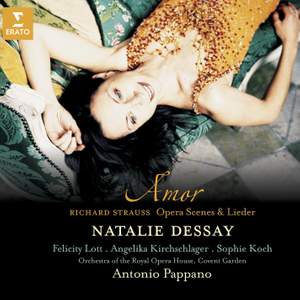
| |  | Amor: Opera scenes & lieder
Strauss, says Natalie Dessay, is the key to her career, and this recital of Lieder, arias and scenes features two contrasting characters central to her stage repertoire: the innocent young Sophie from Der Rosenkavalier and the coquettish Zerbinetta, a role Natalie has made her own in Paris and at the Met, and whose dizzyingly stratospheric set piece opens this programme. Available for the first time in jewel case format. | | | In stock - usually despatched within 1 working day. |
|
|
| |  | Susan Chilcott at La Monnaie
The celebrated soprano Susan Chilcott died five years ago after becoming one of the mainstays of La Monnaie. She made her debut there in 1994 under most extraordinary circumstances when she agreed to replace at very short notice an ailing colleague in the demanding role of Peter Grimes’ Ellen. Susan Chilcott appeared in the world’s major opera houses: the Met, Covent Garden, Garnier, Bastille, the Amsterdam Opera. At La Monnaie she took part in many productions under Antonio Pappano’s baton. Highlights of these productions are featured on this CD. This release is a tribute to a singer whose sad and early death robbed the operatic stage of a unique and extraordinary talent. “…Susan Chilcott's… Desdemona sounds all the more delicate opposite Galusin's rather unwieldy Otello, with some beautifully Italianate legato… The Grimes excerpts are restrained but not less affecting. A moving reminder…” BBC Music Magazine, January 2009 **** “Her voice can turn miraculously from hushed and silvery to burnished and impassioned. For Desdemona’s ‘Willow Song’ alone, with its heart-stopping cry of ‘Ave Maria’, this would be worth every penny. It’s also a
poignant reminder of our loss.” The Observer, 21st December 2008 | | | Usually despatched in 2 - 3 working days. |
|
|
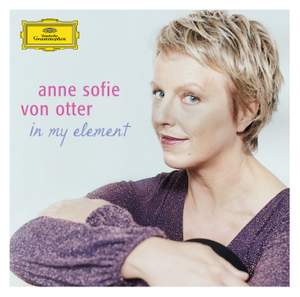
| |  | Anne Sofie von Otter - In My Element
| | I let the music speak No Wonder (arr. by Elvis Costello and Ensemble) I Want to Vanish (arr. by Elvis Costello and Ensemble) | Bizet: | L'amour est un oiseau rebelle 'Habanera' (from Carmen) Les tringles des sistres tintaient (from Carmen) | Brahms: | He, Zigeuner, greife in die Saiten ein! (No. 1 from Zigeunerlieder, Op.103) Brauner Bursche führt zum Tanze (No. 5 from Zigeunerlieder, Op.103) | Chaminade: | Ah! si l'amour prenait Mignonne, à l'amour j'ai lié | Dowland: | In darkness let me dwell | Grieg: | Haugtussa, Op. 67 No. 8 'Ved Gjætle-Bekken' | Haas, P: | Seven Songs in a Folk Style, Op. 18 (unreleased) | Handel: | Qui d'amor (from Ariodante) Hercules: The world, when day's career is run Hercules: When beauty sorrow's liv'ry wears | Mahler: | Rheinlegendchen (Des Knaben Wunderhorn) Oft denk' ich, sie sind nur ausgegangen (Kindertotenlieder) | Monteverdi: | Adagiati, Poppea - Oblivion soave (L'incoronazione di Poppea) Disprezzata regina (L'incoronazione di Poppea) Addio Roma! (from L'incoronazione di Poppea) | Mozart: | Parto, parto, ma tu ben mio (from La Clemenza di Tito) Oh Dei, che smania è questa (La Clemenza di Tito) Ah, qual gelido orror...Il padre adorato (from Idomeneo) No, la morte io non pavento (from Idomeneo) Non so più cosa son, cosa faccio (from Le nozze di Figaro) Voi che sapete (from Le nozze di Figaro) | Offenbach: | Barcarolle (from Les Contes d'Hoffmann ) Portez armes...Vous aimez le danger…Ah! que j’aime les militaires! (from La grande-duchesse de Gérolstein) | Purcell: | When I am laid in earth (from Dido and Aeneas) | Schubert: | Im Abendrot, D799 Erlkönig, D328 | Schumann: | Süsser Freund, du blickest mich verwundert an (No. 6 from Frauenliebe und Leben, Op. 42) Die Meerfee Op. 125 No. 1 | Strauss, R: | Sein wir wieder gut (from Ariadne auf Naxos) | Weill, K: | Buddy on the Nightshift My ship Surabaya Johnny (from Happy End) |
“Smart, sophisticated and opinionated, Anne Sofie von Otter has become a star by doing exactly what she wants” Opera News | | | Usually despatched in 2 - 3 working days. |
|
|
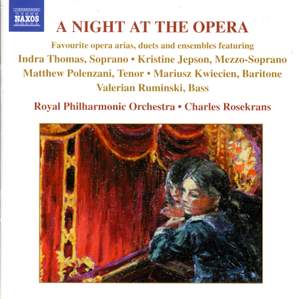
| |  | A Night at the OperaFavourite opera arias, duets and ensembles
| | | (also available to download from $6.00) | Usually despatched in 2 - 3 working days. (Available now to download.) |
|
|
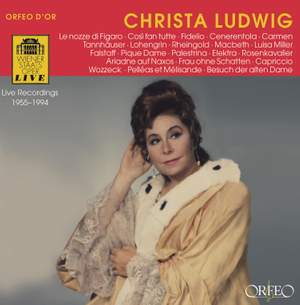
| |  | Christa Ludwig - Vienna State Opera
Beethoven: | Abscheulicher! Wo eilst du hin? (from Fidelio) | Berg: | Dort links geht's in die Stadt (from Wozzeck) | Berlioz: | Pardonne, Iopas...O pudeur! Tout conspire (from Les Troyens) | Bizet: | L'amour est un oiseau rebelle 'Habanera' (from Carmen) sung in German | Debussy: | Voici ce qu'il ecrit a son frere (from Pelléas et Mélisande) | Einem: | Das Herz mit deinem und meinem Namen | Mozart: | Non so più cosa son, cosa faccio (from Le nozze di Figaro) Ah, guarda, sorella (from Così fan tutte) Sento, o Dio (from Cosi fan tutte) Il core vi dono (from Così fan tutte) sung in German | Pfitzner: | Schonste ungnad'ge Dame (from Palestrina) | Rossini: | Nacqui all'affanno, al pianto...Non più mesta (from La Cenerentola) sung in German | Strauss, R: | Ich furchte, Frau Grafin Sie werden nach dieser Einfuhrung (from Capriccio) Sein wir wieder gut (from Ariadne auf Naxos) Da geht er hin (from Der Rosenkavalier, Op. 59) Ach, du bist wieder da! (from Der Rosenkavalier, Op. 59) Die Zeit, die ist ein sonderbar Ding from Der Rosenkavalier,Op. 59 Mir ist die Ehre widerfahren (from Der Rosenkavalier) Was willst du? Seht doch dort! (from Elektra) | Tchaikovsky: | Countess's Scene (from Pique Dame) sung in German | Verdi: | Nel dì della vittoria … Ambizioso spirto … Vieni t'affretta! … Or tutti sorgete (Lady Macbeth) La luce langue (from Macbeth) Una macchia è qui tutt'ora (from Macbeth) Duchessa, Duchessa tu m'appelli! (from Luisa Miller) Reverenza...Buon giorno, buona donna (from Falstaff) sung in German | Wagner: | Erhebe dich, Genossin meiner Schmach! (from Lohengrin) Elsa!... Wer ruft? (from Lohengrin) Entweihte Götter (from Lohengrin) Weiche, Wotan, weiche! (from Das Rheingold) Geliebter, komm! (from Tannhäuser) |
Christa Ludwig (mezzo) Choir and Orchestra of the Vienna State Opera, Böhm, Krips, Erede, Karajan, Prêtre, Heger, Maazel, Bernstein, Stein, Albrecht, Mehta, Kitaenko, Abbado & Hollreiser Live Recordings 1955 - 1994. The wide-ranging repertory in which Christa Ludwig appeared at the Vienna State Opera, often surprising her audiences over a period of many years, is central to the present set of three CDs issued to mark her 80th birthday. It begins with her Cherubino from Le nozze di Figaro and her Composer from Strauss' Ariadne auf Naxos, both of which she sang at the Salzburg Festival soon after her Vienna State Opera début in 1955. Another of her early roles in Vienna was Dorabella, while Angelina in Rossini's La Cenerentola was a lyric mezzo-soprano part that she sang only infrequently but to which she brought a stupendous coloratura technique. Her increasingly dramatic roles are represented by excerpts from Fidelio, Wozzeck,Tannhäuser, Lohengrin and Verdi's Macbeth, which also demonstrate the astute use of her resources in those roles that extend well into the soprano register, without ever sacrificing any quality or intensity. Under Leonard Bernstein, the subdued melancholy of her Marschallin is even more overwhelming than it was in the studio. No less impressive is the way in which Christa Ludwig was able to forge a successful working relationship with each of the very different conductors with whom she appeared, be it Karl Böhm, Herbert von Karajan, Lorin Maazel, Claudio Abbado or the conductor of the most recent New Year's Day Concert from Vienna, Georges Prêtre.Throughout her career, she retained a company spirit, happy to appear in smaller roles and, towards the end of her career, in character parts, including Klytämnestra in Elektra, the role in which she bade farewell to the stage in 1994.This final appearance - almost 40 years after her Viennese début - also brings to an end our musical tribute to Christa Ludwig, recalling an altogether exceptional career by this honorary member of the Vienna State Opera. | | | Usually despatched in 3 - 4 working days. |
|
|
| |
|