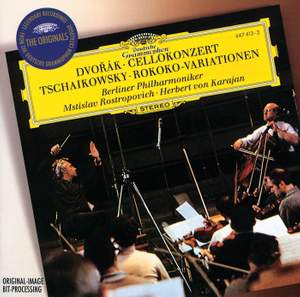
All recordingsPrices shown exclude VAT. (UK tax is not payable for deliveries to United States.) See Terms & Conditions for p&p rates. | |  | Truls Mørk plays Tchaikovksy & Dvorak
Norwegian cellist Truls Mørk is among the leading masters of his instrument, while the Dvorák concerto and Tchaikovsky's Rococo Variations are among the most popular works in the cello repertoire. This interpretation with the Oslo Philharmonic Orchestra conducted by Mariss Jansons is regarded to this day as a reference recording. | 
| | | In stock - usually despatched within 1 working day. |
|
|
| |  | Saint-Saëns & Tchaikovsky: Works for Cello & Orchestra
Stéphane Tétreault (cello) Orchestre Symphonique de Quebec, Fabiel Gabel Stéphane Tétreault, 19 years old, was the First Prize winner in the Montreal Symphony Orchestra Standard Life-OSM 2007 Competition as well as various others. Accompanied by the Orchestre Symphonique de Quebec, he performs Saint-Saens’ Concerto No. 1, Tchaikovsky’s Roccoco Variations coupled with Saint-Saens’ Allegro Passionato and The Swan (from Carnival of the Animals) plus Tchaikovsky’s Pezzo Capriccioso op. 62. “From the very first bars of Saint-Saens's First Cello Concerto you sense that this disc is going to be exhilarating and rewarding. The performers launch the concerto with terrific passion and positive intent, and thereafter call into play a discriminating, captivating spectrum of interpretative sensibility. The solo playing is astonishingly mature...it comes as a shock to realise that Stéphane Tétreault is 19 years old. His is a name to watch.” Gramophone Magazine, March 2013 | 
| | | In stock - usually despatched within 1 working day. |
|
|
| |  | The Very Best of Paul Tortelier
Bach, J S: | Cello Suite No. 1 in G major, BWV1007 | Haydn: | Cello Concerto No. 2 in D major, Hob. VIIb:2 (Op. 101): Rondo | Karjinsky: | Esquisse | Nin: | Granadina (from Cantos populares españoles) | Paganini: | Introduction & Variations on 'Dal tuo stellato soglio' from Rossini's 'Mosé in Egitto', MS23 (Op. 24) | Rachmaninov: | Vocalise, Op. 34 No. 14 | Ravel: | Vocalise-étude en forme de habanera | Rimsky Korsakov: | Flight of the Bumble Bee | Saint-Saëns: | Allegro Appassionato in B minor Op. 43 Mon cœur s'ouvre à ta voix (from Samson et Dalila) Le carnaval des animaux: Le Cygne | Sarasate: | Danza Española No. 6: Zapateado, Op. 23, No. 2 | Strauss, R: | Don Quixote, Op. 35 | Tchaikovsky: | Variations on a Rococo Theme, Op. 33 | Tortelier: | Miniatures (3) |
and movements from cello sonatas by Beethoven and Brahms and the Walton and Elgar Concertos
Paul Tortelier had the lean, ascetic look of an El Greco saint, yet possessed the turbulent idealism of Don Quixote, whom he portrayed so memorably in Richard Strauss’s tone poem. Tortelier was born in Paris in 1914, months before the outbreak of the Great War. Though the family knew poverty, it was his mother’s dream that her son should be a cellist. He started to learn the instrument at the age of six and at 12 he entered the Paris Conservatoire where he won several prizes before leaving at 16 to play freelance in cafés and cinemas in the days of silent films. A year later he made his professional debut playing Lalo’s Concerto at the Concerts Lamoureux. In 1935 he went to the Monte-Carlo Orchestra as principal cellist and two years later played Don Quixote under Strauss’s own direction. He began his solo career in 1938 in Boston, but this was interrupted by the war, during which he remained in Paris. In 1947 he played Don Quixote in Beecham’s Richard Strauss festival in London to great acclaim. This effectively relaunched his international career and he went on to become one of the world’s most distinguished cellists. He died suddenly in 1990 at the age of 76. Bach’s solo Cello Suites were always an integral part of Tortelier’s repertoire and CD 1 opens with the first three movements of Suite No.1 in G. Following this is another Baroque work, the Cello Concerto in D by Vivaldi, in which Tortelier also directs the English Chamber Orchestra. Next comes the finale from Haydn’s Cello Concerto No.2 in D recorded with Jörg Faerber conducting the Wurtemburg Chamber Orchestra in Heilbronn. We then hear movements from Beethoven’s Cello Sonata No.4 in C with the French pianist Eric Heidsieck, and Brahms’s Cello Sonata No.2 in F in which the pianist is Tortelier’s daughter, Maria de la Pau. The CD ends with Tortelier’s third EMI recording of his signature work, Don Quixote by Richard Strauss with the Staatskapelle Dresden under Rudolf Kempe. CD 2 begins with the first two movements of another of the works central to Tortelier’s repertoire, Elgar’s Cello Concerto, a performance of which won him a prize while he was studying at the Paris Conservatoire. This is followed by an extract from the Walton Cello Concerto conducted by Paavo Berglund and then Paganini’s variations on an operatic aria by Rossini to show off Tortelier’s technical skill as a virtuoso of his instrument, this recording conducted by Tortelier’s cellist wife, Maud Tortelier. Next comes a group of encore pieces, including the inevitable ‘Flight of the Bumblebee’ and ‘Le Cygne’, culminating in Three Miniatures for two cellos composed by Tortelier himself and played here with his wife Maud as the second cellist. The programme finishes with a spirited performance of Tchaikovsky’s ‘Rococo’ Variations with the Northern Sinfonia of England conducted by Tortelier’s son Jan Pascal Tortelier. | | | In stock - usually despatched within 1 working day. |
|
|
| |  | Maxim Rysanov plays Schubert, Tchaikovsky & Bruch
In his second disc for BIS, Maxim Rysanov here is joined by the Swedish Chamber Orchestra under the conductor Muhai Tang. Described as 'a prince among violists', Maxim Rysanov was in 2010 chosen to perform at the Last Night of the Proms. On that illustrious occasion he played his own adaptation of Tchaikovsky's Rococo Variations. The string section of the Swedish Chamber Orchestra of that orchestra also join him in another work usually performed on the cello – and usually with the original piano accompaniment: Schubert's Sonata in A minor The programme is rounded off with the one completely original composition on this disc, namely the autumnal Romance in F major by Max Bruch. On his previous disc for BIS, Rysanov also turned to the cello repertoire, performing three of Bach's suites for solo cello. That recording was selected for a special recommendation in The Strad and chosen as Classical CD of the Week in the Daily Telegraph. “Maxim Rysanov's version of the Tchaikovsky Rococo variations for cello is one of the most successful steals, not tampering with the orchestral score but simply shifting the solo part, sometimes up an octave to give its virtuosic writing brilliance and allure. Rysanov's viola sound is warm, lyrical but with an edge to it that suits Schubert's "Arpeggione" sonata” The Observer, 7th August 2011 “Max Bruch’s meltingly beautiful Romance makes for a serene envoi to this delectable disc...[Rysanov] makes [the Rococo's] viola transformation sound thoroughly idiomatic. His burgundy timbre brings lustre to the music; his transpositions of passages into higher registers capitalise on the viola’s own spectrum of sonority, and his agility and subtlety are a marvel.” The Telegraph, 11th August 2011 ***** “Rysanov makes the best possible case for hearing this version [of the Arpeggione], delivering a wonderfully poetic account of the solo part with subtle and sensitive accompaniment from the Swedish Chamber Orchestra...Rysanov's dazzilng performance [of the Rococos] makes us believe that the work was tailor-made for his instrument.” BBC Music Magazine, December 2011 ***** “His playing has his instrument sounding impressively like a cello, although some of the viola's capacity for subtle light and shade has been ironed out in this relentless quest for powerful tone. Max Bruch's Romance (a rare viola original) brings out a likeable, gentler streak in Rysanov's artistry.” Classic FM Magazine, November 2011 **** “Needless to say, Rysanov plays with consummate artistry and stylish aplomb throughout. I can also confirm that he benefits from razor-sharp yet always warmly affectionate backing from an eager Swedish CO under the excellent Muhai Tang.” Gramophone Magazine, December 2011 | | | (also available to download from $10.50) | In stock - usually despatched within 1 working day. |
|
|
| |  | Sol Gabetta plays Tchaikovsky, Saint Saens & Ginastera
| | | In stock - usually despatched within 1 working day. |
|
|
| |  | Truls Mørk plays Tchaikovsky & Dvorak
| | | In stock - usually despatched within 1 working day. |
|
|
| |  | Tchaikovsky: Rococo Variations, Souvenir de Florence & The Tempest
| | | In stock - usually despatched within 1 working day. |
|
|
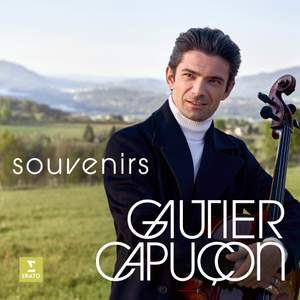
| |  | Gautier Capuçon plays Tchaikovsky & Prokofiev
‘Gautier Capuçon plays the cello with the control and wisdom of a much older musician. The lightness of his touch and the consistent clarity of his bow strokes are quite admirable in themselves, but when combined with an uncanny sweetness of tone in the higher registers they are breathtaking.’ Gramophone A Frenchman in St Petersburg … Gautier Capuçon joins Valery Gergiev (making his Virgin Classics debut) and the Mariinsky Orchestra for works by Tchaikovsky and Prokofiev These live performances were recorded in St Petersburg on 24th December 2008 when Gautier Capuçon was the guest of Russia’s leading maestro – and one of the world’s most prominent conductors – the protean Valery Gergiev and his Mariinsky Orchestra. This is Gergiev’s debut on Virgin Classics; Capuçon, of course, is one of the mainstays of the label and this is his third album of solo works with orchestra. His recording of the Dvorák and Victor Herbert concertos was released in early 2009. The Sunday Telegraph reported that: “This is not the first coupling of these works, but it is perhaps the most distinguished. The works have much in common and Gautier Capuçon makes the most of the music's melodic appeal. The Dvorák receives a powerful and intense interpretation with some superb orchestral solos to match the soloist's eloquence,” while The Guardian found that, in the Herbert, Capuçon “captures the work's rhapsodic ambitions and the lyrical charm of its slow movement perfectly … this version just about has it all.” Gautier joined his brother, violinist Renaud for a recording of the Brahms Double Concerto, released in 2007. “There's something totally compelling about this performance of the Double Concerto from the first few bars,” wrote The Guardian, “when Gautier Capuçon launches into the opening cello solo with a rhapsodic freedom and expressive abandon that seems to sweep all before it, gathering first his brother Renaud's violin playing and then the Gustav Mahler Jugend Orchestra and conductor Myung-Whun Chung into the same unstoppable flood of lyricism.” Tchaikovsky’s Mozart-inspired Rococo Variations are a mainstay of the cello repertoire, but Prokofiev's Sinfonia Concertante features less frequently in concerts and recordings. The work was premiered in 1952 by Mstislav Rostropovich, with the equally legendary pianist Sviatoslav Richter deserting the keyboard for the conductor’s baton. Its material is drawn from the composer’s earlier cello concerto, written in the 1930s. “Gautier Capuçon’s French sensibility is ideally suited to Tchaikovsky’s nostalgic backward glance to the era of his favourite composer, Mozart. He also digs deep into Prokofiev’s mid-20th-century angst” Sunday Times, 13th December 2009 **** “The Mozart-inspired Tchaikovsky piece is dispatched with a light touch, Capuçon's bow dancing over the strings but retaining a sureness of tone.” The Independent, 1st January 2010 ** “Mellifluous tones pour from Gautier Capuçon’s cello, even when he’s partnered by conductor Valery Gergiev, usually a firebrand.” The Times, 16th January 2010 *** “Capuçon [plays] with a blend of impeccable taste, Romantic ardour and technical aplomb...Whether quizzical, rapturous, pensive or demonstrative, Capuçon has full measure of [the music] here in a performance of impressive stature.” The Telegraph, 29th January 2010 ***** “Gautier Capuçon and Valery Gergiev take both works very darkly and seriously. This furrowed-browed approach makes their Symphony-Concerto- …unlike any other. No one manages the first movement's withdrawal into dreams more magically than Gergiev with hushed Mariinsky strings, and Capuçon quickly follows pensive suit.” BBC Music Magazine, February 2010 **** “...you can't help but be seduced by the passion and irony of [Capucon's] playing. Gergiev and the Mariinsky Orchestra bring terrific drama and fire to it as well.” The Guardian, 11th February 2010 **** “Even in this crowded field Gautier Capuçon stands out as exceptional, majoring in elegant, pure, singing tone and long lyrical phrasing rather than waspish attack...there are grand and glorious things here” Gramophone Magazine, April 2010 “Capuçon and Gergiev cleave through histrionic superficiality to produce a reading that bites but never barks.” Michael Quinn, bbc.co.uk, 16th February 2010 | | | In stock - usually despatched within 1 working day. |
|
|
| |  | Tchaikovsky: Symphony No. 6
The three 2-CD Tchaikovsky/Ansermet sets The Sleeping Beauty, The Nutcracker and Swan Lake represent his complete Tchaikovsky recordings for Decca. For many, Ansermet's recording of The Nutcracker is in a league of its own, and many will find fascinating his own sequencing of numbers from Swan Lake and The Sleeping Beauty. Refined, yet passionate, many of the pieces on these recordings make their first international appearance on CD. | | | In stock - usually despatched within 1 working day. |
|
|
| |  | Russian Masterpieces for Cello and Orchestra
Zuill Bailey, the dynamic and exhilarating American cellist, makes his Telarc debut with the release of Russian Masterpieces for Cello. The recording includes Tchaikovsky’s Variations on a Rococo Theme Pezzo Capriccioso and Nocturne in D Minor Op. 19 No. 4, and Shostakovich’s Cello Concerto No. 1 in E-Flat Major, Op. 107. Zuill Bailey’s rare combination of compelling artistry, technical finesse and engaging personality have secured his place as one of the most sought-after cellists today. Bailey performs regularly with long-time duo partner, pianist Awadagin Pratt, as well as with pianist Simone Dinnerstein. He is also a member of the acclaimed Perlman-Schmidt-Bailey Trio, which also includes pianist Navah Perlman and violinist Giora Schmidt. The voice of the cello is uniquely suited to the qualities of passion and melancholy that makes Russian music so provocative to listeners. Tchaikovsky’s Rococo Variations was written for the German-born cellist Wilhelm Fitzenhagen, a professor at the Moscow Conservatory. When Tchaikovsky left Russia for a lengthy stay in Western Europe, he gave Fitzenhagen a free hand in composition, which resulted in significant structural alterations to the piece. The cellist premiered his version of the Rococo Variations at a Moscow concert conducted by Nikolai Rubinstein in 1877. Tchaikovsky was displeased with the alterations, but later said, “The devil take it. Let it stay as it is.” The Fitzenhagen score is heard in Bailey’s rendition, and is considered an effective presentation of Tchaikovsky’s material. Shostakovich wrote his first cello concerto in 1959 for the distinguished cellist Mstislav Rostropovich, who had frequently performed Shostakovich’s Sonata for Cello and Piano with the composer at the piano. It was premiered in Leningrad with the Leningrad Philharmonic and Rostropovich. When Shostakovich gave his only public performance as a conductor in 1962, the Concerto appeared on the programme. “Overall the programme balances nicely enough as a calling-card for the stylish… soloist. …Zuill Bailey plays with impressive technical mastery… He is unfazed by the taxing double-stopping Shostakovich frequently employs in the faster passages while finding commendable depth and solemnity in the slow movement.” Gramophone Magazine, March 2009 | | | In stock - usually despatched within 1 working day. |
|
|
| |
|