Korngold: Glück, das mir verbleib 'Marietta's Lied' (from Die Tote Stadt)

This page lists all recordings of Glück, das mir verbleib 'Marietta's Lied' (from Die Tote Stadt), by Erich Wolfgang Korngold (1897-1957) on CD, SACD, DVD, Blu-ray & download (MP3 & FLAC). Generally, more recent releases are listed first, but with priority given to those that are in stock.

Prices shown exclude VAT. (UK tax is not payable for deliveries to United States.)
See Terms & Conditions for p&p rates.

Essential Opera Divas

Essential Opera Divas


Beethoven:

Abscheulicher! Wo eilst du hin? (from Fidelio)

Bellini:

Casta Diva (from Norma)

Donizetti:

Spargi d'amaro pianto (from Lucia di Lammermoor)

Dvorak:

Mesícku na nebi hlubokém 'Song to the Moon' (from Rusalka)

Gluck:

Dieux puissants que j'atteste… Jupiter, lance la foudre (from Iphigénie en Aulide)

Gounod:

Ah! Je ris de me voir (from Faust)

Ah! Je veux vivre dans ce rêve (from Roméo et Juliette)

Handel:

Ma quando tornerai (from Alcina)

Korngold:

Glück, das mir verbleib 'Marietta's Lied' (from Die Tote Stadt)

Meyerbeer:

Ombra leggiera (Dinorah)

Mozart:

Dove sono i bei momenti (from Le nozze di Figaro)

Or sai chi l'onore (from Don Giovanni)

Batti, batti, o bel Masetto (from Don Giovanni)

In quali eccessi ... Mi tradì quell'alma ingrate (from Don Giovanni)

Non mi dir (from Don Giovanni)

Der Hölle Rache kocht in meinem Herzen (from Die Zauberflöte)

Ach, ich fühl's (from Die Zauberflöte, K620)

Ruhe sanft, mein holdes Leben (from Zaïde)

Puccini:

Vissi d'arte (from Tosca)

Si, mi chiamano Mimi (from La Bohème)

Un bel di vedremo (from Madama Butterfly)

Chi il bel sogno di Doretta (from La Rondine)

O mio babbino caro (from Gianni Schicchi)

In questa reggia (from Turandot)

Rossini:

Una voce poco fa (from Il barbiere di Siviglia)

Verdi:

D'amor sull'ali rosee (from Il Trovatore)

Pace, pace mio Dio! (from La forza del destino)

Ô ma chère compagne (from Don Carlos)

Ave Maria (from Otello)

Vivaldi:

Il Bajazet (Il Tamerlano) : Anch'il mar par che sommerga

Wagner:

Dich, teure Halle (from Tannhauser)

Euch Lüften, die mein Klagen (from Lohengrin)


Released or re-released in last 6 months

EMI Essential - 7234522

(CD - 2 discs)

$8.75

In stock - usually despatched within 1 working day.

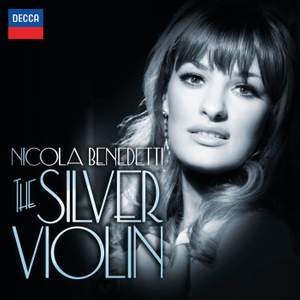
The Silver Violin

The Silver Violin


Gardel:

Por Una Cabeza

Hess, N:

Ladies in Lavender – main theme

Korngold:

Violin Concerto in D major, Op. 35

Glück, das mir verbleib 'Marietta's Lied' (from Die Tote Stadt)

Tanzlied des Pierrot from Die tote Stadt, Op. 12

Mahler:

Piano Quartet (in one movement) in A minor

Marianelli:

My Edward & I

Shore, H:

Eastern Promises Concertino: excerpts

Shostakovich:

Romance (from The Gadfly)

Five Pieces: Prelude

The Counterplan, Op. 33: Andante

Williams, John:

Schindler's List - theme


Best-selling Scottish virtuoso Nicola Benedetti moves dramatically from the 18th-century world of Italia to the 20th-century world of cinema.

As a long-time champion of the lush Violin Concerto by the great stage and screen composer Erich Wolfgang Korngold, Nicola Benedetti has chosen to build a programme around his late Romantic concerto masterpiece.

This unique collection of violin classics, written specifically for the movies, includes the poignant lament from Schindler’s List.

Dmitri Shostakovich, recognised as the Soviet Union’s greatest film composer, is represented by the beloved Gadfly Romance, as well as the similarly lyrical Andante from the film The Counterplan

The contemporary British cinema is represented by the haunting main theme and specially-composed Fantasy for Violin & Orchestra from the 2004 hit Ladies in Lavender

“Benedetti decorates this repertoire with gleaming high-register pirouettes, plus vibrato throbs and hesitations that never descend into schmaltz...Such good taste is a pleasure, though her discretion can make the music paler than necessary.” The Times, 24th August 2012 ***

“The lush, romantic sound of Hollywood – 1930s to the present – suits her well” The Observer, 26th August 2012

“Benedetti's decision to place [the Concerto] in this particular context actually serves to enhance its musical stature. Certainly her performance is beautifully honed with a particularly atmospheric account of the central Andante...she has an instinctive grasp of the ebb and flow of Korngold's melodic lines and avoids the obvious temptation of becoming overtly mannered in order to intensify the musical expression.” BBC Music Magazine, November 2012 ****

“Benedetti’s latest album has lots to commend it...Karabits and the Bournemouth Symphony provide full-blooded backing. Extracts from two Shostakovich film scores are indecently enjoyable” The Arts Desk, 27th October 2012

“her broadly romantic approach and genuine affection for this Hollywood-inspired concerto shine out...Benedetti is joined by star accordionist Ksenija Sidorova in a show-stopping performance which will have you on your feet! The warm acoustic of the Decca recording comes in appropriate widescreen sound.” Gramophone Magazine, November 2012

Decca - 4783529

(CD)

$16.50

In stock - usually despatched within 1 working day.

The Art of Renée Fleming

The Art of Renée Fleming


Bellini:

Casta Diva (from Norma)

Bernstein:

Somewhere (from West Side Story)

with Placido Domingo (tenor)

Catalani:

Ebben? Ne andrò lontana (from La Wally)

Cilea:

Io son l'umile ancella (from Adriana Lecouvreur)

Dvorak:

Mesícku na nebi hlubokém 'Song to the Moon' (from Rusalka)

Gershwin:

Summertime (from Porgy and Bess)

Gounod:

Ah! Je veux vivre dans ce rêve (from Roméo et Juliette)

Ave Maria

Handel:

Ombra mai fu (from Serse)

Korngold:

Glück, das mir verbleib 'Marietta's Lied' (from Die Tote Stadt)

Puccini:

Vissi d'arte (from Tosca)

Un bel di vedremo (from Madama Butterfly)

O mio babbino caro (from Gianni Schicchi)

Schubert:

Ave Maria, D839

plus:

Bonus tracks:

15. Wheels of a Dream [with Bryn Terfel]

16. Amazing Grace

17. Rodgers - Carousel / You’ll Never Walk Alone

18. Hallelujah – [new cut]


Renée Fleming (soprano)

The Art of Renée Fleming brings together 18 defining tracks spanning Renée’s finest Decca recordings, including favorite arias by Puccini, Handel and Gershwin and duets with Bryn Terfel and Plácido Domingo. Four special bonus tracks reflect Renée’s prominence beyond classical repertoire with two Broadway classics, Amazing Grace - which she memorably sang at the site of the World Trade Centre and a brand new version of Leonard Cohen’s Hallelujah.

Decca - 4784446

(CD)

$11.00

(Sorry, download not available in your country)

In stock - usually despatched within 1 working day.

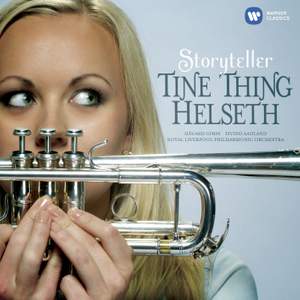
Tine Thing Helseth: Storyteller

Tine Thing Helseth: Storyteller


Cano, J M:

Luna: Epílogo

Canteloube:

La pastoura als camps

Malurous qu’o uno fenno (3rd series, no.5) from Chants d’Auvergne

Delibes:

Chanson Espagnole

Dvorak:

Songs My Mother Taught Me, Op. 55 No. 4

Grieg:

Haugtussa, Op. 67

Korngold:

Glück, das mir verbleib 'Marietta's Lied' (from Die Tote Stadt)

Mahler:

Wer hat dies' Liedlein Erdacht? (Des Knaben Wunderhorn)

Rachmaninov:

How fair this spot, Op. 21 No. 7

Saint-Saëns:

Mon cœur s'ouvre à ta voix (from Samson et Dalila)

Sibelius:

Var det en dröm? Op. 37 No. 4 (J.J. Wecksell)

Soluppgång, Op. 37 No. 3 (Text: Tor Hedberg)

Våren flyktar hastigt, Op. 13 No. 4 (Text: Runeberg)

Strauss, R:

Wiegenlied, Op. 41 No. 1

Weill, K:

Je ne t'aime pas (text: Maurice Magre)


An innovative debut recording from EMI’s new signing, Tine Thing Helseth, in which Tine takes on the mantle of story teller through her interpretation and repertoire curation.

This collection of songs transcribed for trumpet includes music by Strauss, Sibelius, Ravel, Canteloube and Weill, and is anchored by Grieg’s Haugtussa song-cycle. The recording is with orchestra and piano accompaniment.

Tine is 23 with a refreshingly focused and straightforward approach to making music. She is a unique artist with several facets - classical soloist, ensemble leader and jazz musician – and equally at home with each.

Tine Thing Helseth, born in 1987, started to play trumpet at the age of 7, and is already one of the leading trumpet soloists of her generation. Already in her solo career, Helseth has appeared with the Vienna Symphony Orchestra, Vienna Chamber Orchestra, the Zurich Chamber Orchestra, Stuttgart Chamber Orchestra, Ulster Orchestra, Philharmonie Baden-Baden, all the major Norwegian orchestras and further afield with the Shanghai Symphony Orchestra, amongst others.

“Tine Thing Helseth is blessed with a combination of great wind-playing attributes: a soulful - dare one say brooding, Nordic - approach to phrasing, quite astonishingly outstanding intonation and a sound which is open and honest, even and focused in all registers...Helseth can do the ultimate in good trumpet-playing: smith a tune with seeming effortlessness.” Gramophone Magazine, July 2012

EMI - 0883282

(CD)

$16.50

In stock - usually despatched within 1 working day.

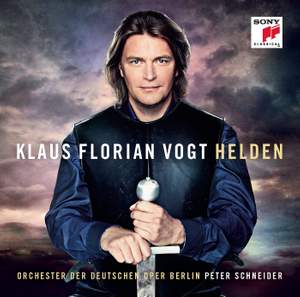
Klaus Florian Vogt: Helden

Klaus Florian Vogt: Helden


Flotow:

Ach, so fromm (from Martha)

Korngold:

Glück, das mir verbleib 'Marietta's Lied' (from Die Tote Stadt)

with Manuela Uhl (soprano)

Lortzing:

Lebe wohl, mein flandrisch Mädchen (from Zar und Zimmermann)

Mozart:

Dies Bildnis ist bezaubernd schön (from Die Zauberflöte)

Wagner:

Winterstürme wichen dem Wonnemond (from Die Walküre)

In fernem Land (from Lohengrin)

Morgenlich leuchtend im rosigen Schein 'Prize Song' (from Die Meistersinger von Nürnberg)

Lohengrin: Prelude to Act 3

Die Meistersinger von Nürnberg: Prelude to Act 3

Weber:

Nein! länger trag' ich nicht die Qualen…Durch die Wälder (from Der Freischütz)

Oberon Overture

Ich juble in Glück und Hoffnung neu (from Oberon)


Klaus Florian Vogt (tenor)

Orchestra of Deutsche Oper Berlin, Peter Schneider

Klaus Florian Vogt is Bayreuth´s leading tenor – he has a unique voice, perfect technique and last but not least the perfect look for a leading man in the works of Wagner.

He had a triumphant breakthrough success as "Lohengrin" at the world famous Bayreuth Wagner festival in the Summer of 2011. Major media acclaimed his singing as "the third wonder of Bayreuth" and the "...best Lohengrin ever".

Klaus Florian Vogt sings in all major opera houses of the world. In 2012, he will star in new productions in Tokyo (Lohengrin), Munich (Valkyrie) and Barcelona (Florentine Tragedy). He will also feature in roles at Bayreuth.

Helden ("Heroes") is Vogt´s first album for Sony Classical, where he is exclusively signed, and is his first recital recording. The CD shows major pieces linked with him, of course Wagner and the famous "Grahlserzählung" in Lohengrin, but there are also beautiful arias by Weber, Flotow, Korngold and Lortzing – and last not least also by Mozart.

“his Siegmund, naive and ecstatic rather than virile and forceful, is striking. Vogt's vocal ease and cleanness of line is appealing in Weber and Wagner, and he proves an accomplished, elegant Mozartian.” The Guardian, 12th April 2012 ***

“Vogt has an attractive if slender voice, and for him to sing on this album called Heroes seems a bit odd, since he is more suited to tender regrets than to thrilling outbursts of tone. He shows a Lieder singer's sensitivity to words, and is almost ideally suited to Lohengrin's narration, perhaps the high-point of his recital.” BBC Music Magazine, July 2012 ***

“[Vogt] offers the gentlest presentation of [Siegmund's] music that I've heard, and notably touching it is. He impresses even more with Lohengrin's narrative, where stage experience pays dividends...Vogt phrases exquisitely, and though the gentleness of sound is again evident, the strength of the character's convictions throughout is clear.” International Record Review, July/August 2012

Sony - 88697988642

(CD)

$18.50

In stock - usually despatched within 1 working day.

Time Traveller: Weimar Germany

Time Traveller: Weimar Germany


Hindemith:

Kammermusik No. 1 Op. 24 No. 1 für 12 Solo-Instrumente

Kammermusik No. 2 Op. 36 No. 1 Klavierkonzert

Korngold:

Glück, das mir verbleib 'Marietta's Lied' (from Die Tote Stadt)

Weill, K:

Alabama Song (from Mahagonny)

Kleine Dreigroschenmusik (excerpts)

and excerpts from Wozzeck, Berliner Requiem, Mahagonny, Happy End, The Threepenny Opera and Remembering Maria


Famed for its divine decadence, explosive politics, rampant inflation and feverish creativity. Germany’s Weimar Republic – born in the wake of World War I – ended in 1933 with Hitler’s seizure of power.

Nothing is more evocative of this tumultuous ear than Kurt Weill’s piquant, jazzy score setting the iconoclastic texts of Bertolt Brecht. Putting them graphically in context are works by other musical luminaries of the era: lust Korngold, purposeful Hindemith, sensitive Berg and revolutionary Schoenberg.

EMI Time Traveller - 6790152

(CD)

$11.00

In stock - usually despatched within 1 working day.

The Very Best of Kiri Te Kanawa

The Very Best of Kiri Te Kanawa


includes

Bizet:

Me voilà seule…Comme autrefois (from Les Pêcheurs de Perles)

Charpentier, G:

Depuis le jour (from Louise)

Cilea:

Ecco: respiro appena. Io son l'umile ancella (from Adriana Lecouvreur)

Duparc:

L'Invitation au voyage

Le Manoir de Rosemonde

Giordano, U:

La mamma morta (from Andrea Chénier)

Korngold:

Glück, das mir verbleib 'Marietta's Lied' (from Die Tote Stadt)

Massenet:

Je marche sur tous les chemins (from Manon)

Mozart:

Ach, ich fühl's (from Die Zauberflöte, K620)

Offenbach:

Elle a fui, la tourterelle (from Les Contes d' Hoffmann)

Puccini:

Signore, ascolta! (from Turandot)

Ravel:

La Flûte enchantée (Shéhérazade No. 2)

Strauss, R:

Da geht er hin (from Der Rosenkavalier, Op. 59)

Verdi:

Attendo,attendo.. Addio del passato (from La Traviata)

Wagner:

Dich, teure Halle (from Tannhauser)

Weber:

Wie nahte mir der Schlummer … Leise, leise, fromme Weise (from Der Freischütz)


Kiri Te Kanawa (soprano)

The glamorous soprano Kiri Te Kanawa was born in 1944 in Gisborne, on the east coast of the North Island of New Zealand. After winning a number of major vocal competitions in Australia, she came to London in 1966 to study singing at the London Opera Centre, where she trained for three years. Then in 1970 she was accepted by the Royal Opera at Covent Garden as a junior member of the company. Her big break came in 1971, when she was chosen to sing the Countess in a new production of Le nozze di Figaro.. It was something of a gamble for the Covent Garden management to cast an inexperienced singer in such an important role, but on the opening night Kiri’s performance stole the show.

After the Covent Garden Nozze di Figaro, an international career was assured. With a carefully chosen repertoire that included the principal soprano roles of Mozart, as well as a number of Verdi, Puccini and Richard Strauss heroines, Kiri went on to triumph in the major opera houses of the world. She first appeared at the Salzburg Festival in 1979 and became a regular and much-loved performer at Glyndebourne, a venue for which she has a particularly strong affection, and in 1981 Kiri was chosen to sing at the wedding of Prince Charles and Lady Diana Spencer in St Paul's Cathedral, an event seen by a world-wide television audience estimated at more than 600 million people

Not surprisingly, her vibrant but creamy voice, together with her attractive stage presence, made her an ideal interpreter of the main Richard Strauss roles, and it was not long before she was singing the Marschallin in Der Rosenkavalier, a part with which she scored a particular success. After a number of popular Italian and French arias, Kiriis heard in this programme in the Marschallin's Act I monologue, 'Da geht er hin', as well as in arias from several other German operas, including Wagner's Tannhäuser, Der Freischutz by Weber and Korngold's unjustly neglected romantic masterpiece Die tote Stadt. As a brief reminder of Kiri's achievements on the concert stage, the first CD closes with three orchestral songs by the French composers Ravel and Duparc, all of which show off the lustrous beauty of her voice to full advantage.

In addition to opera and so-called serious music however, Kiri is also a great enthusiast for the lighter repertoire, including folk music and the songs of Broadway and Tin Pan Alley. When performing this material, she uses the warm, lower part of her rich voice to give idiomatic performances of songs by some of America's greatest composers of popular music, such as George Gershwin, Jerome Kern, Irving Berlin and Cole Porter. Also heard here are Franz Gruber's familiar Christmas carol 'Silent Night' and a number of traditional British folk songs. These are followed by two Maori songs, in which Kiri is joined by a group of Maori singers and a number of specialist musicians who together capture the authentic style of these fascinating pieces.

EMI - The Very Best of... - 6790072

(CD - 2 discs)

$11.00

In stock - usually despatched within 1 working day.

Korngold & Works for Violin & Piano, String Sextet Op. 10

Korngold & Works for Violin & Piano, String Sextet Op. 10


Korngold:

String Sextet in D, Op. 10

Philharmonisches Streichsextett Berlin

Der Schneemann

Caprice Fantastique (Wichtelmannchen from Marchenbilder, Op. 3)

Glück, das mir verbleib 'Marietta's Lied' (from Die Tote Stadt)

Mädchen im Brautgemach

Holzapfel und Schlehwein

Garden scene

Mummenschantz (Hornpipe) (from Much Ado About Nothing, Op. 11)

Glück, das mir verbleib 'Marietta's Lied' (from Die Tote Stadt)

Tanzlied des Pierrot from Die tote Stadt, Op. 12


Daniel Gaede (violin) & Xuesu Liu (piano)

In Werke für Violine und Klavier, the interplay between grotesque humour and instant melodic upswings the piece demonstrates the amazing plasticity of the young Korngold’s inventiveness. Korngold draws on the classical forms in Streichsextett D-Dur, but realizes them individually; the tonal harmonies are sometimes stretched to their limits, without touching their significant function; though the six voices are conceived polyphonically, they can resound orchestrally – all this is part of the trade of the ingenious adolescent.

Korngold’s ballet ‘The Snowman’ (Der Schneemann) was one of his early major achievements written at the age of eleven. Shortly afterwards he composed Wichtelmännchen’ and the ‘Caprice fantastique’ from the ‘Fairy Tale Pictures’ Op. 3 for piano. Two hits from the successful opera ‘Die Tote Stadt’ follow: ‘Glück, das mir verblieb’ andthe ‘Tanzlied des Pierrot’ are essentially waltzes, highly eloquent in the versions for violin. The Sextet stems from 1914/15, just after the completion of ‘Violanta’; the première being given in 1917 by an ensemble directed by Arnold Rosé, the famous concertmaster of the Vienna Philharmonic. Korngold draws on classical forms, but touches with the gifts of an ingenious adolescent, evoking comparison with passages of the Schoenberg sextet ‘Verklärte Nacht’ of 1899.

PhilHarmonie - PHIL06013

(CD)

$17.00

(also available to download from $10.50)

In stock - usually despatched within 1 working day.

Ioan Holender Farewell Concert

Ioan Holender Farewell Concert

Gala from Vienna State Opera


Bellini:

Ah, non credea mirarti (from La Sonnambula)

Diana Damrau (soprano)

Donizetti:

Ah! tardai troppo...O luce di quest'anima (from Linda di Chamounix)

Stefania Bonfadelli (soprano)

Pour ce contrat fatal...Salut à la France (from La fille du régiment)

Natalie Dessay (soprano)

Giordano, U:

Amor ti vieta (from Fedora)

Ramon Vargas (tenor)

Gounod:

L'amour, l'amour... Ah, lève-toi soleil (from Roméo et Juliette)

Ramon Vargas (tenor)

Quel trouble inconnu me pénètre… Salut! Demeure chaste et pure (from Faust)

Piotr Beczala (tenor)

Hiller, W:

Holenderchen! Ich war dein Traumfresserchen (from Das Traumfresserchen)

Herwig Pecoraro (tenor)

Korngold:

Glück, das mir verbleib 'Marietta's Lied' (from Die Tote Stadt)

Angela Denoke (soprano), Stephen Gould (tenor)

Lehár:

So kommen Sie! ? Ich bin eine anstnd'ge Frau (from Die lustige Witwe)

Angelika Kirchschlager (mezzo), Michael Schade (tenor)

Massenet:

Vision fugitive (from Hérodiade)

Boaz Daniel (baritone)

Werther! Werther!…Je vous écris de ma petite chambre (from Werther)

Roxana Constantinescu (mezzo)

Toute mon âme - Pourquoi me réveiller (from Werther)

Piotr Beczala (tenor)

Suis-je gentille ainsi? ... Je marche sur tous les chemins ... Obéissons quand leur voix appelle (from Manon)

Anna Netrebko (soprano)

Mozart:

Un'aura amorosa del nostro tesoro (from Così fan tutte)

Michael Schade (tenor)

Prenderò quel brunettino (from Così fan tutte)

Barbara Frittoli (soprano), Angelika Kirchschlager (mezzo)

E Susanna non vien! … Dove sono i bei momenti (from Le nozze di Figaro)

Barbara Frittoli (soprano)

Offenbach:

Hélas! mon cœur s'égare encore! (from Les Contes d'Hoffmann)

Puccini:

Firenze è come un albero fiorito (from Gianni Schicchi)

Saimir Pirgu (tenor)

Se come voi piccina io fossi (from Le Villi)

Krassimira Stoyanova (soprano)

Strauss, R:

Wie schön ist doch die Musik (from Die schweigsame Frau)

Thomas Quasthoff (bass-baritone)

Nun will ich jubeln wie keiner gejubelt (from Die Frau ohne Schatten)

Adrianne Pieczonka, Deborah Polaski (sopranos), Johan Botha (tenor), Falk Struckmann (baritone)

Er ist der Richtige nicht für mich … Aber der Richtige, wenn's einen gibt für mich (from Arabella)

Adrianne Pieczonka, Genia Khmeier (sopranos)

Verdi:

Stride la vampa (from Il Trovatore)

Nadia Krasteva (mezzo)

In braccio alle dovizie (from I Vespri Siciliani)

Leo Nucci (baritone)

Va, pensiero (from Nabucco)

Elle ne m'aime pas! (from Don Carlos)

Ferruccio Furlanetto (bass)

Pace, pace mio Dio! (from La forza del destino)

Violeta Urmana (soprano)

Perfidi!…Pietà, rispetto, amore (from Macbeth)

Simon Keenlyside (baritone)

Tutto nel mondo è burla (from Falstaff)

Elisabeth Kulman, Krassimira Stoyanova, Ileana Tonca (sopranos), Nadia Krasteva (mezzo), Gergely Nmeti, Herwig Pecoraro, Michael Roider (tenors), Leo Nucci, Alfred Ramek, Boaz Daniel (baritones)

Wagner:

Rienzi Overture

Winterstürme wichen dem Wonnemond (from Die Walküre)

Placido Domingo (tenor)

Mild und leise 'Isolde's Liebestod' (from Tristan und Isolde)

Waltraud Meier (soprano)

O sink hernieder, Nacht der Liebe (from Tristan und Isolde)

Maria Schnitzer (soprano), Peter Seiffert (tenor)

In fernem Land (from Lohengrin)

Johan Botha (tenor)

Über Stock und Stein (from Das Rheingold)

Elisabeth Kulman (soprano), Gergely Nmeti, Adrian Erd (tenors), Boaz Daniel (baritone)

Weber:

Und ob die Wolke sie verhülle (from Der Freischütz)

Soile Isokoski (soprano)


A star-studded benefit concert to celebrate Ioan Holender’s farewell after 19 years as the director of one of the world’s leading and most famous opera houses. The highly acclaimed cast was headed by brilliant singers such as Diana Damrau, Natalie Dessay, Angelika Kirchschlager, Waltraud Meier, Anna Netrebko, Pjotr Beczala, Plácido Domingo, Thomas Hampson, Leo Nucci, Thomas Quasthoff, Ramon Vargas and many others. No fewer than twelve conductors including Marco Armiliato, Bertrand de Billy, Fabio Luisi, Zubin Mehta, Antonio Pappano and Franz Welser-Möst led the way through a program lasting over four hours at the fully-packed Wiener Staastoper.

Subtitles: English, German, French, Spanish, Chinese

DVD Video

Region: 0

Format: NTSC

DG - 0734621

(DVD Video - 2 discs)

$26.50

In stock - usually despatched within 1 working day.

Kate Royal – Midsummer Night

Kate Royal – Midsummer Night


Alwyn:

Midsummer night (Miss Julie)

Barber, S:

Do not utter a word (from Vanessa)

Britten:

Embroidery in childhood (from Peter Grimes)

Thomas Allen (baritone)

Tiny's song (Paul Bunyan)

How Beautiful It Is (from The Turn of the Screw)

Dvorak:

Mesícku na nebi hlubokém 'Song to the Moon' (from Rusalka)

Floyd:

The trees on the mountains (Susannah)

Herrmann, B:

I Have Dreamt

Korngold:

Glück, das mir verbleib 'Marietta's Lied' (from Die Tote Stadt)

Lehár:

Viljalied (from Die lustige Witwe)

Messager:

Philomel from Monsieur Beaucaire

Stravinsky:

Le Chant du Rossignol

Andrew Staples (tenor)

Walton:

At the haunted end of the day (Troilus and Cressida)


Kate Royal (soprano)

Orchestra of the English National Opera & Crouch End Festival Chorus, Edward Gardner

Kate Royal’s second recording for EMI Classics is Midsummer Night, an atmospheric recital collection focusing on female characters in 20th century opera and operetta, reflecting their pain and ecstasy in love. The programme ranges from well known turn-of-the-century works by Dvorák (Song to the Moon from Rusalka) and Lehár (Vilja from The Merry Widow) to Midsummer Night, from the English composer William Alwyn’s opera Miss Julie. Edward Gardner conducts the English National Opera Orchestra with guest appearances by Thomas Allen, Andrew Staples and the Crouch End Festival Chorus.

"[My] Inspiration for this album began with Benjamin Britten's The Turn of the Screw and the Governess - my first major role in a 20th century opera,” said Kate Royal. “The music got under my skin in a way I had not experienced before. Britten's vocal writing is immediate and naturally dramatic. His harmonic world seeps into the subconscious underpinning the character as a fully formed human being rather than a romantic stereotype. So, with the Governess’s Tower Scene as a starting point, I went in search of other arias that shared this combination of intensity and abandon. These are worlds in which the heroines are laid bare, vulnerable in their journey towards emotional fulfilment … women lost in love [or] trapped in a deeper trance-like state as they wrestle with their unsated desires. … Alongside some of the century's seminal works I [was] also delighted to discover what I believe to be some hidden gems for the soprano voice."

Stephen Johns, Vice President of A&R, EMI Classics, has also commented on the choice of repertoire, "The selection of songs for this recital is illuminated by their composers’ reactions to the changing musical scenes of the 20th century. All the arias were written after 1900, but each composer has found a different and unique way of coping with the transition into the century. Some are still firmly rooted in the lush harmonies of the 19th century like Dvorák and Korngold; some even clinging onto the innocence of the past world, such as Léhar. Others are experimenting with newer harmonies - the exoticism of early Stravinsky, and the aching beauty of Walton and Alwyn's music. Still others find new life in the old harmonic structures - Britten and Floyd. What binds them together, in a programme that coincidentally emphasises the nocturnal, the close of the day, is a desire to allow the soprano voice fully to express beauty in melody ….”

Among the lesser known arias on Kate Royal’s CD are those from operas by the English composer William Alwyn and American composers Bernard Herrmann and Carlisle Floyd: William Alwyn (1905-1985) based his only major opera, Miss Julie, on August Strindberg’s tense and intimate drama of class and sexual relations from 1888. Composed between 1973 and 1976, Miss Julie was premiered on BBC Radio in 1977, but has had only one semi-professional stage production, in Copenhagen in 1991; Bernard Herrmann’s many film scores, notably his collaborations with Orson Welles (Citizen Kane), Alfred Hitchcock (Psycho) and Martin Scorsese (Taxi Driver), have diverted attention from his other musical achievements. He was particularly proud of Wuthering Heights, his major opera to a libretto by Lucille Fletcher (his first wife), based on Emily Brontë’s novel. Herrmann (1911-1975) composed it between 1943 and 1951, but the opera was not staged until 1982, seven years after his death; The American composer Carlisle Floyd (b 1926), whose own version of Wuthering Heights was premiered in 1958, has produced a steady stream of operas over a period of fifty years, a couple of which have become staples of the American repertoire. His greatest success has been Susannah, based on the story in the Apocrypha of Susannah and the Elders translated to a contemporary Bible-belt setting. First staged at Florida University in 1955, the opera has been performed predominantly by American companies, notably the Metropolitan Opera in 1999.

"She is a natural communicator, has all the ingredients for an important career – musicality, a lyric soprano of rare loveliness, a poised and dignified manner and looks gorgeous too" The Sunday Times

“…Kate Royal's lustrous soprano has invited comparisons with that of Elisabeth Schwarzkopf, and so it does in this imaginative programme, conducted by fellow wunderkind Edward Gardner.” BBC Music Magazine, June 2009 ****

“Dramatically, she and the orchestra capture the early evening atmosphere with its unsettling undercurrents. Vocally, her voice is so lusciously rich there is a mezzo quality to it; her diction is crystal clear, and her top register effortless, pure and true...Royal seems to have a particular gift for getting to the heart of any text, becoming the character and making it her own.” Charlotte Gardner, bbc.co.uk, 4th June 2009

“Listening to Royal is like being thrown back to a bygone age when singers didn't merely perform roles, they became indivisible from them.” Classic FM Magazine, April 2011 ****

“All the extracts from English and American works go extremely well; the aria that gives the disc its title, "Midsummer Night" from William Alwyn's Miss Julie, is a rarity. The Tower scene from the Turn of the Screw, with its spooky woodwind and harp accompaniment, is as good as the Grimes scene - Royal comes into her own in the Britten roles.” Gramophone Magazine, July 2009

“Solos from Britten’s Paul Bunyan, Peter Grimes and The Turn of the Screw are dotted among extracts from Alwyn’s Miss Julie, Carlisle Floyd’s Susannah, Walton’s Troilus and Bernard Herrmann’s Wuthering Heights. If Royal’s voice sounds squeezed at the top of her range, she revels in this lush music.” Sunday Times, 24th May 2009 ***

“Much of the music is pensive, decorated with birdlike flutes and piccolos or the plink of a refined harp — details brightly supplied by the Orchestra of English National Opera and their conductor Edward Gardner. But Royal’s voice is the best instrument of all: a voice of strong, liquid beauty, unfaltering in any register, never more thrilling than when pealing or gliding in long breaths.” The Times, 1st May 2009 ****

EMI - 2681922

(CD)

$13.00

In stock - usually despatched within 1 working day.

Page: 

 1   2   3 

 Next >>

Copyright © 2002-13 Presto Classical Limited, all rights reserved.