All recordingsPrices shown exclude VAT. (UK tax is not payable for deliveries to United States.) See Terms & Conditions for p&p rates. | |  | Schumann: Complete Piano Trios
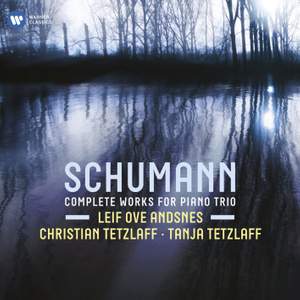
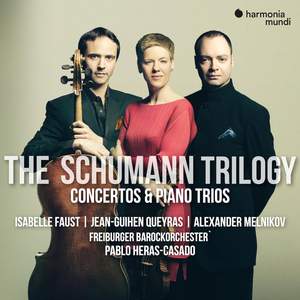
Frequent collaborators Leif Ove Andsnes, violinist Christian Tetzlaff and cellist Tanja Tetzlaff record three of Robert Schumann’s Piano Trios for this 2-CD set. The trio have recorded Piano Trio No. 1 in D minor, Op. 63, Piano Trio No. 2 in f and Piano Trio No. 3 in G minor. “there are so many praiseworthy things. The way these musicians approach Schumann's long spans of rhythmically repetitive writing shows such understanding and sensitivity that you forget there was ever a problem to be solved. There are some very memorable touches here, like the ghostly string tone at the heart of the first movement of the First Trio.” BBC Music Magazine, June 2011 *** “Andsnes and the Tetzlaff siblings adopt a restrained approach that works most convincingly in Schumann’s songful slow movements...there is rapport here.” Sunday Times, 15th May 2011 *** “as you would expect from such fine musicians, they make a formidably competent trio. Their playing of all the works here is technically beyond criticism, and there is plenty to admire, whether it's Andsnes's crystalline delicacy in the slow movements or the way in which the two string players can reduce their tone to the merest whisper for dramatic effect.” The Guardian, 19th May 2011 *** “So what makes this so special? First, the pianist: Leif Ove Andsnes has long been acclaimed for his Schumann...It's not just for their dramatic pacing that I treasure these performances but for their lyrical qualities too...in the 'Duett' from the Op. 88 Fantasiestücke I defy you to find more beauty and understanding bewteen two string players, with Andsnes the most sensitive of supporting artists...a remarkable achievement.” Gramophone Magazine, July 2011 “[Christian Tetzlaff's] strong personality and unmistakeable sound - plangent, witty and often lightly ironic - can seem quite dominant. But Andsnes's sparkling, solid and good-natured pianism is his ideal foil and on the whole the three play as if with one mind. In their hands Schumann emerges as blazingly inspired.” Classic FM Magazine, July 2011 ***** | | | In stock - usually despatched within 1 working day. |
|
|
| |  | Beethoven, Schumann & Ravel: Piano Trios
| | | In stock - usually despatched within 1 working day. |
|
|
| |  | Schumann: The 3 Piano Trios
Schumann’s three piano trios were written over a short four-year period (1847–1851) with the first two dating from just a few months apart in 1847. The First Piano Trio is often regarded as the strongest work of the three, and although it was conceived as a pair with the Second Piano Trio, they differ markedly in tone, with the first having a much darker, and more brooding quality in comparison to the sunnier second. Schumann’s third and final piano trio was written in 1851, soon after the composer and his family had moved to Düsseldorf. Unfortunately it wasn’t a happy move, and Schumann was beginning to experience symptoms of the mental decline that would lead to his committal to a mental hospital in 1854, and his death two years later. “Cellist Dmitry Kouzov joins Gringolts and his pianist Peter Laul, his slightly acidic tone an interesting foil to Gringolts' honeyed sound. The balance is unusually even-handed, leading to sensory overload in the dense melodic effusion of the third Trio. Though some tempi are cautious, this is stylish and thoughtful musicianship.” The Independent on Sunday, 24th April 2011 “The success of the present artist in clarifying Schumann's chamber sonorities without 'over-cleaning the painting' is considerable, though it has a dark underside that is itself positive. The 'underside' consists of the way in which they make the listener understand the instrinsic nature of Schumann's often less than transparent textures, whereby its attendant problems are not so much 'solved' as clearly represented.” International Record Review, May 2011 “These three players would seem to view the trios primarily as inward works, a conversation between friends...Thus these performances are most effective in the less extrovert parts of the music.” Gramophone Magazine, July 2011 | | Onyx - ONYX4072 (CD - 2 discs) Normally: $25.25 Special: $17.67 |
| | In stock - usually despatched within 1 working day. |
|
|
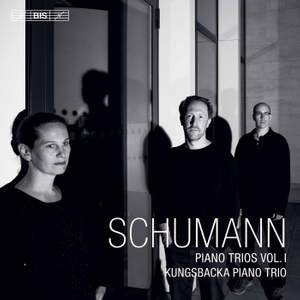
| |  | Schumann - Complete Piano Trios Volume 1
| | | In stock - usually despatched within 1 working day. |
|
|
| |  | Schumann - Piano Trios
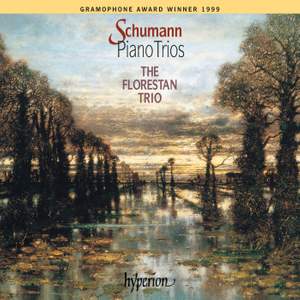
“No one who loves Schumann should miss this outstandingly fine new disc” BBC Music Magazine “For those who have always thought of Schumann's First Piano Trio as his finest chamber work after the Piano Quintet, the Florestan Trio may encourage you to think again about the Second Trio – a wonderful piece, full of poetic ideas. The artists make vigorous work of the first movement's urgent thematic interrelations but the real surprise is the third movement, a lilting barcarolle awash with significant counterpoint, although the heart of the Trio is its slow and deeply personal second movement. The differences in the trios are more marked than their similarities. The Second Trio is mellow, loving and conversational, but the First is troubled, tense, even tragic – save, perhaps, for its Mendelssohnian finale. The Florestan Trio realises the music's myriad perspectives, coaxing its arguments rather than confusing them. Marwood employs some subtle portamento and varies his use of vibrato, whereas Susan Tomes never forces her tone. Real teamwork, equally in evidence for the gently cantering Scherzo and the fine, elegiac slow movement.” Gramophone Classical Music Guide, 2010 | | | In stock - usually despatched within 1 working day. |
|
|
| |  | Schumann: Piano Trios Nos. 1 & 2
Michael Gurevich writes: “We have always loved this music for its overwhelming sincerity and serious nature, and are to this day puzzled as to why the trios by Schumann's colleagues, Brahms and Mendelssohn, are so much more often performed than his. Schumann's trios are in no way less attractive than their contemporaries, arguably more skillfully written, and much more extraordinary in their scope.” Grief overshadowed 1847 for Schumann: dear friend Fanny Mendelssohn died of a stroke in May; the following month his fourth child Emil died at just 16 months and Mendelssohn himself died in November. This grief permeates the first piano trio with its desperate and yearning melancholy, despite its masterful use of contrasts and optimistic ending. With its symphonic sweep and brilliant counterpoint, this is one of Schumann’s great inspirations, leading Clara his wife to comment: ‘The first movement is one of the most beautiful that I know’, when they first performed it on her birthday in September. Schumann began working on the second trio before he had completed the first, and in her diary Clara noted: ‘I love it passionately and keep on wanting to play it!’. In the key of F major, it certainly makes a dramatic contrast to the first, lit with high spirits and a breezy spaciousness. Schumann himself commented that ‘it makes a friendlier and more immediate impression.’ Formed in 2003 at the Royal Northern College of Music, the Rhodes Piano Trio won 2nd Prize at the 2011 Melbourne International Chamber Music Competition. Selected for representation by YCAT in 2010, the Trio has performed widely at venues and festivals across the UK and abroad, giving recitals at Wigmore Hall, Barbican, Purcell Room, Bridgewater Hall, Edinburgh Fringe, Melbourne Recital Centre, the Aldeburgh, Verbier, Aix-en-Provence, Cordes sur Ciel, Festspiele Mecklenburg Vorpommern and Schwetzinger Festivals. They have appeared on BBC Radio 3, SWR2 in Germany and ABC Classic FM in Australia. During the 2011/12 season the Trio were Fellows at the Guildhall School of Music & Drama. | 
| | | Usually despatched in 2 - 3 working days. |
|
|
| |  | Schumann: Piano Trios
Susan Collins (violin), Sue-Ellen Paulsen (cello) & Duncan Gifford (piano) Duncan Gifford is one of Australia´s most notable concert pianists, Violinist Susan Collins is head of strings at the University of Newcastle and former Deputy Concertmaster with the Australian Opera and Ballet Orchestra and Sue-Ellen Paulsen has been principal cellist with the Tasmanian Symphony Orchestra since 1986. | 
| | | Usually despatched in 2 - 3 working days. |
|
|
| |  | Thibaud-Casals-Cortot Trio: Piano Trio Recordings
| | | Usually despatched in 2 - 3 working days. |
|
|
| |  | Robert Schumann: Piano Trios
| |
|
| |  | Schumann: Piano Trios Opp. 63 & 110
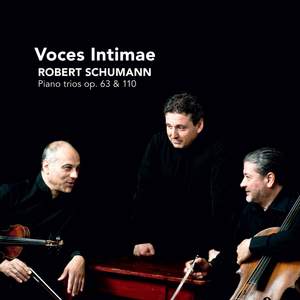
Voces Intimae: Riccardo Cecchetti (piano), Luigi De Filippi (violin) & Sandro Meo (cello) The first and last of Robert Schumann’s three piano trios, opus 63 in D minor and opus 110 in G minor, are here performed on original instruments by Voces Intimae, one of the best ensembles of its type to appear in recent years. The piano trio Voces Intimae’s 2006 recording of music by Hummel on period instruments for Warner Classics was a major critical success, being picked as a Critic’s Choice for that year on BBC Radio 3. Voces Intimae has also made acclaimed recordings of the trios of Franz Schubert and Felix Mendelssohn Bartoldy, as well as a selection of 19th century Fantasias based on the operas of Vincenzo Bellini, all on period instruments. This recording of Schumann Piano Trios is their debut release on Challenge Classics. The trio has appeared in many major venues including the Wigmore Hall and St John’s Smith Square in London, the Carnegie Hall in New York, the Musik Halle in Hamburg, the Vredenburg in Utrecht, and the Amici della Musica of Florence. The first two of Robert Schumann’s three piano trios, opus 63 in D minor and opus 80 in F major, were written in 1847. The Piano Trio in G minor opus 110 followed in 1951, and is dedicated to his friend the Danish composer Niels Wilhelm Gade. “The Voces Intimae players provide admirable insight and character, making the most of both the music's drama and its lyrical warmth. On the debit side, Schumann's ritardandos cry out for more expansive treatment than they generally receive here. The recorded sound is as impressive as the playing itself.” BBC Music Magazine, February 2012 ***** | | | Usually despatched in 4 - 5 working days. |
|
|
| |
|