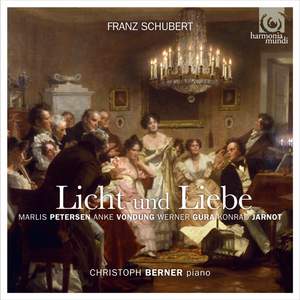
All recordingsPrices shown exclude VAT. (UK tax is not payable for deliveries to United States.) See Terms & Conditions for p&p rates. | |  | Schubert: Licht und LiebeLieder & Vocal Quartets
Marlis Petersen (soprano), Anke Vondung (mezzo-soprano), Werner Güra (tenor), Konrad Jarnot (bass) & Christoph Berner (fortepiano) Sometimes written in dialogue or in unison, sometimes close to opera, to a Singspiel scene or to choral music, Schubert's vocal duets, trios and quartets show the full variety of his creative impulses. These brief vocal ensembles composed for gatherings of friends, the famous ‘Schubertiads', display a skill and a taste for freedom that hold an immediate appeal for today's listener – for here one sings purely for pleasure. “There are treasures here...Marlis Petersen’s bright soprano in Delphine; Werner Güra, a peerless Schubertian tenor, in the cantata-like Der Sänger. The less well-known Anke Vondung (mezzo) and Konrad Jarnot (bass) are no less compelling in their solos, while Berner’s period fortepiano contributes perkily to the domestic ambience of the recital.” Sunday Times, 14th April 2013 “This is a high-quality disc for collectors of Schubert's less famous vocal pieces.” International Record Review, May 2013 “This disc is for the real Schubert connoisseur. It's a recreation of a Schubertiade...The recital is a delight from start to finish, warmly recorded, accompanied by Christoph Berner on a gentle-toned Roenisch fortepiano and with the delectable articulation you'd expect from four native German speakers.” BBC Music Magazine, June 2013 **** “Solemn, saucy or blithe, this is essentially convivial music, to be enjoyed in company, with a glass at hand...Berner and his regular vocal team are well-nigh ideal advocates. The four singers muster an impressive body of tone...The solo songs come off equally well.” Gramophone Magazine, June 2013 | 
| | | In stock - usually despatched within 1 working day. |
|
|
| |  | Schubert: 15 Lieder
Schubert: | Die Allmacht, D852 Fischerweise, D881 (Schlechta) Der Hirt auf dem Felsen, D965 (Von Chezy / Muller) An die Musik D547 Der Musensohn, D764 (Goethe) Ganymed, D544 (Goethe) Auf dem Wasser zu singen, D774 Ave Maria, D839 Die Forelle, D550 Gretchen am Spinnrade, D118 Frühlingsglaube, D686 Der Tod und das Mädchen, D531 Lachen und Weinen, D777 Litanei auf das Fest Allerseelen, D343 Erlkönig, D328 |
“Ludwig presents them with disarming dedication and to hear the hackneyed Ave Maria sung like this is to realise afresh the beauty which all too often is jellied over with sentiment. Gervase de Peyer provides an engaging clarinet obbligato...the bouncing jollity is unbounded” Penguin Guide, 2010 edition **** | | | In stock - usually despatched within 1 working day. |
|
|
| |  | The Hyperion Schubert Edition - Complete Songs Volume 31
| | | In stock - usually despatched within 1 working day. |
|
|
| |  | Schubert: 21 Famous Lieder
Schubert: | An die Laute D905 Lachen und Weinen, D777 An die Musik D547 An Sylvia, D891 Die Allmacht, D852 Erlkönig, D328 Fischerweise, D881 (Schlechta) Frühlingsglaube, D686 Ganymed, D544 (Goethe) Im Frühling, D882 Lachen und Weinen, D777 Gesange Aus 'wilhelm Meister' D877 (Goethe) Litanei auf das Fest Allerseelen, D343 Meeres Stille, D216, Op. 3 No. 2 (Goethe) Der Musensohn, D764 (Goethe) Nacht und Träume, D827 Rastlose Liebe, D138 Seligkeit D433 (Holty) Suleika II, D717 Der Tod und das Mädchen, D531 Wandrers Nachtlied II 'Über allen Gipfeln ist Ruh', D768 |
“This may be the most perfect of discs, owing to Price's magic partnership with Graham Johnson. Schubert's most popular songs are given a new lease of life.” BBC Music Magazine, October 2011 ***** “At first, I found Price’s characterisation a little detached and impersonal, perhaps because of the very beauty of her voice, but her performances grew on me. Her exemplary phrasing, breath control and seamless musical line are heard to fine effect in Death and the Maiden and Wanderers Nachtlied, and in her broadening out of the glorious “all-liebender Vater” in Ganymede.” Sunday Times, 5th June 2011 *** | | | Usually despatched in 4 - 5 working days. |
|
|
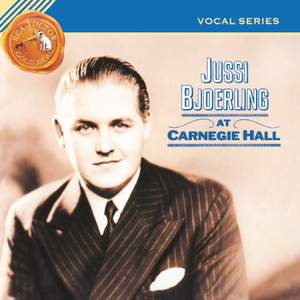
| |  | Jussi Björling - In Song
Arthur: | Today | Bizet: | Je crois entendre encore (from Les Pêcheurs de Perles) | Brahms: | Die Mainacht, Op. 43 No. 2 | Curtis, E: | Torna a Surriento | Geehl: | For You Alone | Grieg: | En svane (No. 2 from Seks Digte af Henrik Ibsen, Op. 25) Seks Sange, Op. 48 No. 6 'Ein Traum' | Kalman: | Das Veilchen vom Montmartre | Körling: | Vita rosor | Leoncavallo: | Mattinata - 'L'aurora di bianco vestita' | Liszt: | Es muss ein Wunderbares sein, S. 314 | Rachmaninov: | Lilacs, Op. 21 No. 5 | Schubert: | Die Forelle, D550 Die Allmacht, D852 Ständchen 'Leise flehen meine Lieder', D957 No. 4 Wandrers Nachtlied II 'Über allen Gipfeln ist Ruh', D768 Die böse Farbe (No. 17 from Die schöne Müllerin, D795) | Sibelius: | Svarta rosor, Op. 36 No. 1 (Ernst Josephson) | Sjögren: | I drömmen du är mig nära | Strauss, R: | Ständchen, Op. 17 No. 2 Morgen, Op. 27 No. 4 | Tosti: | Ideale | trad.: | Ack Värmeland du sköna (Ah Värmland, Thou Fairest) arr. Randel Allt Under Himmelens Fäste | Wolf, H: | Verborgenheit (No. 12 from Mörike-Lieder) |
Historic Masters Ltd. Is delighted to be associated with, and to have contributed to, this CD release of little known material by one of the truly great tenors of the twentieth century. In the course of our researches we have discovered original metal parts for three recordings by Jussi Björling which were not released by EMI at the time they were made. All three have now been issued as part of our Historic Masters series and we are delighted to be able to make copies available for transfer to this CD. The tenor solo from Bizet’s Les Pêcheurs de perles was recorded in April 1947. Given that it is Björling’s only studio version of this aria, it seems surprising that it remained unissued until November 1977, late in the LP era. Only then was it included in an EMI boxed set entitled The Art of Jussi Björling. The other two items, the songs Mattinata and For you alone, rank amongst our most sensational discoveries in the EMI archive. These were the very first recordings made by Björling as an adult on 4 September 1929. Piano accompanied, they were almost certainly intended as tests to determine Björling’s suitability for a recording contract. Listening to these first recordings, there can be no surprise that Björling clearly passed this examination with flying colours. Three months later he was in the studio for what was in effect the launching of his hugely successful recording career with HMV and Victor. In the first few months of that career Björling repeated both songs – this time with full orchestral accompaniment. Perhaps this explains why the original tests were forgotten and, indeed, were marked in March 1930 as ‘destroyed’. In 1952, RCA, using the recently developed tape technology, decided to record a selection of the songs that Björling performed at his recitals. It is unlikely that all of these pieces would have been given at one time, but they were certainly included in his programmes over the years and give a very representative selection of the range of his repertoire. Apart from German Lieder, he always liked to sing some Swedish pieces, as well as works by the Finnish composer Sibelius, who complimented him on his interpretations of his songs, particularly those written to Swedish words. This recording from 1952 remained on the catalogue for many years as an LP in the USA, but it was less widely available in Europe and can now be heard here for the first time in a CD transfer from the original master tape. It finds Björling in particularly glorious voice. Extract from the booklet | | | Usually despatched in 4 - 5 working days. |
|
|
| |  | Jussi Björling Collection, Vol. 5Lieder and Songs 1939-1952
Beethoven: | Adelaide, Op. 46 | Brahms: | Die Mainacht, Op. 43 No. 2 | Grieg: | En svane (No. 2 from Seks Digte af Henrik Ibsen, Op. 25) Seks Sange, Op. 48 No. 6 'Ein Traum' | Liszt: | Es muss ein Wunderbares sein, S. 314 | Rachmaninov: | Lilacs, Op. 21 No. 5 | Schubert: | An Sylvia, D891 Ständchen 'Leise flehen meine Lieder', D957 No. 4 (2 takes) An die Leier, D737 (Bruchmann) Die Allmacht, D852 Wandrers Nachtlied II 'Über allen Gipfeln ist Ruh', D768 Die böse Farbe (No. 17 from Die schöne Müllerin, D795) Die Forelle, D550 | Sibelius: | Svarta rosor, Op. 36 No. 1 (Ernst Josephson) (2 takes) Säf, säf, susa, Op. 36 No. 4 (Text: Gustav Fröding) | Sjöberg: | Tonerna (text: Erik Gustaf Geijer) | Strauss, R: | Morgen, Op. 27 No. 4 Cäcilie, Op. 27 No. 2 Ständchen, Op. 17 No. 2 Morgen, Op. 27 No. 4 | Tosti: | Ideale | Wolf, H: | Verborgenheit (No. 12 from Mörike-Lieder) |
| | | (also available to download from $9.25) | Usually despatched in 2 - 3 working days. (Available now to download.) |
|
|
| |  | Volume 17 - Austrian Contemporaries Volume 2
Schubert: | Der Unglückliche, D713 Widerspruch D865 (Seidl) Glaube, Hoffnung und Liebe, D955 Frohsinn, D520 Die abgeblühte Linde, D514 Der Flug der Zeit, D515 Das Weimweh (‘Ach, der Gebirgssohn'), D851 Die Allmacht, D852 Labetrank der Liebe, D302 An die Geliebte, D303 Vergebliche Liebe D177 (Bernard) Die Sterne, D176 (Fellinger) Die erste Liebe, D182 Lob des Tokayers D248 (Baumberg) Der Zufriedene, D320 Der Sänger am Felsen, D482 Lied 'Ferne con der großen Stadt', D483 Skolie (Laßt im Morgenstrahl des Mai'in', D306 Die Befreier Europas in Paris, D104 (Mikan) Abschied von der Erde, D829 Die Fröhlichkeit, D262 |
Detlef Roth (baritone) & Ulrich Eisenlohr (piano) “Ulrich Eisenlohr gives excellent support and interpretive depth to the songs, as he has done for many other singers in this series.” Classics Today | | | (also available to download from $6.25) | Usually despatched in 2 - 3 working days. (Available now to download.) |
|
|
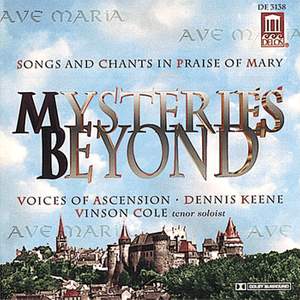
| |  | Mysteries BeyondSongs & Chants in Praise of Mary
Bruckner: | Os justi meditabitur sapientiam Ave Maria (1861), WAB 6 | Casals: | Eucaristica | Duruflé: | Tota pulchra es, Op. 10 No. 2 Ubi caritas, Op. 10 No. 1 | Fauré: | Tantum ergo, Op. 65 No. 2 Kathleen Bride (soprano), Mark Krucez (organ) Ave Maria, Op. posth. Cantique de Jean Racine, Op. 11 | Gounod: | Ave Maria Vinson Cole (tenor), Patrick Stephens (piano) | Holst: | Ave Maria, H49, Op. 9b | Mendelssohn: | Richte mich, Gott Op. 78 No. 2 | Palestrina: | Alma Redemptoris mater - 8vv | Schubert: | Ave Maria, D839 Vinson Cole (tenor), Patrick Stephens (piano) Die Allmacht, D852 (arr. for chorus) Psalm 23 'Gott ist mein Hirt', D706 | Victoria: | Ave Maria for four voices |
| | | (also available to download from $11.00) | Usually despatched in 2 - 3 working days. (Available now to download.) |
|
|
| |  | Kirsten Flagstad: The Supreme Wagnerian Soprano
Alnaes: | Lykken mellem to mennesker | Bach, C P E: | Die Güte Gottes Busslied (An dir Allein) Passionslied Preis sei dem Gotte | Bach, J S: | St Matthew Passion, BWV244: Erbarme dich Vergiss mein nicht, BWV505 O finstre Nacht, wann wirst du doch vergehen, BWV492 Liebster Herr Jesu! wo bleibest du so lange?, BWV484 Komm süsser Tod, BWV478 Dir, dir Jehovah, will ich singen, BWV452 | Backer-Grøndahl: | Mot kveld, Op. 42 No. 7 | Beethoven: | Die Ehre Gottes aus der Natur ('Die Himmel rühmen des Ewigen Ehre'), Op. 48 No. 4 | Böhm, G: | Geh’ ein, mein Leib, in deine Kammer | Bridge: | Love went a-riding | Bull, O: | Saeterjentens Søndag (The Herdgirl's Sunday) | Carissimi: | Soccorretemi ch'io moro | Cruger: | Auf, auf mein Herz mit Freude | Dørumsgaard: | Gudrid stod ved stoveglas, Op. 11 No. 2 Natt, Op. 4 No. 1 Regn (from Op. 6) Hjuring-lokk (from Dusk in the Enchanted Wood, Op. 8) Spinnvettir (from Op.10) Baan sull (from Op. 11) Alle mann hadde fota, Op. 21 No. 2 | Franck, J W: | Wie seh’ ich dich, mein Jesu, bluten Sei nur still Auf, auf! zu Gottes Lob! | Gluck: | Che faro' senza Euridice? (from Orfeo ed Euridice) | Grieg: | Seks Sange, Op. 48 No. 6 'Ein Traum' Tak for dit råd (from 4 Songs Op. 21) Våren, Op. 33 No. 2 Fra Monte Pincio, Op. 39 No. 1 Guten (from 12 Songs Op. 33) Eros (from 5 Songs Op. 70) Ved Rondane (from 12 Songs Op. 33) Seks Sange, Op. 48 No. 6 'Ein Traum' En svane (No. 2 from Seks Digte af Henrik Ibsen, Op. 25) Den særde (from 12 Songs Op. 33) Med en vandlije, Op. 25 No. 4 The Princess, EG133 Tolv Melodier til Digte af Aasmund Olavsson Vinje, Op. 33 No. 5 'Langs ei Å' Mens jeg venter (On the Water), Op. 60 No. 3 Med en Primula veris, Op. 26 No. 4 Og jeg vil ha mig hjertenskjaer (And I would like a sweetheart true), Op. 60 No. 5 Modersord (No. 4 from Four Songs, Op. 15) Millom Rosor, Op. 39, No. 4 | Handel: | Ombra mai fu (from Serse) Messiah: I know that my Redeemer liveth | Hurum: | Blonde nætter, Op. 13 No. 1 | Lie, S: | Sne | Löhner: | O Ewigkeit | Purcell: | Thy hand, Belinda … When I am laid in earth (from Dido & Aeneas) | Schubert: | Die Allmacht, D852 Frühlingsglaube, D686 Wandrers Nachtlied II 'Über allen Gipfeln ist Ruh', D768 | Sinding: | Majnat, Op. 22 No. 3 | Strauss, R: | Seitdem dein Aug' in meines schaute, Op. 17 No. 1 Cäcilie, Op. 27 No. 2 | Wagner: | Wesendonck-Lieder (5) Allmächt’ge Jungfrau! (from Tannhäuser) Siegmund! Sieh' auf mich! (from Die Walküre) Heil dir, Sonne! (from Siegfried) Zu neuen Taten, teurer Helde (from Götterdämmerung) Set Svanholm (Siegfried) Helle Wehr, heilige Waffe (from Götterdämmerung) Starke Scheite schichtet mir dort 'Brünnhilde's Immolation Scene' (from Götterdämmerung) Tristan und Isolde (excerpts) Ludwig Suthaus (Tristan), Blanche Thebom (Brangane) |
This 5-CD set, devoted to the famous Norwegian soprano Kirsten Flagstad, is a further release in the EMI Classics ICON series. Kirsten Flagstad (1895–1962) enjoyed a successful career singing opera and operetta in Scandanavia, and was considering retirement when she was catapulted to international fame in 1935 after a sensational appearance at the Metropolitan Opera in New York singing Sieglinde, Isolde and Brünnhilde. From 1935 until her retirement from the stage in 1953 she was the leading Wagnerian soprano of her day. Her powerful, radiant voice and seemingly inexhaustible vocal stamina were ideally suited to the most taxing roles in Wagner’s operas and she was universally acclaimed, especially as Isolde and Brünnhilde. She scored a particular success at Covent Garden and sang there under the three most famous Wagner conductors of the time: Reiner, Beecham and Furtwängler. The first CD in the set opens with a group of Baroque arias by Handel, Bach, Purcell and Gluck that show off to advantage Flagstad’s superb voice and impeccable musicality. The remainder of this CD consists of Arne Dørumsgaard’s attractive arrangements of classical arias and songs from the collection Canzone scordate. In her concert repertoire, Flagstad specialised in Norwegian songs and made many recordings of the vocal music of Grieg as well as other Scandanavian composers like Alf Hurum, Ole Bull and Christian Sinding, all of whom are represented on CD 2. The third CD beings with a group of songs by Schubert, Beethoven, Bridge and Dørumsgaard, after which Flagstad gives a superb account of the five Wesendonck Lieder that Wagner wrote while composing Tristan und Isolde. This CD concludes with Elisabeth’s prayer ‘Allmächt’ge Jungfrau’ from Tannhäuser and ‘Siegmund! Sieh’ auf mich’ in which Brünnhilde tells Siegmund of his forthcoming death in the second act of Die Walküre. Siegmund is sung by the tenor Set Svanholm, who was one of Flagstad’s regular partners in the theatre and on disc. The remaining two discs include extensive excerpts from Siegfried, Götterdämmerung and Tristan und Isolde, with Set Svanholm as Siegfried and Ludwig Suthaus as Tristan. The complete recording of Tristan und Isolde, conducted by Wilhelm Furtwängler, is considered to be one of the finest opera recordings ever made. | | | In stock - usually despatched within 1 working day. |
|
|
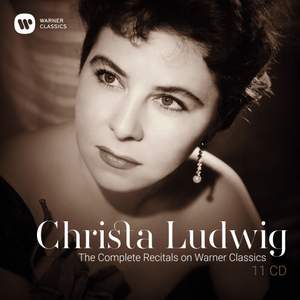
| |  | The Art of Christa LudwigChrista Ludwig 80th Birthday Tribute
Bach, J S: | St John Passion, BWV245: Es ist vollbracht Recorded: 1961, Berlin-Grünewald, Grünewaldkirche Berliner Symphoniker, Karl Forster St Matthew Passion, BWV244: Erbarme dich Recorded: 3-4 January, 14-15 April, 10-12 May, 21, 25-26 November, 28 December 1961, Kingsway Hall, London Philharmonia Orchestra, Otto Klemperer | Bellini: | Sgombra è la sacra selva from Norma Recorded: 5-12 September 1960, Teatro all Scala, Milan Orchestra del Teatro alla Scala di Milano, Tullio Serafin | Bizet: | L'amour est un oiseau rebelle 'Habanera' (from Carmen) sung in German Berliner Symphoniker, Horst Stein | Brahms: | Sapphische Ode, Op. 94 No. 4 Recorded: 11, 13, 14, 17 & 20 November, 1957, Abbey Road Studios, London Gerald Moore (piano) Liebestreu, Op. 3 No. 1 Recorded: 11, 13, 14, 17 & 20 November, 1957, Abbey Road Studios, London Gerald Moore (piano) Der Schmied Op. 19/4 Recorded: 11, 13, 14, 17 & 20 November, 1957, Abbey Road Studios, London Gerald Moore (piano) Die Mainacht, Op. 43 No. 2 Recorded: 11, 13, 14, 17 & 20 November, 1957, Abbey Road Studios, London Gerald Moore (piano) Dein blaues Auge, (No. 8 from Acht Lieder und Gesänge, Op. 59) Recorded: 31 March – 3 April 1969, Abbey Road Studios, London Geoffrey Parsons (piano) Von ewiger Liebe, Op. 43 No. 1 Recorded: 31 March – 3 April 1969, Abbey Road Studios, London Geoffrey Parsons (piano) Das Mädchen spricht, Op. 107 No. 3 Recorded: 31 March – 3 April 1969, Abbey Road Studios, London Geoffrey Parsons (piano) Heimweh, Op. 63 No. 8 Recorded: 31 March – 3 April 1969, Abbey Road Studios, London Geoffrey Parsons (piano) Wie Melodien zieht es mir, Op. 105 No. 1 Recorded: 31 March – 3 April 1969, Abbey Road Studios, London Geoffrey Parsons (piano) Mädchenlied, Op. 107 No. 5 Recorded: 31 March – 3 April 1969, Abbey Road Studios, London Geoffrey Parsons (piano) Vergebliches Ständchen, Op. 84 No. 4 Recorded: 31 March – 3 April 1969, Abbey Road Studios, London Geoffrey Parsons (piano) Der Tod, das ist die kühle Nacht, Op. 96 No. 1 Recorded: 31 March – 3 April 1969, Abbey Road Studios, London Geoffrey Parsons (piano) Auf dem See (No. 2 from Acht Lieder und Gesänge, Op. 59) Recorded: 31 March – 3 April 1969, Abbey Road Studios, London Geoffrey Parsons (piano) Feldeinsamkeit, Op. 86 No. 2 Recorded: 31 March – 3 April 1969, Abbey Road Studios, London Geoffrey Parsons (piano) In stiller Nacht (No. 42 from Deutsche Volkslieder, WoO 33) Recorded: 31 March – 3 April 1969, Abbey Road Studios, London Geoffrey Parsons (piano) Schwesterlein, WoO posth. 37 No. 1 Recorded: 31 March – 3 April 1969, Abbey Road Studios, London Geoffrey Parsons (piano) Immer leiser wird mein Schlummer, Op. 105 No. 2 Recorded: 31 March – 3 April 1969, Abbey Road Studios, London Geoffrey Parsons (piano) Ständchen, Op. 106 No. 1 Recorded: 31 March – 3 April 1969, Abbey Road Studios, London Geoffrey Parsons (piano) Two songs for contralto with viola obbligato, Op. 91 Recorded: November 1965 & March 1966, Abbey Road Studios, London Geoffrey Parsons (piano) & Herbert Downes (viola) Alto Rhapsody, Op. 53 Recorded: March 1962, Kingsway Hall, London Philharmonia Chorus & Orchestra, Otto Klemperer | Handel: | Es blaut die Nacht (Julius Caesar) Recorded: 19 March, 1962, Berlin-Grünewald, Grünewaldkirche Berliner Symphoniker, Horst Stein | Mahler: | Der Abschied (Das Lied von der Erde) Recorded: 19-22 February, 1964, Kingsway Hall, London & 7-8 November 1966, Abbey Road Studos, London Philharmonia Orchestra & New Philharmonia Orchestra, Otto Klemperer Ich ging mit Lust (Lieder und Gesänge aus der Jugendzeit) Hans und Grete (Lieder und Gesänge aus der Jugendzeit) Frühlingsmorgen (Lieder und Gesänge aus der Jugendzeit) Wo die schönen Trompeten blasen (Des Knaben Wunderhorn) Der Schildwache Nachtlied (Des Knaben Wunderhorn) Um schlimme Kinder artig zu machen (Lieder und Gesänge aus der Jugendzeit) Ich atmet' einen linden Duft (Rückert-Lieder) Liebst Du um Schönheit (Rückert-Lieder) Um Mitternacht (Rückert-Lieder) Das irdische Leben (Des Knaben Wunderhorn) Wer hat dies' Liedlein Erdacht? (Des Knaben Wunderhorn) Lob des hohen Verstandes (Des Knaben Wunderhorn) Ich bin der Welt abhanden gekommen (Rückert-Lieder) Rheinlegendchen (Des Knaben Wunderhorn) Des Antonius von Padua Fischpredigt (Des Knaben Wunderhorn) Recorded: 3-5 May, 1957, Abbey Road Studios, London Gerald Moore (piano) | Mozart: | In quali eccessi ... Mi tradì quell'alma ingrate (from Don Giovanni) Recorded: June/July 1966, Abbey Road Studios, London New Philharmonia Orchestra, Otto Klemperer E amore un ladroncello (from Così fan tutte) Recorded: September 1962, Kingsway Hall,, London Philharmonia Orchestra, Karl Böhm | Rachmaninov: | Sing not, O lovely one (Ne poi, krasavitsa, pri mne), Op. 4 No. 4 Recorded: November 1965 & March 1966, Abbey Road Studios, London Geoffrey Parsons (piano) Oh, my field, Op. 4 No. 5 Recorded: November 1965 & March 1966, Abbey Road Studios, London Geoffrey Parsons (piano) | Ravel: | Trois chansons madécasses Recorded: November 1965 & March 1966, Abbey Road Studios, London Geoffrey Parsons (piano) | Reger: | Der Brief, Op. 76, No. 8 Recorded: 29 November & 1 December, 1965, Bürgerbräu, Munich Gerald Moore (piano) Volkslied aus Franken – Waldeinsamkeit, Op. 76, No. 3 Recorded: 29 November & 1 December, 1965, Bürgerbräu, Munich Gerald Moore (piano) | Rossini: | La regata veneziana Recorded: 29 November & 1 December, 1965, Munich Bürgerbräu Gerald Moore (piano) | Saint-Saëns: | Une flûte invisible Recorded: November 1965 & March 1966, Abbey Road Studios, London Geoffrey Parsons (piano) | Schubert: | Die Allmacht, D852 Recorded: 11, 13, 14, 17 & 20 November, 1957, Abbey Road Studios, London Gerald Moore (piano) Fischerweise, D881 (Schlechta) Recorded: 11, 13, 14, 17 & 20 November, 1957, Abbey Road Studios, London Gerald Moore (piano) An die Musik D547 Recorded: 28-30 November, 1961, Abbey Road Studios, London Geoffrey Parsons (piano) Der Musensohn, D764 (Goethe) Recorded: 28-30 November, 1961, Abbey Road Studios, London Geoffrey Parsons (piano) Ganymed, D544 (Goethe) Recorded: 28-30 November, 1961, Abbey Road Studios, London Geoffrey Parsons (piano) Auf dem Wasser zu singen, D774 Recorded: 28-30 November, 1961, Abbey Road Studios, London Geoffrey Parsons (piano) Ave Maria, D839 Recorded: 28-30 November, 1961, Abbey Road Studios, London Geoffrey Parsons (piano) Die Forelle, D550 Recorded: 28-30 November, 1961, Abbey Road Studios, London Geoffrey Parsons (piano) Gretchen am Spinnrade, D118 Recorded: 28-30 November, 1961, Abbey Road Studios, London Geoffrey Parsons (piano) Frühlingsglaube, D686 Recorded: 28-30 November, 1961, Abbey Road Studios, London Geoffrey Parsons (piano) Der Tod und das Mädchen, D531 Recorded: 28-30 November, 1961, Abbey Road Studios, London Geoffrey Parsons (piano) Lachen und Weinen, D777 Recorded: 28-30 November, 1961, Abbey Road Studios, London Geoffrey Parsons (piano) Litanei auf das Fest Allerseelen, D343 Recorded: 28-30 November, 1961, Abbey Road Studios, London Geoffrey Parsons (piano) Erlkönig, D328 Recorded: 28-30 November, 1961, Abbey Road Studios, London Geoffrey Parsons (piano) Der Hirt auf dem Felsen, D965 (Von Chezy / Muller) Recorded: 8 November, 1965, Abbey Road Studios, London Geoffrey Parsons (piano) | Schumann: | Frauenliebe und -leben, Op. 42 Recorded: 3, 4, 6 May & 25 June, 1959, Abbey Road Studios, London Gerald Moore (piano) | Strauss, R: | Die Nacht, Op. 10 No. 3 Recorded: 11, 13, 14, 17 & 20 November, 1957, Abbey Road Studios, London Gerald Moore (piano) Allerseelen, Op. 10 No. 8 Recorded: 11, 13, 14, 17 & 20 November, 1957, Abbey Road Studios, London Gerald Moore (piano) Schlechtes Wetter, Op. 69 No. 5 Recorded: 29 November & 1 December, 1965, Bürgerbräu, Munich Gerald Moore (piano) Der Rosenkavalier, Act 3 – conclusion Recorded: 10-15 & 17-22 December 1956, Kingsway Hall,, London Teresa Stich-Randall, Elisabeth Schwarzkopf, Eberhard Wächter Philharmonia Orchestra, Herbert von Karajan | Verdi: | Quid sum miser (from Requiem) Recorded: 16-21, 23-27 September 1963 & 7 April 1964, Kingsway Hall, London Philharmonia Chorus & Orchestra, Carlo Maria Giulini Liber scriptus (from Requiem) Recordare (from Requiem) | Wagner: | Wesendonck-Lieder (5) orch. Mottl Philharmonia Orchestra, Otto Klemperer Mild und leise 'Isolde's Liebestod' (from Tristan und Isolde) Recorded: 21-23 March 1962, Kingsway Hall, London Philharmonia Orchestra, Otto Klemperer | Wolf, H: | Gesang Weylas (No. 46 from Mörike-Lieder) Recorded: 11, 13, 14, 17 & 20 November, 1957, Abbey Road Studios, London Gerald Moore (piano) Auf einer Wanderung (No. 15 from Mörike-Lieder) Recorded: 11, 13, 14, 17 & 20 November, 1957, Abbey Road Studios, London Gerald Moore (piano) |
“Her voice took naturally to the microphone, so this four-disc set is another source of infinite musical pleasure to be snapped up quickly before it disappears.” Penguin Guide, 2011 edition | | | In stock - usually despatched within 1 working day. |
|
|
| |
|