All recordingsPrices shown exclude VAT. (UK tax is not payable for deliveries to United States.) See Terms & Conditions for p&p rates. | |  | Grigory Ginsburg plays Liszt & Rubinstein
Melodiya presents an album of Grigory Ginsburg, a wonderful virtuoso pianist and one of the glorious representatives of the Russian piano school of the 20th century. Ginsburg’s name is now overshadowed by his some of his better known peers such as Emil Gilels, Sviatoslav Richter, Yakov Flier, Stanislav Neuhaus and others. Meanwhile, in his time in the 1930s-1950s, his concert performances entranced audiences and critics alike. This album comprises compositions by Franz Liszt and Anton Rubenstein’s Piano Concerto No. 4. Ginsburg’s interpretation of the concerto became a model for musicians of many generations. | 
| | | In stock - usually despatched within 1 working day. |
|
|
| |  | Liszt: | Mephisto Waltz No. 1 Tarantella, S. 162 No. 3 (from Venezia e Napoli) Rhapsodie espagnole, S254 Pensée des Morts (Harmonies poétiques et religieuses, S. 173 No. 4) Legende S.175 No. 1, St Francis of Assisi preaching to the birds Benediction de Dieu dans la solitude (Harmonies poétiques et religieuses, S. 173 No. 3) Ave Maria IV in G major, S545/R194 Aux cyprès de la Villa d'Este (Années de pèlerinage III, S. 163 No. 2) Aux cyprès de la Villa d'Este (Années de pèlerinage III, S. 163 No. 3) Les jeux d'eaux à la Villa d'Este (Années de pèlerinage III, S. 163 No. 4) Receuillement, S204 La Lugubre Gondola I, S200 No. 1 La Lugubre Gondola II, S200 No. 2 Après une lecture du Dante, fantasia quasi sonata (Années de pèlerinage II, S. 161 No. 7) Ave Maria für die grosse Klavierschule von Lebert und Stark, S182/R67, "Die Glocken von Rom" |
| | | In stock - usually despatched within 1 working day. |
|
|
| |  | The Great Conductors: Erich Kleiber, Vol. 1
Beethoven: | Dance No. 8 from 12 Deutsche Tänze WoO8 (Coda) recorded in Berlin, 1933 Berlin Philharmonic Orchestra | Bizet: | Carmen: Prelude to Act I recorded in Prague, 1936 Czech Philharmonic Orchestra Carmen: Entr'actes recorded in Prague, 1936 Czech Philharmonic Orchestra | Dvorak: | Scherzo capriccioso, Op. 66 recorded in Berlin, 1931 Berlin Philharmonic Orchestra | Handel: | Alcina: ballet music recorded in Berlin, 1933 Berlin Philharmonic Orchestra | Liszt: | Tarantella, S. 162 No. 3 (from Venezia e Napoli) recorded in Berlin, 1933 Berlin Philharmonic Orchestra Les Préludes, symphonic poem No. 3, S97 recorded in Prague, 1936 Czech Philharmonic Orchestra | Meyerbeer: | Ein Feldlager in Schlesien: Overture recorded in Berlin, 1933 Berlin Philharmonic Orchestra | Strauss, R: | Der Rosenkavalier - Concert Waltz recorded in Berlin, 1931 Berlin Philharmonic Orchestra Till Eulenspiegels lustige Streiche, Op. 28 recorded in Berlin, 1930 Berlin Philharmonic Orchestra |
| 
| |
|
| |  | Liszt: Années de Pèlerinage, deuxième année: Italie S161
A second solo disc on Signum from an insightful Welsh pianist. Llyr Williams is an acclaimed soloist, accompanist and chamber musician; highly sought after as a performer in the United Kingdom he was recently awarded a South Bank Sky Arts Award for his Beethoven Sonata Cycle at Greyfriars Kirk in Edinburgh in August 2011 – where he performed all 32 sonatas in just two weeks! This disc follows SIGCD226 'Pictures', a collection of works by Debussy and Liszt alongside Mussorgsky's 'Pictures at an Exhibition'. “The centrepiece is the three Sonetti del Petrarca, fabulous elaborations of Liszt’s own songs, and Williams lends them a suave grandeur. The suite’s Dante sonata finale is sternly, superbly dispatched; the Bénédiction de Dieu dans la solitude a solemn, beautiful contrast; the transcription of Isolde’s Liebestod a calmly ecstatic one.” Sunday Times, 2nd September 2012 “Williams is a superb Liszt interpreter, never content to use even the most technically demanding music as just a vehicle for flashy display, but always looking beneath the elaborate surfaces for deeper rigour and meaning. That doesn't mean he ever understates the music's sense of theatre or misjudges its sense of scale, though; there's a tremendous power and intensity to his Dante Sonata” The Guardian, 6th September 2012 “Liszt’s piano music could have been written for Williams: he has the size of imagination, the temperamental bravura, the virtuosity-with-substance to make it sound elevated, not the stuff of charlatans...It’s a challenging programme to which he rises with immense authority, investing the Sonnets with the Olympian grace they deserve, and the Sonata with a mixture of barnstorming momentum and architectural scale.” Financial Times, 22nd September 2012 **** “Llyr Williams plays free and easy with the printed page … he does so in the context of performances that reveal such profound understanding, stylistic sophistication and obvious love of the music that I am completely won over.” International Record Review, November 2012 “Williams is entirely on terms with the virtuoso requirements of the Tarantella from Venezia e Napoli...The intricate part-writing of Liszt's transcription from Wagner's Tristan und Isolde, too, comes across with a stellar combination of absolute clarity and gorgeous piano sound.” BBC Music Magazine, January 2013 **** “Instead of heady bravura, with more deliberate tempi Williams deconstructs the music, as it were, shows you every nut and bolt, ensures every note is given its due weight and importance...and then assembles everything into performances of overwhelming power that often send a tingle up the spine. For Williams, less is more...Williams may be no Cziffra but offers another view of Liszt that is as valid as it is compelling.” Gramophone Magazine, February 2013 | | | Usually despatched in 3 - 4 working days. |
|
|
| |  | Dedicated to the 200th Anniversary of the birth of Franz Liszt
Liszt: | Mephisto Waltz No. 1 Vladimir Ashkenazy (piano) Tarantella, S. 162 No. 3 (from Venezia e Napoli) Lazar Berman (piano) Piano Sonata in B minor, S178 Vladimir Ovchinnikov (piano) Hungarian Rhapsody, S244 No. 2 in C sharp minor Gleb Akselrod (piano) Hungarian Rhapsody, S244 No. 6 in D flat major Alexander Slobodyanik (piano) Piano Concerto No. 1 in E flat major, S124 Pavel Serebryakov (piano) Moscow Philharmonic Orchestra, Kirill Kondrashin Les Préludes, symphonic poem No. 3, S97 Moscow Radio Symphony Orchestra, Gennady Rozhdestvensky Tasso, Lamento e trionfo, symphonic poem No. 2, S96 USSR Ministry of Culture Symphony Orchestra, Mark Ermler Orpheus, symphonic poem No. 4, S98 USSR Ministry of Culture Symphony Orchestra, Mark Ermler Prometheus, symphonic poem No. 5, S99 USSR Ministry of Culture Symphony Orchestra, Mark Ermler |
Dedicated to the 200th anniversary of Liszt’s birth, this release includes performances by some of the greatest musicians. The works include Mephisto Waltz, Tarantella, Sonata in B minor, Hungarian Rhapsodies Nos. 2 & 6 and Piano Concerto No. 1. | | | Usually despatched in 2 - 3 working days. |
|
|
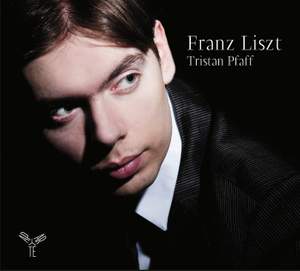
| |  | Liszt: Piano Works
Liszt, the virtuoso, played all the keyboard literature and travelled the roads and seas; Liszt, the thinker, nourished his intellect through his readings of Lamennais, Lamartine and Hugo, Shakespeare and Byron, Dante and Petrarch, Goethe and Schiller; Liszt, the composer of songs, indebted to Italian bel canto, the French romance and the German chorale, set texts written in six languages, not including Latin. Hesitating between pure creation and transcription, which called upon his gifts as a wizard of the keyboard throughout his lifetime, he thus paid tribute to every facet of Western art, as may be seen from this recital, or "soliloquy", to use his own expression. Tristan Pfaff, born 1985, studies with Michel Beroff and has been doing the rounds of the International Piano Competitions, winning the Arcachon. He came third in the recent Scottish International [Oxana Shevchenko was the winner]. “Pfaff's awesome fingers make light work of such technically demanding showpieces...clearly a name to watch and his dexterity must be the envy of many young pianists. This is a fine disc.” Classic FM Magazine, September 2011 **** “Perhaps less boxy sound would have imparted a more fluid, singing quality to the second and third Liebestraüme, third Consolation and two Wagner transcriptions, yet these precise qualities result from Pfaff's sensitive pedalling and refined legato touch in the "Gondoliera"...[He] throws caution to the wind with fingers scintillatingly intact throughout the Rossini-based "La danza" and he tosses off nicely lilting filigree in the Valse impromptu.” Gramophone Magazine, October 2011 | | | Usually despatched in 3 - 4 working days. |
|
|
| |  | Liszt: Insights
Alexander Krichel (piano) | | | (also available to download from $10.50) | This item is currently out of stock at the UK distributor. You may order it now but please be aware that it may be six weeks or more before it can be despatched. (Available now to download.) |
|
|
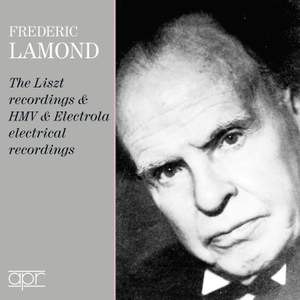
| |  | Louis Kentner - The Pioneering Liszt Recordings Volume 2
Liszt: | Soirées de Vienne: valse-caprice No. 6 (after Schubert), D427 No. 6 recorded on 17 July 1939 Grande Étude de Paganini, S. 141 No. 3 'La Campanella' recorded on 9 & 13 September 1946 Grande Étude de Paganini, S. 141 No. 2 recorded on 27 January 1942 Grande Étude de Paganini, S. 141 No. 5 'La Chasse' recorded on 9 & 13 September 1946 La leggierezza - Étude de concert No. 2, S144 recorded on 10 July 1939 Gnomenreigen, S145 No. 2 recorded on 3 September 1941 Liebestraum, S541 No. 3 (Nocturne in A flat major) recorded on 3 September 1941 Transcendental Study, S139 No. 5 'Feux Follets' recorded on 23 March 1937 Gondoliera, S. 162 No. 1 (from Venezia e Napoli) recorded on 30 March 1938 Tarantella, S. 162 No. 3 (from Venezia e Napoli) recorded on 30 March 1938 Richard Wagner - Venezia, S201 recorded on 10 November 1951 En rêve - Nocturne S207 recorded on 10 November 1951 Csárdás macabre, S. 224 recorded on 10 November 1951 Illustrations du Prophète: No. 2 Les Patineurs—scherzo (Meyerbeer) recorded on 7 March 1939 |
Though Hungarian by birth, and having studied at the Franz Liszt Academy in Budapest, Louis Kentner, like so many others of Jewish origin, immigrated to London in the mid 1930s, aware that central Europe was not the best place to be at that time for someone of his race. He was to remain in London for the rest of his life, becoming very much part of British musical life both as pianist and, later, as teacher. His somewhat sensational London debut took place in the Aeolian Hall in October 1936 where he gave an all Liszt recital. As a direct result he was signed up by HMV and over the next fifteen years, in addition to much other repertoire, he made a large number of Liszt recordings which featured not only the often recorded etudes and Hungarian Rhapsodies but also premiere recordings of many of Liszt's more important, but then less well known, larger works. Our first APR title (APR5514) featured such unusual works as the Scherzo & March, the Berceuse and the first Polonaise; on the current disc, in addition to a number of the well known aforementioned etudes, we find a group of late pieces, including the bizarre Czárdás Macabre, which was only published in the year of its recording, and the Meyerbeer/Liszt 'Les Patineurs' scherzo. This later piece is one of Liszt's most brilliant operatic transcriptions, but is strangely little known. It is perhaps Kentner's most stunning recording and a fitting way to end this fascinating recital. “Kentner, a 'great-grandpupil' of the composer, offers Liszt that is aristocratic and technically exquisite - La leggierezza and La campanella as light as sound itself. Colour and sonority are magically imagined.” BBC Music Magazine, August 2009 ***** “…throughout you will hear playing of a peerless scintillation, patrician command and a poetic engagement known to few pianists.” Gramophone Magazine, October 2009 | | | Usually despatched in 2 - 3 working days. |
|
|
| |  | Grigory Ginzburg - His Early Recordings Volume 1The Goldenweiser School
Balakirev: | Islamey - Oriental Fantasy rec. Moscow c.1942 (78: 015798/9) | Beethoven: | The Ruins of Athens -Turkish March rec. Moscow c.1930 (78: 4172) | Liszt: | Hungarian Rhapsody, S244 No. 10 in E major 'Preludio' rec. Moscow c.1940 (78: 12916/7) Hungarian Rhapsody, S244 No. 11 in A minor rec. Moscow c.1942 (78: 16967/8 Les cloches de Genève (Années de pèlerinage I, S. 160 No. 9) rec. Moscow c.1942 (78: 015946/7) Étude d'exécution transcendante d'après Paganini, S. 140 No. 3 rec. Moscow 1951 (78: 19784/5) Étude d'exécution transcendante d'après Paganini, S. 140 No. 4 Étude d'exécution transcendante d'après Paganini, S. 140 No. 5 recorded Moscow 1951 (78: 18558/9) Gondoliera, S. 162 No. 1 (from Venezia e Napoli) Tarantella, S. 162 No. 3 (from Venezia e Napoli) Concert Paraphrase on Rigoletto, S.434 after Verdi's opera rec. Moscow 1951 (78: 20994/5) Fantasy on Themes from Mozart's Marriage of Figaro and Don Giovanni, S697 (arranged Busoni) rec. Moscow 1948 (from 78 LP: 456/7) | Rossini: | Largo al factotum (from Il barbiere di Siviglia) (arranged Ginzburg) rec. Moscow 1951 (78: 18269/70) |
Grigory Ginzburg (1904-1961) was perhaps the most astounding virtuoso to emerge in Soviet Russia and it is a tragedy that he was never allowed to travel to the west after the mid 1930’s. He focussed his repertoire very much on the 19th century Romantic period and, above all, in Liszt, and his prolific recordings include many of Liszt’s virtuosic opera paraphrases that had fallen into neglect. This CD is the first of two devoted to his earliest 78rpm recordings mainly dating from the 1940s. These discs are extremely rare and many of the performances included will be unknown to even the most ardent collectors. The disc finishes with the most astounding performance of the greatest virtuoso warhorse of the 19th century – Balakirev’s Islamey. Ginzburg’s supremely elegant performance shows total control in even the thorniest passages, for him it appears no more difficult than a Haydn sonata, and the result is that we hear so much more in the music than is normally the case. “Goldenweiser's greatest student, Grigory Ginzburg (1904-61), clearly resembles his teacher in some ways: his tone is solid, his technical craft everywhere apparent, and his identification with the music beyond reproach. …even when the going would be heavy for most pianists, Ginzburg has a musical or expressive purpose that cuts deeper than mere showmanship.” BBC Music Magazine, February 2009 ***** “…Grigory Ginzburg's… legendary performance of the Mozart / Liszt Figaro Fantasy remains a marvel and stylised elegance and dazzling fluency.” Gramophone Magazine, Awards Issue 2008 | | | Usually despatched in 2 - 3 working days. |
|
|
| |  | Josef Hofmann - Acoustic recordings (1916-1923)
Chopin: | Waltz No. 2 in A flat major 'Grande Valse Brillante', Op. 34 No. 1 Recorded 13th February, 1918 Waltz No. 7 in C sharp minor, Op. 64 No. 2 Recorded 18th April, 1923 Nocturne No. 5 in F sharp major, Op. 15 No. 2 Recorded 19th April, 1923 Impromptu No. 4 in C sharp minor, Op. 66 'Fantaisie-Impromptu' Recorded 6th March, 1918 Berceuse in D flat major, Op. 57 Recorded 26th March, 1918 Polonaise No. 3 in A major, Op. 40 No. 1 'Military' Recorded 10th April, 1923 | Liszt: | Meine Freuden (Nocturne) Chants polonais (after Chopin Op. 74). Recorded 27th April, 1923 Polish Songs S480 No. 1 "Maiden's Wish" (after Chopin) Recorded 6th March, 1918 Waldesrauschen, S145 No. 1 Recorded 13th March, 1923 Tarantella, S. 162 No. 3 (from Venezia e Napoli) Recorded 2nd November, 1916 Hungarian Rhapsody, S244 No. 2 in C sharp minor Recorded in December, 1922 | Mendelssohn: | Song without Words, Op. 67 No. 4 in C major 'Spinning Song' or 'Bee's Wedding' Recorded 13th October, 1916 Rondo capriccioso in E major, Op. 14 Recorded 13th February, 1918 Song without Words, Op. 19b No. 3 in A major 'Hunting Song' Recorded 14th February, 1918 | Moszkowski: | La Jongleuse, Op. 52 No. 4 Recorded 14th February, 1918 Spanish Caprice Recorded 16th October, 1916 | Paderewski: | Minuet in G major, Op. 14 No. 1 Recorded 2nd November, 1916 | Rachmaninov: | Prelude Op. 23 No. 5 in G minor Recorded 20th April, 1923 Prelude Op. 3 No. 2 in C sharp minor Recorded 20th April, 1923 | Schubert: | Erlkönig, D328 arr. Liszt. Recorded 13th October, 1916 |
Josef Hofmann was one of the greatest pianists of any age. His unique abilities incorporated a technique second to none, and a clarity and pureness of tone that has probably never been heard since his death. Always in total command of everything he played, Hofmann presented each work with an impression of complete facility of execution. All works recorded in New York City “The recessed, wrong-end-of-a-telescope acoustic recordings are still truthful enough to display Hofmann's mesmerisingly fabulous virtuosity in Liszt's Waldesrauchen and Tarantella, and his full, rounded tone.” BBC Music Magazine, October 2008 ***** “Josef Hofmann is among music’s most jealously guarded legends. For his admirers (and they included Anton Rubinstein and Rachmaninov) he could do no wrong, and those fortunate enough to have heard him live during his heyday in America can reminisce by the hour, recalling unforgettable performances of a vast repertoire ranging from Beethoven’s Op. 111 Sonata to the major works of the great romantics.” Gramophone Magazine | | | (also available to download from $9.00) | Usually despatched in 2 - 3 working days. (Available now to download.) |
|
|
| |
|