All recordingsPrices shown exclude VAT. (UK tax is not payable for deliveries to United States.) See Terms & Conditions for p&p rates. | |  | Viennese Night At The Proms
Lehár: | Gold und Silber Walzer, Op. 79 RPO, Walter Susskind | Strauss, J, I: | Radetsky March, Op. 228 BBCSO, Walter Susskind | Strauss, J, II: | Die Fledermaus Overture Hallé, James Loughran Unter Donner und Blitz, Op. 324 BBCSO, Walter Susskind Pizzicato Polka RPO, Walter Susskind Rosen aus dem Süden, Op. 388 Hallé, James Loughran Csárdás from the operetta Die Fledermaus Sheila Armstrong Hallé, James Loughran Leichtes Blut, polka schnell, Op. 319 Hallé, James Loughran Tritsch-Tratsch Polka, Op. 214 Hallé, James Loughran Der Zigeunerbaron Overture BBCSO, Walter Susskind Der Zigeunerbaron: Einzugsmarsch Hallé, James Loughran Vergnügungszug, Op. 281 Hallé, James Loughran Perpetuum Mobile, Op. 257 RPO, Walter Susskind An der schönen, blauen Donau, Op. 314 Hallé, James Loughran | Suppe: | Leichte Kavallerie Overture bonus BBC Northern, János Fürst |
This compilation DVD features the best performances of Viennese classics from the BBC television archive, spanning a vintage period in the history of the Viennese Night Proms concerts: 1974 – 1979. Audiences at the Viennese Nights rival the enthusiasm of Last Night Prom audiences, a tradition that has been part of the Proms concert season since 1947 and which draws concert goers from all over the world. Classics featured on this DVD include the Blue Danube Waltz, Radetsky March and the Csardas and Laughing Song from Die Fledermaus, performed by Sheila Armstrong, who made her Covent Garden debut four years prior to the performances recorded here. The characteristic Viennese waltzes, polkas and overtures are performed with exuberance, good humour and panache by these three great conductors. Both Susskind and Loughran recorded Strauss and other Viennese composers for EMI, with Loughran succeeding Sir John Barbirolli at the Hallé where Viennese Nights are still a strong tradition. These performances, released for the first time on DVD, will appeal to a wide cross section of the public with branding targeted at the large Viennese/Strauss market, currently dominated by André Rieu. 1DVD Sound format: LPCM stereo/enhanced mono Picture format: 4:3 Running time: 86’ Subtitles: n/a Menu languages: English Booklet languages: E/F/G Region code: 0 Territory Restrictions: None | | | In stock - usually despatched within 1 working day. |
|
|
| |  | Waltzes & Polkas of ViennaStrauss Family Favourites
Strauss, E: | Bahn frei! Schnell-Polka, Op. 45 | Strauss, J, I: | Radetsky March, Op. 228 | Strauss, J, II: | Die Fledermaus Overture Champagner-Polka, Op. 211 An der schönen, blauen Donau, Op. 314 Unter Donner und Blitz, Op. 324 Kaiser-Walzer, Op. 437 Neue Pizzicato-Polka Op. 449 Wiener Blut Waltz, Op. 354 Pizzicato Polka Perpetuum Mobile, Op. 257 Annen-Polka, Op. 117 Rosen aus dem Süden, Op. 388 |
| | | In stock - usually despatched within 1 working day. |
|
|
| |  | Strauss: Waltzes, Polkas & Overtures
Strauss, J, II: | Tritsch-Tratsch Polka, Op. 214 Die Fledermaus Overture Csárdás from the operetta Die Fledermaus Nordseebilder Op. 390 Im Sturmschritt! (At the Double!), Op. 348 Neue Pizzicato-Polka Op. 449 Perpetuum Mobile, Op. 257 Frühlingsstimmen Walzer Op. 410 Der Zigeunerbaron Overture An der schönen, blauen Donau, Op. 314 Egyptischer Marsch, Op. 335 Eljen a Magyar Schnell-Polka, Op. 332 Furioso-Polka quasi Galopp, Op. 260 |
The music of Johann Strauss reflects an elegance and refinement typical of Vienna. It inspires us with a joie de vivre and an almost irresistible urge to dance. The ensemble Anima Eterna Brugge and its conductor, Jos van Immerseel, invite us to spend a delightful moment in Strauss’s company and theirs, with delicacy and feeling, conviction and emotion. Keeping as close as possible to the original score, they enable us to hear these pieces as they were intended by the composer. | 
| | | Usually despatched in 4 - 5 working days. |
|
|
| |  | Strauss: Waltzes, Marches and Polkas
Strauss, J, I: | Radetsky March, Op. 228 | Strauss, J, II: | An der schönen, blauen Donau, Op. 314 Eljen a Magyar Schnell-Polka, Op. 332 Accelerationen, Op. 234 Persischer Marsch, Op. 289 Leichtes Blut, polka schnell, Op. 319 Künstlerleben, Op. 316 Unter Donner und Blitz, Op. 324 Kaiser-Walzer, Op. 437 Tritsch-Tratsch Polka, Op. 214 Rosen aus dem Süden, Op. 388 Annen-Polka, Op. 117 arr. Max Schonherr Wein, Weib und Gesang, Op. 333 Auf der Jagd, Op. 373 Sphärenklänge, Waltz, Op. 235 arr. Max Schonherr Perpetuum Mobile, Op. 257 Geschichten aus dem Wienerwald, Op. 325 Fledermaus-Quadrille, Op. 363 Wiener Blut Waltz, Op. 354 Napoleon-Marsch, Op. 156 (1854) | Strauss, Josef: | Delirien Waltz, Op. 212 |
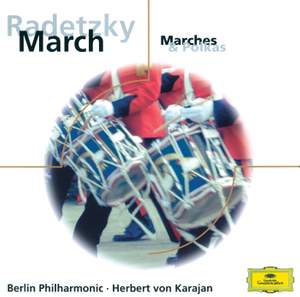
Herbert von Karajan was a master of the Strauss style. Here for the first time are all three of his Strauss recordings from the early 1980s – beautifully conceived programmes of waltzes, polkas and marches, including all the favourites – compiled together in a generous 2-CD set. | | | (Sorry, download not available in your country) | Usually despatched in 2 - 3 working days. |
|
|
| |  | The Barbirolli Viennese Album
Lehár: | Gold und Silber Walzer, Op. 79 Recorded 30-31 December 1966, Kingsway Hall, London STEREO | Schubert: | Symphony No. 9 in C major, D944 'The Great' Recorded 2-3 June 1964, Kingsway Hall, London STEREO | Strauss, J, I: | Radetsky March, Op. 228 orch: Jacob. Recorded 30-31 December 1966, Kingsway Hall, London STEREO | Strauss, J, II: | An der schönen, blauen Donau, Op. 314 Recorded 30-31 December 1966, Kingsway Hall, London STEREO Unter Donner und Blitz, Op. 324 Recorded 30-31 December 1966, Kingsway Hall, London STEREO Der Zigeunerbaron Overture Recorded 30-31 December 1966, Kingsway Hall, London STEREO Perpetuum Mobile, Op. 257 Recorded 30-31 December 1966, Kingsway Hall, London STEREO Champagner-Polka, Op. 211 Recorded 30-31 December 1966, Kingsway Hall, London STEREO | Strauss, R: | Der Rosenkavalier: Waltzes Recorded 30-31 December 1966, Kingsway Hall, London STEREO | Suppe: | Ein Morgen, ein Mittag, ein Abend in Wien Overture Recorded 28-29 June 1957, Free Trade Hall, Manchester STEREO Pique Dame Overture Recorded 28-29 June 1957, Free Trade Hall, Manchester STEREO Die Banditenstreiche Overture Recorded 28-29 June 1957, Free Trade Hall, Manchester STEREO Dichter und Bauer Overture Recorded 28-29 June 1957, Free Trade Hall, Manchester STEREO Leichte Kavallerie Overture Recorded 28-29 June 1957, Free Trade Hall, Manchester STEREO Die schöne Galathée Overture Recorded 28-29 June 1957, Free Trade Hall, Manchester STEREO |
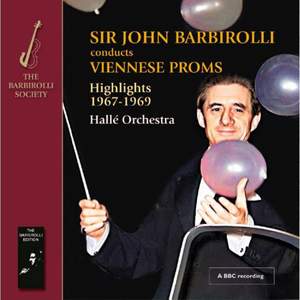
In the Free Trade Hall, at Belle Vue and in the Royal Albert Hall the Viennese Nights were occasions which gave intense musical pleasure and also had a remarkable atmosphere of bonhomie. Sir John could relax, but he never relaxed his artistic standards and he treated the waltzes and polkas as masterpieces of their kind which demanded and deserved top rank treatment. His recording sessions on 30 and 31 December 1966 included Johann Strauss II’s Blue Danube waltz, Perpetuum mobile and Gypsy Baron overture and Johann Strauss I’s Radetzky March in Gordon Jacob’s orchestration. To these are added Strauss II’s cork-popping Champagne Polka and the Thunder and Lightning Polka. No Barbirolli Viennese evening would be complete, of course, without Lehár’s Gold and Silver waltz (1902), performed with especial sumptuousness. From the 1957 Pye sessions come six items by Franz von Suppé, the Austrian composer and conductor of Belgian descent who sealed in Vienna in 1835 where five years later he became third conductor at the Theater in der Josefstadt. In 10 years there, he wrote over twenty scores, including Morning, Noon and Night in Vienna, in which he proved himself in the line of Johann Strauss I. He moved to the Theater an der Wien in 1845 as one of its chief conductors for the next 17 years, after which he went to Kaitheater in 1862 and the Carltheater in 1865 where he remained until his retirement in 1882. His Queen of Spades overture was for a one-act comic operetta, first staged in Berlin, and The Jolly Robbers (Banditenstreiche) for yet another in 1867. Perhaps his best-known and most popular pieces are the Light Cavalry overture and the Poet and Peasant overture. Of all his stage works, only Boccaccio is seen with any regularity today, although he was regarded in his lifetime as Vienna’s answer to Offenbach. But the overtures survive and are ideal Barbirolli Viennese material. The other Strauss in this album is the German, Richard. He is represented by Barbirolli’s suite of waltzes from his most popular opera Der Rosenkavalier which Barbirolli often conducted with the Covent Garden touring company in the 1930s. Sir John never conducted this particular compilation in the concert-hall although he often conducted a suite, probably arranged by Artur Rodzinski, which includes the Presentation of the Rose and the trio in orchestral disguise and can be heard on ‘Barbirolli at the Opera’ (SJB1004). It is interesting to note that Strauss himself made only arrangements of the waltzes for concert performance. Barbirolli recorded this rarity of his own in the December 1966 sessions for Columbia Studio 2. Sir John made two recordings of Schubert’s Great C major Symphony, the first in December 1953 (Barbirolli Society SJB1020) and the second (issued here) in June 1964, also for HMV. | | | Usually despatched in 4 - 5 working days. |
|
|
| |  | Homage to Steuermann
Poulenc: | Toccata for three pianos arranged by Eduard Steuermann | Schoenberg: | Klavierstücke (3), Op. 11 Kleine Klavierstücke (6), Op. 19 Klavierstücke (5), Op. 23 Suite for Piano, Op. 25 Klavierstück, Op. 33a Klavierstück, Op. 33b | Schubert: | Wohin? (No. 2 from Die schöne Müllerin, D795) arranged for three pianos | Steuermann: | Suite | Strauss, J, II: | Themes from Die Fledermaus for two pianos arranged by Eduard Steuermann Perpetuum Mobile, Op. 257 arranged for two pianos by Eduard Steuermann |
Eduard Steuermann, Erika Haase, Carmen Piazzini & Ulrike Moortgat-Pick (pianos) This 2 CD set includes Steuermann’s historic recordings of Schoenberg’s complete works for piano solo, as well as works and arrangements by Steuermann himself. “How wonderful that Steuermann’s recording of piano pieces by Schoenberg is at last available again; it is the classic model for the interpretation of these works.” Alfred Brendel | | | Usually despatched in 2 - 3 working days. |
|
|
| |  | New Year's Concert 2010
Lumbye: | Champagne Galop | Nicolai, C O: | Die lustigen Weiber von Windsor overture | Offenbach: | Die Rheinnixen - 'Overture' | Strauss, E: | Helen Quadrille, Op. 14 | Strauss, J, I: | Der Carneval in Paris, Galopp, Op. 100 (The Carnival in Paris) Radetsky March, Op. 228 | Strauss, J, II: | Die Fledermaus Overture Im Krapfenwald'l, Polka française, Op. 336 Stürmisch in Lieb' und Tanz, Op. 393 Wein, Weib und Gesang, Op. 333 Perpetuum Mobile, Op. 257 Wiener Bonbons Walzer, Op. 307 Champagner-Polka, Op. 211 Ein Herz, ein Sinn! - polka-mazurka, Op. 323 Morgenblätter Walzer, Op. 279 Auf der Jagd, Op. 373 An der schönen, blauen Donau, Op. 314 | Strauss, Josef: | Frauenherz-Polka Op. 166 |
The annual New Year’s Concert from Vienna, seen by millions on TV worldwide, is the best-known classical concert in the world. Georges Prêtre returns to Vienna’s illustrious Musikverein to conduct a compelling programme that combines adored classics with no less than four intriguing premieres. Idolized in Vienna, the legendary French maestro, Georges Prêtre (who first came to eminence for his recordings with the great Maria Callas) is a leading expert on and interpreter of the music of the Strauss family. “The Vienna Philharmonic is...famously peerless in Strauss family music, and in the end it's their inimitable combination of grace, incisiveness and intuitive rhythmicality that leaves the truly abiding impression...the list of special moments is truly a long one.” BBC Music Magazine, April 2010 ***** “Georges Prêtre, 85, the first Frenchman to take on this hallowed tradition, is in intoxicating form” The Observer, 7th February 2010 | | | Usually despatched in 2 - 3 working days. |
|
|
| |  | New Year's Concert 2010
Lumbye: | Champagne Galop | Nicolai, C O: | Die lustigen Weiber von Windsor overture | Offenbach: | Die Rheinnixen - 'Overture' | Strauss, E: | Helen Quadrille, Op. 14 | Strauss, J, I: | Der Carneval in Paris, Galopp, Op. 100 (The Carnival in Paris) Radetsky March, Op. 228 | Strauss, J, II: | Die Fledermaus Overture Im Krapfenwald'l, Polka française, Op. 336 Stürmisch in Lieb' und Tanz, Op. 393 Wein, Weib und Gesang, Op. 333 Perpetuum Mobile, Op. 257 Wiener Bonbons Walzer, Op. 307 Champagner-Polka, Op. 211 Ein Herz, ein Sinn! - polka-mazurka, Op. 323 Morgenblätter Walzer, Op. 279 Auf der Jagd, Op. 373 An der schönen, blauen Donau, Op. 314 | Strauss, Josef: | Frauenherz-Polka Op. 166 |
The annual New Year’s Concert from Vienna, seen by millions on TV worldwide, is the best-known classical concert in the world. Georges Prêtre returns to Vienna’s illustrious Musikverein to conduct a compelling programme that combines adored classics with no less than four intriguing premieres. Idolized in Vienna, the legendary French maestro, Georges Prêtre (who first came to eminence for his recordings with the great Maria Callas) is a leading expert on and interpreter of the music of the Strauss family. “...sparklingly played and witty... this will do more for a hangover than prairie oysters” The Observer, 7th February 2010 | | | Usually despatched in 2 - 3 working days. |
|
|
| |  | J. Strauss: Waltzes & PolkasFerenc Fricsay Edition Volume 12
Strauss, J, II: | An der schönen, blauen Donau, Op. 314 Das Spitzentuch der Königin Overture Tik-Tak Polka, Op. 365 Lagunen-Walzer Op. 411 Frühlingsstimmen Walzer Op. 410 Kaiser-Walzer, Op. 437 Künstlerleben, Op. 316 Leichtes Blut, polka schnell, Op. 319 Perpetuum Mobile, Op. 257 Pizzicato Polka Tritsch-Tratsch Polka, Op. 214 |
Berlin 1950/1952 Ferenc Fricsay's love of the waltzes by Johann Strauss II exemplifies his opinion that there is no difference between ‘popular’ and ‘serious’ music but, if needs be, between good and bad music.Thanks to his own musical education and his first post as conductor of a military band in Szeged, he was very familiar with the repertoire and the musical world of 19th century Vienna.When the 34-year-old was called to post-war Berlin in order to help rebuild musical life in the western part of the destroyed city as director of the newly founded RIAS Symphony Orchestra, he passionately performed the music of Strauss from the outset.This is also documented by his ravishing recording of Die Fledermaus [see audite 23.411]. This CD presents a representative cross-section of the most beautiful and famous waltzes and polkas by Strauss recorded between 1950 and 1952, issued here for the first time. In these, not only do Fricsay's (in)famously precise rehearsal methods become perceptible but also his unique talent of improvisation, i.e. an art of interpretation where the highest degree of precision becomes completely natural, and spontaneous, music-making. | | | Usually despatched in 3 - 4 working days. |
|
|
| |  | Andre Rieu: Forever Vienna
Lehár: | Dein ist mein ganzes Herz (from Das Land des Lächelns) Viljalied (from Die lustige Witwe) | Ravel: | Boléro | Shostakovich: | Jazz Suite No. 2 - Waltz No. 2 | Strauss, J, I: | Radetsky March, Op. 228 | Strauss, J, II: | An der schönen, blauen Donau, Op. 314 Frühlingsstimmen Walzer Op. 410 Wiener Blut Waltz, Op. 354 Perpetuum Mobile, Op. 257 Wein, Weib und Gesang, Op. 333 Unter Donner und Blitz, Op. 324 Der Zigeunerbaron Overture | Strauss, Josef: | Auf Ferienreisen - Polka schnell, Op. 133 |
| | | Usually despatched in 2 - 3 working days. |
|
|
| |
|