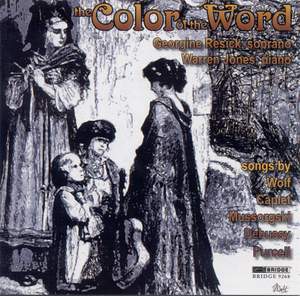
All recordingsPrices shown exclude VAT. (UK tax is not payable for deliveries to United States.) See Terms & Conditions for p&p rates. | |  | The Color of the Word
This new disc on Bridge presents songs by some of the greatest masters of the art of setting poetry to music. With the exception of Purcell's songs, the repertoire heard here grows out of the 19th century German Romantic Lied tradition. Soprano Georgine Resick and pianist Warren Jones have collaborated on several discs for Bridge in the past and are known for their fascinating thematic programming. This recital follows in that tradition, showing unusual contrasts and similarities between diverse repertoire. | | | In stock - usually despatched within 1 working day. |
|
|
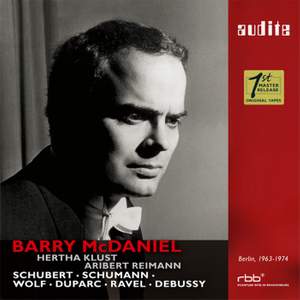
| |  | Barry McDaniel sings Schubert, Schumann, Wolf, Duparc, Ravel & Debussy
Debussy: | Le promenoir des deux amants | Duparc: | Chanson triste Lamento Le Manoir de Rosemonde Extase Soupir Phidylé | Ravel: | Trois chansons madécasses Eberhard Finke (cello) & Karlheinz Zoeller (flute) | Schubert: | Der Winterabend (Es ist so still), D938 Herbst, D945 Dass sie hier gewesen! D775 (Rückert) Der Einsame, D800 Fahrt zum Hades, D526 (Mayrhofer) Der Jungling und der Tod, D545 (Spaun) Sprache der Liebe D410 (A W von Schlegel) Fischerweise, D881 (Schlechta) Über Wildemann D884 (Ernst Schulze) Auflösung, D807 | Schumann: | Gedichte (6) und Requiem, Op. 90 Nachtlied, Op. 96 No. 1 Der Spielmann, Op. 40, No. 4 Zigeunerliedchen I & II Verratene Liebe, Op. 40, No. 5 Provencalisches Lied, Op. 139 No. 4 Mein Schöner Stern! Op. 101 No. 4 Aus den hebräischen Gesängen, Op. 25 No. 15 Ihre Stimme Op. 96 No. 3 (August von Platen) | Wolf, H: | An eine Æolsharfe (No. 11 from Mörike-Lieder) Heimweh (No. 37 from Mörike-Lieder) Lebe wohl (No. 36 from Mörike-Lieder) Nimmersatte Liebe (No. 9 from Mörike-Lieder) Der Tambour (No. 5 from Mörike-Lieder) Abschied (No. 53 from Mörike-Lieder) |
Barry McDaniel (baritone), Hertha Klust (piano) & Aribert Reimann (piano) The American baritone Barry McDaniel was one of the outstanding singers of the post-war era. As a successful opera singer and Lieder interpreter, he enjoyed a long and eventful career, both in Germany and abroad. Despite numerous performances and many recordings for radio and television, he nonetheless remained largely unnoticed by the media, partly because his name almost vanished in the shadow of Dietrich Fischer-Dieskau, who was five years his senior. Unjustly so, since the two singers were equals as artists, albeit with different characters. Today, Barry McDaniel is hardly mentioned in specialist literature and one searches in vain for CDs since, until now, recordings from radio archives have not been phonographically processed. However, Audite now presents a première double CD of Lieder sung by Barry McDaniel. These studio recordings from the archives of Radio Berlin-Brandenburg (formally Sender Freies Berlin) were made between 1963 and 1974 with Hertha Klust and Aribert Reimann as accompanists. This selection of songs by Schubert, Schumann, Wolf, Duparc, Ravel and Debussy reveals diverse facets of McDaniel’s artistic personality. His interpretations are characterised by an interleaving of knowledge and naivety, feeling and craftsmanship, expression and impeccable singing. Apart from his immaculate technique, his accent-free German is particularly remarkable. Barry McDaniel moved from the USA to Germany in 1953 in order to further his studies. He then gave his first song recitals, together with Hermann Reutter, and later began a career as an opera singer. In 1961 he was engaged at the newly re-opened Deutsche Oper Berlin, where he remained for thirty-seven years. At the same time, he gave guest performances at the Vienna Staatsoper, the Metropolitan Opera New York, the Frankfurt Opera and the Munich Opera Festival, as well as broadcasting for radio and television. In addition, Barry McDaniel gave numerous song recitals, for example in Stuttgart, Karlsruhe, Hanover, Brunswick and Berlin, including, in the latter city, the first ever song recital at the newly built Philharmonie in 1963. Today, the 81-year-old baritone declares: “Whatever I sing, I have to believe in it.” That is exactly how these recordings sound. “The American Barry McDaniel inevitably sang in the shadow of Fischer-Dieskau; but this double CD reveals his deeply thoughtful baritone, in superbly accompanied Lieder and melodie.” BBC Music Magazine, June 2012 **** | | | (also available to download from $21.00) | Usually despatched in 3 - 4 working days. (Available now to download.) |
|
|
| |  | Hugo Wolf: The Complete Songs Volume 1Mörike-Lieder Nos. 1-26
This is the first disc in a series that will be the first ever complete edition of the songs of Hugo Wolf. These performances were recorded live at the Oxford Lieder Festival (in the Holywell Music Room) on 22nd October 2010. “their performances are acutely sensitive to Wolf's musical nerve system. And, best of all, a sense of intimacy, of close confiding with the audience, really does come over - invaluable for private listening...Festival director Sholto Kynoch is a vivid and sentient accompanist.” BBC Music Magazine, September 2011 **** “Grevilius’s mezzo rises to the challenge of “Seufzer” and Daneman’s soprano brings sweetness to “Zitronenfalter im April”.” Financial Times, 25th June 2011 ** “The team of four singers is first-rate, responsive in every way, and if anything even more remarkable is the work of their pianist, Sholto Kynoch, displaying an exceptional expressive range, not only ideally agile but with the most subtle range of tone and dynamic...Altogether an impressive achievement from an enterprising new company.” Gramophone Magazine, January 2011 “Daneman, Grevelius, Gilchrist and Loges are top-flight lieder singers, with Oxford Lieder founder and pianist Sholto Kynoch offering sensitive support. Richard Stokes provides excellent notes and translations.” The Observer, 22nd May 2011 | | | (also available to download from $10.50) | Usually despatched in 2 - 3 working days. (Available now to download.) |
|
|
| |  | Angelika Kirchschlager: Wolf & Strauss
Strauss, R: | Heimliche Aufforderung, Op. 27 No. 3 Mein Herz ist stumm, Op. 19 No. 6 Du meines Herzens Krönelein, Op. 21 No. 2 Meinem Kinde, Op. 37 No. 3 Muttertändelei, Op. 43 No. 2 Ruhe, meine Seele!, Op. 27 No. 1 Für fünfzehn Pfennige Op. 36 No. 2 Morgen, Op. 27 No. 4 Nichts, Op. 10 No. 2 encore | Wolf, H: | Auf einer Wanderung (No. 15 from Mörike-Lieder) Im Frühling (No. 13 from Mörike-Lieder) Auf ein altes Bild (No. 23 from Mörike-Lieder) Begegnung (No. 8 from Mörike-Lieder) Das verlassene Mägdlein (No. 7 from Mörike-Lieder) Er ist's (No. 6 from Mörike-Lieder) Alte Weisen, Sechs Gedichte von Gottfried Keller Nimmersatte Liebe (No. 9 from Mörike-Lieder) encore |
“Since her full blooming on the operatic stage, Kirchschlager’s mezzo has grown enormously - and her performing character with it. She still knows how to hold a recital audience in the palm of her hand, but now there’s a newly expansive energy firing all she sings […..] Kirchschlager’s dark mezzo smouldered with sensuality,” so wrote the Times after Angelika Kirchschlager and Roger Vignoles’ February 2010 Wigmore Hall performance of the same collection of Hugo Wolf and Richard Strauss songs. Angelika Kirchschlager is regarded as one of the most distinguished mezzo-sopranos of her generation and in particular is recognised internationally for her interpretations of Richard Strauss. She gives regular solo recitals, balancing her operatic career with lieder performances. Eminent piano accompanist and leading authority on the song repertoire, Roger Vignoles, is her long-standing musical partner. Now in this collection Kirchschlager and Vignoles collaborate to perform nine Strauss songs as well as Wolf’s lieder to texts by Eduard Mörike and Gottfried Keller. Wolf set 43 of Mörike’s poems to music during a period of intense creativity in which he developed a heady new musical language. Kirchschlager delights in the opportunity to convey this with glorious colouring of phrases which are fittingly matched by the piano. The recording provides encores of music from each composer, including Strauss’ triumphant ‘Nichts,’ a fitting end to a compelling programme. “What a generous communicator is the vivacious Angelika Kirchschlager. Quirky Hugo Wolf suits her rather better than Strauss's sometimes generic rapture, though she's splendidly scathing in the often archly delivered 'Für fünfzehn Pfennige'. The full extrovert personality seems to unleash the sometimes reticent Roger Vignoles” BBC Music Magazine, December 2010 **** “listen to [Morgen]...and you will hear a miniature master-class in Lieder singing...Kirchschlager's lightly worn mezzo burnishes a song that is too often over-gilded...It helps that Kirchschlager is such an accomplished singing actress...Vignoles is on tiptop form throughout.” International Record Review, November 2010 “This recital shows the mezzo-soprano at the peak of her powers, richly characterful and infinitely expressive. The same statement can be made about her pianist, Vignoles, in what is quite properly a partnership of equals.” Sunday Times, 28th November 2010 *** “Few Lieder singers match Angelika Kirchschlager in vibrant stage personality. Even heard 'blind', the Austrian mezzo vividly illuminates each of Wolf's nature rhapsodies, vignettes and character sketches...In the wry and/or touching character studies of Wolf's Six Songs in the Old Style...Kirchschlager the born stage animal is in her element...'Morgen' is moving in its unsentimental sincerity” Gramophone Magazine, February 2011 | | | Usually despatched in 3 - 4 working days. |
|
|
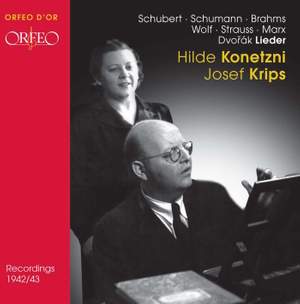
| |  | Hilde KonetznyLive Recordings 1942/43
Brahms: | An die Nachtigall, Op. 46 No. 4 (Text: L.C.H. Hölty) Feldeinsamkeit, Op. 86 No. 2 Ständchen, Op. 106 No. 1 Von ewiger Liebe, Op. 43 No. 1 | Dvorak: | Gypsy Melodies (7), Op. 55 (B104) | Franz, R: | Es hat die Rose sich beklagt Im Herbst Auf dem Meere | Marx: | Lied eines Mädchens Der bescheidene Schäfer | Schubert: | Rastlose Liebe, D138 Mignon I (Heiß mich nicht reden) D726 Frühlingssehnsucht, D 957 No. 3 | Schumann: | Widmung, Op. 25 No. 1 Marienwürmchen Op. 79/14 | Strauss, R: | Cäcilie, Op. 27 No. 2 Heimliche Aufforderung, Op. 27 No. 3 Schlagende Herzen Op. 29 No. 2 Ich trage meine Minne, Op. 32 No. 1 Schlechtes Wetter, Op. 69 No. 5 | Wolf, H: | Gesang Weylas (No. 46 from Mörike-Lieder) Nimmersatte Liebe (No. 9 from Mörike-Lieder) In dem Schatten meiner Locken (No. 2 from Spanisches Liederbuch: Weltliche Lieder) Wenn du, mein Liebster steigst zum Himmel auf (No. 36 from Italienisches Liederbuch) Frühling übers Jahr (No. 28 from Goethe-Lieder) |
The recording conditions could hardly have been more dramatic, made in the bleak mid-war winter of 1942-3, lirico-spinto soprano Hilde Konetzni in a Romantic song programme with Josef Krips as her accompanist and mentor. Konetzni is best known as the Sieglinde in two complete recordings of the Valkyrie under Wilhelm Furtwängler; Krips had been banned from working by the Nazis, so his coaching activities had to be carried out underground, under a constant threat to his life.These private recordings were made by Hermann May, the then sound engineer of the Vienna State Opera, and can now be released on CD thanks to their careful restoration by the Eichinger recording studio in Vienna in collaboration with Gottfried Kraus. The result will delight more than just those interested in Josef Krips's legendary talent for carefully coaching singers, on account of the warmth and immediacy of the ensemble achieved by Konetzni and Krips.This is just as evident in the songs by lesser-known composers such as Robert Franz and Joseph Marx.The Gypsy Melodies by Antonín Dvorák are both the highpoint and the culmination of this recital, not just on account of the interpretative art they display, typical of the time, nor merely as a document of two artistic personalities. But as testament to a friendship that was sustained despite adversity. | | | Usually despatched in 3 - 4 working days. |
|
|
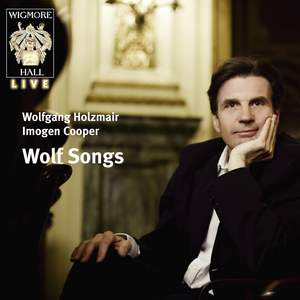
| |  | Wolfgang Holzmair & Imogen CooperSongs by Hugo Wolf
Two of the world’s most seasoned Schubertians, both long associated with Wigmore Hall, come together for the next new release from Wigmore Hall Live. Live from Wigmore Hall - 19 February 2008 This recording comprises 26 of the 53 lieder that Wolf wrote on the poems of Eduard Mörike, born just seven years after Schubert in 1804, but outliving the composer nearly five decades. Reviewing the concert in Seen & Heard International stated that: “The partnership between Cooper and Holzmair is so close, it’s almost symbiotic” “Rarely have I heard so sensitive, intelligent and gloriously musical a partnership. No-one could have asked for more attentive, detailed expressions nor more complete harmony of feeling between singer and pianist … I was transfixed by the sheer artistry.” (The Independent) Wolfgang Holzmair is a native of Upper Austria, and the British pianist Imogen Cooper, whose training included a period in Vienna studying with Paul Badura-Skoda, Jörg Demus and Alfred Brendel. “Holzmair is at his best in those settings which reveal the soul's innermost questionings; he and Cooper capture the fragile ardour of 'Frage und Antwort', and the chromatic unease within 'I'm Frühling'.” BBC Music Magazine, December 2009 “…more often pleasure is virtually unalloyed, whether in the trance-like wonder of "Im Frühling", the tiptoeing delicacy of "Elfenlied" (a hard song for a man to bring off) or the deft comic timing in "Zur Warnung", evidently relished by the Wigmore Hall audience.” Gramophone Magazine, February 2010 | | | Usually despatched in 3 - 4 working days. |
|
|
| |  | Glenda Maurice Live at the Wigmore Hall
Recorded live on 11th January 1988 | | | Usually despatched in 2 - 3 working days. |
|
|
| |  | Diana Damrau - Salzburg Lieder Evening
“…Damrau's programme is a clear, intelligent blend of robust innocence and subtly disquieting experience; her performances are informed by a candour nicely lit in the recording, a well-coloured lower register and an obvious, unfussy delight in the meaning of the texts.” BBC Music Magazine, September 2006 **** “The whole thing is testament to the astonishing versatility of an artist who just goes from strength to strength” The Guardian | | | Usually despatched in 3 - 4 working days. |
|
|
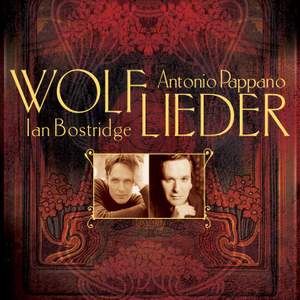
| |  | Voices of our Time - Ian Bostridge
Schubert: | Wehmut, D772 (Collin) Der Zwerg, D771 (Collin) Nacht und Träume, D827 Der Musensohn, D764 (Goethe) An die Entfernte, D765 (Goethe) Am Flusse D160 (Goethe) Willkommen und Abschied, D767 Wandrers Nachtlied II 'Über allen Gipfeln ist Ruh', D768 An die Leier, D737 (Bruchmann) Im Haine, D738 Erlkönig, D328 | Wolf, H: | Der Genesene an die Hoffnung (No. 1 from Mörike-Lieder) Der Knabe und das Immlein (No. 2 from Mörike-Lieder) Gebet (No. 28 from Mörike-Lieder) An den Schlaf (No. 29 from Mörike-Lieder) Neue Liebe (No. 30 from Mörike-Lieder) An die Geliebte (No. 32 from Mörike-Lieder) Begegnung (No. 8 from Mörike-Lieder) Nimmersatte Liebe (No. 9 from Mörike-Lieder) Peregrina II (No. 34 from Mörike-Lieder) Storchenbotschaft (No. 48 from Mörike-Lieder) Abschied (No. 53 from Mörike-Lieder) Peregrina I (No. 33 from Mörike-Lieder) |
“Wolf's Mörike-Lieder is where Bostridge's high literary intelligence comes into its own, with a highly compelling set of love-songs, both spiritual and sensual. Everywhere Vignoles is an inspired and inspiring accompanist.” BBC Music Magazine, July 2010 *** | | | Usually despatched in 2 - 3 working days. |
|
|
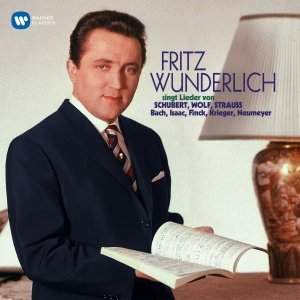
| |  | Wolf: Lieder Recital
“At last: a reissue of Hotter's 1953 Hugo Wolf recital, which forms the centrepiece of this release, and it's in far better, more immediate sound than on the original LP. Hotter's interpretations of Prometheus, Grenzen der Menschheit, the gloomy Harfenspieler Lieder and resigned Michelangelo settings – Wolf at his greatest – remain virtually unsurpassed. They were surely written with a bass-baritone of Hotter's calibre in mind and, quite apart from his vocal prowess, his verbal insights are once again remarkable, while the account of the naughty monks' exploits from the Italian Songbook remind us of Hotter the humorist. The earlier and later items that complete the CD disclose similar gifts, notably the delightful Der Tambour – and AnakreonsGrab, which, both in 1951 and 1957, matches the Innigkeit of Goethe's poem and Wolf's setting. Moore is a masterly partner in music that severely taxes the pianist. This disc is a must for Wolf enthusiasts.” Gramophone Classical Music Guide, 2010 | | | Usually despatched in 4 - 5 working days. |
|
|
| |
|