All recordingsPrices shown exclude VAT. (UK tax is not payable for deliveries to United States.) See Terms & Conditions for p&p rates. | |  | Brahms: Works for chorus and orchestra
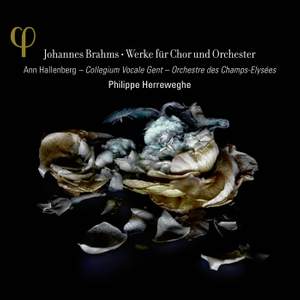
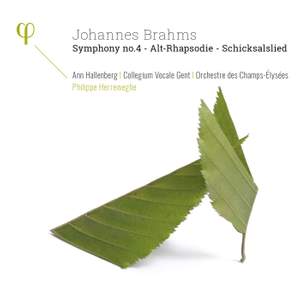
For his third album on Phi, his new label published by the group Outhere, Philippe Herreweghe has brought together a splendid set of artists in the Lutoslawski hall in Warsaw. Ann Hallenberg, whose voice won over the public of some of the world’s most prestigious concert halls, takes on the Rhapsody for contralto solo and men's chorus by Brahms while the rest of the programme leads the listener through his essential works for chorus and orchestra. Herreweghe’s long-time affinity with the composer of A German Requiem has enabled him to provide a coherent and personal vision of those musical pages in which Brahms gave free course to his most intimate thoughts. Collegium Vocale Gent is joined in this endeavour by the members of the Accademia Chigiana of Sienna with whom it formed a European ensemble that was officially recognised as Cultural Ambassador of the European Union just a few months ago. Together with the Orchestre des Champs-Elysées and its authentic instrumentarium, this great choir interprets the Burial Song, the Song of Destiny, the Song of the Fates and the motet Warum ist das Licht gegeben. A great moment for all admirers of Brahms and fans of choral singing at its very best! “Philippe Herreweghe's survey of Brahms' works for choir and orchestra is flooded with light...The silky portamenti of the strings is a testament to the refinement of the Orchestre des Champs-Elysées.” The Independent, 5th February 2012 “To hear this music performed with the cool precision and shining transparency of Philippe Herreweghe's forces sends shivers down the spine.” The Observer, 12th February 2012 “the Dutch conductor reveals that same understanding of, and interpretative sympathy for, Brahms’s music that he brought to his Harmonia Mundi recording of A German Requiem...Hallenberg brings a rapt, mellow, consolatory warmth to the Alto Rhapsody, and Herreweghe taps the Song of Destiny for its potent, spiritual essence.” The Telegraph, 24th February 2012 ***** “This is one of the most impressive collections of Brahms's shorter chorus-and-orchestra works that's come my way for some time. It's partly because of the particular combination of works...But it's also the luminous transparency of the performances themselves that's remarkable...All in all, on many levels, a deeply satisfying recording.” BBC Music Magazine, April 2012 ***** “serene, handsomely blended performances.” Financial Times, 31st March 2012 *** “a superbly rich and eloquent example of Brahms's art at its most sublime...Herreweghe allows the music to evolve with a wonderful feeling of spaciousness in which Brahms's often intense musical textures are beautifully revealed...a performance which stands head and shoulders above much of the competition. It is very much the icing on a mouth-wateringly sumptuous cake of a disc.” Gramophone Magazine, May 2012 “An extremely enjoyable and very useful anthology...[The Schicksalslied] is given a performance that is an ideal combination of drama and transparency; the orchestral epilogue that closes the work is really lovely. Herreweghe's orchestra is responsive to every detail of Brahms's markings...Hallenberg, with her rich tone and fine sense of line and phrasing, has a way of chaping the text that compels attention.” International Record Review, May 2012 BBC Music Magazine
Choral & Song Choice - April 2012 |
| | | In stock - usually despatched within 1 working day. |
|
|
| |  | Brahms: Alto Rhapsody
Brahms’s first connection with choral music came in 1857, and his first appointment in Vienna, in 1863, was to conduct the Singakademie. He premièred A German Requiem in the city and wrote widely for choral forces, taking a variety of poetic source material. Begräbnisgesang (Funeral Hymn) evinces a great feeling of solemnity, whilst Schicksalslied (Song of Destiny) is an urgent, volatile work. Nänie was written as a lament for the death of the painter Anselm Feuerbach, and the Alto Rhapsody has remained one of the greatest works for contralto in the repertoire. “The large Warsaw Philharmonic Choir has a welcome solidity, unanimity and warmth of tone...Wit's tempos tend to be on the brisk side - especially in the Gesang der Parzen, a performance that illuminates that piece's Baroque roots but somewhat mislays its underlying sense of tragic mystery...the field is crowded these days, but this new Naxos offering will be competitive at its budget price.” BBC Music Magazine, February 2012 **** “Ewa Wolak is a rich-toned contralto, without a hint of a wobble, who can evoke exactly the kind of lyrical drama which the lovely Alto Rhapsody commands...The choral singing is radiant in its glowing simplicity...this super-budget collection is marvellously sung and played.” Gramophone Magazine, March 2012 “You might not like Wit's approach if you like your Brahms volatile. His conducting is wonderfully judged, if slow, allowing the music to unfold with a measured eloquence that often generates a sense of gathering implacability...It's the Warsaw Philharmonic Choir's contribution, superbly controlled and articulate, that is so sensational here, however. Their performance of Nänie, in particular, is among the most beautiful on disc” The Guardian, 9th February 2012 **** “The performances are lean, light and powerful. The general approach is on the slower side, which sometimes makes the music static. The Alto Rhapsody is unhurried, even restrained - one of those readings that conquer you not by concentrated stress, but by beauty. The solo alto singing is almost operatic; Ewa Wolak’s voice is strong and even, without annoying vibrato...The chorus has a beautiful sound, very good diction, and is well balanced.” MusicWeb International, August 2012 | | | (also available to download from $6.00) | In stock - usually despatched within 1 working day. |
|
|
| |  | Stephanie Blythe sings Brahms, Wagner and Mahler
The American mezzo Stephanie Blythe sings three works of high Romanticism, all depicting, in different ways, a sense of loneliness, abandonment and spiritual crisis. Brahms’ autobiographical Alto Rhapsody for alto, male chorus and orchestra has long been one of the core works of the alto/mezzo repertoire; Wagner’s intimate Wesendonck-Lieder are performed here in Henze’s version for chamber ensemble, while the heart-wrenching Abschied (Farewell) from Das Lied von der Erde is heard in the delicate arrangement by Mahler’s disciple Schoenberg. | | | In stock - usually despatched within 1 working day. |
|
|
| |  | The Very Best of Janet Baker
Bach, J S: | Christmas Oratorio, BWV248: Bereite dich, Zion Academy of St Martin-In-The-Fields, Sir Neville Marriner | Brahms: | Alto Rhapsody, Op. 53 Sir Adrian Boult, London Philharmonic Orchestra Geistliches Wiegenlied, Op. 91 No. 2 Cecil Aronowitz (viola), André Previn | Britten: | Corpus Christi Carol Gerald Moore (piano) | Duparc: | L'Invitation au voyage London Symphony Orchestra, André Previn | Duruflé: | Requiem, Op. 9: Pie Jesu Choir of King's College Cambridge, Sir Philip Ledger | Elgar: | Sea Pictures, Op. 37 London Symphony Orchestra, Sir John Barbirolli Softly and gently, dearly-ransomed soul 'Angel's Farewell' (from The Dream of Gerontius) Sir John Barbirolli | Fauré: | Two Songs, Op. 83 Gerald Moore (piano) Clair de Lune, Op. 46 No. 2 Gerald Moore (piano) | Handel: | Messiah: He was despised English Chamber Orchestra, Sir Charles Mackerras | Mahler: | Ich bin der Welt abhanden gekommen (Rückert-Lieder) Hallé Orchestra, Sir John Barbirolli | Mendelssohn: | Elijah: O rest in the Lord New Philharmonia, Rafael Frühbeck De Burgos Auf Flügeln des Gesanges, Op. 34 No. 2 Geoffrey Parsons (piano) | Schubert: | Ave Maria, D839 Gerald Moore (piano) Gretchen am Spinnrade, D118 Gerald Moore (piano) Wiegenlied, D498 Gerald Moore (piano) Die Forelle, D550 Geoffrey Parsons (piano) Auf dem Wasser zu singen, D774 Geoffrey Parsons (piano) An die Musik D547 Geoffrey Parsons (piano) An Sylvia, D891 Geoffrey Parsons (piano) Nacht und Träume, D827 Geoffrey Parsons (piano) Heidenröslein, D257 Geoffrey Parsons (piano) Du bist die Ruh D776 (Rückert) Geoffrey Parsons (piano) | Schumann: | Mondnacht (No. 5 from Liederkreis, Op. 39) Daniel Barenboim (piano) Du Ring an meinem Finger (No. 4 from Frauenliebe und Leben, Op. 42) Daniel Barenboim (piano) | Strauss, R: | Befreit, Op. 39 No. 4 Gerald Moore (piano) Morgen, Op. 27 No. 4 Gerald Moore (piano) | Vaughan Williams: | Linden Lea Gerald Moore (piano) | Warlock: | Pretty Ring Time Gerald Moore (piano) |
Compelling for her intensity and integrity as much as for her unmistakeable voice, Dame Janet Baker struck a distinctive path as a performer, primarily on the concert and recital stage. Among her most celebrated recordings are her interpretations of Elgar with Sir John Barbirolli, here complemented by songs and oratorio arias by composers such as Bach, Handel, Schubert, Schumann, Brahms, Mahler, Strauss, Fauré, Vaughan Williams and Britten. | | | In stock - usually despatched within 1 working day. |
|
|
| |  | Brahms: Choral Works
Alice Coote studied at the Guildhall, RNCM and the National Opera Studio and was awarded the Brigitte Fassbaender Award for Lieder Interpretation and the Decca Kathleen Ferrier Prize. A prolific lieder recitalist, she works regularly with the pianist Julius Drake and also enjoys a flourishing career on the international opera stage. “...these are sterling accounts, with just the right mix of tenderness and sorrow in Nänie and a real tragic forward motion to the central section of the Schicksaslied...aided by the passionately committed singing of the choir. In the Alto Rhapsody Alice Coote is an eloquent and thoughtful soloist” BBC Music Magazine, June 2010 **** “These are animated, purposeful performances...The movement is free, quite unclogged; the texture is clear, no thickening substance adhering.” Gramophone Magazine, July 2010 “the Middle European Bamberg sound and the Munich-based choristers sound absolutely at home in this repertoire — there is an old-world Brahmsian glow to the singing and playing... Anyone who wants these works on one disc won’t be disappointed.” Sunday Times, 28th February 2010 **** “Ticciati's performances are wonderfully alive and dramatically sensitive...while the Bamberg orchestra and the Bavarian Radio Choir have this music in their bones.” The Guardian, 25th February 2010 **** “[Ticciati's] ear for style, detail and musical shape is judicious and his mode of expression sound.This is mellow Brahms...The Bavarian forces perform the music with a soft, radiant glow.” The Telegraph, 12th March 2010 **** | | | (also available to download from $10.50) | In stock - usually despatched within 1 working day. |
|
|
| |  | Brahms - Symphonies 3 & 4
Houston Symphony, Christopher Eschenbach | | | In stock - usually despatched within 1 working day. |
|
|
| |  | Brahms: Symphony No. 2
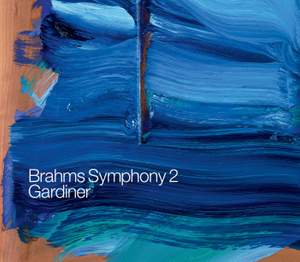
Following on from the phenomenal worldwide success of the first release in the Brahms series, SDG continues the series with Brahms’ Symphony 2 which sees John Eliot Gardiner and his Orchestre Révolutionnaire et Romantique explore the music of Johannes Brahms and of those composers that influenced him. Brahms’ dark, deeply personal and moving Alto Rhapsody for alto solo, male chorus and orchestra is included here alongside three choral works by Franz Schubert. In Schubert’s Gesang der Geister über den Wassern D714 (1821) comparisons between the two composers could not be more clear. Brahms draws on the effective example of his beloved Schubert firstly by composing the rhapsody for male chorus and secondly, basing the work upon a poem by Goethe. The lyrical beauty of Brahms' Second symphony makes it perhaps the most popular of the four works he composed in this form. The contrast between this symphony and the heroic First is complete, and it is strikingly analogous to the differences between Beethoven's Fifth and Sixth symphonies. “In the Second Symphony the period strings' lighter articulation gives Brahms's rhythms a sprightlier feel than in many modern sessions. …in Gesand der Geister Gardiner avoids any awkward episodic feeling by making the music tell the story of Goethe's poem fluently and with character.” BBC Music Magazine, April 2009 **** “Gardiner quotes Walter Frisch's report that Brahms "disliked metronomic rigidity and lack of inflection on the one hand, fussy over- determined expressivity on the other". In the first movement, he and his period instrumentalists strike exactly that balance. This is characterful music-making, complex and subtle.” Gramophone Magazine, May 2009 “Last year I made the CD of the First Symphony one of my Recordings of the Year. This latest instalment will be on the shortlist for 2009, I feel sure – unless SDG trump this particular ace by releasing Symphony 3 before the year end. One can live in hope.” MusicWeb International “[The 1st movement's opening horn theme is] played on natural horn, already outmoded by Brahms’s time...the phrase is lightly broken, in the baroque fashion. Such well-defined colours and detailed attention to articulation collide with the idea of this work as predominantly warm, relaxed and lyrical, and Gardiner sometimes scrubs perhaps a little too vigorously on the patina of inherited performance traditions. Still, he certainly provokes fresh thinking.” Sunday Times, 1st March 2009 *** “John Eliot Gardiner's Brahms cycle, performed across two seasons in several venues, was at pains to place the four symphonies, the German Requiem and the Alto Rhapsody in the context of music that Brahms is known to have admired, and which influenced his own works. For the disc of the Rhapsody and the Second Symphony, recorded in the Salle Pleyel, Paris, in November 2007, that context is provided by three of Schubert's male-voice choruses. Two of them are sung by the Monteverdi Choir in Brahms's own arrangements, while the most substantial, the Gesang der Geister über den Wassern, seems a direct antecedent of the writing for male voices in the Alto Rhapsody, which Natalie Stutzmann sings with gravity. The account of the symphony is impressive too - the Orchestre Révolutionnaire et Romantique sounds on more secure form than it was for the London leg of this tour - and Gardiner's swift reading is always dramatically sure footed.” The Guardian, 6th February 2009 “Orchestre Romantique et Révolutionnaire's sound is vivid and clear. Nathalie Stutzmann's "Alto Rhapsody" is tenderly shaped, depthless, elegant…this is an arresting and impressive performance.” The Independent on Sunday “John Eliot Gardiner and the ORR continue their Brahms symphonies series with this live recording of No 2, with the heartfelt Alto Rhapsody (soloist Nathalie Stutzmann) and three Schubert choruses as a bonus. Energy and meticulous phrasing truly ignite this score. Strings use limited vibrato, with judicious portamento and expressively varied bowing.” The Observer, 8th February 2009 “Gardiner's speeds are so relaxed that the music almost falls over. Still, they emphasise the melancholic strain in a work easily pigeonholed as a lyrical effusion. You can also enjoy the wide colour palette of the period instruments of the Orchestre Révolutionnaire et Romantique. Nathalie Stutzmann's expressive way with the Alto Rhapsody is a delight; and the Schubert items for male chorus make interesting companions.” The Times, 14th February 2009 *** | | | (also available to download from $10.50) | In stock - usually despatched within 1 working day. |
|
|
| |  |
‘…an opportunity to be with Brahms for nearly an hour in which the thoughtful, questioning mood is unbroken and its musical expression unblemished.’ Gramophone | | | In stock - usually despatched within 1 working day. |
|
|
| |  | Brahms - Orchestral Works
| | | In stock - usually despatched within 1 working day. |
|
|
| |  |
| | | In stock - usually despatched within 1 working day. |
|
|
| |
|