This page lists all recordings of LE FESTIN D'ESOPE Op. 39 No. 12, by Charles-Valentin Alkan (1813-88) on CD & download (MP3 & FLAC). Generally, more recent releases are listed first, but with priority given to those that are in stock. |
Prices shown exclude VAT. (UK tax is not payable for deliveries to United States.) See Terms & Conditions for p&p rates. | |  | La Grèce des Mythes & des Rêveries
| | | Usually despatched in 2 - 3 working days. |
|
|
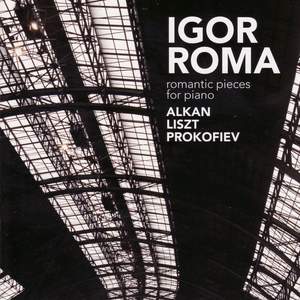
| |  | Romantic Pieces for Piano
| | | This item is currently out of stock at the UK distributor. You may order it now but please be aware that it may be six weeks or more before it can be despatched. |
|
|
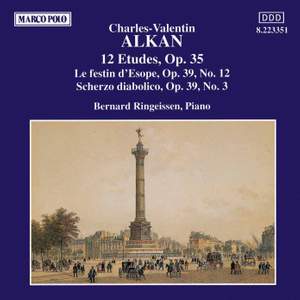
| |  | Alkan: 12 Etudes, Op. 3, Le festin d'Esope & Scherzo diabolico
Bernard Ringeissen (piano) | |
|
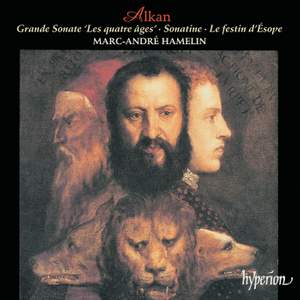
| |  | Hamelin plays Alkan
“Hamelin's power and conviction turn the Grand Sonata on the Four Ages of Man into a statement of inspired profundity.” BBC Music Magazine, September 2007 “Breathtaking virtuosity, outshining all rivals” The Guardian | | | Usually despatched in 2 - 3 working days. |
|
|
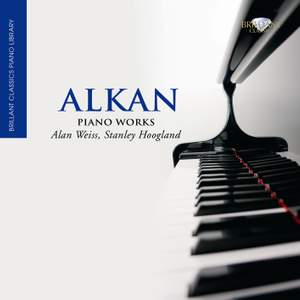
| |  | Alkan - Piano Works
Alkan: | Nocturne in B, Op.22 Esquisses (48), Op. 63 (selection) LE FESTIN D'ESOPE Op. 39 No. 12 Le temps qui n'est plus, Op.31 No.12 Fa, Op. 38b, No. 2 Grande Sonate 'Les Quatre Ages', Op. 33 Toccatina, Op. 75 Les mois, Op. 74 (selection) Petite Fantaisie, Op. 41, No. 2 Petit Conte Le Tambour bat aux champs, Op. 50, No. 2 Trente Chants: Suite No. 1, Op. 38 Symphony (from Twelve Études in the Minor Keys), Op. 39 No. 4 - 7 Preludes (25), Op. 31 (selection) Trente Chants: Suite No. 3, Op. 65 Trente Chants: Suite No. 4, Op. 67 |
Stanley Hoogland & Alan Weiss (piano) Adventurous piano Music of the composer in whose presence even Franz Liszt was afraid to play. Piano music ranging from the miniaturist to the gigantic. Both modern Steinway and period Erard piano are used in this set, a fascinating way of comparison. Charles-Valentin Alkan, often called ‘the Berlioz of the piano’, that mysterious, reclusive genius of the Romantic epoch, will forever be linked in our imagination to Chopin and Liszt, both of whom caught the Parisian public’s attention to a greater extent than did Alkan. Were they and their music more acceptable to the public due to the greater accessibility of many of their works, neither so uncompromisingly ‘difficult’ as Alkan can be in his music? These demands on the listener take the form of extending a musical idea to the limit of its development – often, in the most extreme cases (e.g. the climax of ‘Quasi-Faust’), leaving the listener feeling as if he or she had been through a hurricane. Might this tendency be traceable to his strictly orthodox Jewish heritage and schooling in Talmudic logic? With Alkan, that extraordinary pianist before whom it is said that Liszt himself felt nervous to perform, the exception, compositionally speaking, becomes the rule. | | | Usually despatched in 4 - 5 working days. |
|
|
| |
|