All recordingsPrices shown exclude VAT. (UK tax is not payable for deliveries to United States.) See Terms & Conditions for p&p rates. | |  | Scarlatti Illuminated
plus: SCARLATTI/TAUSIG Sonata in G minor, Sonata in C, Pastorale in E, Sonata in F minor SCARLATTI/FRIEDMAN Gigue in G, Pastorale in D
A Scarlatti recital with a twist. Joseph Moog has assembled a fascinating survey of Scarlatti sonatas, and included a selection of the 18th-century master’s works as re-composed by some of the giants of the piano keyboard from the 19th and 20th centuries. The drama contained in Scarlatti’s short one-movement sonatas has always exerted a hold over both musicians and listeners since their composition. The development of the piano in the 19th century provided too great a temptation for composer pianist Carl Tausig, a rival of Chopin and star pupil of Liszt (and admired by Brahms and Wagner) to ignore these works. He, along with Ignaz Friedman (1882–1948) exploited drama and poetry in Scarlatti’s music, using the new grand piano to its full extent. Friedman was a pianist of extraordinary gifts, and a musical freedom that some thought bordered on the eccentric. Walter Gieseking’s fantastical composition on a theme by Scarlatti forms the centrepiece of Moog’s recital. Gieseking (1895–1956) was a child prodigy, playing all 32 Beethoven sonatas from memory at the age of 15: "The most difficult part was memorising them," he said, adding "and that wasn’t very difficult." Gieseking’s 'Chaconne on a theme by Scarlatti' is a stupendous work of dazzling virtuosity. “Great pianists have often been fascinated by baroque music, and have sought to bring it up to date through transcriptions. Until now I had not heard such versions of Scarlatti sonatas, however, and their full-blown orchestral textures are quite a shock...Moog's bright, sharp pianism sounds better in the originals: the arrangements need more gentle, rounded warmth.” The Observer, 3rd February 2013 “his [Moog's] well-balanced singing tone is always enchanting. It’s hard to find any faults with this Scarlatti cornucopia.” Pianist Magazine, April/May 2013 “Inn essence Moog's 'illumination' interleaves straight performances, often delivered with chaste clarity and dexterous fingerwork, with respectful augmentations by Tausig and more exuberant makeovers by Friedman...Ultimately, a disc more diverting than illuminating - despite Moog's incontestable flashes of pianistic brilliance.” BBC Music Magazine, May 2013 *** “The Gieseking is the most interesting thing here...Moog’s essay suggests he deserves some credit for tracking down the various unconventional arrangements we hear. This may not be Horowitz but it’s very well worth any Scarlatti lover’s time.” MusicWeb International, 26th April 2013 “whether you consider Scarlatti 'illuminated' or obscured, you will surely delight at such enterprise and performance as finely shaded and imaginative as they are dexterous.” Gramophone Magazine, May 2013 | 
| | | In stock - usually despatched within 1 working day. |
|
|
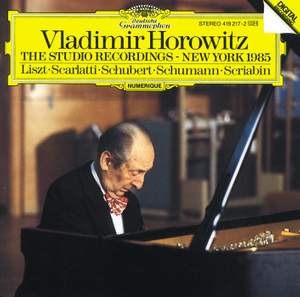
| |  | Horowitz: The Legendary Berlin Concert18th May 1986
| | | In stock - usually despatched within 1 working day. |
|
|
| |  | Horowitz plays Scarlatti
| | | In stock - usually despatched within 1 working day. |
|
|
| |  | Horowitz in Moscow
“In 1986 Horowitz returned to his native Russia for the first time in more than half a century. He's seen here performing, being interviewed and chatting with old family members. Touching and with some extraordinary playing.” BBC Music Magazine, July 2006 **** “The return to his homeland in 1986 by the world's most famous living instrumentalist after an absence of 61 years caught the public imagination. …the 83-year old Horowitz's arrival in Moscow prompted the kind of reception reserved usually for pop stars. Brian Large's Emmy Award-winning film captures all this well... Few have conjured from a piano such a palette of tonal colours with such convincing imagery and musical imagination as Horowitz does in this recital. The audience listens with rapt concentration. A man sits motionless with tears streaming down his face in Träumerei. Unforgettable.” Gramophone Magazine, February 2006 | | | In stock - usually despatched within 1 working day. |
|
|
| |  | Domenico Scarlatti - 11 Sonatas
| | | (also available to download from $10.50) | In stock - usually despatched within 1 working day. |
|
|
| |  | Piano Recital: Antonii Baryshevskyi
Antonii Baryshevskyi (piano) The Ukrainian-born pianist Antonii Baryshevskyi is a multi-award winner, including First Prize at the Fourth Enescu International Piano Competition in Bucharest in 1999, the Fourth Performer-Composer International Piano Competition in St Petersburg in 2004 and the 51st Premio Jaén International Piano Competition in Spain in 2009. | | | (also available to download from $5.75) | Usually despatched in 2 - 3 working days. (Available now to download.) |
|
|
| |  | D. Scarlatti - 42 Sonatas
Michelangelo Carbonara (piano) A selection from the 600 sontas by Domenico Scarlatti (1685-1757) that illustrate two facets of his musical personality. CD1 depicts the genius of the composer – some of his greatest and most remarkable sonatas have been selected by Carbonara. These works illustrate the exploratory and innovative nature of the sonatas. CD2 gathers together a selection of sonatas that illustrate the gambler, or the reckless side of the composer. These sonatas are just as innovative as those on CD1, but there is a devil may care craziness to some of the music. These are dramatic extreme works that give some idea of the incredible technique Scarlatti possessed as a player, and of his remarkably fertile imagination. 2CDs of Scarlatti sonatas containing some unknown and rarely recorded works. New recordings made in 2009. Extensive booklet essay by the artist on each sonata. Carbonara has recorded Ravel’s complete piano music for Brilliant Classics, and a CD of piano music by Nino Rota. He studied with Andreas Staier, Alicia de Larrocha and Leon Fleischer. | | | Usually despatched in 4 - 5 working days. |
|
|
| |  | Volume 1 - Scarlatti & Bartók
At first sight, they appear to have nothing in common - but disregarding the stylistic elements and a difference of two centuries, you soon recognize that both Scarlatti and Bartók, are in a sense, musical architects, who as piano virtuosos were equally interested in miniature forms and inspired by folk music. Inspired by an 18th century performance practice, where two different character pieces were executed opposite each other in pairs in contrast with each other, I experimented in both the concert hall and the recording studio with the series of pieces on this CD. I found out quickly that I heard, experienced and played both Scarlatti and Bartók’s work ‘differently’ when they were executed alternately - as if discovering hidden secrets in familiar works! This realization led to a new and fresh perspective on the style and rubato and reconsideration of rhythmic, melodic and dynamic elements. (Dejan Lazic, liner notes) “An exciting idea this…and it works! After all, Bartók greatly admired Scarlatti: he even recorded a couple of his sonatas. Both composers were innovators and combined a strong feeling for rhythm with an audacious sense of harmony. Dejan Lazic wastes no time in establishing his credentials as a Scarlatti player. He opens the programme with a somewhat militaristic-sounding C major piece, K420, and already it's all there – the light, resilient touch, the crisp (and often free) approach to rhythm, nimble passage- Bartók Orchestral 113 work and an obvious appreciation of subsidiary material. The last of that particular Scarlatti trio, a filigree piece in F, segues beautifully with the first of Bartók's Three Rondos on Slovak Folktunes (in C), the principal common denominator here, as so often elsewhere, the dance element. Lazic has a very individual Bartók style; he's no literalist, as illustrated by his emphatic handling of the syncopated main motif of the last Rondo. Again the segue from Bartók (third Rondo) to Scarlatti (the processional D major Sonata, K491) is imaginative, though the switch from the gaily skipping D major Sonata (K159) to the first of Bartók's haunting Seven Sketches is more surprising. Lazic personalises the sequence in a most compelling way. He then gently breaks their spell with Scarlatti's D minor ('Pastoral') and interestingly sandwiches a dramatic piano version (Bartók's own) of the Kossuth Funeral March between lively sonatas in F major and A minor. Perhaps the most effective segue finds the flamenco strumming of Scarlatti's K135 (E major) acting as a prelude to the first of six Dances in Bulgarian Rhythm which conclude Bartók's Mikrokosmos. Here Lazic underlines the individual character of each dance, tenderising the fourth (a tribute to Gershwin) with expressive arpeggios, and focusing the fifth's dizzying rhythmic ambiguities. You reach the journey's end eager to start all over again – or maybe work out another Scarlatti- Bartók sequence. The potential is limitless and let's hope that that this first volume of a series called 'Liaisons' doesn't preclude a second Scarlatti-Bartók sequence.” Gramophone Classical Music Guide, 2010 “Imaginative fantasy, whole-hearted expressiveness, compelling, dramatic performance, playing of real individuality.” Gramophone Magazine “An exciting idea this… and it works! After all, Bartók greatly admired Scarlatti: he even recorded a couple of his sonatas. Both composers were innovators and combined a strong feeling for rhythm with an audacious sense of harmony.” Gramophone Magazine, April 2008 | | | Usually despatched in 4 - 5 working days. |
|
|
| |  | The Genius of Pogorelich
| | | Usually despatched in 8 - 10 working days. |
|
|
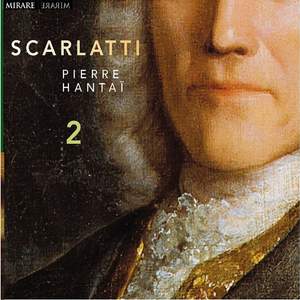
| |  | Domenico Scarlatti - Sonatas Volume 2
“…overwhelming, brilliant and passionate music-making” International Record Review “The astonishing technical variety and wide emotional range contained in Domenico Scarlatti's keyboard sonatas make each and every encounter a rewarding adventure in which the listener is seldom left untouched. Hantaï's playing is wonderfully responsive to the wealth of expressive nuance...” BBC Music Magazine, September 2005 ***** BBC Music Magazine
Instrumental Choice - September 2005 |
| | | Usually despatched in 3 - 4 working days. |
|
|
| |
|