Prices shown exclude VAT. (UK tax is not payable for deliveries to United States.) See Terms & Conditions for p&p rates. | |  | Karl Böhm conducts Brahms & Weber
During the 1950s, Karl Böhm made a handful of orchestral recordings for Decca with the Wiener Philharmoniker of, music by, among others, Mozart, Beethoven, Brahms Schubert and Weber. The Brahms Symphony is performed with sweep and with classical poise and the music is clearly in the Viennese players’ blood (after all, they premiered the symphony in the Grosser Saal of the Musikverein, the very location where this recording was made). It receives its first international release on Decca CD. Weber’s star has, today, rather receded from our view, his name kept alive by but a handful of pieces. Yet he was, in some ways, a heralder of the dawn of the Romantic tradition and Böhm’s affectionate readings of these Overtures now reappear in the catalogue. Recording producer: Victor Olof Recording engineer: Cyril Windebank Recording location: Grosser Saal, Musikverein, Vienna, Austria, May 1951 (Weber), June 1953 (Brahms) | | | In stock - usually despatched within 1 working day. |
|
|
| |  | Weber - Overtures & Bassoon Concerto
The Decca Ansermet Legacy on Eloquence continues to garner the highest plaudits from publications all around the world and the latest batch presents the maestro’s recordings of four key Austro-German Romantics: Schubert, Weber, Mendelssohn and Schumann. This CD brings together all of Ansermet’s Weber recordings for Decca. Weber’s overtures possess an irresistible panache, being a perfect blend of popular and more highbrow styles. If his operas have proved largely unstageable, their overtures have maintained enduring popularity in the romantic orchestral repertoire. In fact, few were better equipped to distil the emotional and atmospheric essence of romantic lyric drama in terms of the orchestral overture than Weber. As Edward Dent once intimated, Weber never quite overcame a tendency to trump his vocal aces with an orchestral court card. But in the overtures he is the complete master. In them he spun poetic and intensely imaginative summaries of their ensuing dramas. The British LP issue of the overtures omitted the Jubel (Jubilee) Overture, here restored to circulation on its CD reissue. The coupling, the composer’s Bassoon Concerto, features Henri Helaerts (1907-2001), the principal bassoonist of this orchestra for nearly fifty years. Helaerts was a very popular figure in Geneva, where he founded and conducted Les Cadets de Genève, a musical group comprised of generations of wind instrumentalists. He was one of the principal representatives of the French bassoon with its very characteristic sonority, sadly disappearing today. "Ansermet is always successful with Weber's allegros by reason of his orchestra's lively playing and his own sense of buoyant rhythm… sheer pleasure, especially the sense of enjoyment in the playing of Preciosa and the remarkably deft performance of Abu Hassan, a piece notoriously difficult to play really cleanly. " Gramophone | | | In stock - usually despatched within 1 working day. |
|
|
| |  |
Following the warmly-embraced reissue on Decca Eloquence of Horst Stein's reading of Bruckner's sixth symphony, we now follow with the Second. As with the sixth, the couplings are music by Weber. Another much-requested reissue, this will be warmly welcomed by collectors and represent some of the best Bruckner performances of all time. | | | In stock - usually despatched within 1 working day. |
|
|
| |  | Bel Canto Bully: The Musical Legacy of the Legendary Opera Impresario Domenico Barbaja
Domenico Barbaja (1777–1841) was the legendary impresario who dominated European operatic stages for thirty years. The ruthless mogul was at the very heart of the bel canto era in which beautiful singing, allied to flawless technique, was brought to perfection. This release celebrates his legacy in exploring how Barbaja influenced the way opera was written and performed, by commissioning a series of masterpieces from the greatest composers of the time, such as Rossini, Donizetti and Weber, and staging them in his magnificent opera houses, performed by the most glamorous singers of the age. | 
| | | (also available to download from $6.00) | Usually despatched in 2 - 3 working days. (Available now to download.) |
|
|
| |  | Barbirolli at the Opera
Listening now to this album one regrets that Sir John Barbirolli’s appearances in the opera house were so few. After all, though he himself was born in London his family was steeped in the Italian operatic tradition: before leaving Italy both his father and grandfather had been members of the orchestra at La Scala, Milan (along with a young cellist named Arturo Toscanini), and in 1887 they had played in the premiere of Verdi’s Otello. By the age of 25 he was appearing at the head of his own orchestra. His potential was quickly recognised by Frederic Austin of the British National Opera Company, who engaged him on the spot. Over the next seven years, either for BNOC or at Covent Garden (where he first appeared in 1928) Barbirolli conducted Aida, Falstaff, Rigoletto, Il Trovatore, La bohème, Tosca, Turandot, Madama Butterfly, Gianni Schicchi, The Barber of Seville, Romeo and Juliet, Hansel and Gretel, Don Giovanni, The Bartered Bride, Die Fledermaus, Die Meistersinger, Der Rosenkavalier and The Wreckers. The Barbirolli years after 1933 were filled by orchestral appointments and it was not until 1951 that he was able to return to Covent Garden. Over the next three seasons he was prominent there conducting old favourites such as Turandot, Aida, La bohème and Madama Butterfly, and adding to them Tristan und Isolde and Orpheus and Eurydice. At the time it was widely thought that Barbirolli might take over at Covent Garden, but his orchestral responsibilities had become all-consuming and in fact after the 1953-4 season he never appeared there again. His love of operatic music remained as strong as ever, though, and found its outlet in concert performances of complete operas and evenings of operatic excerpts. Such events became popular and, on account of Barbirolli’s prestige, would draw huge crowds. Some of these carried into the recording studio: the present album is a fine souvenir of his devoted approach to his beloved Puccini. But he was not now seen in any opera house. Only in his last decade did he find time to conduct Aida in Rome, and to make commercial recordings of Madama Butterfly, Otello and Dido and Aeneas. “Loving and vibrant accounts by Barbirolli of suites, overtures and other substantial extracts from the operatic repertoire he understood so well.” BBC Music Magazine, January 2013 ***** | | | Usually despatched in 4 - 5 working days. |
|
|
| |  | Schuricht conducts Schubert & Weber
| |
|
| |  | Richard Strauss conducts Don Quixote Op. 35 (1941 version)
| | | Usually despatched in 2 - 3 working days. |
|
|
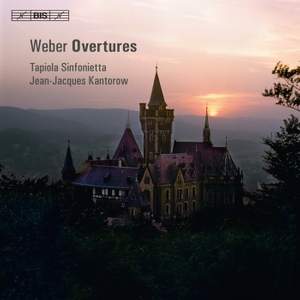
| |  | Weber: Overtures
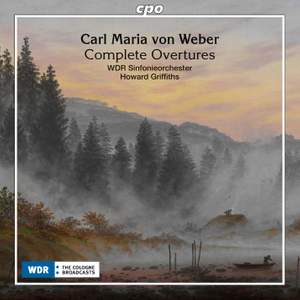
Although celebrated as the father of German Romantic opera, Carl Maria von Weber is today generally known for one opera alone: Der Freischütz. However the overtures of his other operas and music for stage plays have survived the test of time and are popular concert additions. The present disc includes ten of these gems, from the overture to Weber’s first surviving opera Peter Schmoll und seine Nachbarn – composed at the age of fifteen – to that of Oberon, written in London for Covent Garden less than two months before his death from tuberculosis, aged 39. The team of Jean-Jacques Kantorow and the Tapiola Sinfonietta have recorded numerous discs for BIS, by composers as diverse as Saint-Saëns, Mozart, Shostakovich and Rautavaara as well as Weber. | | | (also available to download from $10.75) | This item is currently out of stock at the UK distributor. You may order it now but please be aware that it may be six weeks or more before it can be despatched. (Available now to download.) |
|
|
| |  | Glorious JohnAnniversary Set
Bach, J S: | Sheep May Safely Graze, from Cantata BWV208 (arr: Barbirolli). 1969 Hallé Orchestra | Balfe: | The Bohemian Girl overture 1933 Symphony Orchestra | Biene: | The Broken Melody 1911 John Barbirolli (cello) | Collins, A: | Sir Andrew and Sir Toby - Overture 22 March 1942, ‘live’ in Carnegie Hall, New York | Delius: | The Walk to the Paradise Garden 20 August 1947 ‘live’ in the Festspielhaus, Salzburg Vienna Philharmonic Orchestra | Falla: | Seguidilla murciana (No. 2 from Siete canciones populares españolas) (arr: Halffter). 1957 Marina de Gabarain | Grieg: | Lyric Pieces Op. 57: No. 4 - Secret (arr: Barbirolli). 1953 Hallé Orchestra | Lehár: | Gold und Silber Walzer, Op. 79 1966 Hallé Orchestra | Mascagni: | Santuzza’s Aria from Cavalleria Rusticana 1927 Lilian Stiles-Allen | Mozart: | String Quartet No. 16 in E flat, K428 1925 Cassation K63 1950 Hallé Orchestra Divertimento No. 11 in D major, K251 1952 Hallé Orchestra | Puccini: | Tre sbirri...Una carozza...Presto 'Te Deum' (from Tosca) 1929 Giovanni Inghilleri | Saint-Saëns: | Wedding Cake - Valse-Caprice for piano & strings, Op. 76 1932 Yvonne Arnaud | Strauss, J, II: | Die Fledermaus: Bruderlein und Schwesterlein 1930 | Stravinsky: | Concerto in D for string orchestra 'Basler' 1948 Hallé Orchestra | Verdi: | Niun mi tema (from Otello) 1928 Renato Zanelli | Villa-Lobos: | Bachianas Brasileiras No. 4 for piano or orchestra 1955 Hallé Orchestra | Weber: | Euryanthe Overture | Weinberger: | Christmas 24 December 1939, ‘live’ in Carnegie Hall, New York New York Philharmonic Orchestra |
plus: REHEARSAL SEQUENCE BERLIOZ The Damnation of Faust, op.24 • Hallé Orchestra 1957 INTERVIEW Sir John Barbirolli and R. Kinloch Anderson The complete interview, recorded by EMI – 1964
This 2-CD set marks the 40th anniversary of the death of Sir John Barbirolli (1899-1970) and features recordings ranging from boy cellist in 1911 to international conductor 1969 – in both ‘live’ and studio recordings. John Barbirolli was born in Southampton Row, Bloomsbury, on 2 December 1899, a Cockney as he proudly boasted. Or, to be accurate, Giovanni Battista Barbirolli was born, son of an Italian émigré violinist and his French wife. English-born with Italo-French parentage – a wonderful pedigree for a musician. And so it proved, for he conducted Elgar, Verdi and Debussy, Vaughan Williams, Puccini and Ravel, with equal sensitivity and perception and intuition. This album of recordings forms a kind of musical biography; and Michael Kennedy’s notes (with many rare photos) trace that life alongside the recordings. A special bonus is the 1947 Austrian Radio recording of two works, Weber’s Euryanthe overture and Delius’s Walk to the Paradise Garden, from the Salzburg Festival concert on 20 August at which he conducted the Vienna Philharmonic. Was this, Michael Kenneday asks, the first time this orchestra had played the Delius? Two rare mementos of the New York period are included in this album. Anthony Collins had long been a friend of Barbirolli (they played in the LSO together) and worked in the USA from 1936 to 1945 and his Sir Toby and Sir Andrew, based on the two comic characters in Twelfth Night, is an example of his overlooked talent. Another composer almost forgotten today is the Czech-born Jaromir Weinberger whose opera Schwanda the Bagpiper enjoyed inter-war popularity. His Christmas for organ and orchestra was composed in 1929. In 1939 he dedicated his Variations and Fugue on an old English tune, ‘Under the Spreading Chestnut Tree’ to Barbirolli and the New York Philharmonic. | | | Usually despatched in 4 - 5 working days. |
|
|
| |  | Hermann Scherchen conductsStudio recordings 1957 – 1959
| |
|
| |
|