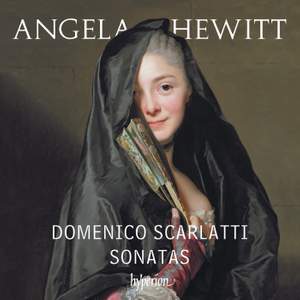
All recordingsPrices shown exclude VAT. (UK tax is not payable for deliveries to United States.) See Terms & Conditions for p&p rates. | |  | D. Scarlatti: Piano Sonatas Volume I15 Keyboard Sonatas
| 
| | | In stock - usually despatched within 1 working day. |
|
|
| |  | Emil Gilels: Early Recordings Volume 3All tracks recorded in the USSR, 1935-1955
Emil Gilels played a sonata by Scarlatti at his first public concert in 1929 and included them in his tours to the West in the 1950s. These recordings present a splendid group of the composer’s widely contrasting moods. Gilels was a true virtuoso in the Lisztian tradition, combining musical integrity with rarely equalled technique. The Fantasia was one of the works with which he won the First Soviet All-Union Competition in 1933, while his recordings of the Hungarian Rhapsodies and three works by Chopin are full of character and personality. A recently discovered notebook in which Gilels logged some of his recording sessions has made the dating of these recordings more accurate in this edition. Ward Marston, audio restoration engineer “Few pianists have possessed a more comprehensive, magisterial technique or musical integrity than Emil Gilels...And here, in Naxos's third volume, you will at once hear those salient characteristics that prompted awe and envy among Gilels's finest colleagues...[His Liszt] is overwhelming in its pulverising strength and brilliance.” Gramophone Magazine, September 2012 “Outstanding early Gilels, with some superb Liszt including his legendary Figaro Fantasy from 1935. The Scarlatti Sonatas may not stand the test of time so well, but this is a must.” BBC Music Magazine, Christmas 2012 ***** | | | (also available to download from $9.00) | In stock - usually despatched within 1 working day. |
|
|
| |  | Scarlatti: Keyboard Sonatas
| | | In stock - usually despatched within 1 working day. |
|
|
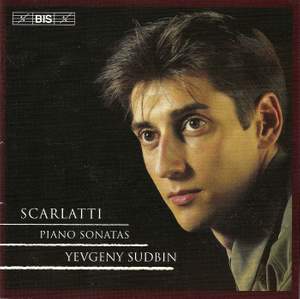
| |  | Scarlatti - Piano Sonatas
“performances of a superlative vitality and super-fine sensitivity” Gramophone “This generously packed CD is sheer delight from start to finish. Even with recorded selections available from the likes of Horowitz, Pletnev, Schiff and Pogorelich, the 25-year-old Russian pianist Yevgeny Sudbin makes his solo debut on disc with performances of a superlative vitality and super-fine sensitivity. His choice of sonatas is richly enterprising, pinpointing their infinite variety, their abrupt changes of mood and direction, so that whether familiar or unfamiliar (and there are many unfamiliar numbers), each offering is a delectable surprise. Free from the nervous tension that can sometimes plague him in the concert hall, Sudbin relishes the way Scarlatti turns convention topsy-turvy, presenting him in both performance and his affectionate accompanying essay as one of music's most ardent and life-affirming adventurers. He's brilliant and incisive in Kk545, and makes every bar of the reflective Kk57 glisten with poetry. What thrumming guitars he evokes in Kk435 and 487, reminding us that Scarlatti forsook his native Italy and later Portugal for a heady addiction to all things Spanish. There are spicy and witty imitations of changing registrations and some notably rumbustious closes to make every facet of these diamond-like sonatas spark and scintillate as if new-minted. This is, arguably, among the finest, certainly most enjoyable of all Scarlatti recitals. As a crowning touch Sudbin is heard in a beautifully warm and natural acoustic.” Gramophone Classical Music Guide, 2010 “…there is plenty to enjoy in Sudbin's expressive, rhythmic and thoughtful playing, virtues which come together rewardingly in the Sonata in B minor (K87).” BBC Music Magazine, May 2005 *** “Sudbin finds, besides much to charm the ear, an infinite expressive depth in many of the minor key works, which are played here with appealing expressive freedom...There is sparkle and brilliance here too, and Sudbin can be both strong and delectably light-fingered. He is recorded splendidly, and this can be placed among the finest and most generous of recent single-disc Scarlatti collections.” Penguin Guide, 2011 edition | | | (also available to download from $10.50) | In stock - usually despatched within 1 working day. |
|
|
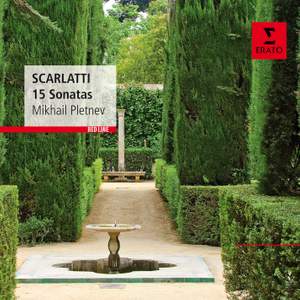
| |  | Scarlatti - Keyboard Sonatas
“Every so often a major pianist reclaims Scarlatti for the piano with an outstanding recording. As Ralph Kirkpatrick put it, Scarlatti's harpsichord, while supremely itself, is continually menacing a transformation into something else. True, the relation of the music to harpsichord sound could hardly be closer, and it wouldn't have been composed the way it is for a different instrument. Scarlatti is marvellous at suggesting imaginary orchestrations and stimulating the imagination. He makes us aware of different vantage points as the music passes before us, of the different tones of voice and rhetorical inflexions – as various in these sonatas as the events in them are unpredictable. There are dances, fiestas and processions here, serenades, laments, and evocations of everything from the rudest folk music to courtly entertainments and churchly polyphony; and as the kaleidoscope turns you marvel at the composer who could embrace such diversity, shape it and put it all on to the keyboard. Pletnev's playing is strongly individual, and his free-ranging poetic licence may not be to your taste. Not that his spectacular virtuosity is likely to be controversial: this really is hors decatégorie and enormously enjoyable. And the evocations of the harpsichord are often very witty, but he doesn't shrink from using the full resources of the piano, sustaining pedal included, and if you baulk at the prospect, he may not be for you. The sustaining pedal is certainly dangerous in music that's almost wholly to do with lines, not washes of colour; it can make us see Scarlatti as if through Mendelssohn's eyes. Yet moments of such falsification are rare. Characterisation is everything, and though he can be coy in the reflective sonatas, he generally goes straight to the heart of the matter. The vigorous, full tone in the quick numbers is a joy, and most admirable is the way he makes sound immediately command character. Superb recorded sound.” Gramophone Classical Music Guide, 2010 “Pletnev establishes a firm pianistic approach...The performances throughout are in the very front rank.” Penguin Guide, 2011 edition | | | In stock - usually despatched within 1 working day. |
|
|
| |  | Arturo Benedetti Michelangeli, Vol. 11941-1948
| |
|
| |  | Guitar Recital: Vladimir Gorbach2011 Winner, Guitar Foundation of America Competition
Vladimir Gorbach (guitar) Brilliant young guitarist Vladimir Gorbach, first prize winner of the Guitar Foundation of America’s International Concert Artist Competition in 2011, has constructed a programme to showcase the variety and versatility of his instrument. Piazzolla’s Estaciones porteñas are richly evocative seasonal portraits vested with his indelible sense of verve. Scarlatti’s inexhaustible sonatas are increasingly popular in guitar transcription, the four here showing his originality and dexterity, whilst Giuliani’s Rondoletto is full of dazzling escapades for the guitar. Vicente Asencio’s Collectici íntim is drenched in vibrant Spanish colours and rhythms. | | | (also available to download from $6.00) | Usually despatched in 2 - 3 working days. (Available now to download.) |
|
|
| |  | Emil Gilels
Beethoven: | Piano Sonata No. 27 in E minor, Op. 90 | Debussy: | Reflets dans l'eau (No. 1 from Images pour piano - Book 1) Pour le piano | Prokofiev: | Piano Sonata No. 3 in A minor, Op. 28 Visions fugitives, Op. 22, No. 1 Visions fugitives, Op. 22, No. 3 Visions fugitives, Op. 22, No. 5 Visions fugitives, Op. 22, No. 10 Visions fugitives, Op. 22, No. 11 Visions fugitives, Op. 22, No. 17 | Scarlatti, D: | Keyboard Sonata K141 in D minor Keyboard Sonata K518 in F major Keyboard Sonata K32 in D minor Keyboard Sonata K533 in A major Keyboard Sonata K27 in B minor Keyboard Sonata K125 in G major Keyboard Sonata K466 in F minor | Scriabin: | Piano Sonata No. 4 in F sharp major, Op. 30 |
Recorded: St. John’s, Smith Square, London, 15 October 1984 (Scarlatti, Debussy) Memorial Hall, Farringdon Street, London, 22 April 1957 (Beethoven, Scriabin, Prokofiev) This CD contains some of the first and last recordings the great Russian pianist Emil Gilels (1916-1985) made for the BBC. The lunchtime concert at the church of St. John's, in Smith Square, London on 15 October 1984 was to be his last performance in London. Gilels liked to play a selection of Scarlatti's sonatas - what he referred to as 'a bouquet'. He included five of them on his first BBC Legends CD (BBCL40152) from his April 1957 BBC studio recording. Here we have another 7 Scarlatti sonatas recorded in excellent stereo. Gilels first performed Debussy's 'Pour le Piano' in December 1953 only playing it a few times. After the mid 1950s, he did not play it again until the end of May 1984, five months prior to this stereo live concert. When referring to this concert Nicholas Kenyon wrote of Gilels performance of 'Pour le Piano'; 'But this is… more than the sheer creation of sound. For every wonderfully contrived sound reflects a conviction about the music: it is a total fusion of composer and interpreter that tells us for a few exalting moments, that the music can only sound this way.' Although he toured the UK for the first time at the end of 1952, Gilels did not record for the BBC until April 1957. Apart from the five sonatas by Scarlatti which were issued on BBCL 4015-2, we have here works by Beethoven, Scriabin and Prokofiev. As persuasive and pliant as his performance is here, it would appear that Gilels did not play this sonata again until he came to record it commercially in the studio in 1974. From Scriabin's ten Piano Sonatas, Gilels only played No.1 in the early 1950s, No.3 only in 1983-84, and No.4 in 1955-57. In this performance of No. 4, Gilels ability to combine great delicacy and enormous controlled power are ideal for this work. From Prokofiev's Piano Sonatas Gilels only played Nos. 2, 3, 7 and 8. “The Scarlatti, Debussy and Beethoven were recorded live in London in 1984, towards the end of Gilels's life; he's dazzling in the Russian repertoire captured in 1957. The later recital is magisterial, but he's struggling.” BBC Music Magazine, Christmas 2009 **** “…Emil Gilels… in all his imperious and aristocratic glory. Seven Scarlatti sonatas show him in an inimitable if unfashionable mood, slow and romantically free in the repeated notes of the D minor Sonata, Kk141. His Debussy…sings and expands in a style far remote from a more classic French performing tradition...” Gramophone Magazine, January 2010 “The Scarlatti sonatas have a crystalline purity and breathtaking range of articulation, while the Beethoven conveys all the wholeness missing from the Waldstein, and the Scriabin musters exactly the obsessive intensity such highly wrought music demands.” The Guardian, 18th September 2009 ***** | |
|
| |  | D. Scarlatti - Thirteen Sonatas
| | | Usually despatched in 4 - 5 working days. |
|
|
| |  | Michelangeli - The Early Recordings Volume 1
Albéniz: | Recuerdos de Viaje, Op. 71: No. 6 - Rumores de la caleta Recorded in Milan, c. December 1941–February 1942 | Bach, J S: | Italian Concerto, BWV971 Recorded in Milan, 22nd January 1943 Partita for solo violin No. 2 in D minor, BWV1004: Chaconne (arr. Busoni) Recorded in London, 27th October 1948 | Brahms: | Variations on a theme by Paganini in A minor, Op. 35 Recorded in London, 26th October 1948 | Galuppi: | Presto in B flat Recorded in London, 27th October 1948 | Granados: | Danza española, Op. 37 No. 5 'Andaluza' Recorded in Milan, c. November–December 1939 | Marescotti: | Fantasque Recorded in Milan, c. November–December 1939 | Mompou: | Cancion y danza No. 1 Recorded in Milan, c. December 1941–February 1942 | Scarlatti, D: | Keyboard Sonata K96 in D major Recorded in Milan, 1941-1943 Keyboard Sonata K27 in B minor Recorded in Milan, 1941-1943 Keyboard Sonata K11 in C minor Recorded in Milan, 1941-1943 Keyboard Sonata K9 in D minor Recorded in Milan, 1941-1943 | Tomeoni, P: | Allegro in G Recorded in Milan, 22nd January 1943 |
Michelangeli’s first recordings were made for HMV in Milan in 1939, following his win at the Geneva International Piano Competition. In Granados’s Andaluza Michelangeli uses a soulful singing tone to great advantage, while his phenomenal virtuoso technique can be heard in Marescotti’s Fantasque, one of the test pieces for the Geneva Competition. These and the 1948 recordings of Bach, Galuppi and Brahms demonstrate that as a young man Michelangeli was already a consummate artist. As a critic wrote about the recording of the Brahms Paganini Variations: “What a pianist! Technically, the playing is astonishing: interpretatively, here is a very great musician…altogether this is the most exciting piano performance and recording I have heard for many a long day.” “Apollonian stance and awe-inspiring control….. The dynamic range reinforces the Lisztian patina of Michelangeli's conception….[a] ravishing, multi-layered sound world.” Classics Today “Was Michelangeli's best playing his earliest? Here's a remarkable artist - overwhelmingly masterful in Brahms's Paganini Variations, engaging in Bach, poetic in Scarlatti, impulsive and haunting in Granados and Albéniz.” BBC Music Magazine, February 2009 ***** “Michelangeli ranks among the grandest of all musical autocrats. And when his transcendent mastery is complemented by warmth, wit and charm, such additions are beyond price. Early in his career he possessed a Romantic as well as magisterial charisma, and listening to his performance of Bach's Italian Concerto with its wealth of colour, nuance and resilience is to be reminded that a human heart beat beneath that legendary froideur. What sparkle, too, in Tomeoni's G major Allegro and how he plays the arch-seducer to the manner born in Albé- niz's Malagueña. Granados's Andaluza is heavily but irresistibly personalised, all fun and fancyfree; hardly for lovers of a more 'correct' Spanish style, while Marescotti's Fantasque is spun off with a virtuosity as life-enhancing as it is thrilling. Michelangeli's reordering of the Brahms Paganini Variations is odd, but his performance remains of classic status. So, too, does his way with the Bach/Busoni Chaconne with his rapid tempi and lean, not-an-ounce-of-fat way with Busoni's maestoso instruction. This is an issue that all lovers of great artistry will pounce on, particularly when so enticingly offered on Naxos's bargain label.” Gramophone Classical Music Guide, 2010 “Michelangeli ranks among the grandest of all musical autocrats. And when his transcendent mastery is complemented by warmth, wit and charm, such additions are beyond price. This is an issue that all lovers of great artistry will pounce on…” Gramophone Magazine, March 2009 | | | (also available to download from $9.00) | Usually despatched in 2 - 3 working days. (Available now to download.) |
|
|
| |
|