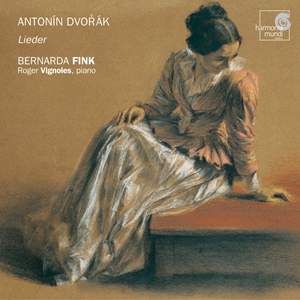
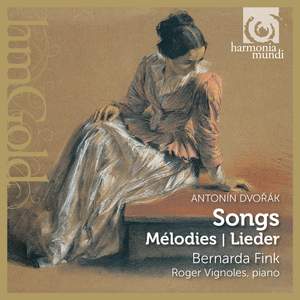
All recordingsPrices shown exclude VAT. (UK tax is not payable for deliveries to United States.) See Terms & Conditions for p&p rates. | |  | Dvorak - Lieder
"A wholly delectable disc, and one that should win many new friends for these songs in the composer's centenary year." CHORAL & SONG DISC OF THE MONTH, BBC Music Magazine, August 2004 “An all-Dvorák song recital may still seem a luxury. The Gypsy Songs, and not just their famous fourth ('Songs my mother taught me'), have found a secure place in the repertoire, but not much else is heard at all regularly either in recital or on disc. They may lack the variety of mood to constitute a fully satisfying programme on their own, but they never fail to give pleasure. One cause of the continued unfamiliarity of the B160 set is that Czech is an alien language to most recitalists. Not, however, to the Argentinian mezzo Bernarda Fink, who comes from a Slovenian family, lived in Prague for a while and has made a special study of Czech music. Her diction is very clear. Her tone is rich and deep, and the manner has warmth and dignity, though these seem to be its limits. If you come to the Gypsy Songs with Anne Sofie von Otter's recording in mind, you'll miss, in Fink's singing, a lot of colour, imagination and temperament. But there may be some relief, too. Her recording with Bengt Forsberg is exciting but assertive. Fink and Vignoles may prove more companionable. But this new issue is most welcome: tasteful and often lovely performances and a generously comprehensive selection.” Gramophone Classical Music Guide, 2010 | | | In stock - usually despatched within 1 working day. |
|
|
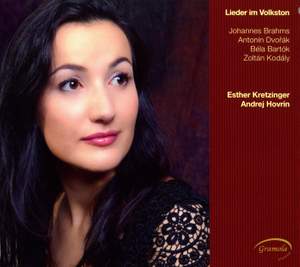
| |  | Lieder im Volkston
Bartók: | 8 Hungarian Folksongs, BB 47, Sz. 64 | Brahms: | Es steht ein Lind (No. 41 from Deutsche Volkslieder, WoO 33) Die Sonne scheint nicht mehr (No. 5 from Deutsche Volkslieder, WoO 33) Da unten im Tale (No. 6 from Deutsche Volkslieder, WoO 33) Schwesterlein, WoO posth. 37 No. 1 Sehnsucht 'Mein Schatz ist nicht da', Op. 14 No. 8 Volkslied 'Die Schwälbe ziehet fort', Op. 7 No. 4 Die Trauernde, Op. 7 No. 5 In stiller Nacht, WoO 34 No. 8 | Dvorak: | In Folk Tone - four songs, Op. 73 | Kodály: | Hungarian Folk Music: selection |
Esther Kretzinger (soprano) & Andrej Hovrin (piano) | | | (also available to download from $10.50) | Usually despatched in 2 - 3 working days. (Available now to download.) |
|
|
| |  | Schumann/Dvorak/Brahms - Lieder
Brahms: | Schwalbe, sag' mir an, Op. 107 No. 3 O schönste Schäfrin mein, WoO 33/1 Schwesterlein, WoO posth. 37 No. 1 Feinsliebchen, du sollst mir nicht barfuß gehen (No. 12 from Deutsche Volkslieder, WoO 33) Wie komm ich denn zur Tur herein (No. 34 from Deutsche Volkslieder, WoO 33) | Dvorak: | In Folk Tone - four songs, Op. 73 Liebeslieder (8), Op. 83 | Schumann: | Tragödie Op. 64 No. 3 Die beiden Grenadiere, Op. 49 No. 1 Die Lotosblume, Op. 25 No. 7 Die feindlichen Brüder, Op. 49 No. 2 Der Soldat, Op. 40, No. 3 Lehn deine Wang' Op. 142 No. 2 Rätsel, Op. 25 No. 16 Romanzen und Balladen III, Op. 53 Der arme Peter, Op. 53 No. 3 Belsazar, Op. 57 Schön ist das Fest des Lenzes, Op. 37 No. 7 Wiegenlied |
Dedicated and sold in aid of Cleft Children International (CCI) Foundation | | | Usually despatched in 2 - 3 working days. |
|
|
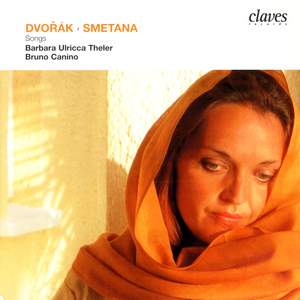
| |  | Barbara Theler Sings Dvorak and Smetana
Barbara Theler (soprano) Bruno Canino (piano) | | | Usually despatched in 4 - 5 working days. |
|
|
| |  | Lucia Popp
Brahms: | Es steht ein Lind (No. 41 from Deutsche Volkslieder, WoO 33) Sehnsucht 'Hinter jenen dichten Wäldern', Op. 49 No. 3 Wie komm ich denn zur Tur herein (No. 34 from Deutsche Volkslieder, WoO 33) Die Trauernde, Op. 7 No. 5 In stiller Nacht (No. 42 from Deutsche Volkslieder, WoO 33) | Dvorak: | In Folk Tone - four songs, Op. 73 | Mahler: | Starke Einbildungskraft (Lieder und Gesänge aus der Jugendzeit) Ich ging mit Lust (Lieder und Gesänge aus der Jugendzeit) Ablösung im Sommer (Lieder und Gesänge aus der Jugendzeit) Um schlimme Kinder artig zu machen (Lieder und Gesänge aus der Jugendzeit) | Schoenberg: | Erwartung, Op. 17 Schenk mir deinen goldenen Kamm Op. 2 No. 2 Erhebung Op. 2 No. 3 Waldsonne Op. 2 No. 4 | Schubert: | An Mein Herz D860 Der Jüngling an der Quelle, D300 (Salis-Seewis) Jägers Abendlied, Second Setting, D368 Der Einsame, D800 | Strauss, R: | Drei Lieder der Ophelia Op. 67 Mein Auge Op. 37 No. 4 Meinem Kinde, Op. 37 No. 3 Die Zeitlose, Op. 10 No. 7 Hat gesagt - bleibt's nicht dabei, Op. 36 No. 3 Allerseelen, Op. 10 No. 8 |
“…in Dvořák's anniversary year, the unmistakable and irresistible character of Popp's voice, by turns radiant and rueful, buoyant and melancholy, wonderfully recreates something at the very heart of the composer's settings of three Slovak folk poems which she included in her 1980 Edinburgh Festival programme with Geoffrey Parsons.” BBC Music Magazine, September 2004 **** | | | (also available to download from $10.50) | Usually despatched in 2 - 3 working days. (Available now to download.) |
|
|
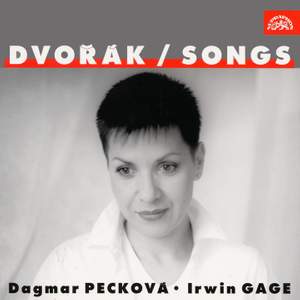
| |  | Dvorak: Songs
“These four cycles make an excellent and generous coupling, with Dagmar Pecková, brilliantly supported by Irwin Gage, a most persuasive advocate. Hers is an ideal voice, unmistakably Slavonic in timbre, yet firm and pure as well as rich. She retains a freshness specially apt for the songs inviting a girlish manner, including Dvorák's most famous song, the fourth of the seven Gypsy Melodies, 'Songs my mother taught me', sounding fresh and new. The four cycles represent the full span of Dvorák's career. The eight Love Songs, B160 may officially date from 1888, but Dvorák in fact reworked a selection from 18 songs he'd written passionately at high speed over 20 years earlier – charming pieces which already reveal his unquenchable lyrical gift. Next chronologically are the Gypsy Songs of 1800, bold and colourful, here nicely contrasted by Pecková and Gage with four simpler, less exotic songs, In Folk Tone, of six years later. Last and longest is the cycle of ten Biblical Songs, written in the United States in 1894, when he was feeling homesick. They are more often sung by male singers, gaining from weight and gravity, but here with the mezzo, Pecková, they prove just as moving and intense. The sound is clear and well balanced.” Gramophone Classical Music Guide, 2010 | | | Usually despatched in 4 - 5 working days. |
|
|
| |  | Lucia Popp - Lieder
| | | Usually despatched in 3 - 4 working days. |
|
|
| |  | Brahms: | Zigeunerlieder, Op. 103 Mädchenlied (No. 6 from Sieben Lieder, Op. 95) Mädchenlied, Op. 85 No. 3 Das Mädchen (No. 1 from Sieben Lieder, Op. 95) Mädchenlied, Op. 107 No. 5 Das Mädchen spricht, Op. 107 No. 3 Mädchenfluch (No. 9 from Neun Gesänge, Op. 69) Gestillte Sehnsucht, Op. 91/1 Geistliches Wiegenlied, Op. 91 No. 2 | Dvorak: | Gypsy Melodies (7), Op. 55 (B104) In Folk Tone - four songs, Op. 73 |
| | | Usually despatched in 8 - 10 working days. |
|
|
| |  | Lucia Popp: The Unforgotten
Bach, J S: | Cantata BWV51 'Jauchzet Gott in allen Landen' | Brahms: | Mädchenfluch (No. 9 from Neun Gesänge, Op. 69) Vorschneller Schwur (No. 5 from Sieben Lieder, Op. 95) Mädchenlied, Op. 107 No. 5 Mädchenlied (No. 6 from Sieben Lieder, Op. 95) Mädchenlied, Op. 85 No. 3 Das Mädchen spricht, Op. 107 No. 3 Die Trauernde, Op. 7 No. 5 Sehnsucht 'Mein Schatz ist nicht da', Op. 14 No. 8 Wie komm ich denn zur Tur herein (No. 34 from Deutsche Volkslieder, WoO 33) In stiller Nacht (No. 42 from Deutsche Volkslieder, WoO 33) Es steht ein Lind (No. 41 from Deutsche Volkslieder, WoO 33) Regenlied, WoO23 | Charpentier, G: | Depuis le jour (from Louise) sung in German | Dvorak: | Mesícku na nebi hlubokém 'Song to the Moon' (from Rusalka) sung in German In Folk Tone - four songs, Op. 73 | Goetz: | Die Kraft versagt | Handel: | Samson: Let the bright seraphim | Janacek: | Moravian Folk Songs (15), JW VIII/23: excerpts | Kodály: | Hungarian Folk Songs | Lortzing: | Die Eifersucht ist eine Plage (from Zar und Zimmermann) | Mahler: | Frühlingsmorgen (Lieder und Gesänge aus der Jugendzeit) Ich ging mit Lust (Lieder und Gesänge aus der Jugendzeit) Nicht wiedersehen (Lieder und Gesänge aus der Jugendzeit) Scheiden und Meiden (Lieder und Gesänge aus der Jugendzeit) Um schlimme Kinder artig zu machen (Lieder und Gesänge aus der Jugendzeit) Hans und Grete (Lieder und Gesänge aus der Jugendzeit) Starke Einbildungskraft (Lieder und Gesänge aus der Jugendzeit) Ablösung im Sommer (Lieder und Gesänge aus der Jugendzeit) Erinnerung (Lieder und Gesänge aus der Jugendzeit) | Massenet: | Allons! Il le faut pour lui-même!... Adieu, notre petite table (from Manon) | Monteverdi: | L'Orfeo: excerpts | Mozart: | E Susanna non vien! … Dove sono i bei momenti (from Le nozze di Figaro) Ach, ich fühl's (from Die Zauberflöte, K620) | Prokofiev: | Russian Folksongs, Op. 104 | Puccini: | O mio babbino caro (from Gianni Schicchi) sung in German | Smetana: | Endlich allein (from Die verkaufte Braut) | Telemann: | Arias from Psalm 111 "Ich danke dem Herrn von ganzem Herzen" | Verdi: | Caro nome (from Rigoletto) sung in German | Weber: | Wie nahte mir der Schlummer … Leise, leise, fromme Weise (from Der Freischütz) |
Soprano Lucia Popp (1939-1993) was one of the most acclaimed singers of her generation. In this four-CD set she is heard in arias from operas by Weber, Mozart, Lortzing, Puccini, Verdi, Massenet and Monteverdi, songs by Brahms, Mahler, Prokofiev, Dvorak, Kodaly, Janacek, and sacred music by Telemann and Bach. After making her debut at the Vienna State Opera in the modest role of Barbarina in The Marriage of Figaro, Lucia Popp worked with all the great conductors of her day including Leonard Bernstein, Sir George Solti, Rafael Kubelik, Lorin Maazel, Sir Neville Marriner, Bernard Haitink and Carlos Kleiber. The State Operas of Vienna and Munich honoured Lucia Popp with the title of Kammersängerin and the Vienna Philharmonic Orchestra awarded her the “Silver Rose”. In 2007 she was placed 7th on BBC Music Magazine's list ‘20 All-time Best Sopranos’ based on a poll of 21 British critics and BBC presenters. | | | (also available to download from $16.00) | Usually despatched in 4 - 5 working days. (Available now to download.) |
|
|
| |
|