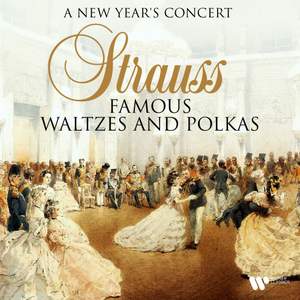
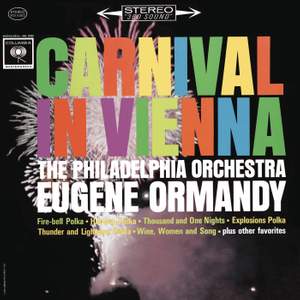
Prices shown exclude VAT. (UK tax is not payable for deliveries to United States.) See Terms & Conditions for p&p rates. | |  | Strauss: Les Plus Belles Valses de Vienne
Strauss, J, I: | Radetsky March, Op. 228 | Strauss, J, II: | An der schönen, blauen Donau, Op. 314 Kaiser-Walzer, Op. 437 Tritsch-Tratsch Polka, Op. 214 Wiener Blut Waltz, Op. 354 Kaiser-Walzer, Op. 437 Pizzicato Polka Wiener Bonbons Walzer, Op. 307 Aquarellen Walzer, Op. 258 Die Fledermaus Overture Annen-Polka, Op. 117 Wo die Zitronen blühen, Op. 364 Unter Donner und Blitz, Op. 324 Geschichten aus dem Wienerwald, Op. 325 Spanischer Marsch, Op. 433 Frühlingsstimmen Walzer Op. 410 Künstlerleben, Op. 316 Elektrophor, Op. 297 Schatz-Walzer, Op. 418 Leichtes Blut, polka schnell, Op. 319 Sirenen - Waltz, Op. 164 Der Zigeunerbaron Overture Sphärenklänge, Waltz, Op. 235 |
Orchestre de l'Opera de Vienne, Alfred Scholz, Kurt Redel & Carl Michalski Performing the marvellous Les Plus Belles coupled with Valses de Vienne, the Orchestre de l’Opera de Vienne rise to the challenge wonderfully. | 
| | | In stock - usually despatched within 1 working day. |
|
|
| |  | Waltzes & Polkas of ViennaStrauss Family Favourites
Strauss, E: | Bahn frei! Schnell-Polka, Op. 45 | Strauss, J, I: | Radetsky March, Op. 228 | Strauss, J, II: | Die Fledermaus Overture Champagner-Polka, Op. 211 An der schönen, blauen Donau, Op. 314 Unter Donner und Blitz, Op. 324 Kaiser-Walzer, Op. 437 Neue Pizzicato-Polka Op. 449 Wiener Blut Waltz, Op. 354 Pizzicato Polka Perpetuum Mobile, Op. 257 Annen-Polka, Op. 117 Rosen aus dem Süden, Op. 388 |
| | | In stock - usually despatched within 1 working day. |
|
|
| |  | Wien bleibt WienWaltzes & Polkas
Lanner: | Die Romantiker, Op. 167 Cerrito-Polka, Op. 189 Abendsterne (Evening Stars) Die Werber Op. 103 | Schrammel: | Wien bleibt Wien | Strauss, E: | Unter der Enns, Op. 12 | Strauss, J, I: | Beliebte Sperl-Polka (Beloved Sperl-Polka), Op. 133 Chineser-Galopp, Op. 20 Kettenbrücke-Walzer, Op. 4 Wiener Gemüths-Walzer, Op. 116 | Strauss, J, II: | Annen-Polka, Op. 117 Pizzicato Polka |
Thomas Christian Ensemble Back to the good old days and to familiar waltzes and polkas presented with the chamber refinement of a string quartet and a double bass instead of with the all-too-familiar glossy finish and polish of New Year’s concerts! The violinist Thomas Christian and his soloists take us back with fine art and inimitable Viennese spirit to the grand days of the Habsburg monarchy: Wien bleibt Wien. | | | In stock - usually despatched within 1 working day. |
|
|
| |  | Strauss Family: Favourite Dances
Strauss, J, I: | Radetsky March, Op. 228 | Strauss, J, II: | Der Zigeunerbaron Overture Annen-Polka, Op. 117 Champagner-Polka, Op. 211 Un ballo in maschera-Quadrille, Op. 272 An der schönen, blauen Donau, Op. 314 Unter Donner und Blitz, Op. 324 Geschichten aus dem Wienerwald, Op. 325 | Strauss, Josef: | Auf Ferienreisen - Polka schnell, Op. 133 Dynamiden - Waltz Op. 173 Jockey Polka, Op. 278 |
The Strauss family was one of music’s greatest dynasties. In this glittering disc, we hear such classics as the Radetzky March of Johann Strauss I, and his son, Johann Strauss II’s overture to Der Zigeunerbaron (The Gypsy Baron), one of the enduring masterpieces of the Viennese concert repertoire. The irresistibly exciting Unter Donner und Blitz (Thunder and Lightning) offers thunderous delight, whilst An der schönen blauen Donau (On the Beautiful Blue Danube) is one of the most unforgettable melodies ever written. Strauss the Elder’s second son, Josef, was an outstanding composer in his own right, as demonstrated by the frenzy of excitement that is the Jokey-Polka (Jockey-Polka). The works by Johann Strauss II have been performed following the New Complete Edition Johann Strauss (Strauss Edition Wien) “the disc is a very satisfying concert. If this is Johannes Wildner’s audition for a future New Year’s in Vienna, he’s put in a very convincing case...The Annen-Polka is all delicate sweetness and reveals Wildner’s knowledge of how to lend this music real poetic worth. The big numbers like the Radetzky March in no way let down the side” MusicWeb International, March 2013 | | | (also available to download from $9.00) | Usually despatched in 2 - 3 working days. (Available now to download.) |
|
|
| |  | Strauss: Waltzes, Marches and Polkas
Strauss, J, I: | Radetsky March, Op. 228 | Strauss, J, II: | An der schönen, blauen Donau, Op. 314 Eljen a Magyar Schnell-Polka, Op. 332 Accelerationen, Op. 234 Persischer Marsch, Op. 289 Leichtes Blut, polka schnell, Op. 319 Künstlerleben, Op. 316 Unter Donner und Blitz, Op. 324 Kaiser-Walzer, Op. 437 Tritsch-Tratsch Polka, Op. 214 Rosen aus dem Süden, Op. 388 Annen-Polka, Op. 117 arr. Max Schonherr Wein, Weib und Gesang, Op. 333 Auf der Jagd, Op. 373 Sphärenklänge, Waltz, Op. 235 arr. Max Schonherr Perpetuum Mobile, Op. 257 Geschichten aus dem Wienerwald, Op. 325 Fledermaus-Quadrille, Op. 363 Wiener Blut Waltz, Op. 354 Napoleon-Marsch, Op. 156 (1854) | Strauss, Josef: | Delirien Waltz, Op. 212 |
Herbert von Karajan was a master of the Strauss style. Here for the first time are all three of his Strauss recordings from the early 1980s – beautifully conceived programmes of waltzes, polkas and marches, including all the favourites – compiled together in a generous 2-CD set. | | | (Sorry, download not available in your country) | Usually despatched in 2 - 3 working days. |
|
|
| |  | A Flourish of Brass
The ensemble-playing of the 22 musicians is characterized by an irreproachable intonation and rhythmical precision, but primarily by their wide range in dynamics, articulation and expressiveness (the pianissimo-nuances of the ensemble are breath-taking!). With his great knowledge about instruments, the band-leader, professor Yamamoto, is an outstanding arranger and knows precisely how to utilize the capacities of his band-members. Therefore, it has been possible for the ensemble to enter into and incorporate genres and styles beyond the conventional brass-band repertoire. “Tailor-made” arrangements of symphonic music by Mahler, organ-music by Brahms, and a choir-piece by Bruckner sound surprisingly idiomatic and, for a while, make the listener forget about authenticity and the original instrumentations! Even prof. Yamamoto’s own entertaining rhapsody of Japanese childrens’ tunes as well as such well-known lighter genres that used to be played in transcriptions for brass-bands, like Strauss waltzes and polkas, are performed by Pegasus, with a sort of symphonic feeling, in a refined and enriched manner. | | | Usually despatched in 4 - 5 working days. |
|
|
| |  | Hans Knappertsbusch conducts the Bayrisches Statsorchester
Cornelius: | Der Barbier von Baghdad: Overture | Komzák II: | Bad'ner Madl'n Walzer, Op. 257 | Lanner: | Die Schönbrunner Waltzer, Op. 200 | Schubert: | Symphony No. 8 in B minor, D759 'Unfinished' Marche Militaire, D733 No. 1 | Strauss, J, II: | Tausendundeine Nacht, Op. 346: Intermezzo Egyptischer Marsch, Op. 335 Annen-Polka, Op. 117 Geschichten aus dem Wienerwald, Op. 325 Rosen aus dem Süden, Op. 388 Pizzicato Polka | Trapp, M: | Concerto for Orchestra No. 3, Op. 50 | Weber: | Invitation to the Dance, Op. 65 Rondo brillant in D flat major J260 |
These recordings date from the fifties and this CD is part of the Archipel Desert Island Collection. The Trapp is a world premiere recording. Recorded KongressSaal des Deutschen Museums, Munich, 1953-58 “Much as you'd expect: hugely individual, dignified, unflustered, clear-headed and, for much of the time, rather slow” Gramophone Magazine, April 2010 | | | Usually despatched in 2 - 3 working days. |
|
|
| |  | Viennese Night
| | A Strauss Fantasy arr. Landauer Walter Landauer & Marian Rawicz (piano duet) | Strauss, J, I: | Radetsky March, Op. 228 arr: Gordon | Strauss, J, II: | Der Zigeunerbaron Overture Geschichten aus dem Wienerwald, Op. 325 Die Fledermaus Overture Pizzicato Polka Annen-Polka, Op. 117 Perpetuum Mobile, Op. 257 An der schönen, blauen Donau, Op. 314 Kaiser-Walzer, Op. 437 |
Viennese Night was a staple feature of Hallé programmes during Sir John Barbirolli’s era, not only at Belle Vue and in the Free Trade Hall but in many of the other towns and cities where the orchestra played and particularly, of course, at the Henry Wood Promenade Concerts in the Royal Albert Hall. There, especially during the 1960s, it rivalled the Last Night as a relaxed and enjoyable occasion, with JB presiding over the audience’s revels in a benevolently avuncular manner. If they were going to sway to the waltzes, they had to do it in time with the music; and if they were going to stamp their feet during some of the polkas, that too had to be done in tempo and accurately. The performances on this disc eloquently illustrate Barbirolli’s way with the music of the Strausses and others such as Lehár who comprise what we call the Golden Age of Vienna, although not all were Vienna-born but became adopted sons of the city. This English conductor of Italo-French parentage could be almost more Viennese than the Viennese. He had the secret of just how much rubato the waltzes could take without tipping over into sentimentality. He also acknowledges their rhythmic vitality and the brilliance of the scoring, not just for strings but for solo piccolo, oboe and percussion. What made his conducting of these Viennese bon-bons so satisfying was that he recognised that they were not just bon-bons but in several cases masterpieces of their genre. | | | Usually despatched in 4 - 5 working days. |
|
|
| |  | Daniel Barenboim - New Year’s Concert 2009
Haydn: | Symphony No. 45 in F sharp minor 'Farewell': 4th movement first performance at a New Year’s Concert | Hellmesberger: | Valse espagnole first performance at a New Year’s Concert | Strauss, J, I: | Zampa-Galopp, Op. 62a first performance at a New Year’s Concert Radetsky March, Op. 228 Encore | Strauss, J, II: | Eine Nacht in Venedig Overture first performance at a New Year’s Concert Märchen aus dem Orient. Walzer, Op. 444 Annen-Polka, Op. 117 Saat und Ernte Schnell-Polka, Op. 159 first performance at a New Year’s Concert Rosen aus dem Süden, Op. 388 Freikugeln-Polka, Op. 326 Der Zigeunerbaron Overture Der Zigeunerbaron: Einzugsmarsch Schatz-Walzer, Op. 418 Alexandrine-Polka francaise, Op. 198 first performance at a New Year’s Concert Unter Donner und Blitz, Op. 324 Eljen a Magyar Schnell-Polka, Op. 332 So ängstlich sind wir nicht! - Polka, Op. 413 Encore An der schönen, blauen Donau, Op. 314 Encore So ängstlich sind wir nicht! - Polka, Op. 413 Ballet Extra Unter Donner und Blitz, Op. 324 Ballet Extra | Strauss, Josef: | Sphärenklänge, Op. 235 Sphärenklänge, Op. 235 Ballet Extra |
The New Year's Concert in Vienna has been a glorious tradition for over six decades. A best-selling classical event year on year, the concert has unique global appeal. It is broadcast on TV and radio to over 50 countries, and is viewed by tens of millions of people all over the world. The 2009 New Year's Day Concert will be conducted by the Argentinean-Israeli pianist and conductor Daniel Barenboim for the first time. From 1991-2006 Barenboim was the principal conductor of the Chicago Symphony Orchestra and since 1992 has been the General Music Director of the State Opera Unter den Linden in Berlin. Barenboim's debut with the Vienna Philharmonic took place in 1989, and he has since been a regular guest. In 1999, Barenboim and the late Palestinian academic Edward Säid founded the West-Eastern Divan Orchestra, in which young musicians from the Middle East and Israel perform together. Among the many awards Barenboim has received, was the Ernst von Siemens Music Prize in Vienna in 2006. In September 2007 Barenboim was named as United Nations Peace Envoy. The concert programme for 1st January 2009 will be the customary collection of Viennese delights, with six first time performances. The first part of the concert is inspired by the conductor’s biography. For example, the waltz Märchen aus dem Orient (Tales from the Orient), alludes to a modern “fairy tale” – the founding of the West-Eastern Divan Orchestra, a symbol of inter-cultural tolerance. Other first performances in the first half include J. Strauss II’s Schnellpost-Polka (Express Mail Polka) and J. Hellmesberger’s Valse Espagnole (Spanish Waltz). The second part of the concert makes constant allusions to the life and work of Joseph Haydn, culminating with the final movement of Haydn’s Symphony No.45 - 'Farewell Symphony'. This is the first time a work by Haydn has featured in the New Year’s Concert programme, and it will launch a year of events marking the bicentenary of the death of this great Austrian composerwho died in Vienna in May 1809. Other first appearances in the second half of the concert include J. Strauss I's Zampa-Galopp and J. Strauss II’s Alexandrine's Polka. | | | Usually despatched in 2 - 3 working days. |
|
|
| |  | Daniel Barenboim - New Year’s Concert 2009
Haydn: | Symphony No. 45 in F sharp minor 'Farewell': 4th movement first performance at a New Year’s Concert | Hellmesberger: | Valse espagnole first performance at a New Year’s Concert | Strauss, J, I: | Zampa-Galopp, Op. 62a first performance at a New Year’s Concert Radetsky March, Op. 228 Encore | Strauss, J, II: | Eine Nacht in Venedig Overture first performance at a New Year’s Concert Märchen aus dem Orient. Walzer, Op. 444 Annen-Polka, Op. 117 Saat und Ernte Schnell-Polka, Op. 159 first performance at a New Year’s Concert Rosen aus dem Süden, Op. 388 Freikugeln-Polka, Op. 326 Der Zigeunerbaron Overture Der Zigeunerbaron: Einzugsmarsch Schatz-Walzer, Op. 418 Alexandrine-Polka francaise, Op. 198 first performance at a New Year’s Concert Unter Donner und Blitz, Op. 324 Eljen a Magyar Schnell-Polka, Op. 332 So ängstlich sind wir nicht! - Polka, Op. 413 Encore An der schönen, blauen Donau, Op. 314 Encore So ängstlich sind wir nicht! - Polka, Op. 413 Ballet Extra Unter Donner und Blitz, Op. 324 Ballet Extra | Strauss, Josef: | Sphärenklänge, Op. 235 Sphärenklänge, Op. 235 Ballet Extra |
The New Year's Concert in Vienna has been a glorious tradition for over six decades. A best-selling classical event year on year, the concert has unique global appeal. It is broadcast on TV and radio to over 50 countries, and is viewed by tens of millions of people all over the world. The 2009 New Year's Day Concert will be conducted by the Argentinean-Israeli pianist and conductor Daniel Barenboim for the first time. From 1991-2006 Barenboim was the principal conductor of the Chicago Symphony Orchestra and since 1992 has been the General Music Director of the State Opera Unter den Linden in Berlin. Barenboim's debut with the Vienna Philharmonic took place in 1989, and he has since been a regular guest. In 1999, Barenboim and the late Palestinian academic Edward Säid founded the West-Eastern Divan Orchestra, in which young musicians from the Middle East and Israel perform together. Among the many awards Barenboim has received, was the Ernst von Siemens Music Prize in Vienna in 2006. In September 2007 Barenboim was named as United Nations Peace Envoy. The concert programme for 1st January 2009 will be the customary collection of Viennese delights, with six first time performances. The first part of the concert is inspired by the conductor’s biography. For example, the waltz Märchen aus dem Orient (Tales from the Orient), alludes to a modern “fairy tale” – the founding of the West-Eastern Divan Orchestra, a symbol of inter-cultural tolerance. Other first performances in the first half include J. Strauss II’s Schnellpost-Polka (Express Mail Polka) and J. Hellmesberger’s Valse Espagnole (Spanish Waltz). The second part of the concert makes constant allusions to the life and work of Joseph Haydn, culminating with the final movement of Haydn’s Symphony No.45 - 'Farewell Symphony'. This is the first time a work by Haydn has featured in the New Year’s Concert programme, and it will launch a year of events marking the bicentenary of the death of this great Austrian composerwho died in Vienna in May 1809. Other first appearances in the second half of the concert include J. Strauss I's Zampa-Galopp and J. Strauss II’s Alexandrine's Polka. | | | Usually despatched in 2 - 3 working days. |
|
|
| |
|