Liszt: Die Macht der Musik, S.302

This page lists all recordings of Die Macht der Musik, S.302, by Ferencz Liszt (1811-86) on CD.

Prices shown exclude VAT. (UK tax is not payable for deliveries to United States.)
See Terms & Conditions for p&p rates.

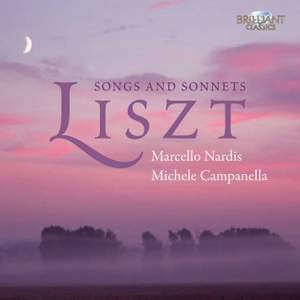
Liszt: Songs and Sonnets

Liszt: Songs and Sonnets


Liszt:

Sonetti di Petrarca (3) for voice & piano, S270

Kling Leise, mein Lied, S301

Im Rhein, im schönen Strome, S272

Schwebe, schwebe, blaues Auge, S. 305

Hohe Liebe

Morgens steh ich auf und frage, S290

Die Macht der Musik, S.302


Marcello Nardis (tenor) & Michele Campanella (piano)

Liszt’s songs are among his least performed works. With the bicentenary of his birth upon us, much of his output will be performed and recorded, and no doubt re-assessed. The composer himself was aware that he was difficult to categorise, and that the public face he had was as a flashy virtuoso pianist composer – a reputation that survives to this day, as the Rick Wakeman’s 1975s rock-opera ‘Lisztomania’ (filmed by Ken Russell, and starring The Who’s Roger Daltry as Liszt) testifies.

‘Everyone is against me: the Catholics because they find my music profane, the protestants because my music is Catholic, the Masons because they find my music too clerical. For the conservatives I am a revolutionary, for the futurists I am a phony Jacobin. For the Italians, in spite of Sgambati (his pupil and fellow composer), if they are Garibaldini they hate me because the think me a bigot, if they are on the Vatican’s side, they accuse me of turning the Tempio di Venere into a church. For Bayreuth I am an advertising agent rather than a composer. The Germans hate my music because they think it French, the French hate it because they think it German. For the Austrians I make Gypsy music, for the Hungarians I make foreign music. And the Jews hate me and my music without any reason.’

Interesting words, from a deeply frustrated Liszt. So how do we or should we find a definition for his music? The songs provide a fascinating clue. The writing for voice is clearly of Latin origin, skillfully woven into German Lied. Liszt manages to adapt the ‘feel’ of the music depending on the language he was setting – so a French text and the music ‘sounds’ of French origin and so on. Such stylistic flexibility can also be found in his orchestral, choral and solo piano works making this great composer a difficult customer in an age where we like to ‘pigeon-hole things. The songs require great skill from both singer and accompanist to reveal their many treasures.

Brilliant Classics - up to 30% off

Brilliant Classics - 94149

(CD)

Normally: $7.50

Special: $6.37

Usually despatched in 4 - 5 working days.

Liszt - Songs for Tenor

Liszt - Songs for Tenor


Liszt:

O Love

Freudvoll und leidvoll, S.280

Es muss ein Wunderbares sein, S. 314

Sonetto 123 del Petrarca 'I' vidi in terra angelici costumi', S270 No. 3

Es rauschen die Winde, S294

Ich eiss nicht, was sol les bedeuten

Vergiftet sind meine Lieder, S.289

Morgens steh ich auf und frage, S290

Es donnern die Hoh’n

Es lachelt der See

Wie singt die Lerche schon. S. 312

S'il est un charmant gazon, S284

Comment, disaient-ils (Hugo), S276

O quand je dors (Hugo), S282

Enfant, si j'étais roi (Hugo), S283

Die Macht der Musik, S.302


Endrik Wottrich (tenor) & Semjon Skigin (piano)

VMS - VMS150

(CD)

$17.75

Usually despatched in 2 - 3 working days.

Copyright © 2002-13 Presto Classical Limited, all rights reserved.