All recordingsPrices shown exclude VAT. (UK tax is not payable for deliveries to United States.) See Terms & Conditions for p&p rates. | |  | Liszt: The Complete Songs Volume 2
Liszt: | Der du von dem Himmel bist (Goethe), S279 First version Ihr Glocken von Marling, S.328 Ein Fichtenbaum steht einsam, S309 First setting, first version Vergiftet sind meine Lieder, S.289 Third version Freudvoll und leidvoll, S.280 First setting, second version Die drei Zigeuner, S.320 First version Über allen Gipfeln ist Ruh (Wandrers Nachtlied II), S.306 Third version Es war einmal ein König, S73 Second version Das Veilchen, S316 No. 1 Die Schlüsselblumen, S316 No. 2 Und sprich 'Sich auf dem Meer' Ihr Auge (Rellstab) Second version Im Rhein, im schönen Strome, S272 Second version Es muss ein Wunderbares sein, S. 314 La perla, S326 Second version Der du von dem Himmel bist (Goethe), S279 Third version |
This second volume of Hyperion’s newest Lieder series features the great dramatic and musical gifts of mezzo-soprano Angelika Kirchschlager. Internationally renowned on the opera stage, the concert hall and the recording studio, Kirchschlager is an ideal performer of these most varied, complex and emotionally charged songs. She is accompanied by the multi-Gramophone Award-winning Julius Drake, who curates the series. The songs recorded here encompass thirty years of Liszt’s life, with texts in German, French and Italian, and contain many examples of the hidden beauties of this undervalued and little-known strand of the composer’s works. Detailed and informative notes by Susan Youens and a beautifully intimate recorded sound complete a volume which will be indispensable to any lovers of Lieder. “one of the most important recording projects of recent years...Kirchschlager is exquisite and intensely dramatic by turns, though occasionally she could do with more weight in her lower registers. Drake is outstanding throughout.” The Guardian, 12th July 2012 **** “Kirchschlager's rich, resonant mezzo finds beauties everywhere on this disc, from heights of drama to imtimacies of reflection, and at every turn Drake is with her. I particularly like the way they take their time in the more meditative songs, with expressive silences.” BBC Music Magazine, August 2012 ***** “Several of the songs on the disc are in effect dramatic scenas. Finding a wide palette of colours within her naturally warm mezzo, Kirchschlager is in her element...this recital should open many ears to the richness and variety of his songs.” Gramophone Magazine, September 2012 “The quality of this CD is stunning from every point of view...[Kirchschlager] has the ability to make the hairs on the nape of my neck rise...Drake makes a sensitive accompanist who is perfectly at home with both the exuberant and complex piano parts as well as the more thoughtful.” MusicWeb International, August 2012 | | | In stock - usually despatched within 1 working day. |
|
|
| |  | Liszt: Songs
Liszt: | Der Fischerknabe, S.292 No. 1 Im Rhein, im schönen Strome, S272 Die Lorelei Die drei Zigeuner, S.320 Es war einmal ein König, S73 Ihr Glocken von Marling, S.328 Über allen Gipfeln ist Ruh (Wandrers Nachtlied II), S.306 Der du von dem Himmel bist (Goethe), S279 Benedetto sia'l giorno S 270a/2 Sonetto 104 del Petrarca 'Pace non trovo', S270 No. 1 Sonetto 123 del Petrarca 'I' vidi in terra angelici costumi', S270 No. 3 Freudvoll und leidvoll, S.280 Es rauschen die Winde, S294 Die stille Wasserrose, S321 Bist du!, S277 Es muss ein Wunderbares sein, S. 314 O lieb, so lang du lieben kannst |
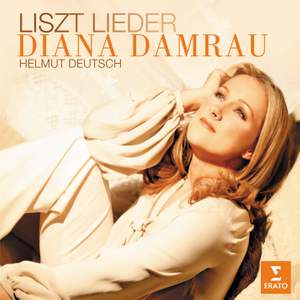
After her sumptuous album of Strauss songs with orchestra, soprano Diana Damrau marks the bicentenary of Liszt’s birth with an album of his most celebrated songs in German, French and Italian, accompanied by pianist Helmut Deutsch. “Diana Damrau has a fine line in floated high notes, and the lyrical songs (the majority of those recorded here) benefit from her sweet tone...Helmut Deutsch's accompaniments are of the highest quality, setting the mood from the very beginning of each song and managing Liszt's virtuoso figuration with apparent ease.” BBC Music Magazine, January 2012 **** “A gifted Lieder singer with a flawlessly even and shining sound, Damrau knows exactly how to draw the listener into the drama of each song...Deutsch proves yet again what a great accompanist he is too: his insights into the atmosphere and psychology of these works are as compelling as Damrau's.” Classic FM Magazine, February 2012 ***** “The particular qualities of Damrau's lustrous coloratura lend an aura of ethereal beauty to several of her interpretations...Damrau brings a languid voluptuousness to the more famous love songs...There are times when one wishes Damrau would abandon her consistently gorgeous sound production to focus instead on a more vivid characterization of the text. In terms of pure singing, these interpretations are undeniably beautiful.” International Record Review, February 2012 | | | In stock - usually despatched within 1 working day. |
|
|
| |  | Liszt: Roots & Routes
Liszt: | Ich liebe dich, S542a Angiolin dal biondo crin, S269 Die drei Zigeuner, S.320 Es muss ein Wunderbares sein, S. 314 Comment, disaient-ils (Hugo), S276 Einst (Bodenstedt) Go not, happy day Enfant, si j'étais roi (Hugo), S283 Was Liebe sei? (Hagn) S'il est un charmant gazon, S284 Mignons Lied (Kennst du das Land), S275 Über allen Gipfeln ist Ruh (Wandrers Nachtlied II), S.306 La tombe et la rose, S285 Ein Fichtenbaum steht einsam, S309 Es war einmal ein König, S73 Tristesse, S327 Verlassen, S336 Jeanne d'Arc au bûcher, S293 Áldjon eg! Vergiftet sind meine Lieder, S.289 Ne brany menya, moy drug, S340a La perla, S326 O Meer im Abendstrahl, S344 |
Elisabeth Kulman (mezzo-soprano) & Eduard Kutrowatz (piano) This collection of songs by Liszt demonstrates how cosmopolitan he was. He wrote songs in German, French, Italian, English, Hungarian and Russian. Some are real discoveries, such as his only song in Russian and a duet. Ne brani menja, moj drug and O Meer im Abandstrahl are premiere recordings. “Liszt's songs are an often-forgotten part of his output. Here are 22 of them, in six languages charting his travels as an internationally renowned virtuoso. Beautifully performed.” BBC Music Magazine, March 2012 | | | Usually despatched in 2 - 3 working days. |
|
|
| |  | Sylvia Sass – The Decca Recitals
Bartók: | Five Songs, Op. 16 (Text: Endre Ady) | Bellini: | Sediziose voci (from Norma) with the Ambrosian Singers | Liszt: | Die Lorelei with András Schiff (piano) Ne brany menya, moy drug, S340a original version with András Schiff (piano) Enfant, si j'étais roi (Hugo), S283 with András Schiff (piano) Es muss ein Wunderbares sein, S. 314 with András Schiff (piano) Vergiftet sind meine Lieder, S.289 with András Schiff (piano) Kling Leise, mein Lied, S301 with András Schiff (piano) Der König von Thule with András Schiff (piano) Die drei Zigeuner, S.320 with András Schiff (piano) | Ponchielli: | Suicidio! (from La Gioconda) National Philharmonic Orchestra, Lamberto Gardelli | Puccini: | In questa reggia (from Turandot) London Symphony Orchestra, Lamberto Gardelli Vissi d'arte (from Tosca) London Symphony Orchestra, Lamberto Gardelli In quelle trine morbide (from Manon Lescaut) London Symphony Orchestra, Lamberto Gardelli Sola, perduta, abbandonata (from Manon Lescaut) London Symphony Orchestra, Lamberto Gardelli Un bel di vedremo (from Madama Butterfly) London Symphony Orchestra, Lamberto Gardelli | Verdi: | Ritorna vincitor! (from Aida) London Symphony Orchestra, Lamberto Gardelli Una macchia è qui tutt'ora (from Macbeth) London Symphony Orchestra, Lamberto Gardelli O madre, dal cielo …Se vano, se vano è il pregare (from I Lombardi) London Symphony Orchestra, Lamberto Gardelli È strano! è strano!...Ah! fors è lui (from La traviata) with Ian Caley (tenor) Vanne, lasciami (from Il Trovatore) La luce langue (from Macbeth) |
Sylvia Sass was born near Budapest, Hungary, in 1951 to a very musical family. Her mother was a coloratura soprano and her father a high school music teacher. She made her stage debut at age 14 in Adam’s operetta Die Nürnberger Puppe and then commenced study at the celebrated Franz Liszt Academy in Budapest, completing a five-year program in two. Her professional debut was as Frasquita in Carmen in 1971. Several awards followed – 1st prize at the Kodály Voice Competition in Budapest, 1972; winner at the International Opera Competition for Young Singers, of the Grand Prix as Violetta in La traviata, 1973, the Silver Medal at the International Tchaikovsky Competition in Moscow, 1974. She was also made an Honoured Artist of Hungary in 1977. While still in Budapest, she performed such dramatic roles as Freia in Das Rheingold, Violetta in La traviata and Mimi in La bohème. International stardom came with a composer with whom she is most associated and in a role represented on her Decca recitals – Giselda in Verdi’s I Lombardi at Covent Garden in London, 1976. The next year she made both, her Italian debut in Turin as Lady Macbeth, and her Metropolitan Opera debut as Tosca alongside José Carreras. La Scala followed the year after, in 1978, where she sang Puccini’s tragic heroine Manon Lescaut alongside Plácido Domingo. Soon, Sass was being heralded as ‘the new Callas’, and she did meet Callas in person, thanks to a meeting set up by Leonard Bernstein. True, the voice had a similar dramatic colour, but Sass quickly rebuffed the comparison, saying, ‘Callas was so great and so unique. I just don’t think it’s fair to compare somebody with such a great artist.’ Her three recital records for Decca include two discs of operatic arias, including all her most celebrated roles, both conducted by Lamberto Gardelli, and a disc of songs by Liszt and Bartók with her compatriot, pianist András Schiff. All of these are issued collectively as a 2CD set for the first time. In recent years, Sass has settled in France, where she keeps busy painting and giving masterclasses. “you could say that Sylvia Sass had taken the best from Callas's and Sutherland's Norma … ‘Sempre libera’, which sounds appropriately hectic, is fearlessly done (with a tender, ardent incursion from Ian Caley as Alfredo) … her vibrant ‘Suicidio’ is undeniably exciting … The Decca recording is faultless.” Gramophone Magazine “The very first phrases of the opening aria (Turandot’s ‘In questa reggia’, no less) command attention and let you know that something rather special has arrived on the scene. And as the Puccini arias follow one another it becomes quite clear that here is an exceptional singer, distinctive in timbre, distinguished in artistry. The voice glitters rather than soothes, shines rather than warms. It is powerful, has a wide range, and is firmly placed. The tone can be brilliantly luminous (as in the Turandot aria), or may acquire a deeper kind of radiance (as in the ‘Vissi d’arte’ that follows it).” Gramophone Magazine “Entering into every nuance of the songs’ moods, and employing a dynamic range from the merest whisper to a full-blooded climax, Sylvia Sass makes the utmost of their not very rewarding vocal line; but the success of this performance is assured by the subtle playing of András Schiff, who conjures up beautiful sounds from the swirling figurations [Bartók] … Die Loreley is an evocative scena, sung imaginatively (and with much flexibility of pace) by Sass, bringing into play a vocal quality as seductive as that of the siren herself; and her gentle singing of the serenade Kling leise, mein Lied would melt the most obdurate heart. … all the performances here are unusually illuminating and satisfying; and the recording is excellent.” Gramophone Magazine (Liszt, Bartók) | | | This item is currently out of stock at the UK distributor. You may order it now but please be aware that it may be six weeks or more before it can be despatched. |
|
|
| |  | Liszt: Voll Freud und Leid
Liszt: | Im Rhein, im schönen Strome, S272 Morgens steh ich auf und frage, S290 Ein Fichtenbaum steht einsam, S309 Anfangs wollt ich fast verzagen, S311 Du bist wie eine Blume Vergiftet sind meine Lieder, S.289 Die Lorelei Der König von Thule Freudvoll und leidvoll, S.280 Wer nie sein Brot mit Tränen ass, S.297 Über allen Gipfeln ist Ruh (Wandrers Nachtlied II), S.306 Der du von dem Himmel bist (Goethe), S279 Die drei Zigeuner, S.320 Es muss ein Wunderbares sein, S. 314 Das Veilchen, S316 No. 1 Die Schlüsselblumen, S316 No. 2 Nonnenwerth Drei Lieder aus Schillers Wilhelm Tell, S292 |
Hans-Jörg Mammel (tenor) & Hilko Dumno (piano) In this 200th anniversary year of Liszt, Carus has released a recording of seldom performed songs. The 20 songs in this collection reflect Liszt’s interest in German Romanticism and are based on poetry by various German poets of the 17th and 18th centuries. Mammel is in great demand as a lieder singer. | | | (also available to download from $11.00) | Usually despatched in 2 - 3 working days. (Available now to download.) |
|
|
| |  | Liszt: Lieder
Liszt: | Die drei Zigeuner, S.320 Du bist wie eine Blume Ein Fichtenbaum steht einsam, S309 Vergiftet sind meine Lieder, S.289 Die Lorelei Ihr Glocken von Marling, S.328 Die stille Wasserrose, S321 Blume und Duft Es rauschen die Winde, S294 Ich möchte hingehn, S.296 Gebet, S265 Freudvoll und leidvoll, S.280 Über allen Gipfeln ist Ruh (Wandrers Nachtlied II), S.306 Der du von dem Himmel bist (Goethe), S279 Mignons Lied (Kennst du das Land), S275 Wie singt die Lerche schon. S. 312 Wieder mocht’ ich dir begegnen Lasst mich ruhen Es muss ein Wunderbares sein, S. 314 Ihr Auge (Rellstab) O lieb, so lang du lieben kannst! S540a |
“Liszt's songs turn up far less frequently in recital than Schumann's, Brahms's or Wolf's… Ruth Ziesak's selection of 21… forms a good introduction to their varied merits, and her strong interpretative skills… stand her in good stead.” BBC Music Magazine, August 2008 **** | | | Usually despatched in 4 - 5 working days. |
|
|
| |  | Elisabeth Schwarzkopf: Farewell Recital in Amsterdam, 1977
Liszt: | Die drei Zigeuner, S.320 | Mahler: | Ich atmet' einen linden Duft (Rückert-Lieder) | Schubert: | Der Einsame, D800 Gretchen am Spinnrade, D118 Seligkeit D433 (Holty) Der Lindenbaum (No. 5 from Winterreise, D911) | Schumann: | Der Nussbaum, Op. 25 No. 3 | Strauss, R: | Ruhe, meine Seele!, Op. 27 No. 1 Ach, was Kummer, Qual und Schmerzen, Op. 49 No. 8 | Wolf-Ferrari: | Vado di notte, come fa la luna | Wolf, H: | Mignon IV 'Kennst du das Land' (No. 9 from Goethe-Lieder) Die Zigeunerin (No. 7 from Eichendorff-Lieder) Ich esse nun mein Brot nicht trocken mehr Ich hab in Penna einen Liebsten (No. 46 from Italienisches Liederbuch) Trau nicht der Liebe (No. 67 from Spanisches Liederbuch: Weltliche Lieder) O wär dein Haus durchsichtig wie ein Glas Wie lange schon war immer mein Verlangen (No. 11 from Italienisches Liederbuch) An den Schlaf (No. 29 from Mörike-Lieder) Heimweh (No. 37 from Mörike-Lieder) Denk es, o Seele! (No. 39 from Mörike-Lieder) Das verlassene Mägdlein (No. 7 from Mörike-Lieder) |
| | | Usually despatched in 2 - 3 working days. |
|
|
| |  | Dvorak, Mahler & Liszt: Songs
Dvorak: | Gypsy Melodies (7), Op. 55 (B104) | Liszt: | Die drei Zigeuner, S.320 Im Rhein, im schönen Strome, S272 Im Rhein, im schönen Strome, S272 Die Lorelei Vergiftet sind meine Lieder, S.289 O quand je dors (Hugo), S282 Ein Fichtenbaum steht einsam, S309 Über allen Gipfeln ist Ruh (Wandrers Nachtlied II), S.306 Freudvoll und leidvoll, S.280 | Mahler: | Ablösung im Sommer (Lieder und Gesänge aus der Jugendzeit) Um schlimme Kinder artig zu machen (Lieder und Gesänge aus der Jugendzeit) Ich ging mit Lust (Lieder und Gesänge aus der Jugendzeit) Zu Strassburg auf der Schanz (Lieder und Gesänge aus der Jugendzeit) Nicht wiedersehen (Lieder und Gesänge aus der Jugendzeit) Rheinlegendchen (Des Knaben Wunderhorn) Lob des hohen Verstandes (Des Knaben Wunderhorn) |
Cornelia Kallisch (mezzo-soprano), Gabriel Dobner (piano) | | | Usually despatched in 2 - 3 working days. |
|
|
| |  | Franz Liszt - Lieder
Liszt: | Der du von dem Himmel bist (Goethe), S279 Freudvoll und leidvoll, S.280 Die drei Zigeuner, S.320 Es muss ein Wunderbares sein, S. 314 O lieb, so lang du lieben kannst! S540a Über allen Gipfeln ist Ruh (Wandrers Nachtlied II), S.306 Ich möchte hingehn, S.296 Ihr Glocken von Marling, S.328 Sonetti di Petrarca (3) for voice & piano, S270 O quand je dors (Hugo), S282 |
Marilyn Schmiege, Donald Sulzen | | | Usually despatched in 3 - 4 working days. |
|
|
| |  | Ruhr Piano Festival Edition Vol. 27: Liszt recordings 2011
Armstrong, K: | Time flies like an arrow, for piano trio Kit Armstrong (piano), Andrej Bielow (violin), Adrian Brendel (cello) | Lervik: | Aphorisme 1.0 Tamara Stefanovich (piano) Aphorisme 1.1 Tamara Stefanovich (piano) | Liszt: | Hexaméron, S392 Igor Levit (piano) Sonetto 123 del Petrarca (Années de pèlerinage II, S. 161 No. 6) Igor Levit (piano) Funérailles (Harmonies poétiques et religieuses, S. 173 No. 7) Benjamin Moser (piano) Isolde's Liebestod (after Wagner), S447 Benjamin Moser (piano) La leggierezza - Étude de concert No. 2, S144 Boris Giltburg (piano) Benediction de Dieu dans la solitude (Harmonies poétiques et religieuses, S. 173 No. 3) Denis Kozhukhin (piano) Tarantella, S. 162 No. 3 (from Venezia e Napoli) Denis Kozhukhin (piano) Piano Sonata in B minor, S178 arr. by Saint-Saens for two pianos Anthony and Joseph Paratore (piano) Vallée d'Obermann (Années de pèlerinage I, S. 160 No. 6) Kit Armstrong (piano), Andrej Bielow (violin), Adrian Brendel (cello) Die Zelle in Nonnenwerth, S382 Andrea Lucchesini, Mario Brunello (pianos) Elegie No. 1, S130 Andrea Lucchesini, Mario Brunello (pianos) La Lugubre Gondola for cello & piano, S134 Andrea Lucchesini, Mario Brunello (pianos) Die Fischerstochter Irina Puryshinskaja, Marina Prudenskaja (piano) Freudvoll und leidvoll, S.280 Irina Puryshinskaja, Marina Prudenskaja (piano) Die drei Zigeuner, S.320 Irina Puryshinskaja, Marina Prudenskaja (piano) Molitva, S331 Irina Puryshinskaja, Marina Prudenskaja (piano) | Nicolaou: | Lullaby Tamara Stefanovich (piano) Little star Tamara Stefanovich (piano) Transylvania Tamara Stefanovich (piano) | Schnebel: | Sonata in B minor Sigfried Mauser (piano) |
This set contains highlights of the most recent Ruhr Piano Festival. The 2011 programme commemorated Liszt’s 200th birthday and two of the CDs contain outstanding renditions of his piano compositions. The performers include Benjamin Moser, Boris Giltburg and Denis Kozhukhin. The bonus CD contains world premiere performances of new piano music. | | | In stock - usually despatched within 1 working day. |
|
|
| |
|