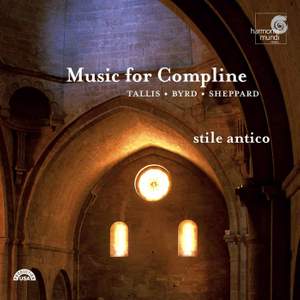
Prices shown exclude VAT. (UK tax is not payable for deliveries to United States.) See Terms & Conditions for p&p rates. | |  | Music for Compline
Aston, H: | Gaude, virgo mater Christi | Byrd: | Christe qui Lux Miserere mihi, Domini Nunc dimittis | Gregorian Chant: | Salva nos, Domine Miserere mihi, Domine Veni Domine | Sheppard, J: | Libera nos 1 & II In pace in idipsum Jesu salvator saeculi, verbum In manus tuas I, II & III | Tallis: | In manus tuas Miserere nostri, motet for 7 voices, P. 207 In pace in idipsum Te lucis ante terminum | White, Robert: | Christe qui lux es et dies |
Helen Ashby, Kate Ashby, Alison Hill (sopranos), Emma Ashby, Eleanor Harries, Carris Jones,Timothy Wayne-Wright (altos), Peter Asprey, Andrew Griffiths,Tom Herford (tenors) & Oliver Hunt, Matthew O' Donovan, David Wright (basses) Stile Antico Vocal ensemble Stile Antico made its harmonia mundi début with this programme of 16th- and 17th-century polyphony written by some of England's greatest composers for the office of Compline, last of the daily hours and a form of night prayer. It went on to become one of the year's best sellers and achieved worldwide critical acclaim. “This outstanding release … features absolutely ravishing performances by Stile Antico… This is an extraordinary recording: In its debut on Harmonia Mundi Stile Antico has given choral music lovers everywhere a reason to
celebrate what looks like the beginning of another beautiful relationship!” Classics Today 10/10 “The singing is staggeringly beautiful, the balance meticulous.” Sunday Times “Debut recordings rarely come as impressive as this sequence of 16th-century English music for the evening service that concluded the daily monastic round of prayer. It suggests that Stile Antico have a future as
bright as their pure and crystalline soprano sound, which is heard to special advantage in the pieces by John Sheppard, the most lavishly represented composer on the disc.” The Telegraph | | | In stock - usually despatched within 1 working day. |
|
|
| |  | Miserere - Sacred Choral Music
A wonderful collection of meditative choral music, spearheaded by Allegri's ubiquitous Miserere and including works by other Renaissance composers, including the magnificent Spem in Alium by Thomas Tallis, performed by two of the foremost British choirs under the direction of two of Britain's leading choral conductors - David Willcocks and Stephen Cleobury. | | | In stock - usually despatched within 1 working day. |
|
|
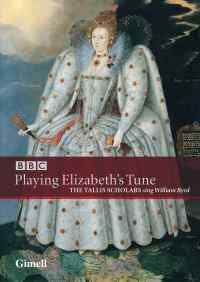
| |  | Playing Elizabeth's TuneSacred Music by William Byrd
Filmed in Merton College Chapel, Oxford and by candlelight in Tewkesbury Abbey “In 2002 The Tallis Scholars recorded an audio-visual Byrd-fest in three parts: a concert- format sequence of some of his sacred music in the atmospheric setting of Tewkesbury Abbey; a documentary of his life and his relationship to his powerful patroness, Queen Elizabeth I; and, as an 'audio bonus', another outing for the Scholars' outstanding version of the three Byrd Masses, recorded in Merton College Chapel. Charles Hazlewood fronts the documentary; xasually attired and casually unshaven, he has a degree of ease, if not exactly charm, in front of the camera. He traces adeptly and fluently the different phases of Byrd's career, with stunning visuals of Lincoln Cathedral, the Chapel Royal and Ingatestone Hall as impressive backdrops. The whole is lent authority through the erudite but accessible contributions of experts on Reformation England (Christopher Haigh) and Byrd's music (David Skinner). Hazlewood sums up by talking about the hidden depths of passion in Byrd's music, and its range, though given that the documentary is slanted towards his development as a composer of church music, we get only background snippets of his keyboard and consort music. Nevertheless, the tale is well told, not least with added visual elements such as shots of 16th-century documentation, the original printed editions of Byrd's music and his own beautifully penned autograph. As to the performances, it's interesting to hear Peter Phillips emphasize the passionate nature of Byrd's sacred music, when this aspect is fairly understated in The Tallis Scholars' performances. This isn't to say that they don't have a high degree of intensity at times: on the whole: they capture the ebb and flow of the music well, but there's a sense of distance. Phillips talks of getting right inside, of 'ticking along with the music', and that's what he does above all. This may not be the only way to perform Byrd's music but it's still very impressive in the ethereal clarity of the overall sound, and in the total commitment and rare understanding resulting from these musicians' years of experience.” Gramophone Classical Music Guide, 2010 | | | Usually despatched in 2 - 3 working days. |
|
|
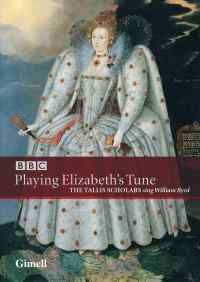
| |  | Playing Elizabeth's TuneSacred Music by William Byrd
Filmed in Merton College Chapel, Oxford and by candlelight in Tewkesbury Abbey “In 2002 The Tallis Scholars recorded an audio-visual Byrd-fest in three parts: a concert- format sequence of some of his sacred music in the atmospheric setting of Tewkesbury Abbey; a documentary of his life and his relationship to his powerful patroness, Queen Elizabeth I; and, as an 'audio bonus', another outing for the Scholars' outstanding version of the three Byrd Masses, recorded in Merton College Chapel. Charles Hazlewood fronts the documentary; xasually attired and casually unshaven, he has a degree of ease, if not exactly charm, in front of the camera. He traces adeptly and fluently the different phases of Byrd's career, with stunning visuals of Lincoln Cathedral, the Chapel Royal and Ingatestone Hall as impressive backdrops. The whole is lent authority through the erudite but accessible contributions of experts on Reformation England (Christopher Haigh) and Byrd's music (David Skinner). Hazlewood sums up by talking about the hidden depths of passion in Byrd's music, and its range, though given that the documentary is slanted towards his development as a composer of church music, we get only background snippets of his keyboard and consort music. Nevertheless, the tale is well told, not least with added visual elements such as shots of 16th-century documentation, the original printed editions of Byrd's music and his own beautifully penned autograph. As to the performances, it's interesting to hear Peter Phillips emphasize the passionate nature of Byrd's sacred music, when this aspect is fairly understated in The Tallis Scholars' performances. This isn't to say that they don't have a high degree of intensity at times: on the whole: they capture the ebb and flow of the music well, but there's a sense of distance. Phillips talks of getting right inside, of 'ticking along with the music', and that's what he does above all. This may not be the only way to perform Byrd's music but it's still very impressive in the ethereal clarity of the overall sound, and in the total commitment and rare understanding resulting from these musicians' years of experience.” Gramophone Classical Music Guide, 2010 | | | Usually despatched in 2 - 3 working days. |
|
|
| |  | I Saw the Lord
Choir of Jesus College Cambridge, Geraint Bowen, Andrew King, Christopher Argent | | | Usually despatched in 8 - 10 working days. |
|
|
| |
|