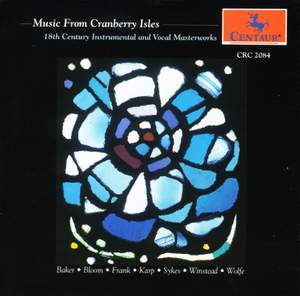
Prices shown exclude VAT. (UK tax is not payable for deliveries to United States.) See Terms & Conditions for p&p rates. | |  | Music from Cranberry Isles18th Century Instrumental and Vocal Masterworks
Bach, W F: | Nun komm der Heiden Heiland Peter Sykes (organ) | Gluck: | Orfeo ed Euridice (Orphée et Euridice): Dance of the Blessed Spirits Julius Baker (flute), Peter Sykes (organ) | Handel: | Neun deutsche Arien, HWV202-210: No. 5. Süßer Blumen Ambraflocken, HWV204 Paul Wolfe (violin), Susan Storey Frank (soprano), Julius Baker (flute), Peter Sykes (organ) Neun deutsche Arien, HWV202-210: No. 8. Flammende Rose, Zierde der Erden HWV210 Paul Wolfe (violin), Susan Storey Frank (soprano), Julius Baker (flute), Peter Sykes (organ) Chi t'intende? (from Berenice) Susan Storey Frank (soprano), Peter Sykes (organ) Violin Sonata in F major, HWV 370: Adagio Paul Wolfe (violin), Peter Sykes (organ) | Scarlatti, A: | Le violette Susan Storey Frank (soprano), Peter Sykes (organ) | Schaffrath: | Duetto in G minor for Bassoon & obbligato Harpsichord William Winstead (bassoon), Peter Sykes (organ) | Telemann: | Quartet TWV 43:d1 in D minor for 2 flutes, recorder (or bassoon or cello) & b.c. Sara Lambert Bloom (oboe), Julius Baker (flute), William Winstead (bassoon) | Vivaldi: | Cello Sonata in G minor, RV42 Benjamin Karp (cello), Peter Sykes (organ) Concerto in G minor, RV107 Paul Wolfe (violin), Sara Lambert Bloom (oboe), Julius Baker (flute), William Winstead (bassoon) |
| |
|
| |  | Victoria de Los Angeles: Lucero MioLullabies and Folk Songs
Brahms: | Wiegenlied, Op. 49 No. 4 (Lullaby) | Canteloube: | Songs of the Auvergne: Chut, chut He! beyla-z da le! | Delibes: | Les filles de Cadix | Dvorak: | Moglichkeit | Falla: | Nana (No. 5 from Siete canciones populares españolas) | Giménez: | La tempránica: Zapateado 'La tarántula é un bicho mú malo' | Halffter, E: | Panxolina | Montsalvatge: | Canción negra No. 4, Cancion de cuna para dormir a un negrito | Morante, M G: | Coplilla a Victoria de los Angeles | Pergolesi: | Stizzoso, mio stizzoso (from La Serva Padrona) | Rossini: | Duetto buffo di due gatti (Comic Duet for Two Cats) | Sadero: | Era la vo | Scarlatti, A: | Le violette | Schubert: | Wiegenlied, D498 An Sylvia, D891 | trad.: | Irish Lullaby arr. Charles Villiers Stanford Durme, durme, hermozo hijico El Noy de la Mare Din, dan, boleran Josep i Maria Margarideta La filadora La ploma de perdiu Els tres tambors |
Victoria de los Angeles (soprano), Dietrich Fischer-Dieskau (baritone), Elisabeth Schwarzkopf (soprano), students from the Victoria de los Angeles Foundation, Orchestre de la Societe des Concerts du Conservatoire, Sinfonia of London, Orchestre des Concerts Lamoureux, Spanish National Orchestra, Manuel Garcia Morante (piano), Alicia de Larrocha (piano), Geoffrey Parsons (piano), Gerald Moore (piano), Oscar Ghiglia (guitar), Renata Tarrago (guitar) & Graciano Tarrago (guitar) Rafael Fruhbeck de Burgos & Jean-Pierre Jacquillat Victoria de los Ángeles’ son Alex has Down's Syndrome and she used to sing many of the songs on this disc to him. The CD is a collaboration between the Victoria de los Ángeles Foundation and the Catalan Down Syndrome Foundation. The project includes the voices and paintings of children with Down Syndrome. | | | Usually despatched in 2 - 3 working days. |
|
|
| |  | Plaisir d’Amour
This CD features Akiko Nakajima - one of Japan’s most celebrated sopranos - giving a recital of famous and lesser-known arias. “Akiko Nakajima has a light voice…with an able technique and imaginative expressiveness.” Gramophone Magazine | | | (also available to download from $10.50) | Usually despatched in 2 - 3 working days. (Available now to download.) |
|
|
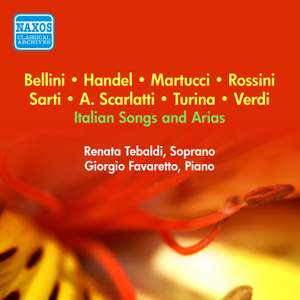
| |  | Vocal Recital: Italian Songs and Arias
recorded in Rome, July 1956 | |
|
| |  | Victoria de los Angeles
“When Victoria de los Angeles appeared at the Edinburgh Festival in 1957, she was in her prime, the voice as supple and sensitive as it was beautiful. Everything she tackled seemed to be touched by the magic of her attractive presence and glorious singing. Good as her account of Schumann's Widmung may be, it's when she gets to Brahms, perhaps her favourite composer in this genre, that she's wholly at home, the wistful sense of pain in Nachtigall caught to perfection. In the wordless pieces by Stravinsky and Ravel she floats that warm yet ethereal tone of hers with consummate ease, and the long–breathed phrasing and excellent French in Duparc's mélodie are enhanced by this artist's innate skill in word–painting. For all that, audiences were always impatient for her to get to the Spanish part of her programme, for in this field she was unsurpassed as a singer and interpreter. Many of these songs were also recorded by her in the studio, but the live occasion gives these performances an extra frisson. The encores are even better. An account of Clavelitos is a superior reading even to those famous ones available elsewhere. That's complemented by a delightfully insouciant account of the Delibes song that she didn't attempt on any other recorded occasion. Gerald Moore, as was his wont, manages to change idioms with his familiar virtuosity. As a whole, this is an invaluable addition to the singer's extensive discography.” Gramophone Classical Music Guide, 2010 | | | (also available to download from $10.50) | Usually despatched in 2 - 3 working days. (Available now to download.) |
|
|
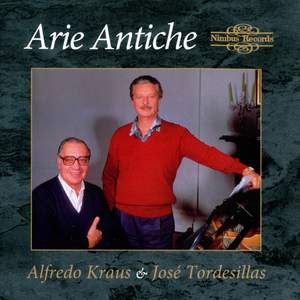
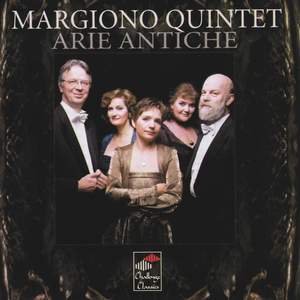
| |  | Arie Antiche
| | | Usually despatched in 4 - 5 working days. |
|
|
| |  | Victoria De Los Angeles Live Recital
Fauré: | Clair de Lune, Op. 46 No. 2 Tristesse, Op. 6 No. 2 L'aurore Au bord de l'eau, Op. 8 No. 1 (Prudhomme) | Giménez: | La tempránica: Zapateado 'La tarántula é un bicho mú malo' | Handel: | Vanne, sorelle ingrata (from Radamisto) | Lorca: | Canciónes (13) españolas antiguas: Los cuatro muleros Canciónes (13) españolas antiguas: Las tres hojas Canciónes (13) españolas antiguas: Sevillanas del Siglo XVIII Canciónes (13) españolas antiguas: El café de Chinitas Canciónes (13) españolas antiguas: Nana de Sevilla Canciónes (13) españolas antiguas: Zorongo Canciónes (13) españolas antiguas: Los reyes de la baraja Canciónes (13) españolas antiguas: La Tarara | Montsalvatge: | Canción negra No. 4, Cancion de cuna para dormir a un negrito | Ovalle: | Azulao | Pergolesi: | Stizzoso, mio stizzoso (from La Serva Padrona) | Rodrigo: | Cuatro madrigales amatorios: De los álamos vengo, madre | Scarlatti, A: | Le violette Sone Unite - Il Pirro e Demetrio | Schubert: | Wohin? (No. 2 from Die schöne Müllerin, D795) Der Tod und das Mädchen, D531 Heidenröslein, D257 Erlkönig, D328 | Schumann: | Widmung, Op. 25 No. 1 Der Nussbaum, Op. 25 No. 3 Aus den hebräischen Gesängen, Op. 25 No. 15 | Valverde: | Clavelitos |
| | | Usually despatched in 4 - 5 working days. |
|
|
| |  | The Fabulous Victoria De Los AngelesA Lifetime Achievement
Barrera Saavedra: | Adiós Granada (from Emigrantes) arr. de los Angeles | Bizet: | L'amour est un oiseau rebelle 'Habanera' (from Carmen) | Brahms: | Dein blaues Auge, (No. 8 from Acht Lieder und Gesänge, Op. 59) Vergebliches Ständchen, Op. 84 No. 4 | Canteloube: | Songs of the Auvergne: Baïlèro | Fauré: | Chanson d'amour, Op. 27 No. 1 Clair de Lune, Op. 46 No. 2 | Granados: | Tonadillas: No. 2, Callejeo Tonadillas: No. 11, El tra la la y el punteado | Guridi Bidaola: | No quiero tus avellanas (from Six canciones castellanas) Llámale con el pañuelo - ¡Como quieres que adivine! | Handel: | Joshua: Oh! had I Jubal's lyre | Nin: | Granadina (from Cantos populares españoles) El Vito (from Cantos populares españoles) El paño murciano (from Cantos populares españoles) | Sacrati: | E dove t'aggiri (from Prosperina Rapita) | Scarlatti, A: | Le violette | Schubert: | Der Tod und das Mädchen, D531 Wohin? (No. 2 from Die schöne Müllerin, D795) An die Musik D547 | Turina: | Tu Pupila es Azul | Valverde: | Clavelitos | Villa-Lobos: | Bachianas Brasileiras No. 5: Aria (Cantilena) |
Victoria de los Angeles sings works by Sacrati, Scarlatti and other composers. | | | Usually despatched in 4 - 5 working days. |
|
|
| |  | Victoria de los Ángeles: The Voice of an Angel
Bach, J C: | Ah! lamenta, oh bella Irene | Barbieri, F: | Canción de Paloma (from El Barberillo de Lavapiés) Profesores de la Orquesta Nacional de España, Rafael Frühbeck de Burgos | Barrera Saavedra: | Adiós Granada (from Emigrantes) arr. de los Angeles Victoria de los Angeles (guitar) | Beethoven: | Oh! would I were but that sweet linnet, WoO. 154 No. 9 Eduard Drolc (violin), Irmgard Poppen (cello) He promised me at parting, WoO. 154 No. 12 They bid me slight my Dermot dear, WoO. 152 No. 8 Eduard Drolc (violin), Irmgard Poppen (cello), Gerald Moore (piano) | Bizet: | Carmen (highlights) Nicolai Gedda (Don Jose), Denise Monteil (Micaela), Marcelle Croisier (Frasquita), Monique Linval (Mercédès) Chœurs et Orchestre National da la Radiodiffusion Française, Sir Thomas Beecham | Brahms: | Wiegenlied, Op. 49 No. 4 (Lullaby) Dein blaues Auge, (No. 8 from Acht Lieder und Gesänge, Op. 59) Vergebliches Ständchen, Op. 84 No. 4 Gerald Moore (piano) Sapphische Ode, Op. 94 No. 4 Gerald Moore (piano) | Caballero: | Romanza de Pilar (from Gigantes y cabezudos) Profesores de la Orquesta Nacional de España, Rafael Frühbeck de Burgos | Canteloube: | Songs of the Auvergne Orchestre des Concerts Lamoureux, Jean-Pierre Jacquillat | Catalani: | Ebben? Ne andrò lontana (from La Wally) Orchestra del Teatro dell’Opera di Roma, Giuseppe Morelli | Chapí: | Canción de Pastora (from La patria chica) Rafael Frühbeck de Burgos Canción de la gitana (from La chavala) Profesores de la Orquesta Nacional de España, Rafael Frühbeck de Burgos Carceleras from Las hijas de Zebedeo Sinfonia of London, Rafael Frühbeck de Burgos | Chueca: | La gran vía: Tango de la menegilda Rafael Frühbeck de Burgos La gran vía: Chotís del eliseo madrilène Profesores de la Orquesta Nacional de España, Rafael Frühbeck de Burgos | Debussy: | Fêtes galantes - Set 1 Gonzalo Soriano (piano) | Delibes: | Les filles de Cadix | Duparc: | L'Invitation au voyage Orchestre de la Société des Concerts du Conservatoire, Georges Prêtre | Dvorak: | Als die alte Mutter (No. 4 from Zigeunermelodien, op. 55) Moglichkeit Der Apfel, Op. 38 No. 2 Gerald Moore (piano) | Falla: | La vida breve: ‘Vivan los que rien!' Alli está! Riyendo (from La vida breve) Philharmonia Orchestra, Stanford Robinson El sombrero de tres picos: Overture Philharmonia Orchestra with Chorus, Rafael Frühbeck de Burgos El Amor Brujo: excerpts Philharmonia Orchestra, Carlo Maria Giulini Siete Canciones populares españolas Gonzalo Soriano (piano) | Fauré: | Tristesse, Op. 6 No. 2 Au bord de l'eau, Op. 8 No. 1 (Prudhomme) Les roses d'Ispahan Op. 39 No. 4 Toujours!, Op. 21 No. 2 Gonzalo Soriano (piano) | Gounod: | Ah! Je ris de me voir (from Faust) Il se fait tard ! Adieu ! (from Faust) Nicolai Gedda (Faust), Boris Christoff (Mephistopheles) Orchestre du Théâtre National de l’Opéra, André Cluytens | Granados: | Tonadillas: No. 2, Callejeo Tonadillas: No. 11, El tra la la y el punteado Gerald Moore (piano) Goyescas: Quejas ó La Maja y el Ruiseñor New Philharmonia Orchestra, Rafael Frühbeck de Burgos Iban al pinar Gracia mía Alicia de Larrocha (piano) | Grieg: | Ich liebe Dich, Op. 5 No. 3 | Guridi Bidaola: | Jota (from Six canciones castellanas) Gerald Moore (piano) | Hahn, R: | L'Enamourée Trois jours de vendange Le rossignol des lilas Gonzalo Soriano (piano) | Handel: | Joshua: Oh! had I Jubal's lyre Gerald Moore (piano) | Haydn: | Schlaf in deiner engen Kammer Eduard Drolc (violin), Irmgard Poppen (cello) | Leoncavallo: | Qual fiamma avea nel guardo!.... Hui! Stridono lassù (from I Pagliacci) RCA Victor Orchestra, Renato Cellini | Lleó Balbastre: | Couplets babilónicos (from La corte del Faraón) Profesores de la Orquesta Nacional de España, Rafael Frühbeck de Burgos | Lorca: | Canciónes (13) españolas antiguas: Anda, jaleo Canciónes (13) españolas antiguas: Los cuatro muleros Canciónes (13) españolas antiguas: Las tres hojas Canciónes (13) españolas antiguas: Los mozos de Monleón Canciónes (13) españolas antiguas: Las morillas de Jaén Canciónes (13) españolas antiguas: Sevillanas del Siglo XVIII Miguel Zanetti (piano) | Luna, P: | El Niño Judío: De España vengo Profesores de la Orquesta Nacional de España, Rafael Frühbeck de Burgos | Martini, J P: | Plaisir d'amour | Mascagni: | Voi lo sapete o mamma (from Cavalleria rusticana) Orchestra del Teatro dell’Opera di Roma, Giuseppe Morelli | Massenet: | Allons! Il le faut pour lui-même!... Adieu, notre petite table (from Manon) Je marche sur tous les chemins (from Manon) Chœurs et Orchestre du Théâtre National de l’Opéra-Comique, Pierre Monteux Werther! Werther!…Je vous écris de ma petite chambre (from Werther) Va! Laisse couler mes larmes (from Werther) Orchestre de Paris, Georges Prêtre | Mendelssohn: | Auf Flügeln des Gesanges, Op. 34 No. 2 | Montsalvatge: | Canciones negras (5) Orchestre de la Société des Concerts du Conservatoire, Rafael Frühbeck de Burgos | Mozart: | Porgi amor (from Le nozze di Figaro) Orchestra del Teatro dell’Opera di Roma, Giuseppe Morelli Ecco quel fiero istante, K346 Elisabeth Schwarzkopf (soprano), Dietrich Fischer Dieskau (baritone), Gerald Moore (piano) | Nin: | Granadina (from Cantos populares españoles) Gerald Moore (piano) | Offenbach: | Elle a fui, la tourterelle (from Les Contes d' Hoffmann) Orchestre de la Société des Concerts du Conservatoire, André Cluytens | Ovalle: | Azulao Profesores de la Orquesta Nacional de España, Rafael Frühbeck de Burgos | Puccini: | Si, mi chiamano Mimi (from La Bohème) O soave fanciulla (from La Bohème) Donde lieta usci (from La Bohème) Jussi Björling (Rodolfo), Robert Merrill (Marcello) RCA Victor Orchestra, Sir Thomas Beecham O mio babbino caro (from Gianni Schicchi) Orchestra del Teatro dell Opera di Roma, Tullio Serafin Ancora un passo…Spira sul mare (from Madama Butterfly) Jussi Björling (Pinkerton), Mario Sereni (Sharpless) Bimba dagli occhi pieni di malia (from Madama Butterfly) Jussi Björling (Pinkerton) Un bel di vedremo (from Madama Butterfly) Con onor muore (from Madama Butterfly) Coro e Orchestra del Theatro dell’Opera di Roma, Gabriele Santini | Purcell: | Let us Wander not Unseen (from The Indian Queen, Z630) Lost is my quiet for ever, Z502 Gerald Moore (piano) | Ravel: | La Flûte enchantée (Shéhérazade No. 2) Orchestre de la Société des Concerts du Conservatoire, Georges Prêtre | Rossini: | Nacqui all'affanno, al pianto...Non più mesta (from La Cenerentola) Giuseppe Morelli Una voce poco fa (from Il barbiere di Siviglia) Royal Philharmonic Orchestra, Vittorio Gui | Sadero: | Era la vo Profesores de la Orquesta Nacional de España, Rafael Frühbeck de Burgos | Scarlatti, A: | Le violette Gerald Moore (piano) | Schubert: | Der Tod und das Mädchen, D531 Wohin? (No. 2 from Die schöne Müllerin, D795) An die Musik D547 Gerald Moore (piano) | Serrano: | Cancion de la gitana (from Le alegria del battallon) Rafael Frühbeck de Burgos Escena lírica (Los claveles) Rafael Frühbeck de Burgos Romanza de Gloria (Los de Aragón) Profesores de la Orquesta Nacional de España, Rafael Frühbeck de Burgos | Stanford: | An Irish Lullaby | Tchaikovsky: | Schottische Ballade, Op. 46 No. 2 Gerald Moore (piano), Dietrich-Fischer Dieskau (baritone) | Toldrá: | Cançó de grumet (A l’ombra del Leidoner) Gonzalo Soriano (piano) | Turina: | Saeta en forme de Salve a la Virgen de la Esperanza, Op. 60 Poema en forma de canciones, Op. 19: No. 3, 'Cantares' Philharmonia Orchestra, Walter Susskind | Valls Gorina: | Canciones Sefarditas Jean-Claude Gérard (flute), Oscar Ghiglia (guitar) | Valverde: | Clavelitos Gerald Moore (piano) | Verdi: | Surta è la notte...Ernani! Ernani, involami (from Ernani) Era più calmo? (from Otello) Mia madre aveva...Piangea cantando...Ave Maria (from Otello) Orchestra del Teatro dell’Opera di Roma, Giuseppe Morelli Come in quest'ora bruna (from Simon Boccanegra) Orchestra del Teatro dell’Opera di Roma, Gabriele Santini Libiamo, ne' lieti calici (from La Traviata) È strano! è strano!...Ah! fors è lui (from La traviata) Teneste la promessa...Addio, del passato (from La Traviata) Carlo del Monte (Alfredo) Coro e Orchestra del Teatro dell’Opera di Roma, Tullio Serafin | Villa-Lobos: | Bachianas Brasileiras No. 5: Aria (Cantilena) Bachianas brasileiras no 5 ; Dança (martelo) Orchestre National de la Radiodiffusion Française, Heitor Villa-Lobos | Wagner: | Dich, teure Halle (from Tannhauser) Einsam in trüben Tagen (from Lohengrin) Orchestra del Teatro dell’Opera di Roma, Giuseppe Morelli | Yradier: | La Paloma Profesores de la Orquesta Nacional de España, Rafael Frühbeck de Burgos |
| | | In stock - usually despatched within 1 working day. |
|
|
| |  | Elly Ameling: The Dutch Nightingale
Bach, J S: | Cantata BWV202 'Weichet Nur, betrübte Schatten' (Wedding Cantata) Cantata BWV209 'Non sa che sia dolore' (Italian Cantata) Cantata BWV80 'Ein feste Burg ist unser Gott': Komm in mein Herzenshaus Cantata BWV147 'Herz und Mund und Tat und Leben': Bereite dir, Jesu, noch itzo die Bahn Cantata BWV149 'Man singet mit Freuden vom Sieg': Gottes Engel weichen nie St John Passion, BWV245: Ich folge dir gleichfalls St John Passion, BWV245: Zerfliesse, mein Herze Christmas Oratorio, BWV248: Nur ein Wink von seinen Händen Cantata BWV93 'Wer nur den lieben Gott läßt walten': Ich will auf den Herren schau'n Cantata BWV177 'Ich ruf zu dir, Herr Jesu Christ': Verleih', dass ich aus Herzens Grund Cantata BWV94 'Was frag ich nach der Welt': Es halt es mit der blinden Welt Cantata BWV202 'Weichet Nur, betrübte Schatten' (Wedding Cantata): Sich üben im Lieben Cantata BWV144 'Nimm, was dein ist, und gehe hin': Genügsamkeit Cantata BWV89 'Was soll ich aus dir machen, Ephraim?': Gerechter Gott, ach, rechnest du? Cantata BWV21 'Ich hatte viel Bekümmernis': Seufzer, tränen, kummer, not Flosst, mein Heiland, flosst dein Namen (from Christmas Oratorio) Cantata BWV187 'Es wartet alles auf dich': Gott versorget alles Leben Cantata BWV199 'Mein Herze schwimmt im Blut': Stumme Seufzer, stille Klagen Cantata BWV98 'Was Gott tut, das ist wohlgetan': Hört, ihr Augen, auf zu weinen Erfullet, ihr himmlischen, gottlichen Flammen (Wie schon leuchtet der Morgenstern BWV1) Cantata BWV75 'Die Elenden sollen essen': Erfüllet, ihr himmloschen göttlichen Flamen Cantata BWV74 'Wer mich liebet, der wird mein Wort halten': Komm, mein Herze steht dir offen Mass in F major, BWV233: Qui tollis peccata mundi | Beethoven: | Wonne der Wehmut, Op. 83 No. 1 Mass in C major, Op. 86: Kyrie | Beginiker: | Ecce nova guadia Nun wiegen wir das Kindlein | Brahms: | Da unten im Tale (No. 6 from Deutsche Volkslieder, WoO 33) Geistliches Wiegenlied, Op. 91 No. 2 | Chausson: | Les Papillons, Op. 2 No. 3 (Gautier) Le Colibri, Op. 2 No. 7 (de Lisle) | Debussy: | Nuit d'étoiles Fleur des blés (André Girod) Dans le jardin Fêtes galantes - Set 1 Proses Lyriques Trois Poèmes de Stéphane Mallarmé Noël des enfants qui n'ont plus de maison | Duparc: | Chanson triste | Fauré: | Le papillon et la fleur, Op. 1 No. 1 Rêve d'amour, Op. 5 No. 2 Dans les ruines d'une abbaye Op. 2 No. 1 Seule! Op. 3 No. 1 L'aurore Puisqu'ici-bas toute âme Op. 10 No. 1 Tarentelle Op. 10 No. 2 Au bord de l'eau, Op. 8 No. 1 (Prudhomme) Automne, Op. 18 No. 3 Le parfum impérissable Op. 76 No. 1 Arpège, Op. 76 No. 2 (Samain) Pleurs d'or Op. 72 Chanson de Melisande Soir Op. 83 No. 2 Chanson Op. 94 Vocalise-étude La chanson d'Ève, Op. 95 Le jardin clos Op. 106 C'est la paix Op. 114 Après un rêve, Op. 7 No. 1 | Grieg: | Ich liebe Dich, Op. 5 No. 3 | Hahn, R: | Si mes vers avaient des ailes | Haydn: | The Mermaid's Song, Hob. XXVIa:25 Ein Magd, ein' Dienerin, Hob. XXVIId:1 | Loewe, C: | Niemand hat's gesehn, Op. 9, H.X/4 | Mahler: | Symphony No. 4 in G major: Wir geniessen den himmlischen Leben | Marchesi: | La Folletta | Mendelssohn: | Auf Flügeln des Gesanges, Op. 34 No. 2 | Mozart: | Ridente la calma, K152 Oiseaux, si tous les ans, K307 Dans un bois solitaire, K308 Die Zufriedenheit, K473 Komm, liebe Zither, K351 Warnung 'Männer suchen stehts zu naschen', K433 Das Veilchen, K476 Sei du mein Trost, K391 Der Zauberer, K472 Das Lied der Trennung, K519 Als Luise die Briefe, K520 Das Traumbild, K.530 Un moto di gioia, K579 Die Verschweigung, K518 Die kleine Spinnerin, K531 Abendempfindung an Laura, K523 Die Alte K517 An Chloë, K524 Sehnsucht nach dem Frühlinge, K596 | Poulenc: | Airs chantés Trois Poèmes de Louise Lalanne Cinq Poèmes de Max Jacob La courte paille Fancy Colloque Trois poèmes de Louise de Vilmorin Ce doux petit visage Fiançailles pour rire | Satie: | La diva de l'empire Je te veux | Scarlatti, A: | Le violette | Schubert: | Auf dem Wasser zu singen, D774 Auf dem See, D543 (Goethe) Erlafsee D586 (Mayrhofer) Die Forelle, D550 Die gefangenen Sänger D712 (Schlegel) Verklarung D59 (Herder, after Pope) Der Jungling und der Tod, D545 (Spaun) Suleika I, D720 Suleika II, D717 Raste Krieger, Krieg ist aus (Ellens Gesang I), D837 Jäger, ruhe von der Jagd (Ellens Gesang II), D838 Ave Maria, D839 Gretchen am Spinnrade, D118 Trost im Liede, D546 (Schober) An die Musik D547 Ganymed, D544 (Goethe) Trost im Liede, D546 (Schober) An die Musik D547 Ganymed, D544 (Goethe) Frühlingsglaube, D686 Liebe schwarmt auf allen Wegen, D239 No. 6 (Goethe) Lachen und Weinen, D777 Ständchen 'Horch! Horch! die Lerch!', D889 Der Hirt auf dem Felsen, D965 (Von Chezy / Muller) Im Frühling, D882 Amalia, D195 (Schiller) Atys D585 Seligkeit D433 (Holty) | Stölzel: | Bist du bei mir | Stravinsky: | Pastorale | trad.: | As I sat on a sunny bank Sweet was the song In Dulci Jubilo Uff'm Berge O suver maecht van Israel Klein, klein Jezuken Canco de nadal Baile de Nadal Baile de Córdoba Baile Andaluz Entre le boeuf et l'ane gris L'appel des bergers Noël pour l'amour de Marie Noël des jouets |
Born Elisabeth Sara Ameling on 8 February 1933 in Rotterdam, the Dutch soprano known as Elly Ameling won first prize at the Vocal Concours in ’s- Hertogenbosch in Holland in 1956, and the Concours International de Musique in Geneva in 1958. She gave her first formal recital in Amsterdam in 1961 and went on to perform for more than thirty years in virtually every major cultural centre in the world as one of the greatest singers of our age, renowned for her warm, unaffected personality, purity of tone and effortless technique. She made her career mainly as a concert and lieder singer, with some appearances in opera (Mozart and Haydn), and became renowned for her recitals of French and German songs and for her superlative interpretative gifts. CD 1 begins with two solo cantatas for soprano by Johann Sebastian Bach – the famous Wedding Cantata (BWV202) and ‘Non sa che sia dolore’ (BWV209) – followed by further arias from Bach cantatas and oratorios. CD 2 presents more music by Bach, with a collection of beautiful soprano arias from cantatas, accompanied by oboe and bass continuo. The oboe soloist is the Dutch virtuoso Han de Vries, who plays three different types of instrument, namely the normal oboe, the ‘oboe da caccia’ and the ‘oboe d’amore’, as specified by the composer, to striking musical effect in the various arias. In CD 3 Ameling shows her skill as an unrivalled interpreter of the music of Schubert with a collection of the composer’s best-known and most popular Lieder including ‘Die Forelle’, ‘Ave Maria’, ‘Gretchen am Spinnrade’ and ‘An die Musik. The piano accompanists are Irwin Gage and Jörg Demus. CD 4 opens with Schubert’s great showpiece for soprano and clarinet: ‘Der Hirt auf dem Felsen’ (‘The Shepherd on the Rock’), in which the clarinet soloist is George Pietersen, plus three other Schubert songs. These are followed by a group of songs by Mozart, including ‘Ridente la calma’, ‘Dans un bois solitaire’ and ‘Un moto di gioia’. The soprano is accompanied by Irwin Gage in the Schubert and Jörg Demus in the Mozart. In CDs 5 and 6, Ameling moves into the field of French song, for which she was trained by the famous French baritone Pierre Bernac. Her repertoire here encompasses many well-known songs by Gabriel Fauré, Claude Debussy and Francis Poulenc. She is accompanied by the distinguished pianist Dalton Baldwin, with whom she frequently performed. In CD 7 we hear a collection of much loved popular songs, typical of the mixed programmes with which the artist always delighted her audiences at recitals. These include Mendelssohn’s ‘Auf Flügeln des Gesanges’ (‘On Wings of Song’) and Grieg’s ‘Ich liebe dich’ (‘I Love You’). The disc closes with a further group of French mélodies by Poulenc. The final CD begins with a collection of Christmas songs from many lands, to which Ms Ameling brings her own special charm. Then comes a typical example of Ameling as a participant in a large-scale liturgical work, in the Kyrie from Beethoven’s Mass in C, where her clearly focussed voice blends perfectly with those of her three fellow soloists. The programme ends with the finale from Mahler’s Fourth Symphony, in which Ameling is heard as the radiant soprano soloist extolling the joys of heaven in a child-like way, with the Pittsburgh Symphony Orchestra conducted by André Previn. | | | In stock - usually despatched within 1 working day. |
|
|
| |
|