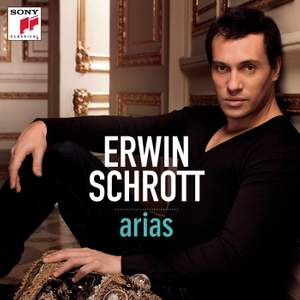
All recordingsPrices shown exclude VAT. (UK tax is not payable for deliveries to United States.) See Terms & Conditions for p&p rates. | |  | Erwin Schrott: Arias
On his second release for Sony Classical, Erwin Schrott transfers many of his stage triumphs to an album of arias. For the most part Schrott has devoted this new CD to classics from the French and Italian bass-baritone repertoire, complementing them with compositions by Verdi and Massenet that are not often heard. The singer also gives due place to his love of music by Spanish and Latin American composers: namely the Spanish composer Pablo Sorozabal, and the Brazilian composer Carlos Gomes. “he has a superb voice which he uses intelligently and sensitively...Once you adjust to the pronounced echo, there is plenty of pleasure to be had here - from his singing and adventurous choice of repertoire alike...his dying Don Quichotte is especially fine.” BBC Music Magazine, September 2012 **** “The best of his voice - a dark vocal plushness in his mid-range - emerges in the Toreador Song's verse portion, though beyond that he pushes for low notes that aren't really there...Declamatory passages go well for Schrott, especially when the language is Italian - one reason why some of the early Verdi arias are among the more convincing moments on the disc.” Gramophone Magazine, October 2012 “on disc, his pleasing lyric bass is a good fit for the characters he plays...this is far from the random bran-tub selection one now almost invariably encounters on recorded solo opera programmes of this type...[Don Quichotte's] valedictory music inspires some of Schrott's most sensitive singing...one of the most plausible champions of this repertoire in today's opera firmament.” International Record Review, September 2012 “Schrott finds perhaps his most rewarding role as Mefistofele in Boito's version of the Faust myth, reaching a feverish pitch of disgust as he derides mankind in "Ave Signor" and "Ecco il Mondo".” The Independent, 23rd June 2012 *** “It's a bit of a mixed bag but, unlike some of his previous recordings, the best of it does capture the mixture of raunchiness and dramatic power he can generate in the theatre...[Pluses] include an electrifying Scintille Diamant from Offenbach's Les Contes d'Hoffmann; excerpts from Verdi's I Lombardi and Attila, in which his sense of line is magnificent; Mefistofele's principal monologues, savagely ironic...Flawed but highly recommended.” The Times, 12th July 2012 **** “The wide range and changing tones are distinctive in this selection from Verdi, Boito, Gounod, Massenet, Bizet and beyond. One minute Schrott’s exploring the ocean depths of his register; the next he’s bobbing on the surface, bright as any tenor.” The Times, 22nd June 2012 *** | | | In stock - usually despatched within 1 working day. |
|
|
| |  | Domingo conducts Milnes! Milnes conducts Domingo!
| | | In stock - usually despatched within 1 working day. |
|
|
| |  | Opera Scenes and Arias & Italian Songs
“As a lesson in vocal versatility, this CD is unsurpassed. Raimondi characterises Mozart's Don Giovanni just as well as Musorgsky's Boris Godunov.” BBC Music Magazine, February 2012 ***** | | | In stock - usually despatched within 1 working day. |
|
|
| |  | The Opera Album 2011
Bizet: | Votre toast je peux vous le rendre 'Toreador Song' (from Carmen) Bryn Terfel (bass-baritone) L'amour est un oiseau rebelle 'Habanera' (from Carmen) Tatiana Troyanos (mezzo) Au fond du temple saint (from Les Pêcheurs de Perles) Luciano Pavarotti (tenor), Nicolai Ghiaurov (bass) La fleur que tu m'avais jetée (from Carmen) Plácido Domingo (tenor) Les tringles des sistres tintaient (from Carmen) Magdalena Kozená (mezzo) | Delibes: | Lakmé: Dôme épais (Flower Duet) Joan Sutherland (soprano), Jane Berbié (mezzo) | Donizetti: | Una furtiva lagrima (from L'elisir d'amore) Juan Diego Flórez (tenor) | Dvorak: | Mesícku na nebi hlubokém 'Song to the Moon' (from Rusalka) Pilar Lorengar (soprano) | Gluck: | Che faro' senza Euridice? (from Orfeo ed Euridice) Andreas Scholl (countertenor) | Gounod: | Ah! Je veux vivre dans ce rêve (from Roméo et Juliette) Renée Fleming (soprano) Gloire immortelle de nos aïeux (from Faust) Richard Bonynge | Handel: | Lascia ch'io pianga (from Rinaldo) Cecilia Bartoli (mezzo) Ombra mai fu (from Serse) Andreas Scholl (countertenor) | Leoncavallo: | Vesti la giubba (from I Pagliacci) Jonas Kaufmann (tenor) | Mozart: | Der Vogelfänger bin ich, ja (from Die Zauberflöte) Hermann Prey (baritone) La ci darem la mano (from Don Giovanni) Ingvar Wixell (baritone), Mirella Freni (soprano) Der Hölle Rache kocht in meinem Herzen (from Die Zauberflöte) Patricia Petibon (soprano) | Offenbach: | Barcarolle (from Les Contes d'Hoffmann ) Joan Sutherland (soprano), Huguette Tourangeau (mezzo) Le jugement de Pâris - Au Mont Ida (from La Belle Hélène) Joseph Calleja (tenor) | Puccini: | Quando me'n vo (from La Bohème) Anna Netrebko (soprano) E lucevan le stelle (from Tosca) Andrea Bocelli (tenor) Humming Chorus (from Madama Butterfly) Giuseppe Sinopoli Nessun dorma (from Turandot) Luciano Pavarotti (tenor) Vissi d'arte (from Tosca) Kiri Te Kanawa (soprano) Si, mi chiamano Mimi (from La Bohème) Angela Gheorghiu (soprano) Signore, ascolta! (from Turandot) Montserrat Caballé (soprano) Chi il bel sogno di Doretta (from La Rondine) Renata Tebaldi (soprano) | Rossini: | Una voce poco fa (from Il barbiere di Siviglia) Teresa Berganza (mezzo) Largo al factotum (from Il barbiere di Siviglia) Leo Nucci (baritone) | Saint-Saëns: | Mon cœur s'ouvre à ta voix (from Samson et Dalila) Marilyn Horne (mezzo) | Verdi: | Anvil Chorus (from Il Trovatore) Sir Georg Solti La donna è mobile (from Rigoletto) Roberto Alagna (tenor) Libiamo, ne' lieti calici (from La Traviata) Plácido Domingo (tenor), Ileana Cotrubas (soprano) Di quella pira (from Il trovatore) José Carreras (tenor) Sempre libera (from La Traviata) Kiri Te Kanawa (soprano) Questa o quella (from Rigoletto) Rolando Villazón (tenor) Va, pensiero (from Nabucco) Silvio Varviso Celeste Aida (from Aida) Luciano Pavarotti (tenor) | Wagner: | Mild und leise 'Isolde's Liebestod' (from Tristan und Isolde) Birgit Nilsson (soprano) |
This magnificent collection features the some of the greatest opera stars of all time: Cecilia Bartoli, Anna Netrebko, Bryn Terfel, Renée Fleming, Andrea Bocelli Luciano Pavarotti, Dame Joan Sutherland, Plácido Domingo, Dame Kiri Te Kanawa and José Carreras. With a carefully chosen selection of perennially popular arias, duets and choruses, this enchanting collection creates the perfect introduction to opera. With 40 tracks and over 2½ hours of music this collection is outstanding value for money. Includes Pavarotti’s classic recording of the most popular opera aria of all, Puccini’s ‘Nessun dorma’. | | | In stock - usually despatched within 1 working day. |
|
|
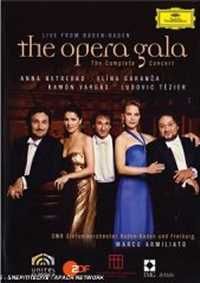
| |  | The Opera Gala - Live from Baden-Baden (DVD)The Complete Concert
| | | In stock - usually despatched within 1 working day. |
|
|
| |  | L'Art de Gabriel BacquierArias, Songs & Operetta
Bellini: | Ah! Per sempre io ti perdei (from I Puritani) | Berlioz: | Une puce gentille 'Flea Song' (from La damnation de Faust) La Damnation de Faust: Devant la maison Absence (from Les nuits d'été, Op. 7) | Bizet: | Votre toast je peux vous le rendre 'Toreador Song' (from Carmen) | Debussy: | Les cloches (Paul Bourget) | Delibes: | Stances (from Lakmé) | Donizetti: | Vieni, amor...Leonora! A' piedi tuoi (from La Favorita) | Duparc: | Chanson triste La Vie antérieure | Fauré: | Clair de Lune, Op. 46 No. 2 Le secret Op. 23 No. 3 | Gounod: | Mab, la reine des mensonges (from Roméo et Juliette) Venise Premier jour de mai | Hahn, R: | Si mes vers avaient des ailes | Lecocq: | Certainement jamais Clairette (from La Fille de Mme Angot) Pour être fort, on se rassemble (from La Fille de Mme Angot) | Lehár: | Der Graf von Luxemburg (highlights) Die Lustige Witwe: Waltz | Massenet: | Bravo, mon cher...Epouse quelque brave fille (from Manon) Quelle priere de reconnaissance (from Werther) Comment peut-on penser du bien (from Don Quichotte) Riez, allez, riez du pauvre idéologue (from Don Quichotte) Elégie | Mozart: | Fin ch'han dal vino (from Don Giovanni) Deh! vieni alla finestra (from Don Giovanni) Vedro mentr'io sospiro (from Le nozze di Figaro) Madamina, il catalogo è questo (from Don Giovanni) | Offenbach: | Scintille, diamant (from Les Contes d'Hoffmann) Dans les rôles d’amoureux (from Les Contes d’Hoffmann) | Poulenc: | Voyage à Paris | Ravel: | Ronsard à son âme D’Anne qui me jecta de la neige | Sauguet: | Berceuse créole | Thomas, Ambroise: | Etre ou ne pas etre (from Hamlet) | Varney: | Pour faire un brave mousquetaire (from Les Mousquetaires au couvent) Gris, suis-je gris, vraiment ? (from Les Mousquetaires au couvent) | Verdi: | Vanne, la tua meta gia vedo…Credo in un Dio crudel (from Otello) O Carlo, ascolta (from Don Carlo) Pari siamo! (from Rigoletto) sung in French Cortigiani, vil razza dannata (from Rigoletto) sung in French | Yvain: | Porquerolle |
Gabriel Bacquier has already, in his lifetime, entered the hallowed halls of great French singers. An incomparable actor, endowed with exceptional vocal means and an unbelievably rich timbre, he carried the art of interpretation to the highest level. For the first time on CD, Decca have issued a collection highlighting this baritone’s remarkable career. | 
| | | (Sorry, download not available in your country) | Usually despatched in 4 - 5 working days. |
|
|
| |  | Opera - 50 of the Best
Bellini: | Casta Diva (from Norma) O rendetemi la speme...Qui la voce sua soave...Vien, diletto (from I Puritani) | Bizet: | L'amour est un oiseau rebelle 'Habanera' (from Carmen) Votre toast je peux vous le rendre 'Toreador Song' (from Carmen) Carmen: Prelude to Act I Au fond du temple saint (from Les Pêcheurs de Perles) | Catalani: | Ebben? Ne andrò lontana (from La Wally) | Gluck: | Che faro' senza Euridice? (from Orfeo ed Euridice) | Leoncavallo: | Vesti la giubba (from I Pagliacci) | Monteverdi: | Possente Spirto (from l'Orfeo) | Mozart: | Le nozze di Figaro, K492: Overture Non piu andrai, farfallone amoroso (from Le Nozze di Figaro) Dalla sua pace (from Don Giovanni) Vedrai, carino (from Don Giovanni) Der Hölle Rache kocht in meinem Herzen (from Die Zauberflöte) Ach, ich fühl's (from Die Zauberflöte, K620) La mia Dorabella capace non e' (from Così fan tutte) E Susanna non vien! … Dove sono i bei momenti (from Le nozze di Figaro) La ci darem la mano (from Don Giovanni) | Offenbach: | Barcarolle (from Les Contes d'Hoffmann ) | Puccini: | Donna non vidi mai (from Manon Lescaut) O mio babbino caro (from Gianni Schicchi) Nessun dorma (from Turandot) Un bel di vedremo (from Madama Butterfly) Tu che di gel sei cinta (from Turandot) Vissi d'arte (from Tosca) Si, mi chiamano Mimi (from La Bohème) Manon Lescaut: Intermezzo Act III Humming Chorus (from Madama Butterfly) Che gelida manina (from La Bohème) E lucevan le stelle (from Tosca) | Purcell: | When I am laid in earth (from Dido and Aeneas) | Rossini: | Elena! Oh tu, che chiamo! (from La donna del lago) Pensa alla patria (from L'Italiana in Algeri) Guillaume Tell Overture Sia qualunque delle figlie (Don Magnifico) Semiramide Overture | Verdi: | Manrico! Che? (from il Trovatore) Sempre libera (from La Traviata) Se quel guerrier io fossi!…Celeste Aida (from Aida) Di provenza il mar (from La Traviata) La donna è mobile (from Rigoletto) Caro nome (from Rigoletto) Or co' dadi, ma fra poco (from Il Trovatore) Noi siamo zingarelle (from La Traviata) È il sol dell'anima (from Rigoletto) | Wagner: | Tannhäuser: Overture Steuermann, laß die Wacht! (from Der fliegende Holländer) Mild und leise 'Isolde's Liebestod' (from Tristan und Isolde) Lohengrin: Prelude to Act 1 |
Graciela Alperyn (mezzo-soprano), Daniela Longhi (soprano), Jozsef Mukk (tenor), Maurizio Frusoni (tenor), Kaludi Kaludov (tenor), Monika Krause (soprano), Tatiana Lisnic (soprano), Renato Girolami (bass), Lando Bartolini (tenor), Marianna Pizzolato (mezzo-soprano), Bo Skovhus (baritone), Miriam Gauci (soprano), Kristjan Johannsson (tenor), Armando Ariostini (baritone), Masako Deguci (soprano), Felipe Bou (bass), Alessandro Carmignani (tenor), Ildiko Raimondi (soprano), Georg Tichy (baritone), Silvano Carroli (baritone), Nelly Miricioiu (soprano), Alan Titus (baritone), Luba Orgonasova (soprano), Yordy Ramiro (tenor), Kym Amps (soprano), Hellen Kwon (soprano), Elisabeth Norberg-Schulz (soprano), Alida Ferrarini (soprano), Ann-Christine Biel (soprano), Indra Thomas (soprano), Kristine Jepson (mezzo-soprano), Franco de Grandis (bass), Goran Eliasson (tenor), Ladislav Neshyba (bass), Rannveig Braga (mezzo-soprano), Marina Mescheriakova (soprano), Hedwig Fassbender (mezzo-soprano), Janez Lotric (tenor), Igor Morozov (baritone), Bruno Pratico (bass-baritone), John Dickie (tenor), Andrea Martin (baritone), Peter Mikulas (bass), Nicola Martinucci (tenor), Jonathan Welch (tenor), Giorgio Lamberti (tenor) Nicolaus Esterhazy Sinfonia, Slovak Radio Symphony Orchestra, Slovak Philharmonic Chorus, Hungarian State Opera Orchestra, Budapest Festival Chorus, Belgian Radio and Television Philharmonic Orchestra, Malaga Symphony Orchestra, Bilbao Choral Society, Mal, Michael Halasz, Alexander Rahbari, Will Humburg, Alberto Zedda, Ricco Saccani, Sergio Vartolo, Arnold Ostman, Charles Rosekrans, Leif Segerstam, Johannes Wildner | |
|
| |  | Baritone Arias Vol. 1Complete versions and orchestral backing tracks
| | | Usually despatched in 2 - 3 working days. |
|
|
| |  | Carlo Colombara: The Art of the Bass
Carlo Colombara (bass) Orchestra della Svizzera Italiana, Bulgarian National Symphony Orchestra & Prague Tchaikovsky Orchestra, György G. Ráth, Vladimir Ghiaurov & Fabrizio Milani Described as “the great Verdian bass” (Le Figaro) and a “Mefistofele who stood out over all the others” (Der Neue Merker), Carlo Colombara brings some of the most famous bass rôles to life in this wide-ranging programme. Emotions range from the pride of Escamillo in Bizet’s Carmen, through the terrors of Verdi’s Attila, to the tender recollections of Rachmaninov’s Aleko. Mephistopheles strides powerfully through both Gounod and Boito’s operas, and Rossini’s comic wit contrasts with the darkness of Mussorgsky’s Boris Godunov. In 1986 he won the prize for the best Italian singer in the G. B. Viotti Competition and the following year he won the As.Li.Co competition before making his début at the Teatro dell’Opera in Rome in Ernani. His subsequent career has brought appearances in the most important theatres of the world, in Tokyo, London, Berlin, Vienna, Milan, New York, Zurich, Barcelona, where he now lives, Verona and elsewhere. | | | Usually despatched in 2 - 3 working days. |
|
|
| |  | Joseph Metternich: Vocal Legends Vol. 10Scenes from Operas (sung in German)
Bizet: | Votre toast je peux vous le rendre 'Toreador Song' (from Carmen) Sung in German as 'Euren Toast kann ich wohl erwidern' | Leoncavallo: | Si può? (from I Pagliacci) Sung in German as 'Schaut her! Ich bin’s' | Verdi: | Di provenza il mar (from La Traviata) Sung in German as 'Hat dein heimatliches Land' Cortigiani, vil razza dannata (from Rigoletto) Sung in German as 'Feile Sklaven' Un di, se ben rammentomi... Bella figlia dell'amore (from Rigoletto) Sung in German as 'Als Tänzerin erschienst du mir...Holdes Mädchen, sieh mein Leiden' Erika Köth (Gilda), Sieglinde Wagner (Maddalena), Rudolf Schock (Graf) Alla vita che t'arride (from Un ballo in maschera) Sung in German as 'Für dein Glück und für dein Leben' Alzati…Eri tu che macchiavi quell'anima (from Un Ballo in Maschera) Sung in German as 'Erhebe dich...Ja, nur du hast dies Herz mir entwendet' Solenne in quest'ora (from La Forza del Destino) Sung in German as 'In dieser heil’gen Stunde' Rudolf Schock (Alvaro) Dio, che nell'alma infondere (from Don Carlo) Sung in German as 'Gott, der entflammte der Liebe heiße Glut im Herzen' Rudolf Schock (Carlo) Va, vecchio John (from Falstaff) Sung in German as 'Brav, alter Hans' Dietrich Fischer-Dieskau (Ford) Vanne, la tua meta gia vedo…Credo in un Dio crudel (from Otello) Sung in German as 'Ich glaube an einen Gott' |
The German baritone Josef Metternich (1915-2005) sang with the Cologne and Bonn choruses, before making his solo debut in 1941 with the Berlin State Opera in Lohengrin. His career was delayed by the war, it really took off in 1946, when he was able to return to the opera stage and was re-engaged at the “Berlin Städtische Oper”, where he appeared in roles such as Jago, Alfio, Simone, Pizarro, Escamillo, Figaro (Rossini), and Amonasro. Metternich made his debut at Covent Garden in 1951, as Flying Dutchman. From 1952 until 1959 he was a member of the Vienna State Opera and appeared at La Scala, the Grand Opéra of Paris and the Edinburgh Festival. From 1953 until 1956 hejoined the Met, where he debuted as Don Carlos (La forza del destino). Includes Bonus-CD (interview with Thomas Voigt, 1990/2000, 53 min.) | | | Usually despatched in 4 - 5 working days. |
|
|
| |
|