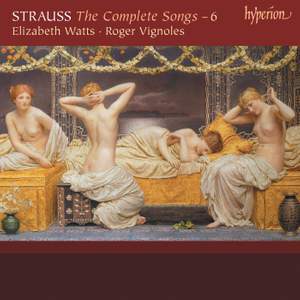
All recordingsPrices shown exclude VAT. (UK tax is not payable for deliveries to United States.) See Terms & Conditions for p&p rates. | |  | Richard Strauss: The Complete Songs 6
Strauss, R: | Einerlei, Op. 69 No. 3 Waldesfahrt, Op. 69 No. 4 Schlechtes Wetter, Op. 69 No. 5 Rote Rosen, AV76 Die erwachte Rose, TrV 90, AV 66 Der Stern, Op. 69 No. 1 Begegnung (Meeting), AV 72 Wir beide wollen springen, AV 90 Das Bächlein, Op. 88 No. 1 Blick vom oberen Belvedere, Op. 88 No. 2 Der Krämerspiegel (12 songs), Op. 66 (texts: Alfred Kerr) Wer hat’s getan Op. 10 No. 6 bis Malven, AV 304 |
Hyperion’s Strauss Lieder series continues to demonstrate that the composer’s achievements in this genre are among the most fascinating and accomplished of his works. This latest volume includes, for instance, the delicious Schlechtes Wetter from Op 69, and the lovely—and unknown—Waldesfahrt from the same group. The delicately beautiful Malven (never published in Strauss’s lifetime, and first performed by Kiri Te Kanawa in 1985), with which the recital ends, is known as Strauss’s ‘Fifth Last Song’. The central work recorded here, Krämerspiegel, owes its genesis to Strauss’s long-lasting and bitter dispute with the German music publishing industry. A Berlin literary critic, Alfred Kerr, wrote him a witty set of satirical verses lampooning music publishers, mentioning many of Strauss’s principal enemies by name. Strauss set all twelve poems to music, and this practical joke finally saw the light of day in 1921. It is easy to understand why the cycle is now rarely performed, given that the texts consist entirely of in-jokes, and that the lion’s share of the music is given to the pianist. But Strauss’s music is well worth savouring, not least for its humorous references to Strauss’s own works, such as Der Rosenkavalier and Ein Heldenleben, and especially for the beautiful prelude to the eighth song and its reprise as the final extended postlude—used by the composer nearly a quarter of a century later, in his opera Capriccio. Roger Vignoles is the curator and pianist of this series, and also writes the informative booklet notes. Making her Hyperion debut is soprano Elizabeth Watts, of whom The Guardian commented at a recent Strauss Lieder recital: ‘Watts, winner of the Lieder prize at Cardiff Singer of the World in 2007, is already a major artist, but this struck me as making a transformation into a great one, as well as allowing us to hear her in music she seems to have been born to sing. Watts has the right tonal glamour for Strauss along with that tricky combination of vocal ease and immaculate control that his work requires.’ “As well as showing her ability to weave around a wide-ranging phrase, apparent in the first song on the disc, 'Einerlei', and incorporating a useful chest voice, she shows a wicked penchant for donning joke fangs in the song cycle.” BBC Music Magazine, March 2013 **** “Vignoles was and is very impressive indeed, here readily catching the extraordinary variety of mood in each song...My pleasure in this latest volume is without any reservations. Elizabeth Watts sings gloriously, rising fluently to the high tessitura of Strauss's melodic lines...Her beautiful voice, sensitive phrasing and response to word-meanings are consistently rewarding and her partnership with Roger Vignoles could hardly be more beautifully balanced.” Gramophone Magazine, February 2013 | | | In stock - usually despatched within 1 working day. |
|
|
| |  | Richard Strauss: Songs
Strauss, R: | Der Stern, Op. 69 No. 1 Einerlei, Op. 69 No. 3 Schlechtes Wetter, Op. 69 No. 5 Muttertändelei, Op. 43 No. 2 Ruhe, meine Seele!, Op. 27 No. 1 Cäcilie, Op. 27 No. 2 Blauer Sommer, Op. 31 No. 1 Das Rosenband, Op. 36 No. 1 Leises Lied, Op. 39 No. 1 Wiegenlied, Op. 41 No. 1 Des Dichters Abendgang, Op. 47 No. 2 Winterweihe, Op. 48 No. 4 Ständchen, Op. 17 No. 2 Meinem Kinde, Op. 37 No. 3 Drei Lieder der Ophelia Op. 67 Ich wollt ein Sträusslein binden, Op. 68 No. 2 Zueignung, Op. 10 No. 1 Die Nacht, Op. 10 No. 3 Die Verschwiegenen, Op. 10 No. 6 Die Zeitlose, Op. 10 No. 7 Allerseelen, Op. 10 No. 8 Waldseligkeit, Op. 49 No. 1 Ach, was Kummer, Qual und Schmerzen, Op. 49 No. 8 Morgen, Op. 27 No. 4 |
This delightful recital of Strauss songs by Dame Felicity Lott focuses on songs composed between 1885 and 1901, the years of Strauss’s richest song-writing genius. Partnered by her long-time collaborator, Graham Johnson, Dame Felicity sings various Nocturnes and Fantasies, songs about flowers, and then, grouped as “Valedictions and Lullabies”, some of Strauss’s best-known songs, including Allerseelen and Muttertändelei. The disc concludes with one of his best-loved songs, ‘Morgen’. This is the last of the four Op.27 wedding-gift songs for his wife, Pauline de Ahna: “…breathless rapture turned into music, one of the great songs of the world…” [Michael Kennedy, 2003] Dame Felicity Lott is considered one of the greatest sopranos of the 21st Century. Her operatic repertoire ranges from Handel to Stravinsky; and her formidable international reputation is as an interpreter of the great roles of Mozart and Strauss. Graham Johnson is recognised as one of the world’s leading vocal accompanists. He was made an OBE in the 1994 Queen's Birthday Honours list and he was also made an Honorary Member of the Royal Philharmonic Society in February 2010. “Lott was still at her peak when these recordings were made in 2002, and has a background of great affinity with the Strauss muse...Her voice and phrasing are still at their glorious finest, and so is her partnership with Johnson. The result is a magical recital, naturally recorded.” Gramophone Magazine, October 2012 “With Johnson's charmingly modest and unfailing attendance, this is a recital peppered with exquisite moments of Olympian power and heroic breath control from Lott. These qualities give the lie to the fact that her remarkable voice is into its sixth decade! It is almost ideal for Strauss here: warmly lyrical, clear, lithe and sensuously intoned, majestic in its dynamic and emotional colourings.” MusicWeb International, August 2012 | | | Usually despatched in 2 - 3 working days. |
|
|
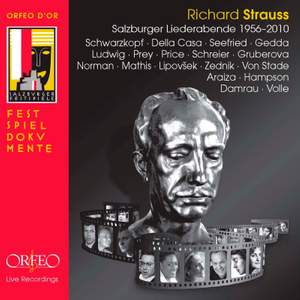
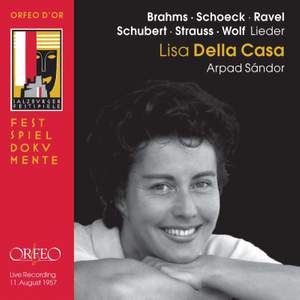
| |  | Lisa Della CasaLive Recording 1957
Brahms: | Wie Melodien zieht es mir, Op. 105 No. 1 Feldeinsamkeit, Op. 86 No. 2 Von ewiger Liebe, Op. 43 No. 1 Meine Liebe ist grün, Op. 63 No. 5 | Ravel: | Chanson française Chanson italienne Chanson espagnole | Schoeck: | Sieh' mich Heil'ger, wie ich bin Mit vollen Atemzügen | Schubert: | Lachen und Weinen, D777 Im Frühling, D882 Du bist die Ruh D776 (Rückert) Gretchen am Spinnrade, D118 | Strauss, R: | Der Stern, Op. 69 No. 1 Waldseligkeit, Op. 49 No. 1 Einerlei, Op. 69 No. 3 Befreit, Op. 39 No. 4 Hat gesagt - bleibt's nicht dabei, Op. 36 No. 3 Schlechtes Wetter, Op. 69 No. 5 | Wolf, H: | Der Gärtner (No. 17 from Mörike-Lieder) Er ist's (No. 6 from Mörike-Lieder) |
Although Lisa Della Casa sang in many operas in Salzburg, she gave only a single lieder recital: in 1957 in the Grosser Saal of the Mozarteum, accompanied by the Hungarian pianist Arpad Sándor, esteemed chamber music partner of musicians such as Fritz Kreisler and Jascha Heifetz.Anyone who had not expected lieder to be a speciality of this lyric soprano would soon be disabused: with the incomparable clarity and simplicity of her melodic line and her precise and unaffected articulation, Lisa Della Casa excelled with touchstones of the repertoire by Schubert and Brahms. She also honoured her compatriot Othmar Schoeck (who had died the previous spring) with her performance of two lieder from his new setting of Goethe's singspiel libretto Erwin und Elmire. She also included in her programme three of the Chansons populaires by Ravel, 1957 being the 20th anniversary of his death. Naturally, she concluded her recital with a group of lieder by Richard Strauss, the composer with whose works her name is still most associated.A unique delight made available to the modern audience thanks to this Orfeo recording. | | | Usually despatched in 3 - 4 working days. |
|
|
| |  | Edita Gruberova & Friedrich Haider sing Strauss
Strauss, R: | Rote Rosen, AV76 Zueignung, Op. 10 No. 1 Nichts, Op. 10 No. 2 Die Nacht, Op. 10 No. 3 Allerseelen, Op. 10 No. 8 Wer hat’s getan Op. 10 No. 6 bis Barkarole, Op. 17 No. 6 Breit' über mein Haupt Op. 19 No. 2 Du meines Herzens Krönelein, Op. 21 No. 2 Cäcilie, Op. 27 No. 2 Morgen, Op. 27 No. 4 Blauer Sommer, Op. 31 No. 1 Wenn ..., Op. 31 No. 2 Liebeshymnus, Op. 32 No. 3 Wir beide wollen springen, AV 90 Glückes genug Op. 37 No. 1 Leises Lied, Op. 39 No. 1 Junghexenlied, Op. 39 No. 2 In der Campagna Op. 41 No. 2 Weihnachtsgefühl, WoO. 94 Ein Obdach gegen Sturm und Regen, Op. 46 No. 1 Morgenrot, Op. 46 No. 4 Einkehr, Op. 47 No. 4 Malven, AV 304 Blick vom oberen Belvedere, Op. 88 No. 2 Der Stern, Op. 69 No. 1 Der Pokal, Op. 69, No. 2 Lied der Frauen, Op. 68 Amor, Op. 68 No. 5 Als mir dein Lied erklang, Op. 68 No. 4 Säusle, Liebe Myrte, Op. 68 No. 3 An die Nacht, Op. 68 No. 1 Ich wollt ein Sträusslein binden, Op. 68 No. 2 Blindenklage, Op. 56 No. 2 In goldener Fülle Op. 49 No. 2 Waldseligkeit, Op. 49 No. 1 Winterweihe, Op. 48 No. 4 Kling! Op. 48 No. 3 |
“Gruberova, at the peak of her career, is a technically superb and perceptive interpreter in this extensive 1991 selection, matched by Haider's accompaniment. His original notes and translations are sadly lacking.” BBC Music Magazine, November 2009 **** | | | Usually despatched in 4 - 5 working days. |
|
|
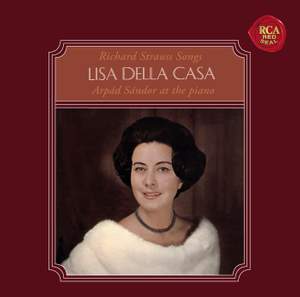
| |  | Richard Strauss - Songs
Strauss, R: | Waldseligkeit, Op. 49 No. 1 Die Nacht, Op. 10 No. 3 Ständchen, Op. 17 No. 2 Leises Lied, Op. 39 No. 1 Schlechtes Wetter, Op. 69 No. 5 Des Dichters Abendgang, Op. 47 No. 2 Der Stern, Op. 69 No. 1 Die Verschwiegenen, Op. 10 No. 6 Die Zeitlose, Op. 10 No. 7 Blauer Sommer, Op. 31 No. 1 Ich wollt ein Sträusslein binden, Op. 68 No. 2 Ruhe, meine Seele!, Op. 27 No. 1 Allerseelen, Op. 10 No. 8 Einerlei, Op. 69 No. 3 Meinem Kinde, Op. 37 No. 3 Wiegenlied, Op. 41 No. 1 Muttertändelei, Op. 43 No. 2 Zueignung, Op. 10 No. 1 Winterweihe, Op. 48 No. 4 Das Rosenband, Op. 36 No. 1 Cäcilie, Op. 27 No. 2 Ach, was Kummer, Qual und Schmerzen, Op. 49 No. 8 Drei Lieder der Ophelia Op. 67 Morgen, Op. 27 No. 4 |
| | (Sorry, download not available in your country) | |
|
|
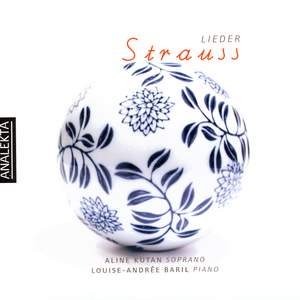
| |  | Strauss: Lieder
Strauss, R: | Rote Rosen, AV76 Barkarole, Op. 17 No. 6 Der Stern, Op. 69 No. 1 Die Nacht, Op. 10 No. 3 Ständchen, Op. 17 No. 2 Nichts, Op. 10 No. 2 Schlagende Herzen Op. 29 No. 2 Wie sollten wir geheim sie halten, Op. 19 No. 4 Für fünfzehn Pfennige Op. 36 No. 2 Hat gesagt - bleibt's nicht dabei, Op. 36 No. 3 Das Rosenband, Op. 36 No. 1 Ich Schwebe, Op. 48 No. 2 Wiegenlied, Op. 41a No. 1 Muttertändelei, Op. 43 No. 2 Herr Lenz Op. 37 No. 5 Mädchenblumen (4 songs), Op. 22 Drei Lieder der Ophelia Op. 67 Mein Herz ist stumm, Op. 19 No. 6 Einerlei, Op. 69 No. 3 Ich wollt ein Sträusslein binden, Op. 68 No. 2 Als mir dein Lied erklang, Op. 68 No. 4 Amor, Op. 68 No. 5 |
Aline Kutan, Louise-Andrée Baril | | | Usually despatched in 2 - 3 working days. |
|
|
| |  | Edita Gruberova: The Teldec Recordings
Donizetti: | Il dolce suono mi colpì di sua voce! … Spargi d'amaro pianto (from Lucia di Lammermoor) | Haydn: | The Creation (extracts) | Mozart: | Mia speranza adorata... Ah, non sai qual pena, K416 Chamber Orchestra of Europe, Nikolaus Harnoncourt Voi avete un cor fedele, K217 Chamber Orchestra of Europe, Nikolaus Harnoncourt No, che non sei capace, K419 Chamber Orchestra of Europe, Nikolaus Harnoncourt Ma che vi fece, o stelle...Sperai vicino il lido, K368 Chamber Orchestra of Europe, Nikolaus Harnoncourt Misera, dove son? - Ah! non son' io che parlo! K369 Chamber Orchestra of Europe, Nikolaus Harnoncourt A questo seno deh vieni…Or che il cielo, K374 Chamber Orchestra of Europe, Nikolaus Harnoncourt Vorrei spiegarvi, oh Dio! K418 Chamber Orchestra of Europe, Nikolaus Harnoncourt Ah se in ciel, benigne stelle, K538 Chamber Orchestra of Europe, Nikolaus Harnoncourt Der Hölle Rache kocht in meinem Herzen (from Die Zauberflöte) Or sai chi l'onore (from Don Giovanni) Crudele? Ah no, mio bene! ... Non mi dir, bell'idol mio (from Don Giovanni) Dalla sponda tenebrosa (from Lucio Silla) | Strauss, J, II: | Klänge der Heimat (from Die Fledermaus) | Strauss, R: | Rote Rosen, AV76 Zueignung, Op. 10 No. 1 Nichts, Op. 10 No. 2 Die Nacht, Op. 10 No. 3 Allerseelen, Op. 10 No. 8 Wer hat’s getan Op. 10 No. 6 bis Barkarole, Op. 17 No. 6 Breit' über mein Haupt Op. 19 No. 2 Du meines Herzens Krönelein, Op. 21 No. 2 Cäcilie, Op. 27 No. 2 Morgen, Op. 27 No. 4 Blauer Sommer, Op. 31 No. 1 Wenn ..., Op. 31 No. 2 Liebeshymnus, Op. 32 No. 3 Wir beide wollen springen, AV 90 Glückes genug Op. 37 No. 1 Leises Lied, Op. 39 No. 1 Junghexenlied, Op. 39 No. 2 In der Campagna Op. 41 No. 2 Weihnachtsgefühl, WoO. 94 Ein Obdach gegen Sturm und Regen, Op. 46 No. 1 Morgenrot, Op. 46 No. 4 Einkehr, Op. 47 No. 4 Kling! Op. 48 No. 3 Winterweihe, Op. 48 No. 4 Waldseligkeit, Op. 49 No. 1 In goldener Fülle Op. 49 No. 2 Blindenklage, Op. 56 No. 2 An die Nacht, Op. 68 No. 1 Ich wollt ein Sträusslein binden, Op. 68 No. 2 Säusle, Liebe Myrte, Op. 68 No. 3 Als mir dein Lied erklang, Op. 68 No. 4 Amor, Op. 68 No. 5 Lied der Frauen, Op. 68 Der Stern, Op. 69 No. 1 Der Pokal, Op. 69, No. 2 Blick vom oberen Belvedere, Op. 88 No. 2 Malven, AV 304 | Verdi: | È strano! è strano!...Ah! fors è lui (from La traviata) |
Collected Teldec recordings from one of the most acclaimed coloraturas of recent decades. | | | In stock - usually despatched within 1 working day. |
|
|
| |
|