All recordingsPrices shown exclude VAT. (UK tax is not payable for deliveries to United States.) See Terms & Conditions for p&p rates. | |  | Stimme der SehnsuchtLieder by Pfitzner, Strauss & Mahler
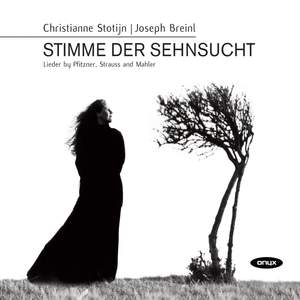
Mahler: | Kindertotenlieder | Pfitzner: | Stimme der Sehnsucht Nachts Op. 26 No. 2 Willkommen und Abschied, Op. 29, No. 3 Lockung Op. 7 No. 4 Nachtwanderer, Op. 7 No. 2 Zum Abschied meiner Tochter, Op. 10 No. 3 | Strauss, R: | Ständchen, Op. 17 No. 2 Des Dichters Abendgang, Op. 47 No. 2 Schlechtes Wetter, Op. 69 No. 5 Nachtgang Op. 29 No. 3 All mein Gedanken ... Op. 21 No. 1 Befreit, Op. 39 No. 4 Zueignung, Op. 10 No. 1 |
"In 'Stimme der Sehnsucht,' a poem by Carl Busse, the voice of longing is depicted as a mysterious whispering sound, a dark and confused spirit from Thule, a mythical island beyond the boundaries of the world. Edgar Allan Poe’s poem 'Dream-land' portrays Thule as a surreal realm of melancholy and dread, while Rainer Maria Rilke wrote: ‘That is longing: living in turmoil and having no home in time'." Christianne Stotijn Christianne Stotijn’s recital of Lieder by Pfitzner, Mahler and Strauss confronts powerful emotions – longing, loving, grief, and a desperate wish to turn the clock back to happier times. The collection is dominated by the theme of night, an exploration of dreams, restlessness and darkness. This is a thoughtful and moving programme from one of the outstanding mezzos of our time. Christianne Stotijn’s previous recordings for ONYX have been praised and her song recital CD 'Tchaikovsky Romances' (ONYX4034) was awarded a BBC Music Magazine Award in 2010. “Stotijn confronts [Kindertotenlieder's] emotions with acute sensitivity, and then leaves us with the benediction of Strauss’s “Morgen!”. A connoisseur’s recital.” The Telegraph, 2nd December 2011 **** “Stotijn's latest well-earned recital disc takes the imaginative high ground right at the start...In the booklet-notes, Stotijn eloquently explains why they travelled to Schiermonnikoog (or 'Grey Monk Island') for the shoot, and how she chose the programme. The programme matters most, of course, though all the incidentals help make this a winner. The Richard Strauss sequence has its own logic of lively versus reflective” BBC Music Magazine, February 2012 ***** “a singer whose voice and intelligence melded seamlessly with words, vocal line and whatever dramatic concert was at hand...Stotijn's vivid performances make you examine the texts anew just to appreciate her sudden burst of vocal colour ('Zueignung' goes into the Jessye Norman zone) or her onomatopoeic effects, which give the characters within the songs a near-physical presence....Stotijn is God's gift to Christa Ludwig admirers.” Gramophone Magazine, March 2012 BBC Music Magazine
Choral & Song Choice - February 2012 |
| | | In stock - usually despatched within 1 working day. |
|
|
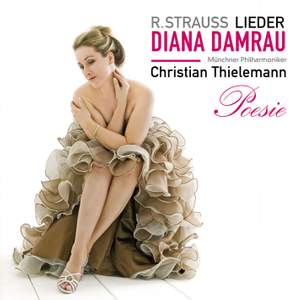
| |  | R. Strauss: Lieder
Strauss, R: | Ich wollt ein Sträusslein binden, Op. 68 No. 2 Waldseligkeit, Op. 49 No. 1 Das Bächlein, Op. 88 No. 1 Winterweihe, Op. 48 No. 4 Morgen, Op. 27 No. 4 Allerseelen, Op. 10 No. 8 Cäcilie, Op. 27 No. 2 Amor, Op. 68 No. 5 Säusle, Liebe Myrte, Op. 68 No. 3 Freundliche Vision, Op. 48 No. 1 Ständchen, Op. 17 No. 2 Traum durch die Dämmerung, Op. 29 No. 1 Wiegenlied, Op. 41 No. 1 Meinem Kinde, Op. 37 No. 3 Muttertändelei, Op. 43 No. 2 Zueignung, Op. 10 No. 1 Das Rosenband, Op. 36 No. 1 Heimkehr, Op. 15 No. 5 Als mir dein Lied erklang, Op. 68 No. 4 Des Dichters Abendgang, Op. 47 No. 2 An die Nacht, Op. 68 No. 1 Lied der Frauen, Op. 68 |
“This is a performance of transcendent art” proclaimed Opera News on hearing Diana Damrau’s interpretation of Strauss’ Zerbinetta on her last Virgin Classics album, ‘Coloraturas’. In this collection of Strauss songs, recorded in the composer’s hometown, she is joined by the Munich Philharmonic and Christian Thielemann, the leading German conductor of his generation. Soprano Diana Damrau, described by The Sunday Times as “the most dazzling star to have emerged from Germany in recent years” was born in Bavaria. The region’s capital, Munich, was the birthplace of Richard Strauss, and in March 2009 a programme of the composer’s songs was presented at the city’s Gasteig Philharmonie, with Damrau accompanied by the Munich Philharmonic Orchestra under its Chief Conductor, Christian Thielemann. “Strauss loved female voices,” says Damrau, “and he explores some extreme possibilities in these many-layered songs, each with its different point of view. Sensitivity to the words is vital to telling the story of each song, to capturing the rapid changes of mood and all the colours.” Strauss’ operatic roles for lyric-coloratura soprano, notably Zerbinetta (Ariadne auf Naxos), Aithra (Die Aegyptische Helena) and Sophie (Der Rosenkavalier) have played an important role in Damrau’s career. As Opera News wrote when reviewing her last Virgin Classics album, ‘Coloraturas’: “Zerbinetta … is one of Damrau's calling cards, having served for her stupendous Met debut in 2005. ‘Grossmächtige Prinzessin’ provides every opportunity to dazzle the listener, with stratospheric high notes, staccatos, roulades and trills, as Zerbinetta cajoles, berates and mocks the gloomy Ariadne. Every note and word reveals Damrau's artistry, the result of constantly questioning and probing into the composer's intentions; while the soprano has a knack for concealing or highlighting technical difficulties at will, here just enough self-absorbed delight breaks to the surface that we are as captivated by Zerbinetta's own theatrical skills as by Damrau's vocal athleticism. Damrau/Zerbinetta even seems to be commanding the orchestra's responses to her whimsical, moody outbursts. This is a performance of transcendent art.” On the new CD, favourites such as ‘Ständchen’, ‘Wiegenlied’, ‘Allerseelen’, ‘Cäcilie’ and ‘Zueignung’ feature alongside more rarely heard numbers, and six tracks recorded under studio conditions now complement the sixteen songs captured live. “Always there is delicacy and an absolute respect for the silky legato that Strauss demands from his soloist. Damrau finds drama in these songs too...the songs that demand diamond-bright coloratura, runs and trills to affright a Zerbinetta hold no terrors...Thielemann has a very special affinity with singers. He also coaxes some fine playing from the Munich orchestra.” International Record Review, January 2011 “What wins this disc the five stars are the facts that Damrau, singing in her native German, is poised ideally between dreamy haze and Schwarzkopfian fussiness...her hallowed pianissimos allow the exquisite detail Thielemann draws from his Munich players to shine...the ineffable balance between voice and orchestra, subtly assisted by the engineering, is a treat throughout.” BBC Music Magazine, February 2011 ***** “Secure in technique, gifted in projecting drama and emotion, Damrau is a peach of a singer...The haunting music; the lyrical voice; the orchestra’s dappled array, with woodwinds curling like climbing roses and violins wafting with fragrant perfume: poesie indeed, in small doses.” The Times, 28th January 2011 **** “With a creamy-voiced soprano such as Renée Fleming, say, the results could be an excess of musical cholesterol, but Damrau’s diamantine timbre brings a welcome edge to the mix...She’s the leading Strauss soprano of the day, and her singing here shows exactly why.” Sunday Times, 30th January 2011 **** “her voice is not ideally voluptuous for Strauss, but she makes up for it by her exceptional musicality, investing every song with meaning, and her clarity of diction. The Munich Philharmonic under Christian Thielemann are splendid partners on a CD that must now be regarded as the best modern introduction to Strauss's songs” Mail on Sunday, 30th January 2011 **** “Her singing is consistently accurate and expressive. I particularly liked her 'Traum durch die Dämmerung', which caught the atmosphere of a secret tryst perfectly...She joins the group of younger sopranos such as Angelika Kirchschlager and Anne Schwanewilms among the leading lyric Strauss singers of the day.” Sunday Telegraph, 30th January 2011 **** “she is not merely a fair-weather soprano. Darker shades, more serious tones lie within her expressive scope than one might at first suppose...Familiar songs such as "Ständchen" gain new life with a smiling intimacy of approach in the first verse and an enriched suggestiveness as dusk falls in the third.” Gramophone Magazine, March 2011 “there are performances of such favourites as Morgen, Allerseelen and Wiegenlied, where her hovering, silvery soprano is heard to perfection...Not all the orchestrations are by Strauss: Christian Thielemann and the Munich Philharmonic really bring home just how marvellous his own instrumentation sounds when placed beside that of some of the other composers” The Guardian, 10th February 2011 **** “When did a German coloratura soprano last handle Richard Strauss’s orchestral songs with such grace and aplomb?...Damrau’s artistry is a combination of vocal noblesse, emotional warmth and instinctive intelligence.” Financial Times, 19th February 2011 **** “This gloriously romantic collection of orchestral settings of Strauss’s songs... shows [Damrau] at her stunning best. Outstanding tracks include Amor, with its airy, witty coloratura, and a magically slow yet gloriously alive Wiegenlied. The accompaniments, as might be expected from Thielemann’s baton, are quite superb.” The Telegraph, 25th February 2011 ***** “These songs demand a variety of vocal weights and colours, and Damrau seems to have it all...Thielemann and the Munich Phil revel in the rich orchestral colours and can be as light as air when required...Damrau brings effortless technique, beautiful tone and unfailing musical instinct to these songs.” Classic FM Magazine, April 2011 ***** BBC Music Magazine
Choral & Song Choice - February 2011 |
| | | In stock - usually despatched within 1 working day. |
|
|
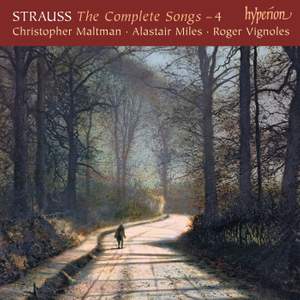
| |  | Richard Strauss: The Complete Songs 4
Strauss, R: | Stiller Gang, Op. 31/4 Funf Lieder, Op. 15 Der Arbeitsmann, Op. 39, No. 3 Lied an meinen Sohn, Op. 39, No. 5 Leise Lieder, Op. 41a No. 5 Des Dichters Abendgang, Op. 47 No. 2 Das Lied des Steinklopfers, Op. 49 No. 4 Gefunden Op. 56 No. 1 Mit deinen blauen Augen, Op. 56 No. 4 Im Spätboot, Op. 56, No. 3 Alastair Miles (bass) Vom kunftigen Alter, Op. 87 No. 1 Alastair Miles (bass) Erschaffen und Beleben, Op. 87, No. 2 Alastair Miles (bass) Und dann nicht mehr, Op. 87 No. 3 Alastair Miles (bass) Im Sonnenschein, Op. 87 No. 4 Alastair Miles (bass) |
Hyperion’s Strauss Lieder series is fast becoming a worthy successor to the seminal Schubert and Schumann Lieder sets on the label. This fourth volume features a veteran of these recordings, the great British bass-baritone Christopher Maltman. Contrary to a commonly held perception of Strauss as a Lieder composer, what most of the songs in the present volume show is that he was not shy of addressing serious themes. Settings of Rückert, Dehmel, Goethe and others are tinged with a dark regret which is enhanced by their bass tessitura. Strauss the opera composer is evident in the epic scale of the lieder written post-Salome. Roger Vignoles provides his famous extensive booklet notes, with commentary about each individual song and scholarly discourse on the poetry. “This fourth volume of songs in the Hyperion series matches Strauss's masterpieces to weaker offerings, all given equal shrift by the pianist Roger Vignoles and his singers. Maltman has the lion's share, his molasses-rich lower range and walnut-polished upper melting into the ethereal Am Ufer and finding gruff humour in Das Lied des Steinklopfers. Alastair Miles's robust, sensitive bass excels in Im Spätboot, perfectly capturing the eerie, dark atmosphere of Strauss's weary boat passenger.” The Times, 14th February 2009 **** “Maltman and Vignoles strike the right note of hard-won simplicity for Goethe's 'Gefunden' and Heine's 'Mit deinen blauen Augen'. Miles then signs in with the wonderful night-boat meditation of Op. 56 No. 4, underlining the need for a true bass with the last low D flat. ...his imposing timbre fits the operatic scope of the three Rückert settings.” BBC Music Magazine, May 2009 **** “With one possible exception, these are all among Strauss's more rarely performed songs, and quite undeservedly so. Most are highly characteristic and clearly written with affection, while those that may not immediately proclaim the composer's identity ('Das Lied des Stein- klopfers' for instance) are among the most interesting. Perhaps that sense of a structured improvisation may (as in the Rückert setting 'Und dann nicht mehr') call for a restraining hand, but more often it is such an appealing personal quality that complaint would be sourly puritanical. Indeed some of the joy arises in just those moments, such as the inspired passage between verses in 'Des Dichters Abendgang', when Strauss the pianist takes over and claims his composer's freedom. Roger Vignoles captures well the expansiveness and generosity of the writing for piano. He is also a sensitive accompanist in songs where the piano part is relatively simple. “Heimkehr”, the last song of Op 15, is one of these, and this is also the exception to the songs' general unfamiliarity. It is well sung, with finely controlled high pianissimi, by Christopher Maltman, who has all but the last five songs (mostly Op 81), which are written specifically for bass. It must be said that with the first sound of Alastair Miles, one is immediately aware of a change, not merely in the quality and nature of the voice, but in its production too. Maltman is a valuable artist in many respects, but recording exposes an unevenness of emission which his art is usually able to render inconspicuous 'in the flesh'. Miles impresses deeply, down indeed to the depths of his low D flat.” Gramophone Classical Music Guide, 2010 | | | In stock - usually despatched within 1 working day. |
|
|
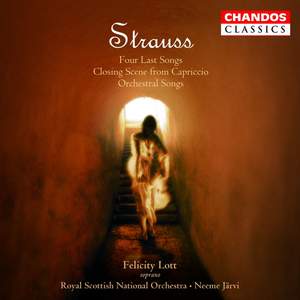
| |  | Strauss R: Four Last Songsand other works
Strauss, R: | Four Last Songs Wiegenlied, Op. 41 No. 1 Ruhe, meine Seele!, Op. 27 No. 1 Freundliche Vision, Op. 48 No. 1 Waldseligkeit, Op. 49 No. 1 Morgen, Op. 27 No. 4 Das Rosenband, Op. 36 No. 1 Zueignung, Op. 10 No. 1 Des Dichters Abendgang, Op. 47 No. 2 Morgen mittag um elf! (from Capriccio) Capriccio: Intermezzo (Moonlight Music) |
'She [Felicity Lott] never loses sight of what the words are about; her vocalism is consistently poised and centered; and its no wonder that the wealth of commitment and knowledge shes brought to Strauss music over the years has made her a prime exponent of this repertoire.'
Fanfare | | | (also available to download from $10.50) | In stock - usually despatched within 1 working day. |
|
|
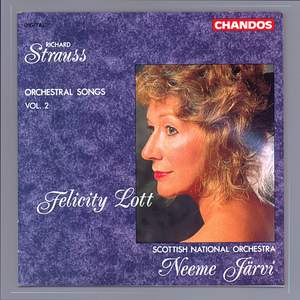
| |  | Richard Strauss: Orchestral Songs
Strauss, R: | Das Rosenband, Op. 36 No. 1 Des Dichters Abendgang, Op. 47 No. 2 Freundliche Vision, Op. 48 No. 1 Heimliche Aufforderung, Op. 27 No. 3 Ich trage meine Minne, Op. 32 No. 1 Liebeshymnus, Op. 32 No. 3 Morgen, Op. 27 No. 4 Ständchen, Op. 17 No. 2 Tod und Verklärung, Op. 24 Verfuehrung Op. 33 No. 1 Waldseligkeit, Op. 49 No. 1 Zueignung, Op. 10 No. 1 Traum durch die Dämmerung, Op. 29 No. 1 |
| | | In stock - usually despatched within 1 working day. |
|
|
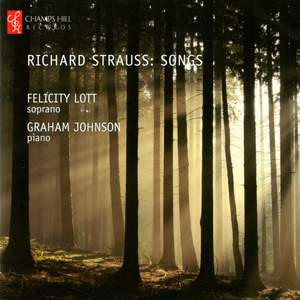
| |  | Richard Strauss: Songs
Strauss, R: | Der Stern, Op. 69 No. 1 Einerlei, Op. 69 No. 3 Schlechtes Wetter, Op. 69 No. 5 Muttertändelei, Op. 43 No. 2 Ruhe, meine Seele!, Op. 27 No. 1 Cäcilie, Op. 27 No. 2 Blauer Sommer, Op. 31 No. 1 Das Rosenband, Op. 36 No. 1 Leises Lied, Op. 39 No. 1 Wiegenlied, Op. 41 No. 1 Des Dichters Abendgang, Op. 47 No. 2 Winterweihe, Op. 48 No. 4 Ständchen, Op. 17 No. 2 Meinem Kinde, Op. 37 No. 3 Drei Lieder der Ophelia Op. 67 Ich wollt ein Sträusslein binden, Op. 68 No. 2 Zueignung, Op. 10 No. 1 Die Nacht, Op. 10 No. 3 Die Verschwiegenen, Op. 10 No. 6 Die Zeitlose, Op. 10 No. 7 Allerseelen, Op. 10 No. 8 Waldseligkeit, Op. 49 No. 1 Ach, was Kummer, Qual und Schmerzen, Op. 49 No. 8 Morgen, Op. 27 No. 4 |
This delightful recital of Strauss songs by Dame Felicity Lott focuses on songs composed between 1885 and 1901, the years of Strauss’s richest song-writing genius. Partnered by her long-time collaborator, Graham Johnson, Dame Felicity sings various Nocturnes and Fantasies, songs about flowers, and then, grouped as “Valedictions and Lullabies”, some of Strauss’s best-known songs, including Allerseelen and Muttertändelei. The disc concludes with one of his best-loved songs, ‘Morgen’. This is the last of the four Op.27 wedding-gift songs for his wife, Pauline de Ahna: “…breathless rapture turned into music, one of the great songs of the world…” [Michael Kennedy, 2003] Dame Felicity Lott is considered one of the greatest sopranos of the 21st Century. Her operatic repertoire ranges from Handel to Stravinsky; and her formidable international reputation is as an interpreter of the great roles of Mozart and Strauss. Graham Johnson is recognised as one of the world’s leading vocal accompanists. He was made an OBE in the 1994 Queen's Birthday Honours list and he was also made an Honorary Member of the Royal Philharmonic Society in February 2010. “Lott was still at her peak when these recordings were made in 2002, and has a background of great affinity with the Strauss muse...Her voice and phrasing are still at their glorious finest, and so is her partnership with Johnson. The result is a magical recital, naturally recorded.” Gramophone Magazine, October 2012 “With Johnson's charmingly modest and unfailing attendance, this is a recital peppered with exquisite moments of Olympian power and heroic breath control from Lott. These qualities give the lie to the fact that her remarkable voice is into its sixth decade! It is almost ideal for Strauss here: warmly lyrical, clear, lithe and sensuously intoned, majestic in its dynamic and emotional colourings.” MusicWeb International, August 2012 | | | Usually despatched in 2 - 3 working days. |
|
|
| |  | Richard Strauss - Songs
Strauss, R: | Waldseligkeit, Op. 49 No. 1 Die Nacht, Op. 10 No. 3 Ständchen, Op. 17 No. 2 Leises Lied, Op. 39 No. 1 Schlechtes Wetter, Op. 69 No. 5 Des Dichters Abendgang, Op. 47 No. 2 Der Stern, Op. 69 No. 1 Die Verschwiegenen, Op. 10 No. 6 Die Zeitlose, Op. 10 No. 7 Blauer Sommer, Op. 31 No. 1 Ich wollt ein Sträusslein binden, Op. 68 No. 2 Ruhe, meine Seele!, Op. 27 No. 1 Allerseelen, Op. 10 No. 8 Einerlei, Op. 69 No. 3 Meinem Kinde, Op. 37 No. 3 Wiegenlied, Op. 41 No. 1 Muttertändelei, Op. 43 No. 2 Zueignung, Op. 10 No. 1 Winterweihe, Op. 48 No. 4 Das Rosenband, Op. 36 No. 1 Cäcilie, Op. 27 No. 2 Ach, was Kummer, Qual und Schmerzen, Op. 49 No. 8 Drei Lieder der Ophelia Op. 67 Morgen, Op. 27 No. 4 |
| | (Sorry, download not available in your country) | |
|
|
| |  |
| | | (also available to download from $10.50) | Usually despatched in 2 - 3 working days. (Available now to download.) |
|
|
| |  | Richard Strauss - The Complete Orchestral Songs
Strauss, R: | Zueignung, Op. 10 No. 1 Allerseelen, Op. 10 No. 8 Heimkehr, Op. 15 No. 5 Ständchen, Op. 17 No. 2 Ruhe, meine Seele!, Op. 27 No. 1 Cäcilie, Op. 27 No. 2 Morgen, Op. 27 No. 4 Traum durch die Dämmerung, Op. 29 No. 1 Liebeshymnus, Op. 32 No. 3 Verfuehrung Op. 33 No. 1 Gesang der Apollopriesterin Op. 33 No. 2 Hymne Op. 34 No. 2 Pilgers Morgenlied, Op. 33 Das Rosenband, Op. 36 No. 1 Ich liebe dich Op. 37 No. 2 Meinem Kinde, Op. 37 No. 3 Mein Auge Op. 37 No. 4 Befreit, Op. 39 No. 4 Der Arbeitsmann, Op. 39, No. 3 Wiegenlied, Op. 41 No. 1 Winterliebe Op. 48 No. 5 Waldseligkeit, Op. 49 No. 1 Das Tal, Op. 51 Der Einsame, Op. 51 Frühlingsfeier Op. 56 No. 5 Die heiligen drei Könige aus Morgenland Op. 56 No. 6 Die Nacht, Op. 10 No. 3 Ich wollt ein Sträusslein binden, Op. 68 No. 2 Säusle, Liebe Myrte, Op. 68 No. 3 Als mir dein Lied erklang, Op. 68 No. 4 Amor, Op. 68 No. 5 Lied der Frauen, Op. 68 Das Bächlein, Op. 88 No. 1 Drei Hymnen Op. 71 Four Last Songs Muttertändelei, Op. 43 No. 2 Notturno, Op. 44 No. 1 Nächtlicher Gang, Op. 44 No. 2 World premiere recording Des Dichters Abendgang, Op. 47 No. 2 Freundliche Vision, Op. 48 No. 1 |
World Premiere Integral Recording | | | Usually despatched in 2 - 3 working days. |
|
|
| |
|