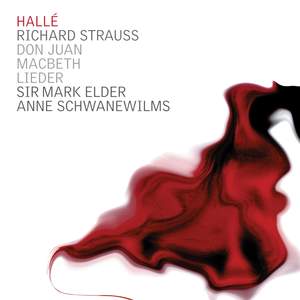
All recordingsPrices shown exclude VAT. (UK tax is not payable for deliveries to United States.) See Terms & Conditions for p&p rates. | |  | R. Strauss: Orchesterlieder & Metamorphosen
Strauss, R: | Ruhe, meine Seele!, Op. 27 No. 1 Waldseligkeit, Op. 49 No. 1 Freundliche Vision, Op. 48 No. 1 Morgen, Op. 27 No. 4 Befreit, Op. 39 No. 4 Meinem Kinde, Op. 37 No. 3 Winterweihe, Op. 48 No. 4 Wiegenlied, Op. 41 No. 1 Die heiligen drei Könige aus Morgenland Op. 56 No. 6 Metamorphosen |
| | | In stock - usually despatched within 1 working day. |
|
|
| |  | Strauss: Four Last Songs
Strauss, R: | Four Last Songs Muttertändelei, Op. 43 No. 2 Waldseligkeit, Op. 49 No. 1 Zueignung, Op. 10 No. 1 Freundliche Vision, Op. 48 No. 1 Die heiligen drei Könige aus Morgenland Op. 56 No. 6 Ruhe, meine Seele!, Op. 27 No. 1 Meinem Kinde, Op. 37 No. 3 Wiegenlied, Op. 41 No. 1 Morgen, Op. 27 No. 4 Das Bächlein, Op. 88 No. 1 Das Rosenband, Op. 36 No. 1 Winterweihe, Op. 48 No. 4 |
| | | In stock - usually despatched within 1 working day. |
|
|
| |  | R. Strauss: Lieder
Strauss, R: | Ich wollt ein Sträusslein binden, Op. 68 No. 2 Waldseligkeit, Op. 49 No. 1 Das Bächlein, Op. 88 No. 1 Winterweihe, Op. 48 No. 4 Morgen, Op. 27 No. 4 Allerseelen, Op. 10 No. 8 Cäcilie, Op. 27 No. 2 Amor, Op. 68 No. 5 Säusle, Liebe Myrte, Op. 68 No. 3 Freundliche Vision, Op. 48 No. 1 Ständchen, Op. 17 No. 2 Traum durch die Dämmerung, Op. 29 No. 1 Wiegenlied, Op. 41 No. 1 Meinem Kinde, Op. 37 No. 3 Muttertändelei, Op. 43 No. 2 Zueignung, Op. 10 No. 1 Das Rosenband, Op. 36 No. 1 Heimkehr, Op. 15 No. 5 Als mir dein Lied erklang, Op. 68 No. 4 Des Dichters Abendgang, Op. 47 No. 2 An die Nacht, Op. 68 No. 1 Lied der Frauen, Op. 68 |
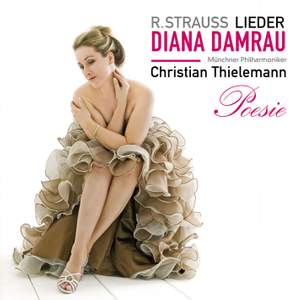
“This is a performance of transcendent art” proclaimed Opera News on hearing Diana Damrau’s interpretation of Strauss’ Zerbinetta on her last Virgin Classics album, ‘Coloraturas’. In this collection of Strauss songs, recorded in the composer’s hometown, she is joined by the Munich Philharmonic and Christian Thielemann, the leading German conductor of his generation. Soprano Diana Damrau, described by The Sunday Times as “the most dazzling star to have emerged from Germany in recent years” was born in Bavaria. The region’s capital, Munich, was the birthplace of Richard Strauss, and in March 2009 a programme of the composer’s songs was presented at the city’s Gasteig Philharmonie, with Damrau accompanied by the Munich Philharmonic Orchestra under its Chief Conductor, Christian Thielemann. “Strauss loved female voices,” says Damrau, “and he explores some extreme possibilities in these many-layered songs, each with its different point of view. Sensitivity to the words is vital to telling the story of each song, to capturing the rapid changes of mood and all the colours.” Strauss’ operatic roles for lyric-coloratura soprano, notably Zerbinetta (Ariadne auf Naxos), Aithra (Die Aegyptische Helena) and Sophie (Der Rosenkavalier) have played an important role in Damrau’s career. As Opera News wrote when reviewing her last Virgin Classics album, ‘Coloraturas’: “Zerbinetta … is one of Damrau's calling cards, having served for her stupendous Met debut in 2005. ‘Grossmächtige Prinzessin’ provides every opportunity to dazzle the listener, with stratospheric high notes, staccatos, roulades and trills, as Zerbinetta cajoles, berates and mocks the gloomy Ariadne. Every note and word reveals Damrau's artistry, the result of constantly questioning and probing into the composer's intentions; while the soprano has a knack for concealing or highlighting technical difficulties at will, here just enough self-absorbed delight breaks to the surface that we are as captivated by Zerbinetta's own theatrical skills as by Damrau's vocal athleticism. Damrau/Zerbinetta even seems to be commanding the orchestra's responses to her whimsical, moody outbursts. This is a performance of transcendent art.” On the new CD, favourites such as ‘Ständchen’, ‘Wiegenlied’, ‘Allerseelen’, ‘Cäcilie’ and ‘Zueignung’ feature alongside more rarely heard numbers, and six tracks recorded under studio conditions now complement the sixteen songs captured live. “Always there is delicacy and an absolute respect for the silky legato that Strauss demands from his soloist. Damrau finds drama in these songs too...the songs that demand diamond-bright coloratura, runs and trills to affright a Zerbinetta hold no terrors...Thielemann has a very special affinity with singers. He also coaxes some fine playing from the Munich orchestra.” International Record Review, January 2011 “What wins this disc the five stars are the facts that Damrau, singing in her native German, is poised ideally between dreamy haze and Schwarzkopfian fussiness...her hallowed pianissimos allow the exquisite detail Thielemann draws from his Munich players to shine...the ineffable balance between voice and orchestra, subtly assisted by the engineering, is a treat throughout.” BBC Music Magazine, February 2011 ***** “Secure in technique, gifted in projecting drama and emotion, Damrau is a peach of a singer...The haunting music; the lyrical voice; the orchestra’s dappled array, with woodwinds curling like climbing roses and violins wafting with fragrant perfume: poesie indeed, in small doses.” The Times, 28th January 2011 **** “With a creamy-voiced soprano such as Renée Fleming, say, the results could be an excess of musical cholesterol, but Damrau’s diamantine timbre brings a welcome edge to the mix...She’s the leading Strauss soprano of the day, and her singing here shows exactly why.” Sunday Times, 30th January 2011 **** “her voice is not ideally voluptuous for Strauss, but she makes up for it by her exceptional musicality, investing every song with meaning, and her clarity of diction. The Munich Philharmonic under Christian Thielemann are splendid partners on a CD that must now be regarded as the best modern introduction to Strauss's songs” Mail on Sunday, 30th January 2011 **** “Her singing is consistently accurate and expressive. I particularly liked her 'Traum durch die Dämmerung', which caught the atmosphere of a secret tryst perfectly...She joins the group of younger sopranos such as Angelika Kirchschlager and Anne Schwanewilms among the leading lyric Strauss singers of the day.” Sunday Telegraph, 30th January 2011 **** “she is not merely a fair-weather soprano. Darker shades, more serious tones lie within her expressive scope than one might at first suppose...Familiar songs such as "Ständchen" gain new life with a smiling intimacy of approach in the first verse and an enriched suggestiveness as dusk falls in the third.” Gramophone Magazine, March 2011 “there are performances of such favourites as Morgen, Allerseelen and Wiegenlied, where her hovering, silvery soprano is heard to perfection...Not all the orchestrations are by Strauss: Christian Thielemann and the Munich Philharmonic really bring home just how marvellous his own instrumentation sounds when placed beside that of some of the other composers” The Guardian, 10th February 2011 **** “When did a German coloratura soprano last handle Richard Strauss’s orchestral songs with such grace and aplomb?...Damrau’s artistry is a combination of vocal noblesse, emotional warmth and instinctive intelligence.” Financial Times, 19th February 2011 **** “This gloriously romantic collection of orchestral settings of Strauss’s songs... shows [Damrau] at her stunning best. Outstanding tracks include Amor, with its airy, witty coloratura, and a magically slow yet gloriously alive Wiegenlied. The accompaniments, as might be expected from Thielemann’s baton, are quite superb.” The Telegraph, 25th February 2011 ***** “These songs demand a variety of vocal weights and colours, and Damrau seems to have it all...Thielemann and the Munich Phil revel in the rich orchestral colours and can be as light as air when required...Damrau brings effortless technique, beautiful tone and unfailing musical instinct to these songs.” Classic FM Magazine, April 2011 ***** BBC Music Magazine
Choral & Song Choice - February 2011 |
| | | In stock - usually despatched within 1 working day. |
|
|
| |  | Strauss - Metamorphosen
Strauss, R: | Metamorphosen Ruhe, meine Seele!, Op. 27 No. 1 Waldseligkeit, Op. 49 No. 1 Freundliche Vision, Op. 48 No. 1 Morgen, Op. 27 No. 4 Befreit, Op. 39 No. 4 Meinem Kinde, Op. 37 No. 3 Winterweihe, Op. 48 No. 4 Wiegenlied, Op. 41 No. 1 Die heiligen drei Könige aus Morgenland Op. 56 No. 6 |
| | | In stock - usually despatched within 1 working day. |
|
|
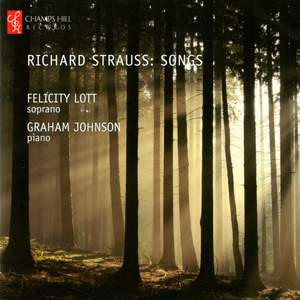
| |  | Strauss R: Four Last Songsand other works
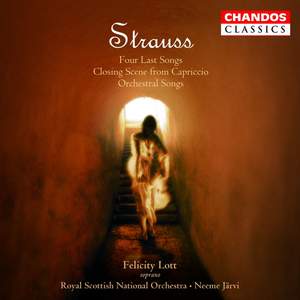
Strauss, R: | Four Last Songs Wiegenlied, Op. 41 No. 1 Ruhe, meine Seele!, Op. 27 No. 1 Freundliche Vision, Op. 48 No. 1 Waldseligkeit, Op. 49 No. 1 Morgen, Op. 27 No. 4 Das Rosenband, Op. 36 No. 1 Zueignung, Op. 10 No. 1 Des Dichters Abendgang, Op. 47 No. 2 Morgen mittag um elf! (from Capriccio) Capriccio: Intermezzo (Moonlight Music) |
'She [Felicity Lott] never loses sight of what the words are about; her vocalism is consistently poised and centered; and its no wonder that the wealth of commitment and knowledge shes brought to Strauss music over the years has made her a prime exponent of this repertoire.'
Fanfare | | | (also available to download from $10.50) | In stock - usually despatched within 1 working day. |
|
|
| |  | Richard Strauss: Orchestral Songs
Strauss, R: | Das Rosenband, Op. 36 No. 1 Des Dichters Abendgang, Op. 47 No. 2 Freundliche Vision, Op. 48 No. 1 Heimliche Aufforderung, Op. 27 No. 3 Ich trage meine Minne, Op. 32 No. 1 Liebeshymnus, Op. 32 No. 3 Morgen, Op. 27 No. 4 Ständchen, Op. 17 No. 2 Tod und Verklärung, Op. 24 Verfuehrung Op. 33 No. 1 Waldseligkeit, Op. 49 No. 1 Zueignung, Op. 10 No. 1 Traum durch die Dämmerung, Op. 29 No. 1 |
| | | In stock - usually despatched within 1 working day. |
|
|
| |  | Richard Strauss: Four Last Songs - Orchestral Songs
Strauss had a lifelong affair with the soprano voice, and many of his songs were written with his (reputedly shrewish) wife Pauline's voice in mind. This collection brings together five songs performed with crystalline purity by Christine Schaefer as well as some more dramatic settings performed by Karita Mattila, concluding with Mattila's reading of the immortal Four Last Songs (Vier Letzte Lieder). | | | In stock - usually despatched within 1 working day. |
|
|
| |  | Strauss: Lieder
Strauss, R: | Xenion, AV131 Nichts, Op. 10 No. 2 Die Nacht, Op. 10 No. 3 Allerseelen, Op. 10 No. 8 Ständchen, Op. 17 No. 2 Cäcilie, Op. 27 No. 2 Heimliche Aufforderung, Op. 27 No. 3 Morgen, Op. 27 No. 4 Traum durch die Dämmerung, Op. 29 No. 1 Schlagende Herzen Op. 29 No. 2 Blauer Sommer, Op. 31 No. 1 Das Rosenband, Op. 36 No. 1 Hat gesagt - bleibt's nicht dabei, Op. 36 No. 3 Befreit, Op. 39 No. 4 Muttertändelei, Op. 43 No. 2 Freundliche Vision, Op. 48 No. 1 Waldseligkeit, Op. 49 No. 1 Säusle, Liebe Myrte, Op. 68 No. 3 Einerlei, Op. 69 No. 3 Schlechtes Wetter, Op. 69 No. 5 Four Last Songs |
| 
| | | Usually despatched in 2 - 3 working days. |
|
|
| |  | The Art of Nance Grant
Beethoven: | Komm, Hoffnung, lass den letzten Stern (from Fidelio) | Donizetti: | Si, vuol di Francia il Rege...Ah! Quando all'ara scorgemi...Ah! Dal ciel discenda un raggio (from Maria Stuarda) | Grieg: | Ich liebe Dich, Op. 5 No. 3 Med en vandlije, Op. 25 No. 4 Two Brown Eyes from “Melodies Of The Heart, Op. 5, No. 4 Peer Gynt: Solveig's Song Seks Sange, Op. 48 No. 6 'Ein Traum' | Hageman: | Charity Music I Heard With You At the Well Do Not Go, My Love Miranda | Mendelssohn: | Hear ye, Israel | Mozart: | Estinto è Idomeneo?...Tutte nel cor vi sento (from Idomeneo) Chi mai del mio provo - Idol mio se ritroso (from Idomeneo) | Strauss, R: | Ich Schwebe, Op. 48 No. 2 Meinem Kinde, Op. 37 No. 3 Die Nacht, Op. 10 No. 3 Die Georgine Op. 10 No. 4 Glückes genug Op. 37 No. 1 Wie sollten wir geheim sie halten, Op. 19 No. 4 Schön sind, doch kalt die Himmelssterne, Op. 19, No. 3 Waldseligkeit, Op. 49 No. 1 Wiegenlied, Op. 41 No. 1 Ein schones war (from Ariadne auf Naxos) Es gibt ein Reich (from Ariadne auf Naxos) | Wagner: | Dich, teure Halle (from Tannhauser) Der Männer Sippe (from Die Walküre) Du bist der Lenz (from Die Walküre) Wesendonck-Lieder (5) |
Acclaimed and cherished as one of Australia’s finest operatic artists, Nance Grant had a voice possessed with beauty and power, an ease of technique, a perfection of phrasing and taste that cemented her place in the hearts of Australian music lovers. This long overdue tribute presents one of the great sopranos from down under - in recordings previously thought lost. Nance Grant chose to stay close to her family in Australia rather than pursue an international career, even though Sir Edward Downes insisted he could ‘fill her books’ with performances in Britain and Europe. So this double album offers those who never had the opportunity to hear her, the gift of discovering a voice of magnitude and generosity, and for those who grew up hearing her on stage, the chance to reacquaint themselves with her artistry. The original tapes from radio broadcasts of the 1960s and ’70s have been carefully restored to give more than a hint of the majesty of Nance Grant in a characteristic range of repertoire. The recordings represent significant landmarks in the development of opera in Australia: the emerging Victorian State Opera’s enormously successful Idomeneo, re di Creta, and Maria Stuarda under the direction of Richard Divall; Australian Opera’s Ariadne auf Naxos, Fidelio and Tannhäuser with Sir Edward Downes; and one of the first of the Australian Opera/ABC collaborations presenting concert performances of Wagner operas, with Grant as Sieglinde in Die Walküre conducted by Leif Segerstam. The programme also pays homage to Nance’s considerable concert career, including a complete song recital - Greig, Richard Hageman and Richard Strauss - with pianist Geoffrey Parsons, Wagner’s Wesendonck Lieder with the West Australian Symphony Orchestra, and an excerpt from Mendelssohn’s Elijah. | | | Usually despatched in 4 - 5 working days. |
|
|
| |  | Richard Strauss, Vol. 31942-1954
| |
|
| |
|