Liszt: Prometheus, symphonic poem No. 5, S99

This page lists all recordings of Prometheus, symphonic poem No. 5, S99, by Ferencz Liszt (1811-86) on CD, DVD & download (MP3 & FLAC). Generally, more recent releases are listed first, but with priority given to those that are in stock.

Recommendations

Re-issue of the Month
June 2012
4 star

All recordings

Prices shown exclude VAT. (UK tax is not payable for deliveries to United States.)
See Terms & Conditions for p&p rates.

Liszt: Tone Poems & Hungarian Rhapsodies

Liszt: Tone Poems & Hungarian Rhapsodies


Liszt:

Les Préludes, symphonic poem No. 3, S97

London Philharmonic Orchestra, Sir Georg Solti

Prometheus, symphonic poem No. 5, S99

London Philharmonic Orchestra, Sir Georg Solti

Festklänge, symphonic poem No. 7, S101

London Philharmonic Orchestra, Sir Georg Solti

Von der Wiege bis zum Grabe, symphonic poem No. 13, S107

Orchestra de Paris, Sir Georg Solti

Mephisto Waltz No. 1

Orchestra de Paris, Sir Georg Solti

Tasso, Lamento e trionfo, symphonic poem No. 2, S96

Orchestra de Paris, Sir Georg Solti

Hungarian Rhapsodies, S244 Nos. 1-19: excerpts

Budapest Festival Orchestra, Iván Fischer


Having made revolutionary changes, during the 1830s and 40s, in both piano performance and composition, Liszt was hardly less innovative in his relationship with the orchestra. He is generally credited with having created the genre of the symphonic poem, in which a narrative or extra-musical idea is depicted within a structural framework usually associated with an abstract symphonic movement. In 1974 and 1977 Sir Georg Solti recorded five of the composer’s Tone Poems as well as the Mephisto Waltz No. 1 with the London Philharmonic and the Orchestre de Paris. With fabled ‘Decca Sound’, these recordings have been much sought after by collectors. Recently reissued in the (limited) Liszt Edition, they are now made available generally as a 2CD set.

The coupling is a much-praised version of the Liszt Hungarian Rhapsodies, in orchestrations by both the composer as well as Doppler, by Iván Fischer, considered one of the most important conductors of our time. The interpretations were unforgettably described by Gramophone, on their first appearance, as ‘frisky as foals and as flavoursome as goulash’. Even though he grew up in a family in which German was spoken, and although he left Hungary at a young age, Liszt regarded himself as a Hungarian, and he took considerable pride in that fact. Nevertheless, Liszt and Hungary did not always understand each other. He promoted the idea that Hungary’s true national music was the music of the Gypsies, not realising that many of the melodies played by Gypsy bands were in fact composed (but not written down) by Hungarian landowners whose families did not appreciate Liszt’s misattributions – particularly because the Gypsies were not highly regarded in Hungary. This, however, does nothing to diminish the popularity of the Hungarian Rhapsodies, six of which were orchestrated in conjunction with Franz Doppler, a flute virtuoso and a composer in his own right who met Liszt in 1854 and began orchestrating several of his rhapsodies three years later.

“Solti and Liszt are handsomely matched.” Gramophone Magazine (Solti)

“wildly fiery, pressing things to their utmost limit when the music seems to warrant that, yet not at all without response to the more romantic episodes. [Solti] also has the power to make an orchestra sound like the best in the world and the Orchestre de Paris — this is his first recording with them—play as I have never heard them play before. The Mephisto Waltz No. 1 is given for all it is worth… This is a stunning performance. … this is certainly very exciting record and I commend it without reservation.” Gramophone Magazine (Solti)

“Fischer’s idiomatic foray into this well-worn repertoire is distinguished by tonal lustre and high spirits … Charm is in generous supply everywhere … There is plenty of power, too, with meaty brass and growling crescendos at the start of No. 4, and a riot of colour to close No. 6. Fischer’s Hungarian Rhapsodies are as frisky as foals and as flavoursome as goulash, and are further aided by excellent, full-bodied sound … as dashing and as dancing as anyone might want. Strongly recommended” Gramophone Magazine (Fischer)

GGramophone Magazine

Re-issue of the Month - June 2012

Australian Eloquence - 4804920

(CD - 2 discs)

$14.25

In stock - usually despatched within 1 working day.

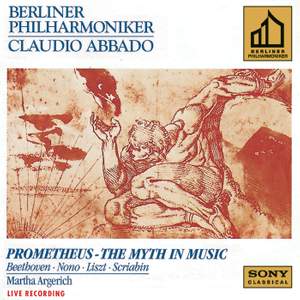
Prometheus - The Myth in Music

Prometheus - The Myth in Music

Beethoven, Nono, Liszt & Scriabin


Beethoven:

The Creatures of Prometheus, Op. 43: excerpts

Liszt:

Prometheus, symphonic poem No. 5, S99

Nono:

Prometeo: excerpts

Martha Argerich (piano), Ingrid Ade-Jesemann, Monika Bair-Ivenz (sopranos), Peter Hall (tenor), Ulrike Krumbiegel, Mathias Schadock (speakers)

Berliner Singakademie, Solistenchor Freiburg

Scriabin:

Prometheus (The Poem of Fire), Op. 60


Sony - SK53978

(CD)

$10.75

In stock - usually despatched within 1 working day.

Liszt: Symphonic Poems, Vol. 1

Liszt: Symphonic Poems, Vol. 1


Liszt:

Tasso, Lamento e trionfo, symphonic poem No. 2, S96

Les Préludes, symphonic poem No. 3, S97

Mazeppa, symphonic poem No. 6, S100

Prometheus, symphonic poem No. 5, S99


20% off Naxos

Naxos - 8550487

(CD)

Normally: $8.25

Special: $6.60

(also available to download from $6.00)

In stock - usually despatched within 1 working day.

Liszt: Symphonic Poems

Liszt: Symphonic Poems


Liszt:

Prometheus, symphonic poem No. 5, S99

Les Préludes, symphonic poem No. 3, S97

Hamlet, symphonic poem No. 10, S104

Die Ideale, symphonic poem No. 12, S106


“As a composer and thinker, Franz Liszt exerted decisive influence on musical developments in the nineteenth century and opened many new doors. Liszt committed his improvisations to paper, creating new forms that enabled him to give musical expression to his fertile imagination. In the process, he broke the constraining moulds of the symphony and sonata and developed Berlioz’s idea of the symphonic poem. He took inspiration from literature, from a heroic figure of classical antiquity in Prometheus, from Shakespeare in Hamlet and from Lamartine’s idea that life is a prelude to that unknown song of which death intones the first solemn notes in Les Preludes. In the works entitled Die Ideale after Schiller, Liszt passes comment on contemporary issues by lamenting the loss of humanistic values, but reaches a positive conclusion at the end.

In striving to express the complexity of emotion in music, he made unprecedented technical and tonal demands on the musicians. The ominous beginning of Prometheus and the long drawn out introduction to Hemlet point far into the future.

The four symphonic poems presented here may stimulate listeners to confront this brilliant composer and to recognise his unconditional commitment to truthfulness and his readiness to go the expremes” (Jun Markl)

Released or re-released in last 6 months

MDR KLASSIK - MDR1204

(CD)

$17.75

Usually despatched in 2 - 3 working days.

Liszt: Prometheus, Festklange & Hamlet

Liszt: Prometheus, Festklange & Hamlet


Liszt:

Prometheus, symphonic poem No. 5, S99

Festklänge, symphonic poem No. 7, S101

Hamlet, symphonic poem No. 10, S104

Von der Wiege bis zum Grabe, symphonic poem No. 13, S107


Performed on original instruments from the time of their first performance, this is the fifth and final volume in the critically acclaimed series “Liszt: The Sound of Weimar” which was initiated by the NCA label to mark the 200th anniversary of the great Hungarian composer’s birth. This disc by the Vienna Academy Orchestra under its highly-regarded Austrian conductor Martin Haselböck features four symphonic poems “for large orchestra”: No. 5 ‘Prometheus’, No. 7 ‘Festklänge’, No. 10 ‘Hamlet, and No. 13 ‘Von der Wiege bis zum Grabe’ (‘From Cradle to Grave’).

The project ‘The Sound of Weimar’ includes all the orchestral works of Franz Liszt in the original orchestration of the live premieres in Weimar. Recorded at the Austrian Liszt Raiding Centre, they come from performances at seven concerts during 2011 and 2012 made by the Vienna Academy Orchestra under the direction of Martin Haselböck. The first of the five-disc series featured the Dante Symphony (60234), and was followed by a first disc of symphonic poems including Les Preludes, Orpheus, and the Berg-Symphonie (60246). The third volume (60250) included three more symphonic poems, Hunnenschlacht, Hungaria, and Mazzepa. Tasso - Lamento e trionfo, Le Triomphe funèbre du Tasse, Héroïde funèbre, and Die Ideale were the works on Volume 4 (60254), also released this summer.

The Austrian conductor Martin Haselböck is the musical director of Musica Angelica in Santa Monica, California. He is the founder and also musical director of the Vienna Academy Orchestra, and with this ensmeble he has established a year-round cycle of concerts for the Gesellschaft der Musikfreunde in the Great Hall of the Vienna Musikverein.

In addition Haselböck is a professor at the University of Vienna, where he teaches organ. “Compelling… Haselböck’s liberated textures open up new listening horizons that all lovers of this fine but still underrated music should investigate. I anticipate more revelations further along the way.” - Rob Cowan in Gramophone on ‘The Sound of Weimar Vol. 3

“From the Cradle to the Grave sounds hauntingly beautiful” BBC Music Magazine, October 2012 ****

“If at first you miss the visceral drama and volume offered by modern drama instruments en masse, do persevere. Time and again Haselböck's approach reveals aspects of Liszt's scoring that would otherwise go unnoticed...Haselböck will have taught you how to 'listen through' as well as merely 'listening to'. You will have known Liszt's sound world as he knew it, more or less.” Gramophone Magazine, November 2012

“all [are] given with the right fervency of spirit.” Sunday Times, 16th September 2012

New Classical Adventure - The Sound of Weimar - 60255

(CD)

$17.50

(also available to download from $10.50)

Usually despatched in 4 - 5 working days. (Available now to download.)

Dedicated to the 200th Anniversary of the birth of Franz Liszt

Dedicated to the 200th Anniversary of the birth of Franz Liszt


Liszt:

Mephisto Waltz No. 1

Vladimir Ashkenazy (piano)

Tarantella, S. 162 No. 3 (from Venezia e Napoli)

Lazar Berman (piano)

Piano Sonata in B minor, S178

Vladimir Ovchinnikov (piano)

Hungarian Rhapsody, S244 No. 2 in C sharp minor

Gleb Akselrod (piano)

Hungarian Rhapsody, S244 No. 6 in D flat major

Alexander Slobodyanik (piano)

Piano Concerto No. 1 in E flat major, S124

Pavel Serebryakov (piano)

Moscow Philharmonic Orchestra, Kirill Kondrashin

Les Préludes, symphonic poem No. 3, S97

Moscow Radio Symphony Orchestra, Gennady Rozhdestvensky

Tasso, Lamento e trionfo, symphonic poem No. 2, S96

USSR Ministry of Culture Symphony Orchestra, Mark Ermler

Orpheus, symphonic poem No. 4, S98

USSR Ministry of Culture Symphony Orchestra, Mark Ermler

Prometheus, symphonic poem No. 5, S99

USSR Ministry of Culture Symphony Orchestra, Mark Ermler


Dedicated to the 200th anniversary of Liszt’s birth, this release includes performances by some of the greatest musicians. The works include Mephisto Waltz, Tarantella, Sonata in B minor, Hungarian Rhapsodies Nos. 2 & 6 and Piano Concerto No. 1.

Melodiya - MELCD1001911

(CD - 2 discs)

$30.50

Usually despatched in 2 - 3 working days.

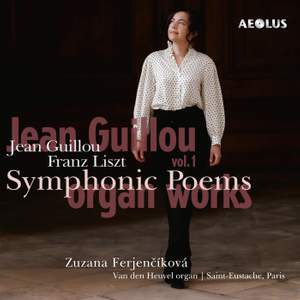
Liszt at the Scottish Abbey

Liszt at the Scottish Abbey


Liszt:

Missa pro organo (1879) R. 384, S. 264

Prometheus, symphonic poem No. 5, S99

arr. Guillou

Fantasia and Fugue on ‘Ad nos, ad salutarem undam', S259

Prelude en Mi Majeur, Op. 28/9

Prelude en Mi Mineur, Op. 28/4


Zuzana Ferjenciková (organ)

Zuzana Ferjenciková performs the organ works of Liszt on the organ of the Schottenstift in Vienna, a Benedictine monastery. Her recital includes Liszt’s arrangements of Chopin’s Preludes Op 28 Nos.4 & 9, as well as Liszt’s Mass for the Organ.

Preiser - PR91199

(CD)

$12.75

Usually despatched in 2 - 3 working days.

Liszt - Transcriptions for Organ by Jean Guillou

Liszt - Transcriptions for Organ by Jean Guillou


Liszt:

Prometheus, symphonic poem No. 5, S99

Fantasia & Fugue on B-A-C-H, S529

Orpheus for organ

Fantasia and Fugue on ‘Ad nos, ad salutarem undam', S259


Jean Guillou (organ of the Naples Conservatory)

It was inevitable that Jean Guillou’s fascination for Liszt would be exercised through the virtuoso’s panache and his transcriptions for orchestral masterpieces are a delight to behold for fans of the organ . None of the works brought together on this disc escape Jean Guillou’s ‘signature’. Recently restored to its full glory in 2007, the organ of Naples Conservatory brings these sublime transcriptions to life in a way that Liszt would have surely admired.

Accord - 4800989

(CD)

$18.50

This item is currently out of stock at the UK distributor. You may order it now but please be aware that it may be six weeks or more before it can be despatched.

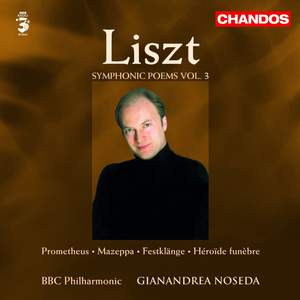
Liszt - Symphonic Poems Volume 3

Liszt - Symphonic Poems Volume 3


Liszt:

Prometheus, symphonic poem No. 5, S99

Mazeppa, symphonic poem No. 6, S100

Festklänge, symphonic poem No. 7, S101

Héroide funèbre, symphonic poem No. 8, S102


“Mazeppa is the most familiar of these works, and Noseda gives it a rousing performance… Noseda deals well with the often episodic nature of this music… He does this by an acute sense of pacing, so that each section seems to inhabit its natural tempo, and move smoothly into the next one.” BBC Music Magazine, July 2007 ****

“No one could accuse Liszt of a lack of largesse.
Here, once more, is one dramatic gesture after another to startle and provoke Liszt's contemporaries who, indifferent to such generosity, quibbled over the length of the massive Héroïdefunèbre and dismissed Mazeppa as vulgar and meretricious. Again, it is possible to see in all these works Liszt's lifelong preoccupation with the triumph of good over evil and, more personally, the recognition due to him long after his death. True, there are times when his reliance on sequence and chromaticism to intensify his themes can seem like so much padding and it says much for the BBC Philharmonic under Gianandrea Noseda that they once more temper drama with discretion.
They achieve a special sense of exultance rather than bombast in Festklänge, written to celebrate Liszt's planned marriage to the Princess Carolyne Sayn-Wittgenstein. And they are no less successful in the vast spans of the Héroïdefunèbre, a still desolating tribute to those who suffered 'throughout the whole spectrum of human carnage' (Liszt). Fluent and eloquent as ever, Noseda and his orchestra have once more been superbly recorded.”
Gramophone Classical Music Guide, 2010

“Here, once more, is one dramatic gesture after another to startle and provoke Liszt's contemporaries who, indifferent to such generosity, quibbled over the length of the massive Héroïde funèbre and dismissed Mazeppa as vulgar and meretricious. …the BBC Philharmonic under Gianandrea Noseda... achieve a special sense of exultance rather than bombast in Festklänge, written to celebrate Liszt's planned marriage to the Princess Carolyne Sayn-Wittgenstein. And they are no less successful in the vast spans of the Héroïde funèbre, a still desolating tribute to those who suffered "throughout the whole spectrum of human carnage" (Liszt). Fluent and eloquent as ever, Noseda and his orchestra have once more been superbly recorded.” Gramophone Magazine, July 2007

“The highlight here is Mazeppa...Noseda and the BBC Philharmonic Orchestra give it plenty of life and vividly re-create the evocation of the horse galloping across the countryside with the eponymous hero strapped to its back.” Penguin Guide, 2011 edition

Chandos - CHAN10417

(CD)

$16.75

(also available to download from $10.50)

Usually despatched in 2 - 3 working days. (Available now to download.)

Liszt Symphonic Poems

Liszt Symphonic Poems


Liszt:

Ce qu'on entend sur la montagne, symphonic poem No. 1, S95

Prometheus, symphonic poem No. 5, S99

Mazeppa, symphonic poem No. 6, S100


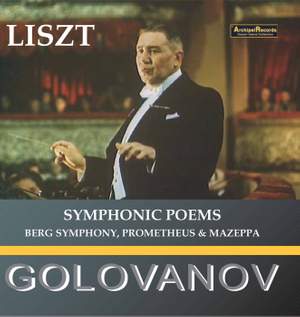
UDSSR Large Radio Orchestra Moscow, Nikolai Golovanov

Recorded 1952-53

Archipel Records - ARPCD0279

(CD)

$8.00

Usually despatched in 2 - 3 working days.

Page: 

 1   2   3 

 Next >>

Copyright © 2002-13 Presto Classical Limited, all rights reserved.