Prices shown exclude VAT. (UK tax is not payable for deliveries to United States.) See Terms & Conditions for p&p rates. | |  | Liszt: Festival Echoes
| | | In stock - usually despatched within 1 working day. |
|
|
| |  | Liszt: Hunnenschlacht, Hungaria & Mazeppa
This is the third CD in a critically acclaimed series entitled ‘Liszt: The Sound of Weimar’ which NCA is releasing as part of the celebrations to mark the 200th anniversary of the great Hungarian composer’s birth. These recordings are by the Vienna Academy Orchestra with the esteemed Austrian conductor Martin Haselböck, and as with the previous two discs the music on volume 3 is performed on original instruments of the 19th Century. Liszt wrote 13 symphonic poems in all, and the three featured here, ‘Hunnenschlacht’, ‘Mazeppa’, and ‘Hungaria’, are listed as being numbers 11, 9, and 6 respectively. The orchestral project ‘The Sound of Weimar’ will include all the orchestral works of Franz Liszt in the original orchestration of the live premieres in Weimar. The recordings are taking place at the Austrian Liszt Raiding Centre, and will all be made at performances in seven concerts during 2011 and 2012 by the Vienna Academy Orchestra under the direction of Martin Haselböck. The first two CDs in the series were the Dante Symphony (60234), which was released at the end of last year, and a disc featuring the Symphonic Poems ‘Les Preludes’, ‘Orpheus’, and the ‘Berg-Symphonie’ (60246), which was released last month. The renowned Austrian conductor Martin Haselböck is the musical director of Musica Angelica in Santa Monica, California, and the musical director and founder of the Vienna Academy Orchestra. He is also a professor at the University of Vienna, where he teaches organ. “Vol. 3 of the series is in some respects the best so far, principally on account of Haselböck's compelling performance of the rarely heard Hungaria...Haselböck's liberated textures open up new listening horizons that all lovers of this fine but still underrated music should investigate.” Gramophone Magazine, January 2012 | | | (also available to download from $10.75) | Usually despatched in 4 - 5 working days. (Available now to download.) |
|
|
| |  | Liszt - Symphonic Poems Volume 4
This is the fourth volume of the BBC Phiharmonic’s five-disc cycle of Liszt’s Symphonic Poems, conducted by Gianandrea Noseda. This monumental survey continues to go from strength to strength through Noseda’s passionate conducting and innate Italian romanticism and has made possible a reappraisal of these unjustly neglected works. The Telegraph wrote, “…it is hard to imagine them ever sounding better than here. This is music-making full of rich colouring, refined shaping of melodic line and emotional power.” Between 1848 and 1858 Liszt wrote twelve Symphonic Poems. He coined the term Symphonische Dichtung around 1853 to describe these musical works whose ideas were inspired by other art forms such as poetry or painting, or by characters and scenes. The works were particularly revolutionary for they are one-movement compositions, rather than the traditional four-movement form and pushed the boundaries of orchestration, form, harmony and structure. In this fourth instalment, the BBC Philharmonic presents four key works in Liszt’s symphonic catalogue. Widely acknowledged as one of Liszt’s greatest works, Hamlet is rarely performed, yet widely acknowledged as one of Liszt’s greatest works, and chronologically the last of the symphonic poems to be composed. It was intended as an overture to Shakespeare’s play. Hungaria was composed following Liszt’s first return visit to Hungary in 1839 having moved from his homeland aged 11. He was welcomed with open arms as a great celebrity and artist by his compatriots Undoubtedly inspired by this visit, the post Vörösmarty wrote his patriotic ode ‘To Ferenc Liszt’ to which Liszt eventually responded with his episodic work, Hungaria. Die Ideale is a highly episodic work based on quotes from a poem by Friedrich Schiller and was first played in 1857 in Weimar, conducted by the composer. The final work, Battle of the Huns takes its inspiration from Kaulbach’s painting of Attila the Hun. The final volume of this epic series is released in 2009 and will include the Dante Symphony. “utterly gripping in Noseda’s hands and puts fine versions by Bernard Haitink and Kurt Masur quite in the shade” Classic FM Magazine “Volume 4 of Chandos's superb cycle of Liszt's symphonic poems takes us through Hungaria, Hamlet and Hunnenschlacht ('The Battle of the Huns') to Die Ideale. Liszt's orchestral resources and easy sense of the picturesque still provoke endless debate among avid Lisztians and equally avid detractors. And it is true that his ever-ready susceptibility can involve stock-in-trade gestures and responses, and a wholly 19th-century rhetoric. Yet when performed with such superfine brilliance as here, everything is made irresistibly vital and graphic. Here you sense how Liszt's first audiences were fired to a renewed sense of nationalism as they listened to Hungaria, a glorified Hungarian rhapsody where muted fanfares and foreboding lead to ultimate triumph and freedom from repression. Hamlet to an even greater extent achieves its stature through extreme contrasts of violence and introspection, while Hunnenschlacht is alive with a whirling chromaticism and insistent rhythm making terms such as marziale, eroico and trionfante as central to its theme as in Hungaria. Again, Die Ideale may commence with a gloomy quote from Schiller but all possible pessimism is resolved by Liszt's preoccupation with duality; with triumph and defeat, good and evil, etc. All these qualities are conveyed by orchestra and conductor in a way that tells you that true virtuosity is achieved through discipline rather than a more generalised and garish drama. This finely recorded disc is a glorious addition to the series.” Gramophone Classical Music Guide, 2010 “…when performed with such superfine brilliance as here, everything is made irresistibly vital and graphic.” Gramophone Magazine, January 2009 | | | (also available to download from $10.75) | Usually despatched in 2 - 3 working days. (Available now to download.) |
|
|
| |  | Liszt - Symphonic Poems Volume 4
| | | (also available to download from $6.00) | Usually despatched in 2 - 3 working days. (Available now to download.) |
|
|
| |  | Liszt: Orchestral Pieces
Liszt: | Hungarian Rhapsodies, S359 Nos. 1-6 Budapest Symphony Orchestra, Andras Korodi Les Préludes, symphonic poem No. 3, S97 Wiener Symphoniker, Yuri Ahronovitch Dante Symphony, S. 109 Netherlands Philharmonic Orchestra and Chorus, Hartmut Haenchen Tasso, Lamento e trionfo, symphonic poem No. 2, S96 Ungarische Nationalphilharmonie, János Ferencsik À la chapelle Sixtine, for orchestra, S. 360 Netherlands Philharmonic Orchestra and Chorus, Hartmut Haenchen Orpheus, symphonic poem No. 4, S98 Ungarische Nationalphilharmonie, János Ferencsik Mazeppa, symphonic poem No. 6, S100 Ungarische Nationalphilharmonie, János Ferencsik Rakoczi March, S242a/1 (first version, 1839/40) Ungarische Nationalphilharmonie, János Ferencsik Hungaria, symphonic poem No. 9, S103 Ungarische Nationalphilharmonie, János Ferencsik Goethe-Festmarsch, S521 Ungarische Nationalphilharmonie, Gyula Németh Hungarian Rhapsody, S244 No. 15 in A minor 'Rákóczy Marsch' Jenő Jandó (piano) |
This 4 CD set includes some rarities such as the Dante Symphony and the Symphonic Poems Tasso and Mazeppa. The works are performed by the Wiener Symphoniker, the Netherlands Philharmonic Orchestra and the Hungarian State Orchestra. | | | (also available to download from $23.50) | Usually despatched in 2 - 3 working days. (Available now to download.) |
|
|
| |  | Liszt - Complete Tone Poems
| | | Usually despatched in 2 - 3 working days. |
|
|
| |  | Liszt: Symphonic Poems (Complete Edition)
This 5-CD set comprises a series of live recordings made by the Orchester Wiener Akademie and its conductor Martin Haselböck of orchestral music by Franz Liszt. They were released to mark the 200th anniversary of the composer’s birth. It features all of the Symphonic Poems, the Dante Symphony and the beautiful Évocation à la Chapelle Sixtine. These critically-acclaimed performances from 2011 and 2012 are unique in that the orchestra performs on the original instruments or copies of the original instruments that were used at concerts conducted by the composer himself. For “The Sound of Weimar” project, Liszt expert Martin Haselböck deployed the orchestra Wiener Akademie in exactly the size adopted for the original performances given by the Weimar Hofkapelle, and for the recordings made use of instruments that had either been played in concerts conducted by Franz Liszt himself or were faithful copies of such instruments. When the early CDs of the series appeared they were immediately described in such terms as “definitive recording”, “exemplary editions”, “a resounding success” or “a tonal phenomenon”. In addition to the symphonic poems this special edition also includes the Dante symphony, a work that was also composed at Weimar, and Évocation à la Chapelle Sixtine. Volumes 1 to 4 of the series won the International Franz Liszt Record Grand Prix in 2011 and 2012, and the series has received outstanding reviews in specialist magazines around the world. | 
| | | (also available to download from $42.25) | Usually despatched in 4 - 5 working days. (Available now to download.) |
|
|
| |  | Liszt: Symphonic Poems (complete)
| | | This item is currently out of stock at the UK distributor. You may order it now but please be aware that it may be six weeks or more before it can be despatched. |
|
|
| |  | Liszt: Orchestral Works and Piano and Orchestra
Liszt: | Symphonic Poems Nos. 1-13 A Faust Symphony, S108 Episoden (2) aus Lenaus Faust S100 Dante Symphony, S. 109 Piano Concerto No. 1 in E flat major, S124 Piano Concerto No. 2 in A major, S125 Wandererfantasie (Schubert), S366 Polonaise brillante, S367 Fantasy on Hungarian Folk-tunes, S123 Fantasia on a theme from Beethoven's 'Ruins of Athens', S122 Grande fantaisie symphonique on themes from Berlioz's ‘Lelio', S120 Malédiction, S121 Op. 452 Totentanz, S126 for piano & orchestra |
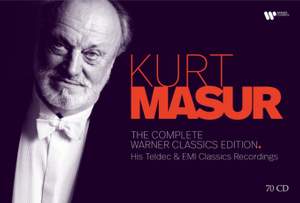
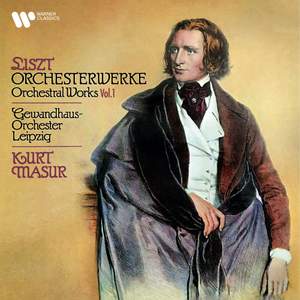
Among the 25 orchestral works that Liszt wrote, the thirteen tone poems make up the biggest single category. He gave these works of ideas their final form during his years as kapellmeister at the Weimar court (1843–59), and dedicated them to his beloved, Princess Carolyne von Sayn-Wittgenstein. The numbering of the first editions doesn’t reflect the order of composition: the first tone poem that Liszt composed was Tasso (first performance: 28. August 1849); it was followed (in the order of the first performance) by Bergsinfonie and Prometheus (1850), Orpheus, Les Préludes, Mazeppa and Festklänge (1854), Hungaria (1856), Die Ideale, Héroide funèbre and Hunnenschlacht (1857), and finally Hamlet (1876). Nearly all the tone poems are based on literary sources or historic myths and reflect philosophical ideas, with the exception of Festklänge, which was intended to be the wedding march for Liszt’s planned wedding to Carolyne, and Hungaria, which extols the praises of the composer’s native country. Von der Wiege bis zum Grabe (1881/2) was not written during the Weimar years: this later addition can be seen as an epilogue penned in the wisdom of old age. Liszt treated the character of Faust in his music in a variety of forms: in the two orchestral episodes after Nikolaus Lenau’s poem of the same name, and in the different Mephisto Waltzes. The Faust Symphony is a study of the three main characters in the Goethe drama, but it also represents a picture "of the nature of Man with his aspirations and flaws, with his fluctuation between guilt and redemption" (Hans Jürgen Meinerts), culminating in the challenge to find true love. Here Liszt introduces the closing chorus with a tenor solo: "Everything transient is but an allegory, the inadequate becomes reality, the indescribable is done; eternal femininity draws us upwards". The Dante Symphony, which is dedicated to Wagner, reflects the process of understanding described in the Divine Comedy, which Dante completed shortly before his death in 1321. In the ‘Inferno’ Liszt sends the Romantic idea of love to hell in the example of Francesca da Rimini qnd Paolo. The opening of ‘Purgatorio’ puts Dante’s words into music: "A gentle blue, poured like oriental sapphire on to the bright firmament"; later follows a fugue marked ‘Lamentoso’ that portrays the process of purification. Liszt originally wanted to add a final section corresponding to Dante’s ‘Paradiso’, but Wagner convinced him that this couldn’t be depicted in music. Thus Liszt left the piece in two movements; however, the ‘Magnificat’ essentially represents Paradise, for the Gregorian magnificat he quotes here with its ethereal female choir is in keeping with the central message of Man finding his fulfilment in the divine. Liszt subsequently added a closing apotheosis to the work. Nowadays, this later addition often falls victim to the tendency to favour the original version, but doing so actually distorts our view of the connections between the two symphonies: ‘Mephisto’ and ‘Inferno’ correspond inversely with one another, as do ‘Faust’ and ‘Purgatorio’. Admittedly, the Dante Symphony goes one step further: where Gretchen was still a real person in the Faust Symphony, Liszt makes Beatrice, whom Dante tries to find in hell, into a mere ideal that no longer appears. Of Liszt’s ten original compositions for piano and orchestra, at least four can be described as piano concertos, among them Malédiction S. 121. But Liszt only numbered two of them for publication. Listened to one after the other, they create an impression of extreme opposites. This much is apparent from the basic keys of E flat major and A major, which couldn’t be farther away from one another. The majestic Piano concerto no.1 is clearly structured in three movements, while the second concerto has a single movement with a six-part structure that superimposes variation and sonata form. Notwithstanding, the two works seem to refer to each other. As Liszt also appeared for many years as a concert pianist, he also left quite a number of arrangements for piano and orchestra of other composers’ works. In most such fantasias, he used well-known themes by composers like Berlioz and Beethoven for musical reflections that are formally independent. Schubert’s Wanderer Fantasy, on the other hand, he turned into a captivating piano concerto, even though it does stick for the most part to the form of the original. The first complete German recording of Franz Liszt's 13 tone poems, his two symphonies and the big works for piano and orchestra. Recorded by the Leipzig Gewandhaus under Kurt Masur in 1980–81, this issue set international standards in the Liszt discography. | | | In stock - usually despatched within 1 working day. |
|
|
| |  | Liszt Collection
Liszt: | Années de pèlerinage, 1ère année, Suisse (9 pieces), S. 160 Années de pèlerinage, 2ème année, Italie (7 pieces), S. 161 Années de pèlerinage, 3ème année (7 pieces), S. 163 Piano Concerto No. 1 in E flat major, S124 Piano Concerto No. 2 in A major, S125 Totentanz, S126 for piano & orchestra Fantasy on Hungarian Folk-tunes, S123 Symphonic Poems Nos. 1-13 Transcendental Studies, S139 Nos. 1-12 Three Concert Studies, S144/R5: Un lamento; La leggierezza; Un sospiro Two Concert Studies, S145/R6: Gnomenreigen; Waldesrauschen Études d'exécution transcendante d'après Paganini (6), S.140 Hungarian Rhapsodies, S244 Nos. 1-19 A Faust Symphony, S108 Piano Sonata in B minor, S178 Widmung S566 after Schumann (Liebeslied) Erlkönig, S558 No. 4 (after Schubert D328) Liebesbotschaft (No. 10 from Schwanengesang, S560, after Schubert) Valse oubliée No. 1, S.215/1 Valse oubliée No. 2, S.215/2 Réminiscences de "Don Juan" (after Mozart), S. 418 Consolations (6), first series (6), S171a Liebesträume, S541 Nos. 1-3 Concert Paraphrase on Rigoletto, S.434 after Verdi's opera Valse de concert sur deux motifs de Lucia et Parisina (Donizetti) Faust (Gounod)_Waltz Isolde's Liebestod (after Wagner), S447 Fantasy on Themes from Mozart's Marriage of Figaro and Don Giovanni, S697 Spinnerlied aus Der fliegende Holländer S440 Pilgerchor aus Tannhäuser S443 Aus Richard Wagners Lohengrin, S446 Polonaise Aus Tschaikowskys Oper Jewgeny Onegin S429 |
Artists include Lazar Berman, Sviatoslav Richter, Maurizio Benini, Michele Campanella, Anna Kravtchenko, Thomas Trotter, Jorge Bolet, Jean-Yves Thibaudet, Claudio Arrau, Nikita Magaloff, Daneil Barenboim; Leonard Bernstein, Kirill Kondrashin, Bernard Haitink; London Symphony Orchestra, Boston Symphony Orchestra | 
| | DG - 4805066 (CD - 16 discs) Normally: $57.00 Special: $45.50 |
| | In stock - usually despatched within 1 working day. |
|
|
| |
|