Rossini: Nacqui all'affanno, al pianto...Non più mesta (from La Cenerentola)

This page lists all recordings of Nacqui all'affanno, al pianto...Non più mesta (from La Cenerentola), by Gioacchino Antonio Rossini (1792-1868) on CD, SACD, DVD, Blu-ray & download (MP3 & FLAC). Generally, more recent releases are listed first, but with priority given to those that are in stock.

Recommendations

Opera Choice
April 2011
DVD of the Month
July 2009
Editor's Choice
July 2011
Editor's Choice
October 2006
4 star

All recordings

Prices shown exclude VAT. (UK tax is not payable for deliveries to United States.)
See Terms & Conditions for p&p rates.

Opera 2012

Opera 2012


Adès:

The Tempest: Overture

Bellini:

Ascolta! Se Romeo t'uccise un figlio...La tremenda ultrice spada (from I Capuleti)

Joyce DiDonato (mezzo)

Britten:

Look! Through the port comes the moonshine astray (from Billy Budd)

Nathan Gunn (baritone)

Donizetti:

Una furtiva lagrima (from L'elisir d'amore)

Rolando Villazon (tenor)

Pour ce contrat fatal...Salut à la France (from La fille du régiment)

Natalie Dessay (soprano)

Gounod:

Il était un roi de Thule (from Faust)

Inva Mula (soprano)

Handel:

Ariodante : Overture

Alan Curtis

Scherza, infida (from Ariodante)

Joyce diDonato (mezzo)

Venti turbini (Rinaldo)

David Daniels (countertenor)

Massenet:

Suis-je gentille ainsi? ... Je marche sur tous les chemins ... Obéissons quand leur voix appelle (from Manon)

Natalie Dessay (soprano)

Mozart:

Fin ch'han dal vino (from Don Giovanni)

Peter Mattei (baritone)

Mi tradì quell'alma ingrate (from Don Giovanni)

Veronique Gens (soprano)

Soave sia il vento (from Così fan tutte)

Thomas Allen (baritone)

Parto, parto, ma tu ben mio (from La Clemenza di Tito)

Elina Garanca (mezzo)

Offenbach:

Les oiseaux dans la charmille (from Les Contes d'Hoffmann)

Natalie Dessay (soprano)

Puccini:

Si, mi chiamano Mimi (from La Bohème)

Angela Gheorghiu (soprano)

O soave fanciulla (from La Bohème)

Angela Gheorghiu (soprano), Roberto Alagna (tenor)

Vissi d'arte (from Tosca)

Angela Gheorghiu (soprano)

Un bel di vedremo (from Madama Butterfly)

Liping Zhang (soprano)

Rossini:

Guillaume Tell Overture

Antonio Pappano

Una voce poco fa (from Il barbiere di Siviglia)

Diana Damrau (soprano)

Nacqui all'affanno, al pianto...Non più mesta (from La Cenerentola)

Joyce DiDonato (mezzo)

Verdi:

È strano! è strano!...Ah! fors è lui (from La traviata)

Natalie Dessay (soprano)

Ella mi fu rapita! (from Rigoletto)

Vittorio Grigolo (tenor)

Vivaldi:

Recordati che sei (from Farnace)

Max Emanuel Cencic (countertenor)

Wagner:

Ewig war ich (from Siegfried)

Deborah Voigt (soprano)


Virgin - 0709542

(CD - 2 discs)

$15.50

In stock - usually despatched within 1 working day.

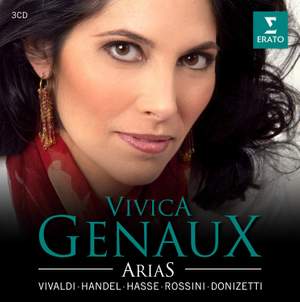
Vivica Genaux: Bel Canto Arias

Vivica Genaux: Bel Canto Arias


Donizetti:

Nella fatal di Rimini (from Lucrezia Borgia)

Il segreto per esser felici (from Lucrezia Borgia)

E sgombro il loco...Un bacio ancora (from Anna Bolena)

Popolo, amici, sanguinosi allori...Ah si, da tanti affani (from Alahor in Granada)

Rossini:

Nacqui all'affanno, al pianto...Non più mesta (from La Cenerentola)

Cruda sorte! Amor tiranno! (from L'Italiana in Algeri)

Pronti abbiamo...Amici in ogni evento...Pensa alla patria (from L'Italiana in Algeri)

Mura felici (from La donna del lago)

Eccomi alfine in Babilonia (from Semiramide)

Ah! quel giorno ognor rammento (from Semiramide)

Una voce poco fa (from Il barbiere di Siviglia)


Rossini, Bellini, Donizetti: these three men alone sufficed to popularise the art of Italian opera during the first half of the nineteenth century, a century so propitious to the spread of romanticism in all its manifestations.

If we set aside Bellini, who flashed across the sky like a meteor, this leaves Rossini and Donizetti, and the differences between them are patent. Rossini was born in Pesaro in 1792 and died in Paris in 1868. His stage career began in 1810 in Venice with a ‘farsa’, Il cambiale di matrimonio, establishing immediately the high standard which he maintained without faltering until he suddenly stopped writing operas in 1839. His last opera was Guillaume Tell which failed to convince the regular audience at the Paris Opéra, unresponsive as they were to its ground-breaking aspects. Rossini’s decision to stop has given rise to endless speculation, but the most likely explanation is that he had grown weary of seeing audiences’ tastes changing and forsaking the ideal of vocal beauty for which he always strove.

Donizetti’s life was shorter, and more full of drama – though we should no longer see Rossini, who suffered from depression, as a jovial fun-lover, a popular but misleading view. Donizetti was born in Bergamo in 1797 and died there in April 1848. A pupil of Giovanni Simone Mayr, he had a very full professional life which was nevertheless marred by sorrow and illness. He produced over seventy-five operas of all kinds from comic to tragic and, like Rossini, his career took him to Paris.

Surprisingly, much of Rossini’s output is not well known. The image of him which mainly springs to mind is linked to the comedies La Cenerentola, L’italiana in Algeri and above all Il barbiere di Siviglia, an undisputed masterpiece and in a way his emblematic work. But this is to leave out a large number of significant works, his opere serie, which are rarely performed today despite their outstanding qualities. The type of female voice Rossini preferred was the contralto (a term to be understood in the context of its time, when vocal nomenclature was far less precise than today), with a sumptuous, opulent low register, tawny amber colours and a full, rich sound. Although the contralto’s high register was at first only rarely called upon, she was not confined to viragos or trouser roles; for certain parts she had to be capable of moderating and lightening her naturally full-bodied instrument. When the writing moves into the upper range it takes on similarities with the mezzo-soprano, as well as slightly more femininity.

The disappearance of the castrati at the start of the nineteenth century encouraged the fashion for the contralto. Rossini was probably harking back to the golden age of the castrato when he wrote some of his finest serious roles, such as Arsace in Semiramide. This was written for Rosa Mariani, who performed it for the first time in Venice in 1823 opposite the composer’s wife Isabella Colbran as the Queen of Babylon. It is a magnificent role, that of a courageous young man of whom the queen is enamoured and who, by the most unhappy mischance, turns out to be her son, and, even more unfortunately, the involuntary cause of her death. ‘Eccomi alfine in Babilonia… Ah! quel giorno’ is his entrance aria, classically structured in three parts, recitative, slow section, quick section: certainly a bravura piece, but one in which the singer has to give expression to feelings as varied as ardent love and fear of the future. Even finer, and more intensely poetic, is Malcolm’s ‘Mura felici’ from La donna del lago, a Scottish tale over which hovers the shade of Sir Walter Scott, so dear to nineteenth-century opera. In 1819, at the San Carlo in Naples, Rosmunda Pisaroni captured the dream-like essence of this aria so perfectly that the smallpox blemishing her face was entirely forgotten.

But the contralto can also play the woman – especially of the strong-willed, courageous type, like Isabella in L’italiana in Algeri, a difficult part which, in Venice in 1813, gave Marietta Marcolini the chance to shine. The role exhibits throughout a blend of charm and virtuosity, unabated energy and unshakable good humour, whether at Isabella’s entrance in Act I, cursing her fate before sharpening her weapons of seduction (‘Cruda sorte’) or exhorting her beloved, before the finale, to behave like a true Italian (‘Pensa alla patria’). For the final rondo of La Cenerentola, the voice lightens, using less of its lower register; Angelina’s goodness and joie de vivre shine through. At the world premiere in Rome in 1817, Geltrude Giorgi-Righetti took the part. A year earlier, also in Rome, she lent her personality to the exuberant Rosina in Il barbiere di Siviglia, who displays her determination to marry Lindoro in ‘Una voce poco fa’.

Donizetti followed a different path both musically and theatrically. The idea of opera as simply a feast of singing begins to fade before dramatic urgency; the power of song alone is no longer enough, and words come into their own. Can we still speak of ‘bel canto’? The same devices are used, the same ornamentation, the role of colour, nuance, dynamics and contrast, but they are regarded more as a means than as an end in themselves. At the Teatro Carcano in Milan in 1830, Anna Bolena was enthusiastically received. This time the contralto (Amalia Laroche) again had a trouser role, the page Smeton; we can perhaps see something of Cherubino in this adolescent boy who is far from indifferent to Anna’s charms (‘È sgombro il loco’, from Act I, Scene 1). The Victor Hugo-inspired Lucrezia Borgia was not to the liking of either the poet or the censor. Its hero Orsini is yet again a trouser role (one of Marietta Brambilla’s parts at La Scala, Milan, in 1833); he launches the plot in the prologue by telling his friend Gennaro that they will both be killed by Lucrezia Borgia – ‘Nella fatal di Rimini’. Later, during the fateful banquet of the final act he sings a brindisi, a drinking-song with a catchy rhythm which was immensely popular at the time (‘Il segreto per esser felici’); its second verse lends itself to brilliant ornamentation.

Alahor in Granata was first staged by the Teatro Carolino in Palermo in January 1826, but the work was forgotten throughout the twentieth century until the Teatro de la Maestranza in Seville revived it for the opening of its 1998 season. It is a youthful work, though it came after some remarkably accomplished efforts such as the delightful L’ajo nell’imbarazzo (1824), itself preceded, in 1822, by Zoraide di Granata, another picturesque piece drawn from Spanish history. The trouser role here is that of King Muley-Hassem (first performed by Marietta Gioia-Tamburini), who is in love with Zobeida, a member of an enemy tribe, the Abencerrages. Here, the king appears in the role of peace-maker; his efforts put an end to the war and win him his beloved. There could be no better way to round off this gallery of portraits devoted to a voice distinguished, among other qualities, by its rarity.

Virgin - 0293232

(CD)

$11.00

In stock - usually despatched within 1 working day.

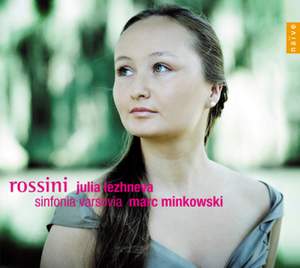
Julia Lezhneva sings Rossini

Julia Lezhneva sings Rossini


Rossini:

Tanti affetti in tal momento (from La donna del lago)

Ils s'éloignent enfin (from Guillaume Tell)

Bel raggio lusinghier (from Semiramide)

Assisa a' piè d'un salice (from Otello)

La Cenerentola - Sinfonia

Nacqui all'affanno, al pianto...Non più mesta (from La Cenerentola)

L'ora fatal s'appressa ... Giusto ciel! (from L'Assedio di Corinto)


A star is born! The Russian soprano Julia Lezhneva is the vocal revelation that everyone is talking about. Still only 21, a protégée of Dame Kiri Te Kanawa and the winner of several major awards, Lezhneva makes her solo recital debut with a programme of arias by Rossini, a composer of whom is particularly fond. She is accompanied by the Sinfonia Varsovia conducted by its new artistic director Marc Minkowski.

In 2007 Julia Lezhneva won the prestigious Elena Obraztsova International Competition for Young Opera Singers in St Petersburg, for which the judges included Teresa Berganza, Christa Ludwig and Eva Marton. She has sung opposite Juan Diego Flórez at the Rossini Opera Festival in Pesaro, and made her UK debut, aged 19, with the Royal Liverpool Philharmonic Orchestra conducted by Vasily Petrenko, also performing Rossini. Her London debut, introduced by Dame Kiri Te Kanawa, came at the 2010 Classical Brit Awards singing Elena’s Final Rondo from Rossini’s La Donna del Lago in the Royal Albert Hall.

In October 2010 she confirmed her status as one of the world’s most exciting talents by winning the First International Opera Competition held at the Theatre des Champs-Elysees in Paris. Her performance in the recent Naïve recording of Vivaldi’s opera Ottone in Villa, conducted by Giovanni Antonini, has been praised to the skies by the international press. Her debut solo concerts at the 2010 Salzburg Festival with the Mozarteum Orchestra and Marc Minkowski likewise achieved extraordinary success. Minkowski has followed the young singer’s career closely; it was he who invited her in 2009 to take part in Bach’s B minor Mass, her first recording, and in summer 2011 she will sing the part of Fiordiligi under his baton in a new production of Mozart’s Così fan tutte at Salzburg. Despite her youth, Julia Lezhneva has a huge and extremely varied repertoire, ranging from the Baroque and bel canto styles to Romantic and contemporary music.

“The 21-year-old Russian soprano — winner of Finland’s prestigious Mirjam Helin singing competition in 2009 — is clearly a name to watch. Hers is a bright, high soprano of limpid timbre and an easy coloratura technique” Sunday Times, 3rd April 2011 ***

“She has attractively full tone in the lower middle, where much of the music lies, and she possesses the flexibility to negotiate exceedingly challenging coloratura...[Minkowski] should lead Rossini more frequently - his vigour, intelligence and sheer polish are most welcome here.” International Record Review, April 2011

“Lezhneva's voice is perfectly suited to a flamboyant coloratura piece such as "Tanti Affetti", from La Donna del Iago, with her tiptoeing trills teetering delicately along. But the standout here is "Assisa a' piè d'un salice...for which the liquid harp glissandi and subtle strings of the Sinfonia Varsovia provide the most delightful, sensitive setting.” The Independent, 29th April 2011 ****

“Her sense of line is unquestionably superb, as is her technique: there are trills and staccatos here, the likes of which we hear all too rarely.” The Guardian, 5th May 2011 ***

“there is real flair and talent here, with much of the coloratura neatly despatched, and some stylistic grace that is admirable...Minkowski and his Polish musicians are marvellous, especially in a knockout account of the Cenerentola overture.” BBC Music Magazine, June 2011 ***

“a pure, pellucid soprano with an intriguing hint of mezzo plangency, fluent movement between the registers, and scintillating (if faintly aspirated) coloratura...this is a highly enjoyable debut recital, by turns affecting exhilarating, from a soprano of impressive accomplishment and still more exciting potential. Orchestral accompaniments are trim and alert” Gramophone Magazine, July 2011

“she delivers truly heart-stopping versions of the coloratura showpieces...Marc Minkowski's conducting is full of joie de vivre and sparkle too.” Classic FM Magazine, July 2011 ***

“Lezhneva’s vibrant pyrotechnics during "Tanti affeti" from La donna del lago are as wittily entertaining as they are musically appropriate...There’s crisp support from the Warsaw chorus and effortless, gossamer-light orchestral backing. Remarkable indeed.” The Arts Desk, 26th June 2011

“she sings with pinpoint accuracy, real elegance and musicality, and the voice itself is warm and round and womanly and beautifully clean...there is a gorgeous relaxed feel to her singing...This lovely disc, neatly accompanied by Marc Minkowski and the Sinfonia Varsovia, is genuinely the herald of a special new voice.” Opera Now, September/October 2011 ****

GGramophone Magazine

Editor's Choice - July 2011

Naive - V5221

(CD)

$16.75

(also available to download from $10.50)

In stock - usually despatched within 1 working day.

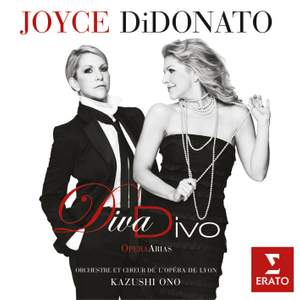
Joyce DiDonato: Diva, Divo

Joyce DiDonato: Diva, Divo


Bellini:

Ascolta! Se Romeo t'uccise un figlio...La tremenda ultrice spada (from I Capuleti)

Edgaras Montvidas (tenor), Nabil Suliman (baritone)

Berlioz:

La Damnation de Faust: D'amour l'ardente flamme

Roméo et Juliette, Op. 17: Premiers transports que nul n'oublie

Gluck:

Se mai senti spirarti sul volto (from La clemenza di Tito)

Gounod:

Faites- lui mes aveux (from Faust)

Massenet:

Je suis gris! Je suis ivre! (from Chérubin)

Allez, laissez-moi seul...Coeur sans amour, printemps sans roses (from Cendrillon)

Ô frêle corps.... Chère Cypris (from Ariane)

Mozart:

Giunse alfin il momento... Deh, vieni, non tardar… (from Le nozze di Figaro)

Ecco il punto...Non più di fiori vaghe catene (from La clemenza di Tito)

Voi che sapete (from Le nozze di Figaro)

Rossini:

Contro un cor (from Il barbiere di Siviglia)

Edgaras Montvidas (tenor)

Nacqui all'affanno, al pianto...Non più mesta (from La Cenerentola)

Elena Semenova (soprano), Pascale Obrecht (mezzo), Edgaras Montvidas (tenor), Nabil Suliman (baritone), Paolo Stupenengo (bass)

Strauss, R:

Sein wir wieder gut (from Ariadne auf Naxos)


Joyce DiDonato (mezzo)

Orchestre et Choeur de L'Opéra National De Lyon, Kazuko Ono

Joyce DiDonato celebrates the rich dramatic variety of the mezzo-soprano voice in this collection of arias for different characters – of both sexes – from a single opera, or from different operatic treatments of the same story.

Joyce DiDonato’s capacity for characterisation is as astounding as the range and flexibility of her voice. As her Virgin Classics recitals of Handel and Rossini have proven, she can charm and touch as a good girl, seduce and seethe as a bad girl, and slip believably into the trousers of a hero. As Opera News said of the Rossini disc, ‘Colbran, The Muse’: “With her sure sense of line and colour, DiDonato takes possession of the repertory, mining every musical and vocal gesture to inhabit each character confidently … Her theatrical sense is magnificent. Musically and dramatically, the disc is perfection.”

This new collection showcases DiDonato’s multi-faceted art – and the wealth of opportunities open to a mezzo-soprano – by presenting her as different characters, both male and female, from the same opera or from different musical treatments of the same story.

As DiDonato explains: “This recital celebrates the vast and fabulous world of the mezzo-soprano. Aside from the obvious Toscas or Cio-Cio Sans, I've never regretted the length of my vocal cords!

I have the privilege and unmitigated joy of playing boys and young men, as well as girls and grown women … It’s an exploration of the human palette of emotions.

“I wanted to find a way to show this duality on disc, while highlighting some of the composers I'm most passionate about, such as Mozart, Bellini, Berlioz, Rossini, and Massenet. In exploring this idea, the possibility became clear for telling different sides of some of the most familiar tales which have served as inspiration for operatic legends: Cinderella, Faust, Romeo and Juliet … I've always thought of myself as a storyteller, and with this particular disc, I can showcase that side of me as never before. I'm ready to play!”

The programme features several roles that DiDonato has sung on stage – such as Rossini’s Cenerentola (it was the character’s gentle, then exuberant ‘Nacqui all’affanno’ that launched her international career at Plácido Domingo’s Operalia competition, and subsequently at La Scala), Bellini’s Romeo and Mozart’s Cherubino. The ‘flip sides’ of those characters are roles that have not featured in her repertoire: the Prince from Massenet’s Cendrillon (a lavish treatment of the Cinderella story more likely to bring DiDonato in the title role – as at Santa Fe in 2006 and, in 2011, at Covent Garden); the Nurse from Berlioz’s Roméo et Juliette, and both Chérubin (from Massenet’s ‘sequel’ to Le nozze di Figaro) and Susanna. The Figaro connection continues with an excerpt from Il barbiere di Siviglia (Rosina, of course, later becomes Countess Almaviva), while other operas on the programme, from the Renaissance to late Romanticism, include La clemenza di Tito (Sesto and Vitellia), Faust, La Damnation de Faust, Mefistofele, Orphée et Eurydice, Orfeo and Orphée aux Enfers.

Accompanying Joyce DiDonato in this tour de force is the Orchestre de l'Opéra National de Lyon under the company’s Principal Conductor Kazushi Ono, another artist who successfully embraces an extraordinary diversity of musical idioms.

As John von Rhein wrote in Gramophone: “In complete control vocally, Joyce DiDonato is … consumed by the character. She embodies whomever she’s playing and whatever emotional situation she is evoking.”

“It's playful, as well as an ideal vehicle for her glorious mezzo voice in which the most fiendish coloratura ornaments and trills sound effortless.” The Observer, 30th January 2011

“I can find nothing but praise...This recording gives enormous pleasure in rare as well as familiar repertoire...the mezzo invariably finding the right colour for each portrayal...Perhaps the best thing about this recital is that everything DiDonato sings sounds spontaneous, as if the character her- or himself were actually experiencing it for the first time.” International Record Review, March 2011

“she is steadily terrific: technically secure, nimble and clean in her flourishes and roulades, always alert to dramatic nuance. Nor do we lack variety. First, a swaggering, tipsy aria for Cherubino from the luxuriously coloured Chérubin (Massenet again). Then we jump to Mozart’s Susanna, intimate and tender in The Marriage of Figaro. So it goes: jolting, fascinating, entertaining.” The Times, 11th February 2011 ****

“[This collection] draws together paired arias of male and female roles from the same story...the youthful Siebel's declaration of love for Marguerite, from Gounod's Faust, receives an anachronistic response from Berlioz's La Damnation de Faust. Clever stuff.” The Independent, 11th February 2011 ***

“DiDonato’s is a five-star voice, perhaps the finest lyric mezzo before the public today...Ono’s Lyons orchestra and chorus give her voice luxury support, and her growing army of fans won’t be disappointed.” Sunday Times, 20th February 2011 ****

“[DiDonato] underlines what has been increasingly obvious from her stage appearances – she is a consummate professional” Financial Times, 11th February 2011 ****

“DiDonato's tone and phrasing catch a genuine male authority in the first entry of Bellini's Capuleti Romeo...Cendrillon and the (to Anglophones) rare Ariane are utter, and quite dark, delights. Elsewhere the Mozart is enjoyed and well negotiated - the lower colouring makes Susanna sound mature and knowing.” Gramophone Magazine, April 2011

“Proof of DiDonato's consummate musicianship is everywhere here...For sheer beauty of tone, legato that defies gravity and singing that restores your faith in human nature, listen last of all to what Joyce DiDonato does with Berlioz's 'D'amour l'ardente flamme'. Diva or Divo, this is the real thing.” BBC Music Magazine, April 2011 *****

“Listening to DiDonato depict both [Cherubino and Susanna]...brings home just how deeply this singer can inhabit character...The American mezzo delivers this ambitious, imaginative programme with intelligence, musicality, vocal brilliance and immense charm. There's some lovely playing from the Lyon Opera Orchestra too.” Classic FM Magazine, May 2011 *****

GGramophone Awards 2011

Finalist - Recital

BBC Music Magazine

Opera Choice - April 2011

Virgin - 6419860

(CD)

$16.75

In stock - usually despatched within 1 working day.

Una voce poco fa: A Portrait of Teresa Berganza

Una voce poco fa: A Portrait of Teresa Berganza


Bizet:

L'amour est un oiseau rebelle 'Habanera' (from Carmen)

Près des remparts de Séville (Séguedille) (from Carmen)

Cherubini:

Medea! O Medea!...Solo un pianto (from Medea)

Falla:

Siete Canciones populares españolas

Gluck:

Che faro' senza Euridice? (from Orfeo ed Euridice)

Che puro ciel (Orfeo ed Euridice)

Divinités du Styx (from Alceste)

Handel:

Mi lusinga il dolce affetto (from Alcina)

Verdi prati (from Alcina)

Mozart:

Non so più cosa son, cosa faccio (from Le nozze di Figaro)

Voi che sapete (from Le nozze di Figaro)

Temerari!...Come scoglio! (from Così fan tutte)

Ch'io mi scordi di te?... Non temer, amato bene, K505

Rossini:

Una voce poco fa (from Il barbiere di Siviglia)

Cruda sorte! Amor tiranno! (from L'Italiana in Algeri)

Nacqui all'affanno, al pianto...Non più mesta (from La Cenerentola)

and traditional Spanish folksongs


“A truly memorable Teresa Berganza compliation. Naturally, there is a good sprinkling of her classic early operatic recordings of Rossini and Mozart, which sparkle as brightly as ever...All the other items on the first disc, from the Gluck and Handel items to the Bizet, also show her on top form, a real star mezzo of character and style...this is one of the most enterprising collections in Decca's 'Portrait' series.” Penguin Guide, 2011 edition

DG - E4755182

(CD - 2 discs)

$15.00

In stock - usually despatched within 1 working day.

Vesselina Kasarova: A Portrait & French Opera Arias

Vesselina Kasarova: A Portrait & French Opera Arias


Bellini:

Ascolta! Se Romeo t'uccise un figlio...La tremenda ultrice spada (from I Capuleti)

Berlioz:

Ah! Je vais mourir (from Les Troyens)

Donizetti:

Fia dunque vero…O mio Fernando (from La Favorita)

Sposa a Percy...Per questa fiamma indomita (from Anna Bolena)

Gluck:

Che faro' senza Euridice? (from Orfeo ed Euridice)

Gounod:

Ô ma lyre immortelle (from Sapho)

Depuis hier je cherche en vain mon maître...Que fais-tu, blanche tourterelle (from Roméo et Juliette)

Nuit resplendissante (from Cinq-Mars)

Handel:

Or la tromba (Rinaldo)

Lalo:

De tous côtes j'apercois...Lorsque je t'ai vu soudain (from Le Roi d'Ys)

Massenet:

De cet affreux combat…Pleurez, mes yeux ! (from Le Cid)

Meyerbeer:

Non, non, non, vous n'avais jamais, je gage (from Les Huguenots)

Donnez, donnez (from Le Prophète)

Mozart:

Voi che sapete (from Le nozze di Figaro)

Batti, batti, o bel Masetto (from Don Giovanni)

Rossini:

Nacqui all'affanno, al pianto...Non più mesta (from La Cenerentola)

Pensa alla patria (from L'Italiana in Algeri)

Una voce poco fa (from Il barbiere di Siviglia)

Saint-Saëns:

Amour, viens aider ma faiblesse (Samson et Dalila)

Thomas, Ambroise:

Connais-tu le pays (from Mignon)


“[Portrait] is the stuff of legends: I can't recall the last time I heard a debut opera recital that has given me so much pleasure. The vibrant richness of Kasarova's tone allied to her totally uninhibited manner before the microphone allow her to bring to astonishing life each of the characters portrayed within.” Gramophone Magazine, February 2007

RCA - 88697526592

(CD - 2 discs)

$13.00

In stock - usually despatched within 1 working day.

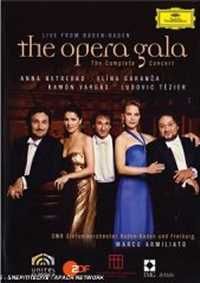
The Opera Gala - Live from Baden-Baden

The Opera Gala - Live from Baden-Baden


Bellini:

Norma Overture

Mira, o Norma (from Norma)

Anna Netrebko (soprano) & Elina Garanca (mezzo-soprano)

Ah! Per sempre io ti perdei (from I Puritani)

Ludovic Tezier (baritone)

Casta Diva (from Norma)

Anna Netrebko (soprano)

Bizet:

Au fond du temple saint (from Les Pêcheurs de Perles)

Ramon Vargas (tenor) & Ludovic Tezier (baritone)

Votre toast je peux vous le rendre 'Toreador Song' (from Carmen)

Ludovic Tezier (baritone)

Chapí:

Al pensar en el dueno (from Las Hijas del Zebedeo)

Elina Garanca (mezzo-soprano)

Delibes:

Lakmé: Dôme épais (Flower Duet)

Anna Netrebko (soprano) & Elina Garanca (mezzo-soprano)

Donizetti:

Una furtiva lagrima (from L'elisir d'amore)

Ramon Vargas (tenor)

Lehár:

Meine Lippen sie Kussen so heiss (from Giuditta)

Anna Netrebko (soprano)

Puccini:

O soave fanciulla (from La Bohème)

Anna Netrebko (soprano) & Ramon Vargas (tenor)

Rossini:

Nacqui all'affanno, al pianto...Non più mesta (from La Cenerentola)

Elina Garanca (mezzo-soprano)

Soirées musicales: La Danza

Ramon Vargas (tenor)

Saint-Saëns:

Bacchanale from Samson et Dalila

Mon cœur s'ouvre à ta voix (from Samson et Dalila)

Elina Garanca (mezzo-soprano)

Verdi:

Dio, che nell'alma infondere (from Don Carlo)

Ramon Vargas (tenor) & Ludovic Tezier (baritone)

Quando le sere al placido (from Luisa Miller)

Ramon Vargas (tenor)

Per me giunto è il di (from Don Carlo)

Ludovic Tezier (baritone)

Bella figlia dell'amore (from Rigoletto)

Anna Netrebko (soprano), Elina Garanca (mezzo-soprano), Ramon Vargas (tenor) & Ludovic Tezier (baritone)

Libiamo, ne' lieti calici (from La Traviata)

Anna Netrebko (soprano), Elina Garanca (mezzo-soprano), Ramon Vargas (tenor) & Ludovic Tezier (baritone)


Blu-ray Disc

Region: all

Blu-rays - up to 40% off

DG Unitel - 0734490

(Blu-ray)

Normally: $26.25

Special: $19.68

In stock - usually despatched within 1 working day.

Cecilia Bartoli - Maria

Cecilia Bartoli - Maria

The Barcelona Concert + Malibran Rediscovered


Balfe:

Yon moon o’er the mountains (from The Maid of Artois)

Bellini:

Ah, non credea mirarti (from La Sonnambula)

Garcia, M:

E Non Lo Vedo ... Son Regina

Yo Que Soy Contrabandista

Hummel, J:

Air À La Tirolienne Avec Variations

Malibran:

Oh dolce incanto (for Donizetti’s L’elisir d’amore)

Rataplan

Mendelssohn:

Infelice

Persiani:

Cari Giorni

Rossini:

Nacqui all'affanno, al pianto...Non più mesta (from La Cenerentola)

Assisa a' piè d'un salice (from Otello)


Cecilia Bartoli

Orchestra La Scintilla & International Chamber Soloists, Ádám Fischer

DVD 1 features the Barcelona concert from the ongoing Maria album tour La Rivoluzione Romantica. The 80 minute programmed performed in the stunning Palau de la Musica Catalana features highlights from the Maria album, and includes Rossini’s Willow Song as a DVD exclusive.

DVD 2 features a fascinating 70 minute film Malibran Rediscovered , following Cecilia Bartoli as she researches the life of Maria Malibran and records the album.

“[Bartoli] has aimed not only to present Malibran's repertoire but also to capture her sound. Bartoli's rich voice, with its pyrotechnical capabilities and dramatic powers, couldn’t have been better suited to the task...More than just a history lesson though, this is wonderful music sung by a modern-day star.” Charlotte Gardner, bbc.co.uk, 11th January 2008

“No prima donna since Callas and Sutherland has excited such extreme reactions in audiences and critics as Cecilia Bartoli. This pair of DVDs will delight her admirers and perhaps confound some of the detractors. Bartoli's evident, and infectious, enthusiasm and delight in studying the career of Maria Malibran is sketched in Michael Sturminger's documentary, in whichwe follow her to many of the theatres and streets associated with the diva beloved of the Romantic imagination. In libraries and museums we are able to view some of the scores used by Malibran in her brief and stormy progress through the capitals of Europe. From the opening shots of a gondola in Venice passing through the Rio Malibran, to the final glimpse of her tomb in Brussels, one gets some idea of the impact she made on audiences in the 1820s and '30s.
Bartoli's concert, in the spectacular surroundings of Barcelona's Palau de la Música Catalana, includes many of the same arias that were on her CD 'Maria' (see above). With the encouragement of a wildly enthusiastic audience, she surpasses those performances, and in two Rossini items, the Willow Song from Otello and the final Rondo from La Cenerentola (neither on the CD), one feels that she is indeed invoking the shade of Manuel García's daughter. 'Nacqui' all'affano' benefits from Bartoli's study of Malibran's own variations for Cenerentola. As for the final encore, 'Yo que soy contrabandista' from García's opera El poeta calculista, in which Bartoli is accompanied by guitar, castanets, and 'clappers', it has to be heard and seen to be appreciated: serious fun.”
Gramophone Classical Music Guide, 2010

“Bartoli's evident, and infectious, enthusiasm and delight in studying the career of Maria Malibran is sketched in Michael Sturminger's documentary… Bartoli's concert, in the spectacular surroundings of Barcelona's Palau de la Música Catalana, includes many of the same arias that were on her CD "Maria" (12/07). With the encouragement of a wildly enthusiastic audience, she surpasses those performances, and in two Rossini items, the Willow Song from Otello and the final Rondo from La Cenerentola (neither on the CD), one feels that she is indeed invoking the shade of Manuel García's daughter. As for the final encore, "Yo que soy contrabandista" from García's opera El poeta calculista, in which Bartoli is accompanied by guitar, castanets, and "clappers", it has to be heard and seen to be appreciated: serious fun.” Gramophone Magazine, July 2009

“Bartoli's personality comes through superbly...The concert was clearly a success and the excitement of the occasion comes over well in this handsomely produced DVD” Penguin Guide, 2011 edition

GGramophone Magazine

DVD of the Month - July 2009

DVD Video

Region: 0

Format: NTSC

Decca - 0743252

(DVD Video - 2 discs)

$26.50

In stock - usually despatched within 1 working day.

Aria Cantilena - Elina Garanca

Aria Cantilena - Elina Garanca


Chapí:

Carceleras from Las hijas de Zebedeo

Massenet:

Werther! Werther!…Je vous écris de ma petite chambre (from Werther)

Montsalvatge:

Madrigal sobre un tema popular (‘El cant dels ocells')

Offenbach:

C'est l'amour vainqueur (from Les Contes d'Hoffmann)

Ah! que j'aime les militaires (from La Grande-Duchesse de Gérolstein)

Rossini:

Nacqui all'affanno, al pianto...Non più mesta (from La Cenerentola)

Per lui che adoro from L'Italiana in Algeri

Strauss, R:

Marie Theres'! ... Hab mir's gelobt (from Der Rosenkavalier)

Ist ein Traum, kann nicht wirklich sein (from Der Rosenkavalier)

Villa-Lobos:

Bachianas Brasileiras No. 5: Aria (Cantilena)


Elina Garanca (mezzo soprano), Adrianne Pieczonka (soprano), Diana Damrau (soprano), Katharina Flade (soprano), Heike Liebmann (mezzo-soprano), Rafael Harnisch (tenor), Dominik Licht (baritone), Mirko Tuma (bass), Matthias Beutlich (bass) & Thomas Müller (bass)

'Something sensational . . . Her voice is a phenomenon of nature.' Opera World

DG - 4776231

(CD)

$16.75

In stock - usually despatched within 1 working day.

A Journey Through Venice

A Journey Through Venice


Fauré:

Cinq Melodies 'de Venise', Op. 58

Hahn, R:

Venezia – Chansons en dialecte Venetien

La primavera

arr. J. Drake

Handel:

Cara speme (from Giulio Cesare)

Head, M:

Songs of Venice (3)

Rossini:

La regata veneziana

Nacqui all'affanno, al pianto...Non più mesta (from La Cenerentola)


Joyce DiDonato (mezzo-soprano) & Julius Drake (piano)

'A mesmerising performance by DiDonato, who flaunts spectacular technique’ (The Times)

“The sparks fly from the opening set, Rossini's La regata veneziana… as DiDonato seizes upon the songs' operatic impulses. There's a frenzied urgency in the second song, "Anzoleta co passa la regata", for example, that conveys the intense excitement of the race and the passionate palpitations of the woman watching her lover speed towards victory. Throughout, Julius Drake's affectionate, finely shaded playing is an absolute delight.” Gramophone Magazine, October 2006

GGramophone Magazine

Editor's Choice - October 2006

Wigmore Hall Live - WHLIVE0009

(CD)

$11.50

In stock - usually despatched within 1 working day.

Page: 

 1   2   3   4 

 Next >>

Copyright © 2002-13 Presto Classical Limited, all rights reserved.