All recordingsPrices shown exclude VAT. (UK tax is not payable for deliveries to United States.) See Terms & Conditions for p&p rates. | |  | Opera 2013
Artists include Natalie Dessay, Maria Callas, Diana Damrau, Janet Baker, Joyce DiDonato, Philippe Jaroussky and Roberto Alagna
A glittering selection of operatic highlights and arias, featuring great composers and artists who are all celebrating significant anniversaries in 2013. | 
| | | In stock - usually despatched within 1 working day. |
|
|
| |  | Essential Opera Divas
Beethoven: | Abscheulicher! Wo eilst du hin? (from Fidelio) | Bellini: | Casta Diva (from Norma) | Donizetti: | Spargi d'amaro pianto (from Lucia di Lammermoor) | Dvorak: | Mesícku na nebi hlubokém 'Song to the Moon' (from Rusalka) | Gluck: | Dieux puissants que j'atteste… Jupiter, lance la foudre (from Iphigénie en Aulide) | Gounod: | Ah! Je ris de me voir (from Faust) Ah! Je veux vivre dans ce rêve (from Roméo et Juliette) | Handel: | Ma quando tornerai (from Alcina) | Korngold: | Glück, das mir verbleib 'Marietta's Lied' (from Die Tote Stadt) | Meyerbeer: | Ombra leggiera (Dinorah) | Mozart: | Dove sono i bei momenti (from Le nozze di Figaro) Or sai chi l'onore (from Don Giovanni) Batti, batti, o bel Masetto (from Don Giovanni) In quali eccessi ... Mi tradì quell'alma ingrate (from Don Giovanni) Non mi dir (from Don Giovanni) Der Hölle Rache kocht in meinem Herzen (from Die Zauberflöte) Ach, ich fühl's (from Die Zauberflöte, K620) Ruhe sanft, mein holdes Leben (from Zaïde) | Puccini: | Vissi d'arte (from Tosca) Si, mi chiamano Mimi (from La Bohème) Un bel di vedremo (from Madama Butterfly) Chi il bel sogno di Doretta (from La Rondine) O mio babbino caro (from Gianni Schicchi) In questa reggia (from Turandot) | Rossini: | Una voce poco fa (from Il barbiere di Siviglia) | Verdi: | D'amor sull'ali rosee (from Il Trovatore) Pace, pace mio Dio! (from La forza del destino) Ô ma chère compagne (from Don Carlos) Ave Maria (from Otello) | Vivaldi: | Il Bajazet (Il Tamerlano) : Anch'il mar par che sommerga | Wagner: | Dich, teure Halle (from Tannhauser) Euch Lüften, die mein Klagen (from Lohengrin) |
| 
| | | In stock - usually despatched within 1 working day. |
|
|
| |  | Maria Callas: Lyric & Coloratura Arias
| | | In stock - usually despatched within 1 working day. |
|
|
| |  | Opera 2012
| | | In stock - usually despatched within 1 working day. |
|
|
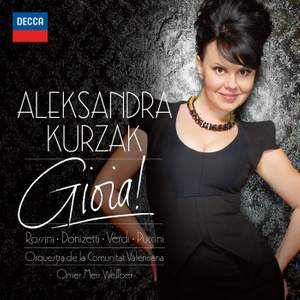
| |  | Aleksandra Kurzak: Gioia!
The lyric soprano Aleksandra Kurzak is one of the most exciting young singers on the international stage - thrilling press and public alike with her performances in Europe and the US. "Gioia", her debut on Decca, is the eagerly anticipated proof of her excellence. This debut is capturing the current state of Aleksandra's voice by contrasting lyric and coloratura arias, focusing on roles which she has performed on stage. The album features much-loved Puccini arias from La Bohème and Gianni Schicchi, bel canto showpieces from I Puritani and Lucia di Lammermoor and the taxing First Act aria from La traviata "Sempre libera" which showcases both her effortless agility and the full, warm intensity of a Verdi lyric soprano. “A rising-star soprano with flashing eyes and cover-girl looks” (The Observer). “Kurzak impresses as a coloratura soprano of the old school” BBC Music Magazine, September 2011 *** “So, what's special? The tone quality of the voice, in which an apparently endless sparkle is subtly coloured by darker, East European tints. The accuracy of pitch and intervals...The ability to act with the voice (Adele and Lauretta, which follow each other here, sound really radically different). Also, and it's not as common as you may think, she conveys a real understanding of the text.” Gramophone Magazine, October 2011 “there’s no doubt that her voice is stupendous: firm, true, crystal-clear in coloratura, beautifully rich in legato. I enjoyed this far more than recent releases by more famous sopranos.” The Times, 21st January 2012 **** “There's a gamine appeal about young Polish soprano Aleksandra Kurzak, who brings an innocent enthusiasm to the arias on this debut collection, negotiating the richly ornamented phrases with an almost exultant relish. Her joie de vivre is well-suited to the "laughing aria" from Die Fledermaus...while her vibrato during "Regnava nel silenzio"...is so controlled it's astonishing to learn she received no vocal training till she was 19.” The Independent, 27th January 2012 “Kurzak's technique is well honed, scale-work clearly surmounted, no slovenly sliding through the fioritura, and her timbre is most agreeable, having no rawness to spoil the euphony. One can say that her voice does not have the number of colours that a soprano with a larger voice might display, but I did not find that I was bored at any time.” International Record Review, February 2012 “her musical intelligence ensures that there is no hint of monotony here even in some over-exposed repertoire...She achieves everything without resorting to show-off tactics; indeed, a few numbers might almost be described as reserved. Every track gives pleasure, but highlights include a seductive ‘Deh vieni’” Opera | | | In stock - usually despatched within 1 working day. |
|
|
| |  | The Callas Effect (Deluxe Edition)2CD / 1DVD
Bellini: | Casta Diva (from Norma) Col sorriso d'innocenza (from Il Pirata) | Bizet: | L'amour est un oiseau rebelle 'Habanera' (from Carmen) Carreau! Pique! La mort! (from Carmen) | Catalani: | Ebben? Ne andrò lontana (from La Wally) | Delibes: | Où va la jeune Indoue? 'Bell Song' (from Lakmé) | Giordano, U: | La mamma morta (from Andrea Chénier) | Gluck: | Divinités du Styx (from Alceste) | Gounod: | Ah! Je ris de me voir (from Faust) | Mozart: | In quali eccessi ... Mi tradì quell'alma ingrate (from Don Giovanni) | Ponchielli: | Suicidio! (from La Gioconda) | Puccini: | O mio babbino caro (from Gianni Schicchi) Si, mi chiamano Mimi (from La Bohème) In questa reggia (from Turandot) Vissi d'arte (from Tosca) Un bel di vedremo (from Madama Butterfly) Senza mamma, o bimbo (from Suor Angelica) Sola, perduta, abbandonata (from Manon Lescaut) | Rossini: | Una voce poco fa (from Il barbiere di Siviglia) | Saint-Saëns: | Amour, viens aider ma faiblesse (Samson et Dalila) | Thomas, Ambroise: | Ah, pour ce soir...Je suis Titania (from Mignon) | Verdi: | Mercè, dilette amiche 'Bolero' (from I Vespri Siciliani) Caro nome (from Rigoletto) Ah, fors'è lui che l'anima (from La Traviata) La luce langue (from Macbeth) D'amor sull'ali rosee (from Il Trovatore) Surta è la notte...Ernani! Ernani, involami (from Ernani) Ritorna vincitor! (from Aida) Tu che la vanità (from Don Carlo) |
DVD 'The Callas Effect' 1. Introduction 2. Humble Beginnings 3. The New Star 4. Norma at Covent Garden 5. Records and Romance 6. La Traviata 7. Il Trovatore 8. Bringing drama to the opera stage: Tosca 9. Concerts 10. Audience Response 11. High Society and Fashion 12. Losing Voice 13. 'Sola, perduta, abbandonata' 14. The Callas Effect today 15. Conclusion
Maria Callas is the ultimate and original diva. Widely regarded as the greatest Opera singer and performer of all time whose life, voice and performances have intrigued, thrilled and inspired all others. Maria Callas 34 years after her death Maria Callas remains the definition of a diva. She is not only the world's bestselling soprano but also EMI Classic's bestselling artist of all time. Widely regarded for her intense characterisation and unique interpretations she has become a cultural icon whose music and life continues to influence today. “Her reputation, extremely high when she died, has become ever greater in the years since her death. As a personality she remains controversial, but as an artist hardly at all: her genius is recognised as supreme by virtually all opera lovers, indeed it is often from listening to her many recordings that people discover what an incredibly potent art form opera can be.” BBC Music Magazine The Music This wonderfully constructed 2CD collection of opera arias highlights Callas’s spectacular climb to fame tracking her move from innocent young woman to the tragic heroine in her later years through the opera arias she recorded. Featuring the most special and exquisitely interpreted arias of her output this collection brings together such opera favourites as O mio babbino caro, Vissi d’arte and Casta diva. Callas’s recordings have featured prominently in many critically acclaimed movies including Academy Award winner Philadelphia and Academy Award Nominated Milk Callas is the immortal diva whose music transcends time and sounds as unique and inspired today. Many noted musicians have quoted Callas as a musical influence including Linda Ronstadt, Patti Smith, Emmylou Harris, Celine Dion, Jason Mraz and Rufus Wainwright. Documentary EMI Classics has made The Callas Effect because there are powerful first-hand accounts that have not before been revealed of how and why Callas has exerted a unique and extraordinary effect – on other celebrity opera singers, on distinguished stage directors, on actors and actresses, on backstage theatre crews, on recording staff, on impresarios, on audiences who queued up for days and nights to see her, and now on young music-lovers who are captivated by her CDs and DVDs. People from all these walks of life, newly captured just for this memoir and including some who personally knew her, are the passionate witnesses of Maria Callas’s genius in The Callas Effect, which also includes extracts from her performances, recordings and interviews. “memorable artistry is evident everywhere - utterly exemplary in its musical intelligence, stirring in its interpretative eloquence. The technique dazzles in marvellously expressive trills...and everywhere, of course, the uniquely penetrating dramatic involvement.” International Record Review, January 2012 “This makes a good Callas set for beginners. It contains arias that showcase a good section of her most successful repertoire and it captures her voice at its best.Exactly when it is captured remains a mystery, however: the set’s main problem for pre-existing fans and aficionados is that, while it contains information about where and with whom each track was recorded, we are not given any dates.” MusicWeb International, January 2012 | | | In stock - usually despatched within 1 working day. |
|
|
| |  | The Callas Effect (Experience Edition)
Bellini: | Casta Diva (from Norma) Col sorriso d'innocenza (from Il Pirata) | Bizet: | L'amour est un oiseau rebelle 'Habanera' (from Carmen) Carreau! Pique! La mort! (from Carmen) | Catalani: | Ebben? Ne andrò lontana (from La Wally) | Delibes: | Où va la jeune Indoue? 'Bell Song' (from Lakmé) | Giordano, U: | La mamma morta (from Andrea Chénier) | Gluck: | Divinités du Styx (from Alceste) | Gounod: | Ah! Je ris de me voir (from Faust) | Mozart: | In quali eccessi ... Mi tradì quell'alma ingrate (from Don Giovanni) | Ponchielli: | Suicidio! (from La Gioconda) | Puccini: | O mio babbino caro (from Gianni Schicchi) Si, mi chiamano Mimi (from La Bohème) In questa reggia (from Turandot) Vissi d'arte (from Tosca) Un bel di vedremo (from Madama Butterfly) Senza mamma, o bimbo (from Suor Angelica) Sola, perduta, abbandonata (from Manon Lescaut) | Rossini: | Una voce poco fa (from Il barbiere di Siviglia) | Saint-Saëns: | Amour, viens aider ma faiblesse (Samson et Dalila) | Thomas, Ambroise: | Ah, pour ce soir...Je suis Titania (from Mignon) | Verdi: | Mercè, dilette amiche 'Bolero' (from I Vespri Siciliani) Caro nome (from Rigoletto) Ah, fors'è lui che l'anima (from La Traviata) La luce langue (from Macbeth) D'amor sull'ali rosee (from Il Trovatore) Surta è la notte...Ernani! Ernani, involami (from Ernani) Ritorna vincitor! (from Aida) Tu che la vanità (from Don Carlo) |
This wonderfully constructed 2CD collection of opera arias highlights Callas’s spectacular climb to fame tracking her move from innocent young woman to the tragic heroine in her later years through the opera arias she recorded. Featuring the most special and exquisitely interpreted arias of her output this collection brings together such opera favourites as O mio babbino caro, Vissi d’arte and Casta diva. “memorable artistry is evident everywhere - utterly exemplary in its musical intelligence, stirring in its interpretative eloquence. The technique dazzles in marvellously expressive trills...and everywhere, of course, the uniquely penetrating dramatic involvement.” International Record Review, January 2012 | | | In stock - usually despatched within 1 working day. |
|
|
| |  | Vivica Genaux: Bel Canto Arias
Rossini, Bellini, Donizetti: these three men alone sufficed to popularise the art of Italian opera during the first half of the nineteenth century, a century so propitious to the spread of romanticism in all its manifestations. If we set aside Bellini, who flashed across the sky like a meteor, this leaves Rossini and Donizetti, and the differences between them are patent. Rossini was born in Pesaro in 1792 and died in Paris in 1868. His stage career began in 1810 in Venice with a ‘farsa’, Il cambiale di matrimonio, establishing immediately the high standard which he maintained without faltering until he suddenly stopped writing operas in 1839. His last opera was Guillaume Tell which failed to convince the regular audience at the Paris Opéra, unresponsive as they were to its ground-breaking aspects. Rossini’s decision to stop has given rise to endless speculation, but the most likely explanation is that he had grown weary of seeing audiences’ tastes changing and forsaking the ideal of vocal beauty for which he always strove. Donizetti’s life was shorter, and more full of drama – though we should no longer see Rossini, who suffered from depression, as a jovial fun-lover, a popular but misleading view. Donizetti was born in Bergamo in 1797 and died there in April 1848. A pupil of Giovanni Simone Mayr, he had a very full professional life which was nevertheless marred by sorrow and illness. He produced over seventy-five operas of all kinds from comic to tragic and, like Rossini, his career took him to Paris. Surprisingly, much of Rossini’s output is not well known. The image of him which mainly springs to mind is linked to the comedies La Cenerentola, L’italiana in Algeri and above all Il barbiere di Siviglia, an undisputed masterpiece and in a way his emblematic work. But this is to leave out a large number of significant works, his opere serie, which are rarely performed today despite their outstanding qualities. The type of female voice Rossini preferred was the contralto (a term to be understood in the context of its time, when vocal nomenclature was far less precise than today), with a sumptuous, opulent low register, tawny amber colours and a full, rich sound. Although the contralto’s high register was at first only rarely called upon, she was not confined to viragos or trouser roles; for certain parts she had to be capable of moderating and lightening her naturally full-bodied instrument. When the writing moves into the upper range it takes on similarities with the mezzo-soprano, as well as slightly more femininity. The disappearance of the castrati at the start of the nineteenth century encouraged the fashion for the contralto. Rossini was probably harking back to the golden age of the castrato when he wrote some of his finest serious roles, such as Arsace in Semiramide. This was written for Rosa Mariani, who performed it for the first time in Venice in 1823 opposite the composer’s wife Isabella Colbran as the Queen of Babylon. It is a magnificent role, that of a courageous young man of whom the queen is enamoured and who, by the most unhappy mischance, turns out to be her son, and, even more unfortunately, the involuntary cause of her death. ‘Eccomi alfine in Babilonia… Ah! quel giorno’ is his entrance aria, classically structured in three parts, recitative, slow section, quick section: certainly a bravura piece, but one in which the singer has to give expression to feelings as varied as ardent love and fear of the future. Even finer, and more intensely poetic, is Malcolm’s ‘Mura felici’ from La donna del lago, a Scottish tale over which hovers the shade of Sir Walter Scott, so dear to nineteenth-century opera. In 1819, at the San Carlo in Naples, Rosmunda Pisaroni captured the dream-like essence of this aria so perfectly that the smallpox blemishing her face was entirely forgotten. But the contralto can also play the woman – especially of the strong-willed, courageous type, like Isabella in L’italiana in Algeri, a difficult part which, in Venice in 1813, gave Marietta Marcolini the chance to shine. The role exhibits throughout a blend of charm and virtuosity, unabated energy and unshakable good humour, whether at Isabella’s entrance in Act I, cursing her fate before sharpening her weapons of seduction (‘Cruda sorte’) or exhorting her beloved, before the finale, to behave like a true Italian (‘Pensa alla patria’). For the final rondo of La Cenerentola, the voice lightens, using less of its lower register; Angelina’s goodness and joie de vivre shine through. At the world premiere in Rome in 1817, Geltrude Giorgi-Righetti took the part. A year earlier, also in Rome, she lent her personality to the exuberant Rosina in Il barbiere di Siviglia, who displays her determination to marry Lindoro in ‘Una voce poco fa’. Donizetti followed a different path both musically and theatrically. The idea of opera as simply a feast of singing begins to fade before dramatic urgency; the power of song alone is no longer enough, and words come into their own. Can we still speak of ‘bel canto’? The same devices are used, the same ornamentation, the role of colour, nuance, dynamics and contrast, but they are regarded more as a means than as an end in themselves. At the Teatro Carcano in Milan in 1830, Anna Bolena was enthusiastically received. This time the contralto (Amalia Laroche) again had a trouser role, the page Smeton; we can perhaps see something of Cherubino in this adolescent boy who is far from indifferent to Anna’s charms (‘È sgombro il loco’, from Act I, Scene 1). The Victor Hugo-inspired Lucrezia Borgia was not to the liking of either the poet or the censor. Its hero Orsini is yet again a trouser role (one of Marietta Brambilla’s parts at La Scala, Milan, in 1833); he launches the plot in the prologue by telling his friend Gennaro that they will both be killed by Lucrezia Borgia – ‘Nella fatal di Rimini’. Later, during the fateful banquet of the final act he sings a brindisi, a drinking-song with a catchy rhythm which was immensely popular at the time (‘Il segreto per esser felici’); its second verse lends itself to brilliant ornamentation. Alahor in Granata was first staged by the Teatro Carolino in Palermo in January 1826, but the work was forgotten throughout the twentieth century until the Teatro de la Maestranza in Seville revived it for the opening of its 1998 season. It is a youthful work, though it came after some remarkably accomplished efforts such as the delightful L’ajo nell’imbarazzo (1824), itself preceded, in 1822, by Zoraide di Granata, another picturesque piece drawn from Spanish history. The trouser role here is that of King Muley-Hassem (first performed by Marietta Gioia-Tamburini), who is in love with Zobeida, a member of an enemy tribe, the Abencerrages. Here, the king appears in the role of peace-maker; his efforts put an end to the war and win him his beloved. There could be no better way to round off this gallery of portraits devoted to a voice distinguished, among other qualities, by its rarity. | | | In stock - usually despatched within 1 working day. |
|
|
| |  | A Night at the Opera
Bright cantabile – virtuoso fire: Joachim Kaiser once called Sabine Meyer’s playing “a revelation”; the German music critic praised her wealth of nuance. And A Night at the Opera again bears witness to the artistic earnest of this remarkable musician: the unerring brilliance of her presentation conceals a reflection on the history, the abilities and the limits of her instrument. | | | In stock - usually despatched within 1 working day. |
|
|
| |  | Maria Callas in Hamburg
This is a recording of a complete concert performance dating from 1959. | | | In stock - usually despatched within 1 working day. |
|
|
| |
|