Prices shown exclude VAT. (UK tax is not payable for deliveries to United States.) See Terms & Conditions for p&p rates. | |  | The Great Conductors: Hermann Abendroth
Dohnányi: | Wedding Waltz, Op. 18 No. 4 (from The Veil Of Pierrette) recorded in Berlin, 19 June 1937 | Gluck: | Iphigénie en Aulide Overture recorded in Berlin, 19 June 1937 | Graener: | Comedietta, Op. 82 recorded in Berlin, 2 October 1936 | Liszt: | Hungarian Rhapsody, S359 No. 1 in F minor recorded in Berlin, 19 June 1937 Hungarian Rhapsody, S244 No. 2 in C sharp minor recorded in Berlin, 1 October 1938 | Sibelius: | Finlandia, Op. 26 recorded in Berlin, 2 October 1936 | Wagner: | Der fliegende Holländer: Overture recorded in Berlin, 1 October 1938 |
| 
| |
|
| |  | Wagner in Switzerland
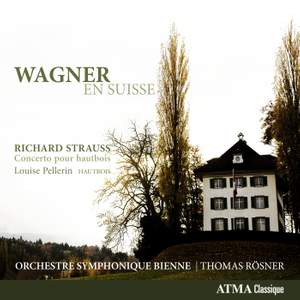
Orchestre Symphonique Bienne, Thomas Rösner Wagner composed an arrangement of Gluck’s Iphigenie in Aulis, adding a new ending of his own and ATMA offers the first-ever recording of Wagner’s original, discovered in Zürich in the late 1990s. Two more gems are included; Siegfried-Idyll in its original version for chamber orchestra and Richard Strauss’ Oboe Concertos completes the CD. | | | (also available to download from $10.50) | Usually despatched in 2 - 3 working days. (Available now to download.) |
|
|
| |  | Leon Fleisher plays Beethoven
Beethoven: | Piano Concerto No. 2 in B flat major, Op. 19 Recording: Saal 1, Funkhaus, Cologne, 18 November 1957 Leon Fleisher (piano) Hans Rosbaud Piano Concerto No. 4 in G major, Op. 58 Recording: Saal 1, Funkhaus, Cologne, 27 February 1956 Leon Fleisher (piano) Otto Klemperer | Gluck: | Iphigénie en Aulide Overture Recording: Saal 1, Funkhaus, Cologne, 27 February 1956 Otto Klemperer |
Leon Fleisher (1928 - ) was born in San Francisco. He had his piano debut at the age of eight, began studies with Artur Schnabel at nine, made his San Francisco Symphony debut at 14, then he had his Carnegie Hall debut at 16 playing with the New York Philharmonic under Pierre Monteux. He won the prestigious Queen Elisabeth Piano Competition in Belgium in 1952, became one of the most sought-after soloists and recitalists in the world's finest concert halls, and began a rich series of recordings with, among others, Georg Szell and The Cleveland Orchestra. His landmark version of Mozart, Beethoven and Brahms concertos as well as his solo recordings of Schubert and his explorations of the American repertory would become cult classics. In 1965, he was cruelly sidelined at the height of his powers by a rare neurological disease that lost him the use of his right hand. Undeterred, while being told by his doctors that he would never play again, he became an inspirational teacher and conductor, all the while playing-and in fact revitalizing-the left-handed repertory, determined not to be defeated. Leon Fleisher's great career was cut short early by his debilitating illness at the age of 37 and so any recording featuring his distinguished playing is important. These WDR sourced recordings are rare because they showcase Fleisher in a 'live' studio broadcast (almost all his recordings were in the studio with George Szell for Sony during the 1950's and early 1960's). Here is partnered in two of Beethoven's most popular concertos by two of the most distinguished conductors of the period, Otto Klemperer and Hans Rosbaud. Klemperer's performance of Gluck's Iphegenie aus Aulis Overture from the same concert on 27 February 1956 has been added in as a bonus. This is the first authorized release of these recordings in superb sound using WDR's original master tapes. “These recordings, dating from 1956-57, show Leon Fleisher already at the height of his powers… as unfailing in repose as he is in breathtaking bravura. Criticism falls silent when confronted by such overwhelming mastery and there are no less memorable partnerships from Hans Rosbaud in the Second Concerto and Otto Klemperer in the Fourth. Klemperer's calm and dignity in Gluck's Iphigenie in Aulis Overture provides a crowning touch to recordings that transcend any possible sense of dated sound.” Gramophone Magazine, Awards Issue 2009 | | | Usually despatched in 2 - 3 working days. |
|
|
| |  | Bruckner - Symphony No. 7Recorded live at Carnegie Hall, December 1954 (previously unpublished)
Throughout his later decades, Bruno Walter (1876-1962) was considered to be one of the world’s most noteworthy Brucknerians. Among his valedictory recordings his most prized are arguably those of Bruckner’s Fourth, Seventh and Ninth Symphonies with the Los Angeles-based Columbia Symphony Orchestra, recorded between 1959 and 1961. Yet Walter came to conduct Bruckner relatively late in his career. His first known Bruckner performance was a 1914 performance of the Fourth. Walter admitted that he himself did not feel entirely comfortable conducting Bruckner’s music until 1927, when he was over fifty years of age, as a result of enforced rest and contemplation caused by a bout of double pneumonia. Until almost twenty years after his death, in 1962, none of the numerous surviving live Bruckner recordings had come to light. Suddenly, within a few short years, a number of live Bruckner Ninths started appearing. Six are now known, including three with the New York Philharmonic. A relatively early Bruckner Fourth (from 1940) surfaced, and a unique recording of the Bruckner Eighth (from 1941) was undoubtedly the highlight of the new discoveries. All the while, no broadcast of the Seventh could be found. This was especially unfortunate, given that Walter’s tempi slowed down markedly after his heart attack in 1957. On 27 December 1953, Columbia Records recorded Walter conducting the New York Philharmonic-Symphony Orchestra (as it was then known) in Bruckner’s Symphony No.9, a live concert that was also broadcast. The following year, on 23 December 1954, Columbia recorded the entire, non-broadcast concert, in which the Bruckner Symphony No.7 was included in the programme. The next afternoon, in another concert that was not broadcast, Columbia again recorded the exact same programme. While the 1953 Columbia recording of the Ninth has not, apparently, survived (although, fortunately, broadcast tapes do), both 1954 concerts exist in their entirety. (It is not altogether clear, however, which recording is from which concert: only the 23 December concert is mentioned in Columbia’s paperwork, and the tapes are undated, simply being listed as ‘A’ and ‘B’.) Extract from the boolet note Jon M. Samuels, 2008 | | | Usually despatched in 4 - 5 working days. |
|
|
| |  | Richard Strauss conducts Der Rosenkavalier
| | | Usually despatched in 2 - 3 working days. |
|
|
| |  | Otto Klemperer
| | | Usually despatched in 4 - 5 working days. |
|
|
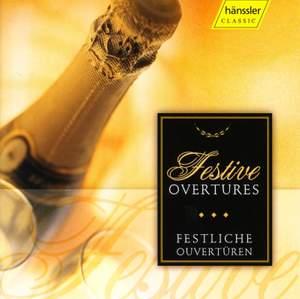
| |  | Festive Overtures
Beethoven: | Egmont Overture, Op. 84 | Glinka: | Ruslan & Lyudmila Overture | Gluck: | Iphigénie en Aulide Overture Orfeo ed Euridice Overture | Handel: | Water Music: Overture Music for the Royal Fireworks, HWV351: Overture | Mozart: | Die Zauberflöte, K620: Overture Così fan tutte, K588: Overture La clemenza di Tito, K621: Overture Die Entführung aus dem Serail, K384: Overture Le nozze di Figaro, K492: Overture | Rossini: | Il barbiere di Siviglia Overture | Strauss, J, II: | Rosen aus dem Süden, Op. 388 | Tchaikovsky: | Sleeping Beauty, Op. 66: Introduction & March Miniature March (The Nutcracker) | Weber: | Oberon Overture |
The great composers have always known that a great opening is the secret to success. This delightful program features many popular overtures by Mozart and Beethoven and even a Strauss waltz. | | | (also available to download from $21.00) | Usually despatched in 2 - 3 working days. (Available now to download.) |
|
|
| |  | Richard Strauss Conducts
| | | Usually despatched in 2 - 3 working days. |
|
|
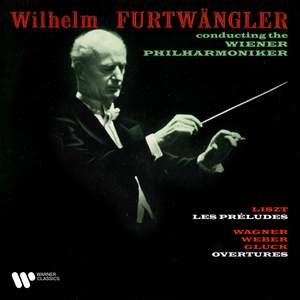
| |  | Wilhelm Furtwängler: The Legend
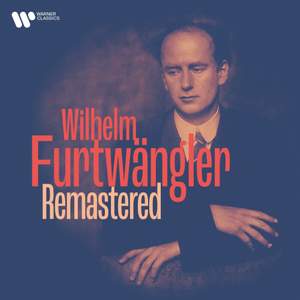
This 3-CD set couples together a selection of some of the more popular classics recorded by the great German conductor Wilhelm Furtwängler. Furtwängler was born 125 years ago in 1886 and this birthday tribute comes as a timely reminder of his genius. He was, without doubt, one of the truly great musical interpreters of the 20th century and we are fortunate indeed that he was working at a time when EMI were able to capture on record his work both in the studio and on the concert platform. All the recordings were made with the Vienna Philharmonic in the late 1940s and early '50s, during the final years of the conductor's career. The first disc in the set contains three popular symphonies by composers who were close to Furtwängler's heart. The other two CDs comprise a selection of well-known shorter works, making this the ideal means by which purchasers can familiarise themselves with the work of this great man of music. Studio Recordings, 1949-1954 | | | In stock - usually despatched within 1 working day. |
|
|
| |  | Joseph Keilberth - Rare Recordings
These are very rare recordings, conducted by Joseph Keilberth from 1943-57 | | | Usually despatched in 2 - 3 working days. |
|
|
| |
|