All recordingsPrices shown exclude VAT. (UK tax is not payable for deliveries to United States.) See Terms & Conditions for p&p rates. | |  | Philippe Jaroussky: La voix des rêvesGreatest Moments on Concerts
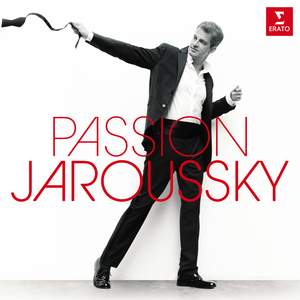
Philippe Jaroussky, described by Germany’s Die Zeit as “the Apollo of countertenors’, stands out among his many talented contemporaries as much for the soprano-like beauty of his tone as for the elegance and insight of his interpretations and his adventurous and erudite approach to repertoire – whether unearthing neglected scores by little-known composers or venturing beyond the Baroque into the 19th and 20th centuries. Established as one of Virgin Classics’ bestselling artists, Jaroussky, now aged 34, has been honoured three times in the Victoires de la Musique awards in his native France and has also received Germany’s most prominent music prize, the Echo Klassik. His diverse achievements are saluted in two new collections on Virgin Classics – the 2CD set “The Voice” and the DVD and Blu Ray “La Voix des rêves: Greatest moments in Concert”. “LA VOIX DES RÊVES - Greatest Moments in Concert” (available on DVD & Blu Ray) features video footage from a number of occasions and venues – including items from a concert given among the crystal chandeliers of the splendid Galerie des Glaces in the palace of Versailles, and works by Handel and Vivaldi performed in another jewel of French Baroque architecture, the sumptuously decorated Chapelle de la Trinité in Lyon. Also included are exclusive interviews an array of fellow musicians: Jean-Christophe Spinosi, Emmanuelle Haïm, Christina Pluhar; Jérôme Ducros, Quatuor Ebène, Gautier Capuçon, Marie-Nicole Lemieux and Renaud Capuçon. Jaroussky and his appeal were aptly summarised in a recent profile in the French magazine Balthazar: “Philippe Jaroussky alternates between opera and recitals, bringing his sensual, graceful voice and matinee idol looks, and this has made him a key star of classical music. But his recordings also reveal a skilled musicologist who has revived numerous forgotten artists like the castrato Carestini [and the composers] Johann Christian Bach and Caldara. Jaroussky simply glows. Anyone who has had the opportunity to meet him will find it hard to forget his enthusiastic conversation and his magnetic gaze.” The singer made his passions clear in an interview with Crescendo magazine, revealing that “I don’t like being told I have the ‘voice of an angel’, because that would just mean that it sounds pretty and takes people out of themselves … I want to be able to evoke more human emotions too: sorrow, despair, jealousy.” Speaking to the leading French newspaper Le Monde, he went into more detail on his philosophy as a maturing singer: “Ten years into your career, you reach a certain level of purity in your approach. You are always set on improving – strengthening your high notes, your low notes, your projection or your expressivity – but you also accept what it means to be an artist.” | | | In stock - usually despatched within 1 working day. |
|
|
| |  | Philippe Jaroussky: La voix des rêvesGreatest Moments on Concerts
Philippe Jaroussky, described by Germany’s Die Zeit as “the Apollo of countertenors’, stands out among his many talented contemporaries as much for the soprano-like beauty of his tone as for the elegance and insight of his interpretations and his adventurous and erudite approach to repertoire – whether unearthing neglected scores by little-known composers or venturing beyond the Baroque into the 19th and 20th centuries. Established as one of Virgin Classics’ bestselling artists, Jaroussky, now aged 34, has been honoured three times in the Victoires de la Musique awards in his native France and has also received Germany’s most prominent music prize, the Echo Klassik. His diverse achievements are saluted in two new collections on Virgin Classics – the 2CD set “The Voice” and the DVD and Blu Ray “La Voix des rêves: Greatest moments in Concert”. “LA VOIX DES RÊVES - Greatest Moments in Concert” (available on DVD & Blu Ray) features video footage from a number of occasions and venues – including items from a concert given among the crystal chandeliers of the splendid Galerie des Glaces in the palace of Versailles, and works by Handel and Vivaldi performed in another jewel of French Baroque architecture, the sumptuously decorated Chapelle de la Trinité in Lyon. Also included are exclusive interviews an array of fellow musicians: Jean-Christophe Spinosi, Emmanuelle Haïm, Christina Pluhar; Jérôme Ducros, Quatuor Ebène, Gautier Capuçon, Marie-Nicole Lemieux and Renaud Capuçon. Jaroussky and his appeal were aptly summarised in a recent profile in the French magazine Balthazar: “Philippe Jaroussky alternates between opera and recitals, bringing his sensual, graceful voice and matinee idol looks, and this has made him a key star of classical music. But his recordings also reveal a skilled musicologist who has revived numerous forgotten artists like the castrato Carestini [and the composers] Johann Christian Bach and Caldara. Jaroussky simply glows. Anyone who has had the opportunity to meet him will find it hard to forget his enthusiastic conversation and his magnetic gaze.” The singer made his passions clear in an interview with Crescendo magazine, revealing that “I don’t like being told I have the ‘voice of an angel’, because that would just mean that it sounds pretty and takes people out of themselves … I want to be able to evoke more human emotions too: sorrow, despair, jealousy.” Speaking to the leading French newspaper Le Monde, he went into more detail on his philosophy as a maturing singer: “Ten years into your career, you reach a certain level of purity in your approach. You are always set on improving – strengthening your high notes, your low notes, your projection or your expressivity – but you also accept what it means to be an artist.” | | | In stock - usually despatched within 1 working day. |
|
|
| |  | Liederabend: José Carreras
Cardillo: | Core 'ngrato | Falla: | Siete Canciones populares españolas | Fauré: | Après un rêve, Op. 7 No. 1 Toujours!, Op. 21 No. 2 | Lara, Augustin: | Granada | Massenet: | Pensée d'automne Elégie Ouvre tes yeux bleus | Mompou: | Damunt de tu, nomes les flors Jo et pressentia com la mar | Puccini: | Nessun dorma (from Turandot) | Tosti: | Malià Non t'amo più! Vorrei morire! Aprile A vucchella L'alba separa dalla luce l'ombra | Turina: | Poema en forma de canciones, Op. 19: No. 2, 'Nunca olvida' Poema en forma de canciones, Op. 19: No. 4, 'Los dos miedos' Poema en forma de canciones, Op. 19: No. 5, 'Las locas por amor' |
Although no longer a regular guest, José Carreras was in the 1970s and ’80s one of the great, up-and-coming singers and he returns in 2012 once more for a song recital in Salzburg on August 30. Accompanied here by Edoardo Müller, his recital of 1981 takes us from the French song with piano by Massenet and Fauré via the tenor “classics” of Tosti to the canciones of De Falla, Mompou and Turina – and all sung with a secure sense of style and with great subtlety. Carreras’s encores delighted adherents of the brilliant tenor repertoire, and can be appreciated on this recording too. | | | In stock - usually despatched within 1 working day. |
|
|
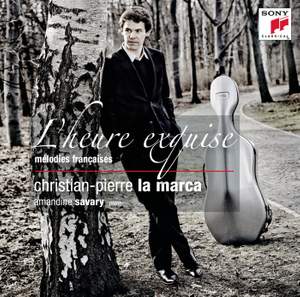
| |  | L'heure ExquiseMelodies Francaises
Christian-Pierre La Marca (cello), Amandine Savary (piano) | | | In stock - usually despatched within 1 working day. |
|
|
| |  | Opium (Mélodies Françaises)
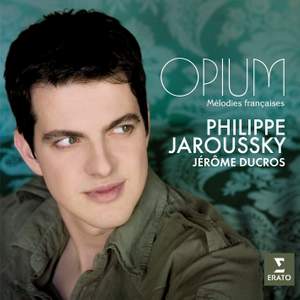
Unsurprisingly, it is in the music of the Baroque era – the heyday of the castrato – that French countertenor Philippe Jaroussky has captured the attention of music-lovers lovers around the world. The ethereal, but sensuous beauty of his voice, his virtuosity and his sense of style have brought him critical praise, a number of major awards – including, in 2008, Germany’s prestigious Echo-Klassik prize for Male Singer of the Year, honouring his Virgin Classics album, Carestini: The Story of a Castrato – and impressive sales: more than 120,000 copies of his Vivaldi album Heroes and 90,000 of the Carestini release. Jaroussky enters new territory with this programme of French songs from the late 19th and early 20th centuries – well over a hundred years after the end of the Baroque era. Taking its name, Opium, from a song by Saint-Saëns, it evokes the voluptuous, sometimes decadent spirit of the Belle Époque, the era of transition between Romanticism and Modernism. The programme includes a number of rarities by composers such as Dukas, Caplet, and Chaminade, as well as better-known numbers by figures like Fauré, Chausson and Hahn. “Many people will probably wonder why a counter tenor should sing these songs,” says Jaroussky, “but if you think about it, the countertenor voice as such has no repertoire of its own, except the modern music written specifically for it. For the most part we sing music written for castratos who – as we know – had very different voices from ours. So why not venture into other musical worlds if we feel they are suited to our voices? … There has been David Daniels in Schubert, Max Emmanuel Cencic in Rossini, and even Andreas Scholl and Gérard Lesne in pop music. “I’ve always felt a special affinity for French song, which was an area of focus in the early days of my studies with my teacher, Nicole Fallien. It was Renaud Capuçon -- whom I want to thank, along with Gautier Capuçon and Emmanuel Pahud for his valuable contribution to this disc -- who first had the idea of inviting me to sing Hahn, Chausson, Fauré in a recital. It was then that I met the pianist Jérôme Ducros, and we decided to work further on this rich and well-stocked repertoire, which contains some real undiscovered treasures. There is no theme to this album, but I wanted to record songs which have captured my heart and which suit my voice. Perhaps I can show them in a new light too.” French song demands an acute sense of language and style, and today there are relatively few singers --- even native Francophones – who succeed in capturing its elusive magic. “I’ve decided to pronounce the texts in a way that is as close as possible to the spoken word – I don’t roll the ‘r’, for example,” continues Jaroussky. “The poetry should come to life without the imposition of too much interpretation or emotional contrivance. I’ve tried to approach it with humility.” "Philippe Jaroussky is one of the best countertenors around. His voice is mellow, evenly toned, wide-ranging and largely free from intrusive mannerism and vocal strain” BBC Music Magazine, February 2007 “Philippe Jaroussky has a wide pitch range and absolute control throughout, with no tenseness at the top of hooting at the bottom, and his floated high notes are ravishing. Jérôme Ducros's accompanying is some of the best I have heard.” BBC Music Magazine, April 2009 **** “His repertoire is fabulous, mixing gold star favourites with striking curios by non-song composers such as Dukas. The instrumental back-up from Jerome Ducros, the Capuçon brothers and Emmanuel Pahud is superb.” The Times, 28th March 2009 *** | | | In stock - usually despatched within 1 working day. |
|
|
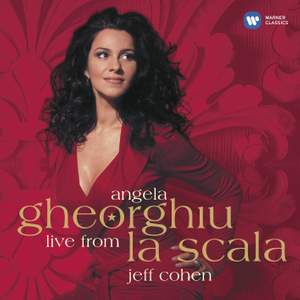
| |  | Angela Gheorghiu - Live from La Scala
‘The public feels so close and intimate. There’s really nowhere to escape…’ Angela Gheorghiu “…it's the Verdi group that is the heart of the first half. "In solitaria stanza", with its main theme closely resembling "Tacea la notte" from Il trovatore, must rank as one of the loveliest things she has recorded. …the Massenet "Elégie"… benefits from Gheorghiu's operatic experience: here are words and music given equal importance to make a miniature drama. ...throughout the recital, Jeff Cohen provides a sensitive and idiomatic accompaniment. The recording catches the mood; it was obviously a fun evening.” Gramophone Magazine, November 2007 | | | In stock - usually despatched within 1 working day. |
|
|
| |  | Massenet: Operatic and Orchestral Favourites
Massenet: | Le Cid - Ballet music Recorded at Kingsway Hall, London on 14-16 July 1952 London Symphony Orchestra, Robert Irving Phèdre: Overture Recorded at Maison de la Mutualité, Paris on 1 June 1951 Orchestre de l’Opéra-Comique, Paris, Albert Wolff Werther: Prelude & La nuit de Noël Recorded at Maison de la Mutualité, Paris on 1 June 1951 Orchestre de l’Opéra-Comique, Paris, Albert Wolff Scènes alsaciennes Recorded at the Salle Apollo Paris on 15 September 1953 Orchestre Lamoureux, Jean Fournet La Vierge: Le Dernier Sommeil de la vierge (Légende sacrée) Recorded at Walthamstow Town Hall, London 7 – 18 December 1953 Royal Philharmonic Orchestra, Sir Thomas Beecham Scènes pittoresques Recorded at the Salle Apollo Paris on 15 September 1953 Orchestre Lamoureux, Jean Fournet Ô noble lame étincelante (from Le Cid) Recorded on 2 February 1933 Georges Thill Eugène Bigot Pleurez, mes yeux (Le Cid) Recorded on 16 May 1930 Germaine Cernay Gustave Cloez Dis-moi que je suis belle (from Thaïs) Recorded on 08 November 1927 Fanny Heldy Piero Coppola Te souvient-il du lumineux voyage (from Thaïs) Recorded on 14 January 1947 Dorothy Kirsten, Robert Merrill RCA Victor Orchestra, Jean Morel Il est doux, il est bon (from Hérodiade) Recorded in Paris on 29 March 1928 Ninon Vallin Gustave Cloëz Calmez donc vos fureurs…Jean, je te revois (from Hérodiade) Recorded on 21 November 1932 César Vezzani, Jeanne Guyla Fleurissait une rose au bord de chemin (from Le jongleur de Notre-Dame) Recorded in Camden, New Jersey, USA on 11 October 1926 Marcel Journet Je suis encore tout étourdie (from Manon) Recorded on 26 March 1928 Emma Luart Gustave Cloëz On l'appelle Manon (from Manon) Recorded on 26 March 1928 Emma Luart, Gaston Micheletti Gustave Cloëz Adieu, notre petite table (from Manon) Recorded on 7 June 1945 Bidú Sayão Fausto Cleva Je marche sur tous les chemins (from Manon) Recorded on 27 March 1928 Emma Luart Gustave Cloëz Obéissons quand leur voix appelle (from Manon) Recorded in 1928 Emma Luart Gustave Cloëz Instant charmant … En fermant les yeux (from Manon) Recorded in Paris in 1916 Edmond Clément with orchestra Je suis seul, seul enfin... Ah fuyez douce image (from Manon) Recorded in Paris in 1916 Edmond Clément with orchestra Promesse de mon avenir (from Le roi de Lahore) Recorded at Salle du Conservatoire, Paris 30 November 1929 Arthur Endrèze Henri Defosse J'aurais sur ma poitrine (from Werther) Recorded on 10 May 1927 Georges Thill Fernand Heuteur Va! Laisse couler mes larmes (from Werther) Recorded in Paris on 13 April 1927 Ninon Vallin Gustave Cloëz Ah! mon courage m’abandonne!... Seigneur Dieu (from Werther) Recorded in Paris on 13 April 1927 Ninon Vallin Gustave Cloëz Pourquoi me reveiller (from Werther) Recorded between 1950 - 1952 Cesare Valletti Orchestra Lirica della Cetra di Torino, Arturo Basile Elégie Recorded on 19 May 1926 Rosa Ponselle (soprano), Alfred Lennartz (cello) Rosario Bourdon |
2012 is the centenary of Jules Massenet’s death. Several of his operas have received important revivals this year Unlike most other Massenet albums released this year this 2CD set celebrates equally his orchestral music (now becoming familiar once again in the concert hall after several years of neglect) and his operas. Although the performances were recorded in the mono era, the majority of vocal extracts stem from a golden period of French music-making (1910s-1930s) and the orchestral recordings have been rated by critics as sonically ahead of their time. Singers include Edmond Clément, Ninon Vallin, Georges Thill, Emma Luart, Bidu Sayão, Marcel Journet, Fanny Heldy and Cesare Valletti in roles they made famous. Jean Fournet, Albert Wolff, Robert Irving and Sir Thomas Beecham conduct the works for orchestra. | | | Usually despatched in 4 - 5 working days. |
|
|
| |  | Massenet: 'Ivre d'amour' - 28 songs for soprano and piano
Jules Émile Frédéric Massenet (1842-1912) is best known for his operas Manon written in 1884, Werther in 1892, and Thaïs in 1894 and have remained firm favorites in the opera repertoire. In addition to his operas, Massenet composed concert suites, ballet music, oratorios, cantatas and over two hundred and eighty songs. There is only one cycle on this disc, the short Quelques Chansons Mauves, most of the other songs being individual compositions. Long term Massenet champion Richard Bonynge revived Massenet's opera Esclarmonde in 1974 in San Franciso, in 1976 at the Metropolitan Opera in New York and in 1983 at the Royal Opera House in London with, on all occasions, his wife Dame Joan Sutherland in the title role. Also on Guild Music is a CD of songs by Michael Balfe to be followed shortly by songs by William Vincent Wallace with the same artists. | | | Usually despatched in 8 - 10 working days. |
|
|
| |  | L'Art de Gabriel BacquierArias, Songs & Operetta
Bellini: | Ah! Per sempre io ti perdei (from I Puritani) | Berlioz: | Une puce gentille 'Flea Song' (from La damnation de Faust) La Damnation de Faust: Devant la maison Absence (from Les nuits d'été, Op. 7) | Bizet: | Votre toast je peux vous le rendre 'Toreador Song' (from Carmen) | Debussy: | Les cloches (Paul Bourget) | Delibes: | Stances (from Lakmé) | Donizetti: | Vieni, amor...Leonora! A' piedi tuoi (from La Favorita) | Duparc: | Chanson triste La Vie antérieure | Fauré: | Clair de Lune, Op. 46 No. 2 Le secret Op. 23 No. 3 | Gounod: | Mab, la reine des mensonges (from Roméo et Juliette) Venise Premier jour de mai | Hahn, R: | Si mes vers avaient des ailes | Lecocq: | Certainement jamais Clairette (from La Fille de Mme Angot) Pour être fort, on se rassemble (from La Fille de Mme Angot) | Lehár: | Der Graf von Luxemburg (highlights) Die Lustige Witwe: Waltz | Massenet: | Bravo, mon cher...Epouse quelque brave fille (from Manon) Quelle priere de reconnaissance (from Werther) Comment peut-on penser du bien (from Don Quichotte) Riez, allez, riez du pauvre idéologue (from Don Quichotte) Elégie | Mozart: | Fin ch'han dal vino (from Don Giovanni) Deh! vieni alla finestra (from Don Giovanni) Vedro mentr'io sospiro (from Le nozze di Figaro) Madamina, il catalogo è questo (from Don Giovanni) | Offenbach: | Scintille, diamant (from Les Contes d'Hoffmann) Dans les rôles d’amoureux (from Les Contes d’Hoffmann) | Poulenc: | Voyage à Paris | Ravel: | Ronsard à son âme D’Anne qui me jecta de la neige | Sauguet: | Berceuse créole | Thomas, Ambroise: | Etre ou ne pas etre (from Hamlet) | Varney: | Pour faire un brave mousquetaire (from Les Mousquetaires au couvent) Gris, suis-je gris, vraiment ? (from Les Mousquetaires au couvent) | Verdi: | Vanne, la tua meta gia vedo…Credo in un Dio crudel (from Otello) O Carlo, ascolta (from Don Carlo) Pari siamo! (from Rigoletto) sung in French Cortigiani, vil razza dannata (from Rigoletto) sung in French | Yvain: | Porquerolle |
Gabriel Bacquier has already, in his lifetime, entered the hallowed halls of great French singers. An incomparable actor, endowed with exceptional vocal means and an unbelievably rich timbre, he carried the art of interpretation to the highest level. For the first time on CD, Decca have issued a collection highlighting this baritone’s remarkable career. | | | (Sorry, download not available in your country) | Usually despatched in 4 - 5 working days. |
|
|
| |  | Alfredo Kraus: The 1996 Tokyo RecitalCelebrating 40 years of career
Alfredo Kraus (tenor) with Emiko Suga (soprano), Edelmiro Arnaltes (piano) & Asier Polo (cello) Recorded at Tokyo Bunkamura Orchard Hall, 15th June 1996 World première recording. This 1996 Tokyo recital is a celebration of the distinguished Spanish tenor Alfredo Kraus’s 40 year career. After warming his voice with two classical arias transcribed by Parisotti, Kraus launches into an anthology of music from the French, Spanish and Italian repertoires. The recital includes a duet from the first act of Lucia di Lammermoor and the famous aria "Pourquoi me réveiller?" from Massenet's Werther, an opera in which Kraus was considered an outstanding interpreter of the title role. Each and every piece is managed with extreme elegance, noble aplomb and ease, qualities that he attained through a formidable technique and a careful career pacing. At sixty nine Kraus sings without any apparent effort and with that aristocratic nonchalance that was one of the most charming aspects of his style. Picture Format: 4:3 Sound Format: LPCM 2.0 Region Code: 0 – All regions Running Time: 55 Min Notes: ITA - ENG - GER - FRE Subtitles: ITA - ENG - GER - FRE – SPA Available Worldwide | | | Usually despatched in 2 - 3 working days. |
|
|
| |
|