Liszt: Wandererfantasie (Schubert), S366

This page lists all recordings of Wandererfantasie (Schubert), S366, by Ferencz Liszt (1811-86) on CD & download (MP3 & FLAC). Generally, more recent releases are listed first, but with priority given to those that are in stock.

Recommendations

Re-issue of the Month
June 2011

All recordings

Prices shown exclude VAT. (UK tax is not payable for deliveries to United States.)
See Terms & Conditions for p&p rates.

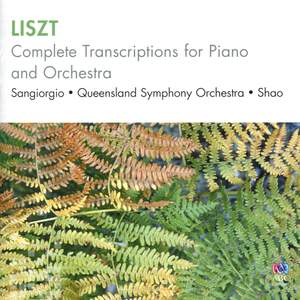
Liszt: Complete Transcriptions for piano and orchestra

Liszt: Complete Transcriptions for piano and orchestra


Liszt:

Wandererfantasie (Schubert), S366

Grande fantaisie symphonique on themes from Berlioz's ‘Lelio', S120

Fantasia on a theme from Beethoven's 'Ruins of Athens', S122

Polonaise brillante, S367


Victor Sangiorgio (piano)

Queensland Symphony Orchestra, En Shao

ABC Classics - ABC4764236

(CD)

$11.25

In stock - usually despatched within 1 working day.

Edward Kilenyi: The Pathé Recordings 1937-39

Edward Kilenyi: The Pathé Recordings 1937-39


Chopin:

Études (12), Op. 10

Mazurka No. 13 in A minor, Op. 17 No. 4

Piano Sonata No. 2 in B flat minor, Op. 35 'Marche funèbre'

Liszt:

Hungarian Rhapsody, S244 No. 8 in F sharp minor

Mephisto Waltz No. 1

Totentanz, S126 (extract)

Fantasy on Hungarian Folk-tunes, S123

Wandererfantasie (Schubert), S366

Hungarian Rhapsody, S244 No. 15 in A minor 'Rákóczy Marsch'

Gondoliera, S. 162 No. 1 (from Venezia e Napoli)

Tarantella, S. 162 No. 3 (from Venezia e Napoli)


Edward Kilenyi (Piano)

Symphony Orchestra, Selmar Meyrowitz

“The programme contains some of the most demanding repertoire...I was not prepared for such brilliant, grand playing, a throwback to the golden days of Lhévinne, Godowsky and Hofmann.” Newport Life (USA)

Historical Recordings - up to 25% off

APR - APR7037

(CD - 2 discs)

Normally: $23.75

Special: $19.00

Usually despatched in 2 - 3 working days.

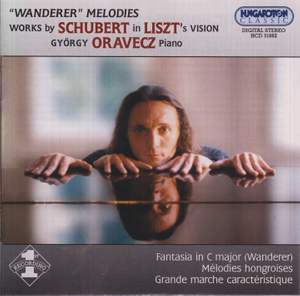
Liszt: Wandererfantasie (Schubert), S366, etc.

Liszt:

Wandererfantasie (Schubert), S366

Melodies Hongroises D'apres Fr. Schubert, S425

Grande marche caractéristique (after Schubert), S. 426 No. 3


György Oravecz (piano)

Hungaroton - HCD31662

(CD)

$16.25

Usually despatched in 4 - 5 working days.

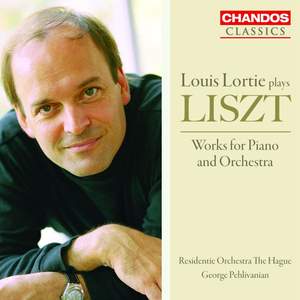
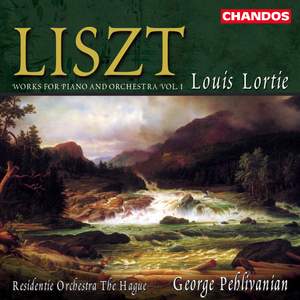
Liszt - Works for Piano and Orchestra

Liszt - Works for Piano and Orchestra


Liszt:

Wandererfantasie (Schubert), S366

Fantasia on a theme from Beethoven's 'Ruins of Athens', S122

Polonaise brillante, S367

Grande fantaisie symphonique on themes from Berlioz's ‘Lelio', S120

De profundis, S691, Op. 668

Malédiction, S121 Op. 452

Fantasy on Hungarian Folk-tunes, S123

Totentanz, S126 for piano & orchestra

Piano Concerto No. 1 in E flat major, S124

Piano Concerto No. 3 in E flat major, S125a, Op. post.

Piano Concerto No. 2 in A major, S125

Concerto pathétique for Piano and Orchestra, S365a


3 CDs for 2

Building a Library

First Choice - April 2003

Chandos Classics - CHAN10371X

(CD - 3 discs)

$16.00

(also available to download from $12.50)

In stock - usually despatched within 1 working day.

Liszt Complete Music for Solo Piano 53b: Music for Piano & Orchestra 2

Liszt Complete Music for Solo Piano 53b: Music for Piano & Orchestra 2


Liszt:

Piano Concerto No. 2 in A major, S125

De profundis – Psaume instrumental pour orchestre et piano principal, S121a

score prepared from manuscript sources by Jay Rosenblatt; further preparation and completion of the work - the last six bars (901-6)

Wandererfantasie (Schubert), S366

arranged for piano and orchestra by Liszt S366

Concerto pathétique for Piano and Orchestra, S365a

Carl Maria Von Weber Konzertstück In F Minor (Op 79, 1821)

with Liszt's version of the solo part, S367a

Totentanz, S126 for piano & orchestra

Fantasy on Hungarian Folk-tunes, S123

Sophie Menter S714


This set and its companion (CDA67401/2) are perhaps the most important releases in Leslie Howard's complete survey of Liszt's piano music. In addition to such well known works as the mature Piano Concertos (two of the most popular works in the nineteenth-century Romantic repertoire) and the other lesser known but familiar pieces, several items here receive their first recordings; as a result of Leslie Howard's indefatigable research we can now hear orchestral versions of Hexaméron and the Grand Solo de concert for the first time. Also in new versions are the recently discovered Concerto in E flat, Op posth, and De Profundis. A re-examination of the manuscripts has led our pianist to make refinements to the published scores which provide a more accurate reflection of Liszt's intentions. All these issues and more are documented in Leslie Howard's characteristically thorough notes.

“Exemplary, and superbly recorded” BBC Music Magazine

“Hyperion's production, as always, is superb. For the Lisztian, this is indispensable” Fanfare

“Howard's dedication is clear in all his playing here, with clear, crisp articulation vividly caught in finely balanced sound” The Guardian

Hyperion - Liszt Complete Solo Piano Music - CDA67403/4

(CD - 3 discs)

$35.00

In stock - usually despatched within 1 working day.

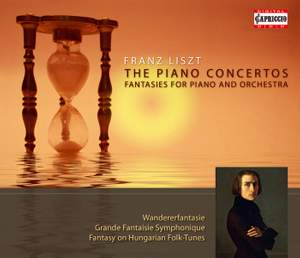
Liszt: The Piano Concertos

Liszt: The Piano Concertos


Liszt:

Piano Concerto No. 1 in E flat major, S124

Piano Concerto No. 2 in A major, S125

Wandererfantasie (Schubert), S366

Grande fantaisie symphonique on themes from Berlioz's ‘Lelio', S120

Fantasy on Hungarian Folk-tunes, S123

Fantasia on a theme from Beethoven's 'Ruins of Athens', S122

Malédiction, S121 Op. 452

Polonaise brillante, S367

Fantasie über Themen aus Webers Der Freischütz S451

Totentanz, S126 for piano & orchestra


As well as the popular piano concertos, this 3CD set includes all of Liszt’s Fantaisies for piano and orchestra.

Capriccio - C7095

(CD - 3 discs)

$18.25

(also available to download from $17.50)

Usually despatched in 2 - 3 working days. (Available now to download.)

Liszt - Complete works for Piano & Orchestra

Liszt - Complete works for Piano & Orchestra


Liszt:

Malédiction, S121 Op. 452

Grande fantaisie symphonique on themes from Berlioz's ‘Lelio', S120

Piano Concerto No. 1 in E flat major, S124

Piano Concerto No. 2 in A major, S125

Totentanz, S126 for piano & orchestra

Piano Concerto No. 3 in E flat major, S125a, Op. post.

Fantasia on a theme from Beethoven's 'Ruins of Athens', S122

Polonaise brillante, S367

Concerto pathétique for Piano and Orchestra, S365a

Fantasy on Hungarian Folk-tunes, S123

Wandererfantasie (Schubert), S366


Beyond the two piano concertos and occasional performances of Totentanz, little is heard of Liszt’s music for piano and orchestra, though an interest in the composer sparked by ‘complete’ sets of his vast output has lately increased attention on this spectacular music. What was already grand or passionate in themes by his predecessors, Liszt magnifies and intensifies in works such as the Fantasia on a theme from Beethoven’s ‘Ruins of Athens’, the Wanderer Fantasie after Schubert and the Grande Fantaisie Symphonique on themes from Berlioz’s ‘Lelio’, demanding the kind of bravura that only the finest of today’s pianists, such as Louis Lortie and Nelson Freire, can match up to.

“A unique coupling of these works Rare recording of the Piano Concerto No.3, reconstructed from sketches ‘Louis Lortie plays all these works with immaculate brio, where necessary tempering bravura with restraint, and makes the best possible case for the music. He is admirably partnered throughout, and the sound and balance are natural and refined.” Gramophone Magazine

Brilliant Classics - up to 30% off

Brilliant Classics - 93700

(CD - 3 discs)

Normally: $13.50

Special: $10.12

Usually despatched in 4 - 5 working days.

Brendel Plays Schubert

Brendel Plays Schubert


Liszt:

Wandererfantasie (Schubert), S366

Schubert:

4 Impromptus, D899

Moments Musicaux (6), D780, Op. 94

Klavierstücke (3), D946

Fantasie in F minor for piano duet, D940

Allegro in A minor 'Lebensstürme', D947

Grand Duo Sonata in C major, D812

Fantasie in C major, D760 'Wanderer'

4 Impromptus, D935


Alfred Brendel (piano)

Vienna Volksoper Orchestra, Michael Gielen

Vox - CD3X3041

(CD - 3 discs)

$20.00

Usually despatched in 8 - 10 working days.

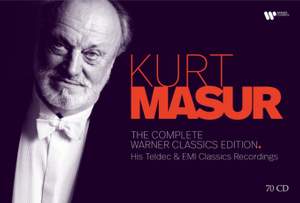
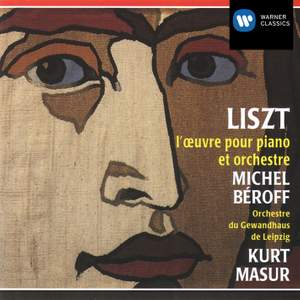
Liszt: Orchestral Works and Piano and Orchestra

Liszt: Orchestral Works and Piano and Orchestra


Liszt:

Symphonic Poems Nos. 1-13

A Faust Symphony, S108

Episoden (2) aus Lenaus Faust S100

Dante Symphony, S. 109

Piano Concerto No. 1 in E flat major, S124

Piano Concerto No. 2 in A major, S125

Wandererfantasie (Schubert), S366

Polonaise brillante, S367

Fantasy on Hungarian Folk-tunes, S123

Fantasia on a theme from Beethoven's 'Ruins of Athens', S122

Grande fantaisie symphonique on themes from Berlioz's ‘Lelio', S120

Malédiction, S121 Op. 452

Totentanz, S126 for piano & orchestra


Michel Béroff (piano)

Leipzig Gewandhaus, Kurt Masur

Among the 25 orchestral works that Liszt wrote, the thirteen tone poems make up the biggest single category. He gave these works of ideas their final form during his years as kapellmeister at the Weimar court (1843–59), and dedicated them to his beloved, Princess Carolyne von Sayn-Wittgenstein. The numbering of the first editions doesn’t reflect the order of composition: the first tone poem that Liszt composed was Tasso (first performance: 28. August 1849); it was followed (in the order of the first performance) by Bergsinfonie and Prometheus (1850), Orpheus, Les Préludes, Mazeppa and Festklänge (1854), Hungaria (1856), Die Ideale, Héroide funèbre and Hunnenschlacht (1857), and finally Hamlet (1876). Nearly all the tone poems are based on literary sources or historic myths and reflect philosophical ideas, with the exception of Festklänge, which was intended to be the wedding march for Liszt’s planned wedding to Carolyne, and Hungaria, which extols the praises of the composer’s native country. Von der Wiege bis zum Grabe (1881/2) was not written during the Weimar years: this later addition can be seen as an epilogue penned in the wisdom of old age.

Liszt treated the character of Faust in his music in a variety of forms: in the two orchestral episodes after Nikolaus Lenau’s poem of the same name, and in the different Mephisto Waltzes. The Faust Symphony is a study of the three main characters in the Goethe drama, but it also represents a picture "of the nature of Man with his aspirations and flaws, with his fluctuation between guilt and redemption" (Hans Jürgen Meinerts), culminating in the challenge to find true love. Here Liszt introduces the closing chorus with a tenor solo: "Everything transient is but an allegory, the inadequate becomes reality, the indescribable is done; eternal femininity draws us upwards". The Dante Symphony, which is dedicated to Wagner, reflects the process of understanding described in the Divine Comedy, which Dante completed shortly before his death in 1321. In the ‘Inferno’ Liszt sends the Romantic idea of love to hell in the example of Francesca da Rimini qnd Paolo. The opening of ‘Purgatorio’ puts Dante’s words into music: "A gentle blue, poured like oriental sapphire on to the bright firmament"; later follows a fugue marked ‘Lamentoso’ that portrays the process of purification. Liszt originally wanted to add a final section corresponding to Dante’s ‘Paradiso’, but Wagner convinced him that this couldn’t be depicted in music. Thus Liszt left the piece in two movements; however, the ‘Magnificat’ essentially represents Paradise, for the Gregorian magnificat he quotes here with its ethereal female choir is in keeping with the central message of Man finding his fulfilment in the divine. Liszt subsequently added a closing apotheosis to the work. Nowadays, this later addition often falls victim to the tendency to favour the original version, but doing so actually distorts our view of the connections between the two symphonies: ‘Mephisto’ and ‘Inferno’ correspond inversely with one another, as do ‘Faust’ and ‘Purgatorio’. Admittedly, the Dante Symphony goes one step further: where Gretchen was still a real person in the Faust Symphony, Liszt makes Beatrice, whom Dante tries to find in hell, into a mere ideal that no longer appears.

Of Liszt’s ten original compositions for piano and orchestra, at least four can be described as piano concertos, among them Malédiction S. 121. But Liszt only number­ed two of them for publication. Listened to one after the other, they create an impression of extreme opposites. This much is apparent from the basic keys of E flat major and A major, which couldn’t be farther away from one another. The majestic Piano concerto no.1 is clearly structured in three movements, while the second concerto has a single movement with a six-part structure that superimposes variation and sonata form. Notwithstanding, the two works seem to refer to each other. As Liszt also appeared for many years as a concert pianist, he also left quite a number of arrangements for piano and orchestra of other composers’ works. In most such fantasias, he used well-known themes by composers like Berlioz and Beethoven for musical reflections that are formally independent. Schubert’s Wanderer Fantasy, on the other hand, he turned into a captivating piano concerto, even though it does stick for the most part to the form of the original.

The first complete German recording of Franz Liszt's 13 tone poems, his two symphonies and the big works for piano and orchestra. Recorded by the Leipzig Gewandhaus under Kurt Masur in 1980–81, this issue set international standards in the Liszt discography.

EMI - 0851602

(CD - 7 discs)

$27.75

In stock - usually despatched within 1 working day.

Alfred Brendel Edition

Alfred Brendel Edition

including the complete Beethoven Piano Sonatas and Concertos


Balakirev:

Islamey - Oriental Fantasy

Beethoven:

Piano Concerto No. 1 in C Major, Op. 15

Stuttgart Philharmonic Orchestra, Wilfried Boettcher

Piano Concerto No. 2 in B flat major, Op. 19

Orchestra of the Vienna Volksoper, Heinz Wallberg

Piano Concerto No. 3 in C minor, Op. 37

Vienna Symphony Orchestra, Heinz Wallberg

Piano Concerto No. 4 in G major, Op. 58

Vienna Symphony Orchestra, Heinz Wallberg

Piano Concerto No. 5 in E flat major, Op. 73 'Emperor'

Vienna Symphony Orchestra, Zubin Mehta

Fantasia for Piano, Chorus and Orchestra in C minor, Op. 80

Stuttgart Lehrergesangverein & Stuttgart Philharmonic Orchestra, Wilfried Boettcher

Piano Sonatas Nos. 1-32 (Complete)

Quintet in E flat major for piano and winds, Op.16

Eroica Variations, Op. 35

Variations (5) on 'Rule Britannia', WoO 79

Variations (7) on 'God save the King', WoO 78

Variations (12) on a Russian Dance, WoO 71

Variations (6) on an original theme 'Die Ruinen von Athen', Op. 76

Variations (32) on an Original Theme in C minor, WoO 80

Variations (7) on the Quartet 'Kind, willst du ruhig schlafen', WoO 75

Variations (24) on Righini's Arietta 'Venni amore,' WoO 65

Variations (6) in G major on the duet 'Nel cor più non mi sento' from the opera La Molinara by Giovanni Paisiello, WoO 70

Eight variations in F major on Tändeln und Scherzen (by Süssmayr), WoO 76

Variations (13) on the Arietta 'Es war ein alter Mann', WoO 66

Variations (10) in B-flat major on the duet 'La stessa, la stessissima' from the opera Falstaff by Antonio Salieri, WoO 73

Variations (6) in F major on a Swiss Song, WoO 64

Variations (9) on the Aria 'Quant' è più bello', WoO 69

Variations (6) on an original theme in G major for Piano, WoO 77

Variations (8) on the Romance 'Une fièvre brûlante', WoO 72

Rondo in G major, Op. 51 No. 2

Allegretto in C minor,WoO 53

Ecossaises (6) in E flat major, WoO 83

Für Elise (Bagatelle in A minor, WoO59)

Polonaise in C major, Op. 89

Diabelli Variations, Op. 120

Bagatelles (11), Op. 119

Bagatelles (6), Op. 126

Rondo a capriccio in G major, Op. 129 ‘Rage over a lost penny'

Rondo in C major, Op. 51 No. 1

Bagatelles (7), Op. 33

Andante Favori in F, Wo057

Piano Piece in B flat major WoO 60

Chopin:

Polonaise No. 6 in A flat major, Op. 53 'Héroïque'

Polonaise No. 4 in C minor, Op. 40, No. 2

Polonaise No. 5 in F sharp minor, Op. 44

Polonaise No. 7 in A flat major, Op. 61 'Polonaise-fantaisie'

Andante spianato & Grande Polonaise, Op. 22

Haydn:

Keyboard Concerto No. 11 in D major, HobXVIII:11

Vienna Chamber Orchestra, Paul Angerer

Liszt:

Wandererfantasie (Schubert), S366

Vienna Volksoper Orchestra, Michael Gielen

Piano Concerto No. 1 in E flat major, S124

Piano Concerto No. 2 in A major, S125

Totentanz, S126 for piano & orchestra

Piano Sonata in B minor, S178

Après une lecture du Dante, fantasia quasi sonata (Années de pèlerinage II, S. 161 No. 7)

Miserere du Trovatore, S433

Lucia di Lammermoor: Sextet (Donizetti)

Réminiscences de Norma, S394

Overture zu Oberon, S574

Benediction Et Serment - Deux Motifs De Benvenuto Cellini S396

Pilgerchor aus Tannhäuser S443

Grandes Études de Paganini (6), S. 141

Tarantella, S. 162 No. 3 (from Venezia e Napoli)

Hungarian Rhapsody, S244 No. 15 in A minor 'Rákóczy Marsch'

Hungarian Rhapsody, S244 No. 3 in B flat major

Hungarian Rhapsody, S244 No. 2 in C sharp minor

Hungarian Rhapsody, S244 No. 13 in A minor

Hungarian Rhapsody, S244 No. 8 in F sharp minor

Hungarian Rhapsody, S244 No. 17 in D minor

Csárdás obstinée, S. 225 No. 2

Invocation (Harmonies poétiques et religieuses, S. 173 No. 1)

Benediction de Dieu dans la solitude (Harmonies poétiques et religieuses, S. 173 No. 3)

Pensée des Morts (Harmonies poétiques et religieuses, S. 173 No. 4)

Funérailles (Harmonies poétiques et religieuses, S. 173 No. 7)

Cantique d'amour (Harmonies poétiques et religieuses, S. 173 No. 10)

Sonetto 47 del Petrarca (Années de pèlerinage II, S. 161 No. 4)

Sonetto 104 del Petrarca (Années de pèlerinage II, S. 161 No. 5)

Sonetto 123 del Petrarca (Années de pèlerinage II, S. 161 No. 6)

Mozart:

Piano Concerto No. 9 in E-flat major, K271 "Jeunehomme"

I Solisti di Zagreb, Antonio Janigro

Piano Concerto No. 14 in E flat major, K449

I Solisti di Zagreb, Antonio Janigro

Piano Concerto No. 17 in G major, K453

Orchestra of the Vienna Volksoper, Paul Angerer

Piano Concerto No. 25 in C major, K503

Pro Musica Orchestra, Vienna, Paul Angerer

Piano Concerto No. 19 in F major, K459

Orchestra of the Vienna Volksoper, Wilfried Boettcher

Piano Concerto No. 20 in D minor, K466

Orchestra of the Vienna Volksoper, Wilfried Boettcher

Piano Concerto No. 22 in E flat major, K482

Vienna Chamber Orchestra, Paul Angerer

Piano Concerto No. 9 in E-flat major, K271 "Jeunehomme"

Orchestra of the Vienna Volksoper, Paul Angerer

Rondo for Piano & Orchestra in D major, K382

Orchestra of the Vienna Volksoper, Paul Angerer

Piano Sonata No. 8 in A minor, K310

Variations (9) in D on a Menuet by Duport, K573

Concerto for 2 Pianos and Orchestra No. 10 in E flat, K365

with Walter Klien (piano)

Orchestra of the Vienna Volksoper, Paul Angerer

Sonata for 2 pianos in D major, K448

with Walter Klien (piano)

Orchestra of the Vienna Volksoper, Paul Angerer

Quintet for Piano and Winds in E flat, K452

members of the Hungarian Quintet

Mussorgsky:

Pictures at an Exhibition (piano version)

Prokofiev:

Piano Concerto No. 5 in G major, Op. 55

Vienna State Opera Orchestra, Jonathan Sternberg

Schoenberg:

Piano Concerto, Op. 42

Symphony Orchestra of Southwest German Radio Baden-Baden, Michael Gielen

Schubert:

Piano Sonata No. 19 in C minor, D958

Piano Sonata No. 15 in C major, D840 'Reliquie'

16 German Dances D783

4 Impromptus, D899

Moments Musicaux (6), D780, Op. 94

Klavierstücke (3), D946

Fantasie in C major, D760 'Wanderer'

4 Impromptus, D935

Schumann:

Fantasie in C major, Op. 17

Études symphoniques, Op. 13

Stravinsky:

Petrushka - suite


The complete Vox, Turnabout and Vanguard solo recordings

Alfred Brendel retires this year from public performance. He will give his last recital in December at Vienna’s Musikverein, in the city where he came to prominence over half a century ago. The recordings he made then for young American labels established in the wake of the Second World War, harnessing young talent in classic repertoire, have stood the test of time. They put down a marker for the music that Brendel would come almost to ‘own’ in the eyes of the piano-music-loving public: the Beethoven concertos and sonatas, Mozart concertos, Schubert, Liszt and Schoenberg. He would later bring deepening insights to the core of the Austro-German repertoire that was his mainstay, but these early recordings are of far more than merely historical value: they are the first, impetuous explorations of a true keyboard lion. Thus there is also music we don’t associate with Brendel, and to which he chose not to return, especially from Russia: Balakirev, Mussorgsky, Prokofiev and Stravinsky. In sum, and at a specially reduced price, this is essential listening for anyone interested in piano music and in the career of one of the greatest living pianists.

Many of these performances have scarcely been available on CD: this is the first time they have been gathered together as a set Extensive booklet notes by pianophile Ates Orga, including a conversation piece with Brendel.

Brilliant Classics - up to 30% off

Brilliant Classics - 93761

(CD - 35 discs)

Normally: $96.50

Special: $67.55

Usually despatched in 4 - 5 working days.

Page: 

 1   2 

 Next >>

Copyright © 2002-13 Presto Classical Limited, all rights reserved.