Debussy: Jeux - Poème dansé

This page lists all recordings of Jeux - Poème dansé, by Claude Achille Debussy (1862-1918) on CD, SACD, DVD & download (MP3 & FLAC). Generally, more recent releases are listed first, but with priority given to those that are in stock.

Recommendations

First Choice
November 2003
Budget Choice
November 2003
100 Greatest RecordingsEditor's Choice
August 2012
Editor's Choice
November 2009
Rosette

All recordings

Prices shown exclude VAT. (UK tax is not payable for deliveries to United States.)
See Terms & Conditions for p&p rates.

Ravel: Daphnis et Chloe, La Valse & Bolero

Ravel: Daphnis et Chloe, La Valse & Bolero


Debussy:

Prélude à l'après-midi d'un faune

Royal Concertgebouw Orchestra

Jeux - Poème dansé

Royal Concertgebouw Orchestra

Ravel:

Daphnis et Chloé

Tanglewood Festival Chorus & Boston Symphony Orchestra

Alborada del gracioso (orchestral version)

Royal Concertgebouw Orchestra

La Valse

Royal Concertgebouw Orchestra

Boléro

Royal Concertgebouw Orchestra

Ma Mère l'Oye

Orchestral version

Royal Concertgebouw Orchestra


This collection brings together all the ballets by the two so-called Impressionistic composers, Ravel and Debussy, in recordings by Bernard Haitink.

Ravel’s masterpiece is the three act ballet Daphnis et Chloé, commissioned by Diaghilev, with Nijinsky dancing the lead role. Also included are La Valse, the orchestral version of Ma mère l'oye (Mother Goose) and two works inspired by Spain, Alborada del gracioso and Boléro – a work Ravel famously described as a “piece for orchestra without music”.

Debussy is represented by two masterpieces from both ends of his career: Prélude à l'après-midi d'un faune, a turning point in the history of music that ushered in the modern harmonies of the 20th century, and converted into a sensational ballet by Nijinsky (L'après-midi d'un faune); Jeux was the composer’s last orchestral work and premiered just two weeks before The Rite of Spring.

Decca Ballet Edition - 4784740

(CD - 2 discs)

$15.00

(Sorry, download not available in your country)

In stock - usually despatched within 1 working day.

Debussy: Orchestral Works

Debussy: Orchestral Works


Debussy:

Musiques pour Le Roi Lear

Images for orchestra

Jeux - Poème dansé


Before Sir Simon Rattle took over the helm of the Berlin Philharmonic Orchestra, he poured all his resources as the conjurer of Early Modern music into his work with the City of Birmingham Symphony Orchestra. One of the best documents of this cooperation is his set of recordings of the Impressionist orchestral scores of Claude Debussy.

EMI Red Line - 6365592

(CD)

$7.25

In stock - usually despatched within 1 working day.

Debussy: La Mer, Nocturnes , Jeux & Prélude à l'après-midi d'un faune

Debussy: La Mer, Nocturnes , Jeux & Prélude à l'après-midi d'un faune


Debussy:

Prélude à l'après-midi d'un faune

La Mer

Trois Nocturnes

Jeux - Poème dansé


Decca 20C - 4784251

(CD)

$11.25

In stock - usually despatched within 1 working day.

Debussy: Orchestral Works

Debussy: Orchestral Works


Debussy:

L'Enfant prodigue: Cortege et Air de danse

L'Enfant prodigue: Prélude

Printemps, suite for piano 4 hands or orchestra, L. 61

Prélude à l'après-midi d'un faune

Marche Écossaise

Trois Nocturnes

La Mer

Images for orchestra

Jeux - Poème dansé

Berceuse héroïque


Recognised internationally as a conductor of the highest calibre, Stéphane Denève took up the post of Music Director of the Royal Scottish National Orchestra in 2005, and has since attracted attention from audiences and critics alike. This May, the conductor bids a fond farewell to Scotland and the RSNO with a series of ‘Au Revoir’ concerts, and of course, this disc of orchestral works by Debussy.

After the impact made by the production of Pelléas et Mélisande in 1902, the next orchestral work by Debussy was awaited with intense interest. La Mer did not disappoint, and is today widely considered to have been crucial in its influence on twentieth-century music. After completing this work, Debussy spent no fewer than seven years wrestling with what were to become Images for orchestra. Some critics were puzzled by the work and suggested that Debussy’s talent might have dried out. They were promptly put right in an article by Ravel, who accused them of ‘slowly closing their eyelids before the rising sun amid loud protestations that night is falling’.

With a sultry flute solo, Prélude à l’après-midi d’un faune opened an astonishing new world for western music. Debussy based this composition on a poem by Mallarmé, who wrote to the composer: ‘I have come from the concert, deeply moved: A miracle! that your illustration of L’Après-midi d’un faune should present no dissonance with my text, other than to venture further, truly, into nostalgia and light…’

The three Nocturnes feature some of Debussy’s most imaginative orchestral writing. In the words of the composer, ‘the title Nocturnes is… not meant to designate the usual form of a nocturne, but rather all the various impressions and the special effects of light that the word would suggest’. Debussy provided descriptions of the three movements. ‘Nuages’, for example, depicts ‘the slow, melancholy procession of the clouds, ending in a grey agony tinged with white’, and also the experience of standing ‘on the Pont de Solférino very late at night. Total silence. The Seine without a ripple, like a tarnished mirror’.

“Denève still summons a sensuous bloom in the Prélude, and thanks to his influence, the RSNO proves better than the French at their own game: these are among the most seductive Debussy performances I have heard in years.” Financial Times, 9th June 2012 ****

“Denève shows how precise were [Debussy's] choices of instrumental colour and how well-defined and animated the images he was expressing through his music...There is nothing vague about these performances; rather they convey both the dynamism and the delicacy of the music with understanding and stimulating freshness.” Gramophone Magazine, August 2012

“his meticulous attention to detail is impressive, but what should be a complex, living seascape remains stubbornly one-dimensional...Outwardly brilliant, inwardly dull. Perplexing.” MusicWeb International, August 2012

“his Debussy is his own, muscular yet transparent, colouristic yet atmospheric and mysterious...Even that symphonic warhorse La Mer sounds freshly reimagined by the young Frenchman, whose sense of the music’s ebb and flow, with surging climaxes, is unerring...an ideal way to acquire Debussy’s orchestral masterpieces” Sunday Times, 3rd June 2012

“Denève has clear ideas about the lucidity of Debussy’s scoring and he conducts the orchestra in a way that brings the poetic or visual pictures that inspired the music vividly and freshly to life...All are performed with finesse and with a combination of energy, discretion and colour that give them a luminous quality.” The Telegraph, 22nd June 2012 ***

GGramophone Magazine

Editor's Choice - August 2012

Super Audio CD

Format:

Hybrid Multi-channel

Chandos - CHSA5102(2)

(SACD - 2 discs)

$33.75

(also available to download from $21.00)

In stock - usually despatched within 1 working day.

Debussy: La Mer, Jeux & Nocturnes

Debussy: La Mer, Jeux & Nocturnes


Debussy:

La Mer

Trois Nocturnes

Jeux - Poème dansé


“These Debussy performances from Maazel have some stylish moments” BBC Music Magazine, August 2012 **

RCA Classical Masters - 88691928092

(CD)

$7.50

In stock - usually despatched within 1 working day.

Debussy: La Mer, Jeux & Prélude à l’après-midi d’un faune

Debussy: La Mer, Jeux & Prélude à l’après-midi d’un faune


Debussy:

La Mer

Prélude à l'après-midi d'un faune

Jeux - Poème dansé


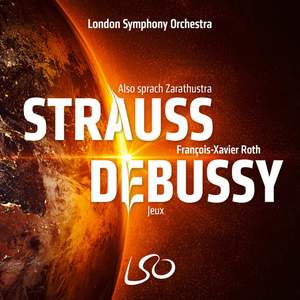
DSD recording, live at the Barbican September 2009 (La mer), December 2009 (Jeux), May 2010 (Prélude à l’après-midi d’un faune).

Valery Gergiev has been performing Debussy’s music regularly with the LSO since he became Principal Conductor of the orchestra in 2007. For his latest LSO Live release he records three of Debussy’s most wellknown works for the first time, including a sensational performance of La mer. One of the 20th century’s most innovative and influential composers, Debussy was a 'musical impressionist', although it was a term he disliked. Despite running to little over ten minutes in duration, the sublime Prélude à l’après-midi d’un faune is widely regarded as one of the important and revolutionary of musical works. La mer was completed ten years later whilst Debussy was living in Eastbourne in Sussex and is a spectacular orchestral showpiece. Jeux, one of Debussy’s final orchestral works, was written for Diaghilev and the Ballets Russes.

Valery Gergiev’s recent releases have included acclaimed recordings of Mahler’s Symphony No 5 and music by Debussy’s French contemporary Ravel. Gergiev and the LSO perform in London and Paris in March before embarking on a European tour in May, visiting Germany, Switzerland and the Netherlands.

CONCERT REVIEWS:

"virtuoso attention to detail and stylistic élan were on show from the start in a pungent performance of Debussy’s three orchestral sketches, La Mer" The Times

"For his players, this [La Mer] was a virtuoso orchestral showcase of relentless proportions. It seemed to have been meticulously rehearsed, with the instruments precisely blended and mercurially responsive to Gergiev’s tweaks of tempo and mood. This was a characteristic LSO-at-the-Barbican sound: big, bold and glossy in the best sense" The Guardian

"Gergiev and the LSO at their best: a sensual, supremely unhurried reading of Debussy’s Prélude à l’après midi d’un faune in which Gareth Davies’s flute shimmered into focus over limpid pools of colour from the harp and strings" The Independent

“the disc proves Gergiev to be a fine Debussy conductor, knowing instinctively how much of his large personality he can impose on this music. His is a muscular rather than a fragile view, so there is certitude as well as subtlety even in the subtle textures of the Prélude, while in La Mer, one can almost taste the salt spray. There is a luminous reading of the exotic-erotic Jeux to end.” Sunday Times, 27th March 2011 ***

“From the shimmering picture of sea rippling over pebbles to the cataclysmic force of crashing waves, this has to be the most graphic picture of La Mer placed on disc. For conductor, Valery Gergiev, the LSO a display of detailed virtuosity, before moving to a whole spectrum of subtle sounds in the playful Jeux ... A demonstration in the art of orchestral recording.” Yorkshire Evening Post

“delicate, crystalline Debussy performances by the LSO … The combination of the Impressionist groundbreaker Prélude à l’après-midi d’un faune with the quasi-symphonic La mer and the dance-inspired Jeux is as all-embracing as it is exquisite. Gergiev fills them with all manner of silken touches, succulently realised by the LSO’s many fine solo contributions. The crashing wave power of La mer is majestic, even awesome at times, but never rough. The lesser-played Jeux introduces more sinister hues, but is again driven by a delicious, multicoloured finesse” The Scotsman

“Among the slowest of accounts [of the Prélude], it briefly seems as if the flute's intoxicating gestures have left the orchestra in a torpor - though Gergiev's reluctance to break the spell is understandable...Not that there is any lack of energy elsewhere, with delectably nuanced woodwind in 'Jeux de vagues' and Jeux driven by an inner energy.” BBC Music Magazine, June 2011 ****

“Gergiev clearly loves this music, and he’s aided by pin-sharp orchestral playing and the clarity of the Barbican acoustic – I’ve never heard so many details emerge so clearly yet so naturally. And the unexpected final payoff is great. The Prélude à l’après-midi d’un faune is played just right, not too languid and with a beautiful, limpid flute solo from Gareth Davies.” Graham Rickson, The Arts Desk, 14th May 2011

“Jeux turns out to be Valery Gergiev's game, set and match. The ambiguity and transience of the music are captured with fleet-footed energy, wit and real piquancy...This degree of contrast and continuity add real backbone to the work without compromising its intrinsic unpredictability, turning the musical argument into more of an enigmatic conversation-piece as well as highlighting its genesis as a ballet.” International Record Review, May 2011

“The recording captures [the Prélude's] mesmerising force, its atmospheric languor and exceptional beauty. La mer and Jeux are scarcely less exalted, suggesting Gergiev’s partnership with the London Symphony Orchestra still has honeymoon qualities.” Financial Times, 28th May 2011 ****

“This Prélude à l'après-midi d'un faune is a reading which distils an almost indecently sultry languor and is marked by felicitous solo work from the LSO wind principals...The most successful item turns out to be Jeux, a less diaphanous, more sensual and hot-blooded beast than usual, pungently characterised, always alive and always sure of its destination.” Gramophone Magazine, July 2011

“From the spine-tingling opening of the Prelude, through all the colours and moods of La Mer to the enigmatic pace and enticing phrasing of Jeux, Gergiev brings out both the lucidity and the detail required...[He] loves the drama and tension of La Mer, but never allows the dynamic tension to overshadow the delicate subtlety of Debussy's revolutionary, evocative music.” Classic FM Magazine, July 2011 ****

“ if you’re open for a muscular approach to La Mer, Gergiev gives a characteristically dramatic and impassioned reading. Perhaps the real gem here is a wonderfully atmospheric (and kinetic) Jeux; the composer’s late dance masterpiece sounds stunning in the full and wide-ranging LSO Live sound.” london24.com, 17th June 2011

Super Audio CD

Format:

Hybrid Multi-channel

LSO and Mariinsky - up to 25% off

LSO Live - LSO0692

(SACD)

Normally: $11.50

Special: $9.20

In stock - usually despatched within 1 working day.

Debussy: La Mer, Images, Nocturnes & Jeux

Debussy: La Mer, Images, Nocturnes & Jeux


Debussy:

Prélude à l'après-midi d'un faune

La Mer

Images for orchestra

Children's Corner

orch. Andre Caplet

Printemps, suite for piano 4 hands or orchestra, L. 61

Trois Nocturnes

Jeux - Poème dansé


Martine Laure (piano)

Orchestre National de l’ORTF & Berliner Philharmoniker, Andre Previn & Carlo Maria Giulini

When Claude Debussy (1862-1918) composed his Prélude à l'après-midi d'un faune in 1894, nothing quite like it had been heard before. At the time it totally revolutionised music and set a new path for music in the century to come.

It was during 1905 that Debussy spent some months residing in Eastbourne in England where he completed one of his greatest works – La Mer (The Sea). He had taken refuge in England with his pregnant mistress, Emma Bardac, to escape the scandal caused by the attempted suicide of his then wife. Shortly after returning to Paris, Bardac gave birth to Debussy's only child, Claude-Emma, to whom he dedicated the piano original of his Children's Corner.

The Ballet score Jeux was Debussy's last orchestral work, being written in 1912 for Diaghilev's Ballet Russes with choreography by Nijinsky. It is a complex piece, made up of many small musical cells and changes of tempo.

EMI 20th Century Classics - 9072162

(CD - 2 discs)

$11.25

In stock - usually despatched within 1 working day.

Debussy - Orchestral Works

Debussy - Orchestral Works


Debussy:

Prélude à l'après-midi d'un faune

First Release on CD

La Mer

First International Release on CD

Trois Nocturnes

First International Release on CD

Jeux - Poème dansé

First Release on Decca of Stereo Version

Clair de Lune (from Suite Bergamasque)

Petite Suite

Rhapsody for clarinet & piano (or orchestra), L. 116 'Première rapsodie'

Robert Gugholz (clarinet)

Printemps, suite for piano 4 hands or orchestra, L. 61

Images for orchestra

First Release on CD


This volume of Debussy’s orchestral works under Ernest Ansermet brings together all of the composer’s acknowledged masterpieces together with some of the shorter pieces. The rare 1951 recording of Prélude à l’après-midi d’un faune and the 1949 recording of the Images make their first appearance on CD. Ansermet’s second recording of La Mer – he also recorded the piece for Decca in 1947, 1957 and 1964 – his first of the Nocturnes, and the early stereo version of Jeux are, likewise, all rarities. The anthology is completed with an authentically French-sounding Rapsodie pour clarinette as well as a lush Clair de lune and a delectable Petite suite.

Australian Eloquence - 4800127

(CD - 2 discs)

$14.00

In stock - usually despatched within 1 working day.

Debussy & Ravel - The Ballets

Debussy & Ravel - The Ballets


Debussy:

Jeux - Poème dansé

Prélude à l'après-midi d'un faune

Ravel:

Daphnis et Chloé

Boléro

La Valse

Ma Mère l'Oye


The Ballet Edition is a series of 2 CD sets drawn from the catalogues of EMI Classics, presenting the best-loved and most popular ballets, performed by the world’s leading orchestras and conductors.

“No hazy, lazy impressionism but rather a lithe, dancing sensuality informs Martinon's classic performances. Includes a muscular Jeux and passionate Faune.” BBC Music Magazine, March 2010 *****

EMI Ballet Edition - 9677342

(CD - 2 discs)

$11.25

In stock - usually despatched within 1 working day.

Debussy - Complete Works for Solo Piano Volume 5

Debussy - Complete Works for Solo Piano Volume 5

Debussy Transcriptions – 3 Ballets


Debussy:

Khamma

version for piano

La Boite A Joujoux

Jeux - Poème dansé

version for piano


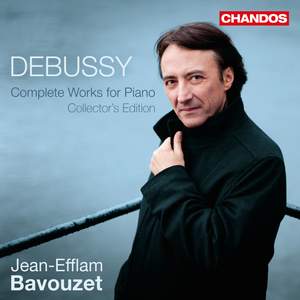
Jean-Efflam Bavouzet reaches the climax of his multi award-winning complete works for piano, with an album of solo piano transcriptions of three ballets from the same period.

Sir Charles Stanford subjected all music to what he called a ‘piano test’: if it didn’t stand up to being played on the piano, then it wasn’t to be taken seriously. In the case of Debussy, all the French composer’s scores went through a notational stage which, if not specifically designed for piano, could be given a reasonably accurate performance on that instrument. Where ballets were concerned, obviously the choreographer had to rehearse the dancers to the accompaniment of a piano score that conformed to the rhythms and structure of the final orchestral product. The three piano versions recorded here were therefore intimately related to both the compositional and production processes.

Khamma stems from a commission in 1910 for an Egyptian ballet, originally entitled Isis. The project was troubled from the start when Debussy refused to reduce the orchestra from 90 to 40 players. He never heard the work, which was first given its concert performance in 1924. Bavouzet writes, ‘I discovered almost by chance in a Parisian music store, a version for piano of Khamma. This had previously escaped me so what was my surprise when I saw the richness and originality! The virtuosity required is much more subtle than the more obvious. It must give the illusion of more perfect sound levels corresponding to each specific instruments group.’ In the midst of the negotiations over Khamma, Debussy wrote his second ballet, Jeux. Jeux is a highly complex and incomprehensible piece for two hands. Bavouzet notes, ‘In several places what Debussy wrote in the reduction for solo piano is really unplayable. The text is so thin and poor that a small part of the richness of the orchestral version is realised. It was indeed this frustration that prompted me to write some years ago, a version for two pianos today published by Durand. But for this disc I had to make a version for two hands to do justice to the score. I can say that this is probably one of the most difficult works that I have played.’ Two months after the Jeux premiere, Debussy began work on his last ballet, La boîte à joujoux, based on an illustrated children’s story. Debussy embraced the plot, busy ‘extracting secrets from [his daughter] Chouchou’s old dolls and learning to play the side drum’. Within a month the first tableau was done, and he claimed he had ‘tried to be straightforward and even “amusing”, without pretentiousness or pointless acrobatics.’ The following month the piano score was complete.

Jean-Efflam concludes, ‘In my opinion the transcriptions can offer greater clarity and organisation of musical discourse. Young conductors have told me that they understood the score of Jeux better after hearing the version for two pianos… for those who do not know these three ballets in their orchestral version, this disc may give them the curiosity to explore the works further.’

“This series has been as much an exploration of the mind of Debussy as a traversal of the works themselves. Bavouzet combines a probing intellect with a sensuality of touch that is enthralling. …a remarkable achievement…” Gramophone Magazine, November 2009

“The work’s prismatic inventiveness and its way of seeming at once discontinuous and a breathless sweep do not need instrumental colour to be forcefully registered, as Bavouzet demonstrates. His accounts of all three pieces are graphic and meticulous.” Sunday Times, 22nd November 2009 ***

“In all three works, Bavouzet's exceptional control, variation of touch and keyboard colour regularly provide new insights, so that he conjures up the evasive, mutable world of Jeux in a way that seems almost as convincing as the composer's own exquisitely dappled scoring.” The Guardian, 19th November 2009 ****

“it’s a musical adventure for everyone, and Bavouzet has more than achieved what he set out to do. Anyone familiar with Debussy’s shimmering orchestral colouration will recognise it translated into piano form, and anyone who isn’t will find their imaginations filling in the blanks.” Charlotte Gardner, bbc.co.uk, 17th November 2009

“Such vivid colours, such superbly voiced textures and such flair, nuance and richness of atmosphere, who needs orchestras?” Classic FM Magazine, December 2009

“Debussy playing does not come any better than this” Penguin Guide, 2011 edition

GGramophone Awards 2010

Finalist - Instrumental

GGramophone Magazine

Editor's Choice - November 2009

Chandos Bavouzet Debussy Series - CHAN10545

(CD)

$16.75

(also available to download from $10.50)

In stock - usually despatched within 1 working day.

Page: 

 1   2   3   4   5 

 Next >>

Copyright © 2002-13 Presto Classical Limited, all rights reserved.